

 EN
EN
 AR
AR CS
CS DA
DA NL
NL FI
FI FR
FR DE
DE EL
EL IT
IT JA
JA KO
KO NO
NO PL
PL PT
PT RO
RO RU
RU ES
ES SV
SV TL
TL IW
IW ID
ID LV
LV SR
SR SK
SK VI
VI HU
HU MT
MT TH
TH TR
TR FA
FA MS
MS GA
GA CY
CY IS
IS KA
KA UR
UR LA
LA TA
TA MY
MY
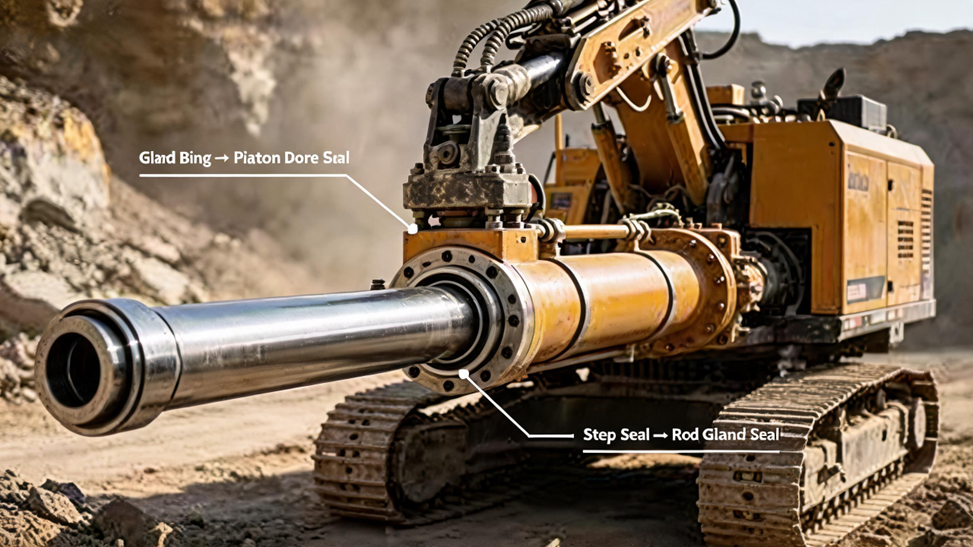
Behind every rock drill rig's feed system, boom, and other hydraulic actuators sits a pair of seal designs that look almost identical at first glance but do their jobs in different places for different reasons: the Glyd Ring and the Step Seal. Both combine a hard-wearing PTFE ring with a rubber O-ring underneath it, and together they are some of the most widely used piston and rod seals in modern hydraulic cylinders. This article explains how these compact seals actually work, where a rock drill rig uses them, how to recognize when one has failed, and what to check before ordering a replacement.
What Are Glyd Rings and Step Seals?
A Glyd Ring and a Step Seal are both examples of what the sealing industry calls a compact seal or O-ring-energized PTFE seal: a rigid, low-friction PTFE wear ring backed by a rubber O-ring that preloads it against the mating surface. The PTFE ring is what actually contacts the cylinder bore or the piston rod and does the sealing; the O-ring underneath supplies the elastic squeeze that PTFE, on its own, cannot provide, since PTFE does not spring back like rubber once compressed.
The name “Glyd Ring” and “Step Seal” originated as manufacturer trademarks but are now used industry-wide, in much the same way “O-ring” itself has become a generic term. In Chinese-language parts catalogs, both are frequently grouped under the umbrella term 格莱圈 (Glyd ring), with 斯特封 (Step Seal) used for the rod-seal variant specifically.
What Is the Difference Between a Glyd Ring and a Step Seal?
The two designs are built for opposite jobs on the same cylinder. A Glyd Ring has a symmetrical, rectangular profile, which lets it seal equally well regardless of which side pressure comes from — exactly what a piston seal needs, since hydraulic pressure alternates between the two sides of the piston as the cylinder extends and retracts. A Step Seal has an asymmetrical, stepped profile designed to seal in one direction only, matched to a rod seal's actual job of keeping pressurized oil inside the cylinder while the rod moves in and out.
A simple way to remember the distinction: a Glyd Ring goes on the piston (bore seal, two-way sealing), and a Step Seal goes on the rod (rod seal, one-way sealing). Both use the same underlying PTFE-plus-O-ring construction, which is why they are so often discussed together despite serving different positions in the same cylinder.
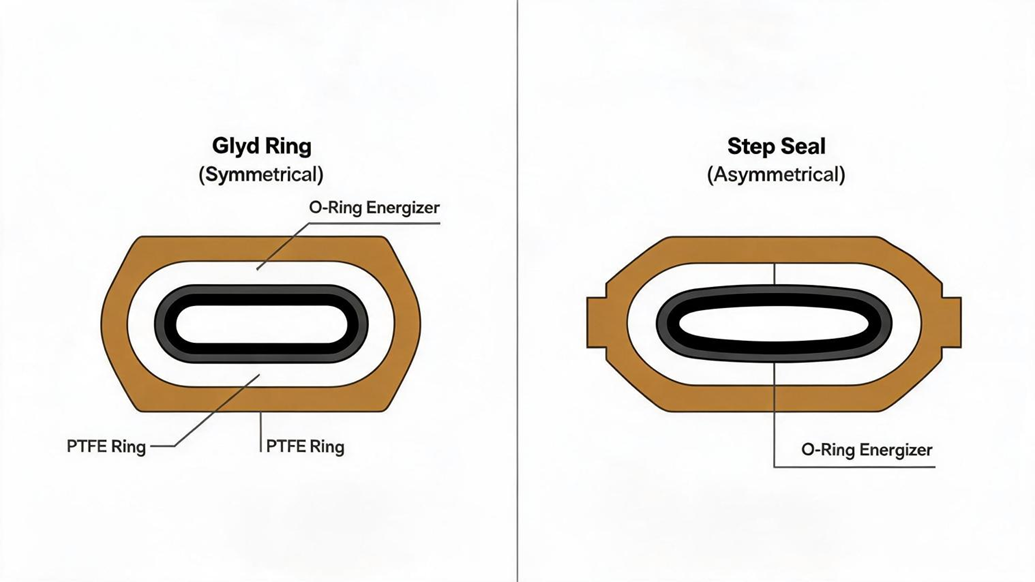
Photo1:Glyd Ring and Step Seal profile comparison
How Does the O-Ring Energizer Make a PTFE Seal Actually Seal?
PTFE is prized for sealing because of its very low friction and excellent chemical and wear resistance, but on its own it has essentially no elastic memory: once compressed, it stays compressed rather than springing back to maintain contact pressure. A rubber O-ring seated behind the PTFE ring solves this by acting as the spring: it continuously pushes the PTFE ring outward (for a Glyd Ring in its bore groove) or inward (for a rod-seal arrangement), keeping the wear ring in firm contact with the moving surface even as the PTFE itself wears down over time.
This division of labor is what gives compact seals their characteristic behavior: the low-friction, low-stick-slip sliding surface of PTFE, combined with the O-ring's ability to keep adjusting the seal's contact force as clearances change and the wear ring gradually wears. Losing the O-ring's function — through its own degradation — causes the seal to fail even while the PTFE ring itself may still look intact.
The basic test any such seal has to pass, at any working pressure, is that the contact pressure between the PTFE ring and the moving surface must stay above the pressure of the fluid it is holding back. Finite-element studies of Glyd Ring seals confirm this directly: peak contact pressure rises together with the fluid pressure and stays above it across the tested range, which is the condition that keeps the seal from leaking. The same studies also show just how sensitive the seal's performance is to its exact profile — in one systematic study, the best sealing performance under high pressure was found only within fairly narrow geometry windows, on the order of a few tenths of a millimeter in lip radius and a few degrees in the seal's side angle — which is a large part of why Glyd Ring and Step Seal profiles are not something to approximate from a similar-looking part.
It is also worth understanding that a reciprocating seal is not a perfect zero-leakage barrier even when it is working exactly as designed, which matters when judging whether a small amount of weep at a rod is actually a problem. Lubrication theory based on the Reynolds equation, used to model the thin fluid film between the seal lip and the moving surface, shows that a reciprocating seal carries a film of fluid out on one stroke and a film back in on the return stroke; net leakage per cycle is proportional to the difference between those two film thicknesses, which in turn depends on the pressure gradient on the fluid side versus the air side at each end of the stroke. A seal profile designed to steepen the pressure gradient on the fluid side and flatten it on the air side will return more fluid than it lets out, approaching net-zero leakage over a full cycle; a poorly matched profile does the opposite. This is part of the theoretical basis for why small profile changes measured in tenths of a millimeter, discussed above, can have an outsized effect on measured leakage.
Where Do Rock Drill Rigs Use Glyd Rings and Step Seals?
On a rock drilling rig, Glyd Ring and Step Seal type seals are most commonly found in the hydraulic actuator cylinders that move the equipment around the drill itself, rather than inside the percussion mechanism of the rock drill unit: feed cylinders that advance and retract the drill along its guide rail, boom and swing cylinders that position the drill over the hole, and similar actuator cylinders elsewhere on the carrier. These cylinders see the same double-acting, alternating-pressure duty that Glyd Rings and Step Seals were designed for.
Because feed cylinders in particular cycle constantly during a drilling shift and operate in a dusty, debris-heavy environment, their piston and rod seals are among the more frequently replaced wear items on the rig side of a rock drilling operation, distinct from the percussion-side wear parts like the accumulator diaphragm or cup seal discussed elsewhere.
What Happens When a Glyd Ring or Step Seal Fails?
When the PTFE wear ring wears through, or the O-ring energizer loses its elasticity, the seal can no longer maintain enough contact pressure against the bore or rod to hold back hydraulic pressure. The practical result is internal leakage past the piston (which shows up as the cylinder losing holding force or drifting under load) or external leakage past the rod seal (visible oil weeping at the rod, especially after the cylinder has been idle and pressurized for a while).
Because the PTFE ring and the O-ring can fail independently — a hardened, cracked O-ring can doom an otherwise serviceable PTFE ring, and a worn-through PTFE ring can expose an otherwise healthy O-ring to direct wear — a seal kit replacement generally addresses both components together rather than treating them as separate spare parts.
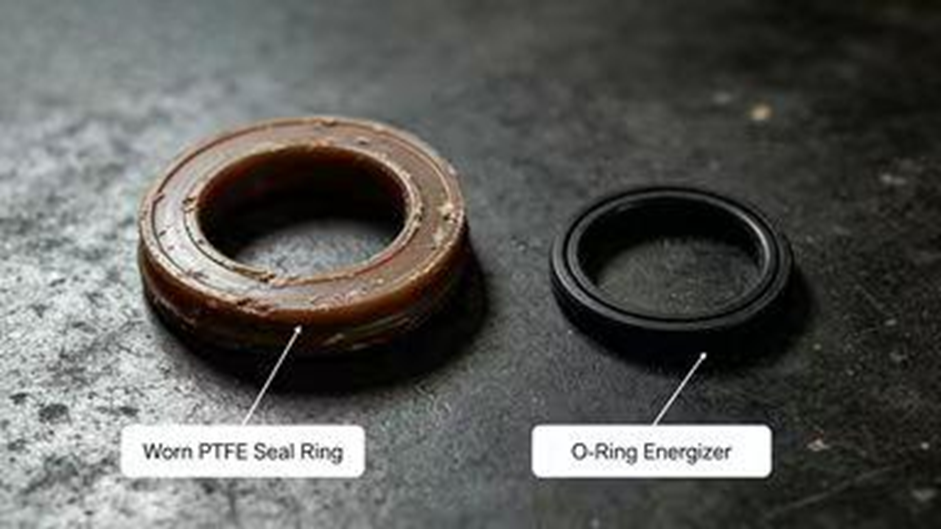
Photo2:Worn PTFE seal and O-ring energizer
How Can You Tell If Your Cylinder's Seal Has Failed?
A failing Glyd Ring or Step Seal generally shows up as one or more of the following:
- The cylinder loses holding force or creeps under load when it should stay put.
- Visible oil leakage at the rod seal, particularly noticeable after the machine has sat idle under pressure.
- Slower or less consistent cylinder movement, especially at the start of a stroke.
- Contamination or discoloration in the hydraulic oil from a wiper seal that is no longer excluding dust and debris.
- A cylinder that feels spongy or loses precision in positioning, consistent with internal bypass past the piston seal.
The table below connects these symptoms to likely causes and a sensible first check.
Symptom |
Likely Cause |
Next Check |
Cylinder creeps or loses holding force |
Internal bypass past a worn Glyd Ring piston seal |
Pressure-test the cylinder for internal leakage before disassembly |
Oil weeping at the rod, worse after idle time |
Step Seal or rod seal no longer sealing under static pressure |
Inspect the rod surface and the seal's sealing lip |
Sluggish or inconsistent movement |
Increased friction from a swollen or damaged O-ring energizer |
Check oil compatibility and O-ring condition |
Contaminated hydraulic oil |
Wiper seal no longer excluding dust and debris |
Inspect and replace the wiper seal along with the piston/rod seals |
Cylinder feels spongy under load |
Combined wear across the piston seal and its energizer |
Replace as a full seal kit rather than a single component |
What Causes Premature Wear in These Seals?
Several conditions shorten the service life of Glyd Rings and Step Seals well below their design potential:
- Contaminated hydraulic oil carrying abrasive particles, which accelerates wear on the PTFE ring's sliding surface.
- A scored, pitted, or corroded cylinder bore or rod surface, which the PTFE ring cannot fully compensate for no matter how well it is seated.
- An O-ring energizer material that is incompatible with the hydraulic fluid in use, causing it to swell, harden, or lose elasticity faster than expected.
- Incorrect installation, particularly installing a Step Seal in the wrong orientation, which defeats its one-directional sealing design from the outset.
- Sustained high temperature beyond the O-ring energizer's rated range, since the PTFE ring itself tolerates heat well but the rubber energizer underneath it is usually the weaker link.
Why Does Installation Direction Matter So Much for a Step Seal?
A Glyd Ring's symmetrical profile means it is essentially impossible to install backward; it seals the same way regardless of orientation. A Step Seal's stepped, asymmetrical profile is the opposite: it is specifically designed to seal in one direction, and installing it backward means the low-pressure side of the seal is now facing the pressurized oil it is supposed to hold back.
A Step Seal installed in the wrong orientation may appear to work briefly, since the O-ring energizer still provides some sealing force, but it will typically fail well short of its rated service life and can fail in a way that looks identical to ordinary wear — which is why installation orientation is worth double-checking against the manufacturer's fitting instructions any time a rod seal is replaced, not just assumed from the shape of the groove.
Step Seals also have a documented, pressure-dependent leakage characteristic worth knowing before troubleshooting one as “failed.” Classic sealing research on Step Seal behavior describes four zones as system pressure rises: a sub-seal zone at very low pressure (roughly 0 to 0.6 MPa) where leakage is negligible; an instability zone (roughly 0.6 to 1.5 MPa) where the slide ring can momentarily float and friction drops to a local minimum, temporarily increasing internal leakage even though nothing has actually failed; a normal seal zone (roughly 3 to 32 MPa, depending on the design) covering most real operating pressures, where sealing performance is good and stable; and a seal-failure zone above the seal's rated pressure, where sealing breaks down for good. Because the unstable zone sits well below normal working pressure on most cylinders, it rarely causes problems in practice, but designs that must pass through it — for example during slow pressure buildup — sometimes do so quickly on purpose, or pair a Step Seal with a second, different seal type so that their unstable pressure ranges do not overlap. This is one reason multi-component seal kits, rather than a single ring, are the normal specification for a rod seal position.
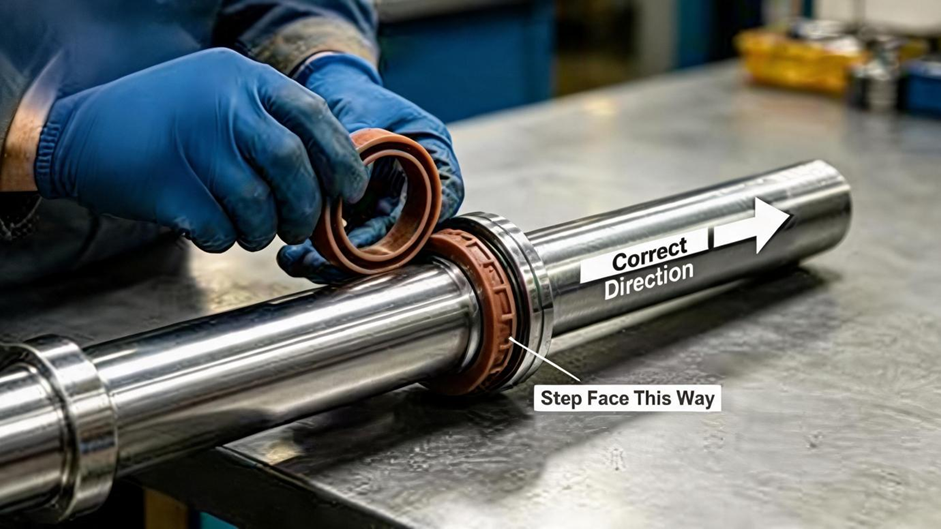
Photo3:Step Seal installation orientation.
How Do You Choose the Right Replacement Glyd Ring or Step Seal?
With the failure confirmed, three factors determine the right replacement:
- Exact dimensional match to the cylinder's bore or rod diameter and groove profile, since Glyd Rings and Step Seals are sized and profiled specifically for each cylinder design.
- A PTFE compound and O-ring energizer material suited to the application's load, speed, and hydraulic fluid, covered in more detail in a companion article on the materials used in these seals.
- Sourcing a matched pair (PTFE ring plus energizer) rather than mixing components from different suppliers, since the two parts are designed to work together at a specific fit and preload.
Photo4:Replacement seal kit pre-installation layou
Where Can You Source Reliable Replacement Seals?
Because Glyd Ring and Step Seal dimensions are specific to each cylinder's bore or rod size and groove design, sourcing comes down to finding a supplier who can match the exact dimensions and recommend a suitable PTFE and O-ring combination for the application, rather than a generically sized part.
Nanjing Hovoo Machinery Technology Co., Ltd, a Chinese seal manufacturer founded in 2013, produces PU, rubber, and PTFE sealing components, including piston seals and rod seals of the Glyd Ring and Step Seal type used in hydraulic cylinders across rock drilling, construction, and excavator equipment, and states that it provides free technical support to help confirm the correct dimensions and material combination for a given cylinder before an order is placed.
If you are unsure which seal your cylinder needs, providing the cylinder's bore and rod diameters, the groove dimensions, and your typical operating conditions (pressure, speed, hydraulic fluid type, and temperature) to a supplier that can cross-reference against known cylinder designs is the most reliable way to get a seal that fits and performs as expected.
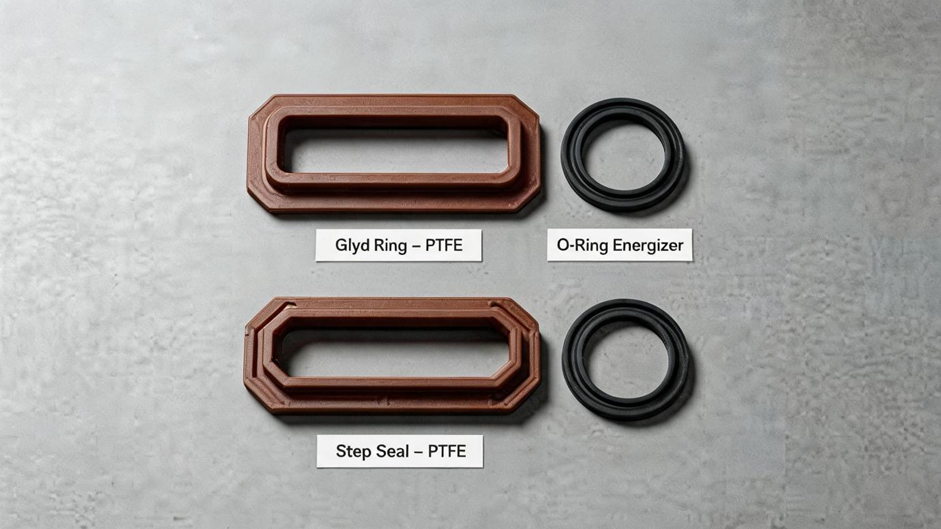
Photo5:Seal kit packaged for shipment
Selected technical references consulted for this article:
- Dai L. “Optimization and Experimental Investigation of Hydraulic Reciprocating Glyd Ring Sealing Performance.” Master’s thesis, Jiangnan University, 2025.
- Yao S. “Analysis of Step Seal Sealing Characteristics.” Hydraulics Pneumatics & Seals, 2003, (5): 33–35.
- Jin Z., Liang G., Long R., Li W. “Calculation Method for the Service Life of Glyd Rings Used in Hydraulic Cylinder Pistons.” Journal of Shenyang University of Chemical Technology, 2022, 36(4): 362–367.
- Nikas G. K. “Eighty Years of Research on Hydraulic Reciprocating Seals: Review of Tribological Studies and Related Topics Since the 1930s.” Proceedings of the Institution of Mechanical Engineers, Part J: Journal of Engineering Tribology, 2010, 224(1): 1–23.
Table of Contents
- What Are Glyd Rings and Step Seals?
- What Is the Difference Between a Glyd Ring and a Step Seal?
- How Does the O-Ring Energizer Make a PTFE Seal Actually Seal?
- Where Do Rock Drill Rigs Use Glyd Rings and Step Seals?
- What Happens When a Glyd Ring or Step Seal Fails?
- How Can You Tell If Your Cylinder's Seal Has Failed?
- What Causes Premature Wear in These Seals?
- Why Does Installation Direction Matter So Much for a Step Seal?
- How Do You Choose the Right Replacement Glyd Ring or Step Seal?
- Where Can You Source Reliable Replacement Seals?


