

 EN
 AR
 CS
 DA
 NL
 FI
 FR
 DE
 EL
 IT
 JA
 KO
 NO
 PL
 PT
 RO
 RU
 ES
 SV
 TL
 IW
 ID
 LV
 SR
 SK
 VI
 HU
 MT
 TH
 TR
 FA
 MS
 GA
 CY
 IS
 KA
 UR
 LA
 TA
 MY

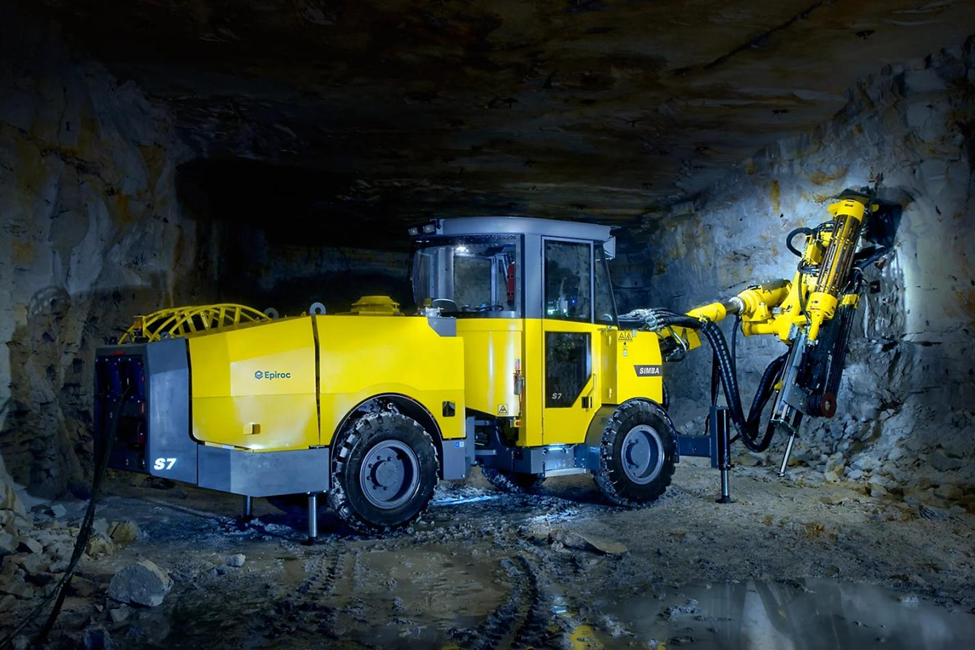
Bauma China 2026 opens at the Shanghai New International Exhibition Centre (SNIEC) from 24 to 27 November. The event draws thousands of exhibitors in the construction, mining, and demolition machinery sectors, making it an efficient venue for procurement teams to evaluate hydraulic breaker components including sealing systems. For maintenance engineers and distributors who manage fleets of hydraulic breakers, the show provides direct access to seal manufacturers and the opportunity to verify technical claims against physical samples and documentation.
Hydraulic breakers work under some of the most demanding sealing conditions in construction equipment. The percussion mechanism works under high hydraulic pressure, the impact frequency subjects seals to thousands of loading cycles per hour, and the working environment exposes the tool point and lower housing to dust, concrete particles, rock chips, and moisture. A seal failure at any of the key positions — piston, nitrogen chamber, or dust wiper — can lead to rapid escalation from minor leakage to major internal damage. This guide explains how hydraulic breaker seals function, what determines their performance, and what questions to ask at Bauma China when evaluating potential suppliers.
How Does a Hydraulic Breaker Generate Impact Force?
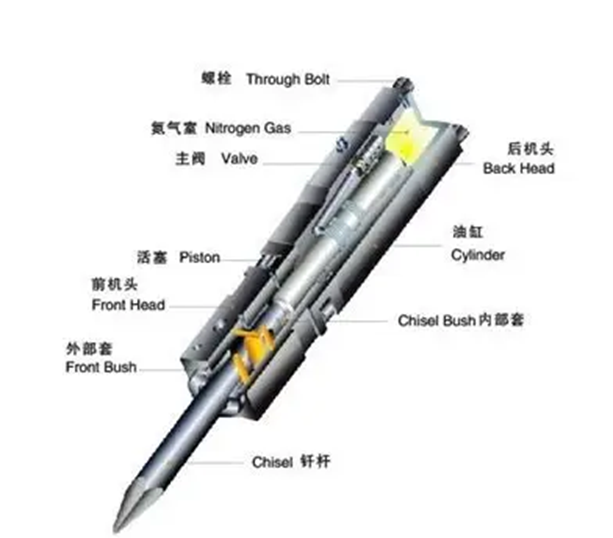
A hydraulic breaker is an impact device: it converts the flow of pressurized hydraulic oil from the excavator circuit into a rapid reciprocating motion of a heavy steel piston. The piston accelerates downward under hydraulic pressure, strikes the chisel or moil at high velocity, and the impact energy is transmitted through the tool into the material being broken.
The working cycle has a power stroke and a return stroke. On the power stroke, high-pressure oil enters the drive chamber above the piston. As the piston moves down, it compresses a nitrogen gas chamber below — either a separate accumulator or a built-in gas charge depending on the breaker design. On the return stroke, the compressed nitrogen helps push the piston back up, and the hydraulic circuit simultaneously feeds oil into the return chamber to complete the cycle.
The nitrogen pre-charge is critical to efficiency. It stores energy from the previous cycle and releases it to help drive the next power stroke, effectively multiplying the hydraulic input. The diaphragm or membrane that separates the nitrogen from the hydraulic oil is therefore a load-bearing element as well as a sealing element — when it fails, the breaker loses striking energy immediately and measurably.
The energy delivered per blow is set by the piston mass m and the piston velocity v at the instant of impact, and the number of blows per minute then determines the power the tool transmits:
E = ½ m v2 (1)
Studies of rock drill pistons treat impact energy and impact frequency as the performance parameters of an impact mechanism, while piston diameters, stressed areas, and stroke are structural parameters fixed at design [3]. The point for sealing is that every blow reverses the pressure in the piston chambers, so each seal in the drive section sees a pressure cycle at the blow frequency for the whole working life of the tool.
What Are the Primary Sealing Positions in a Hydraulic Breaker?
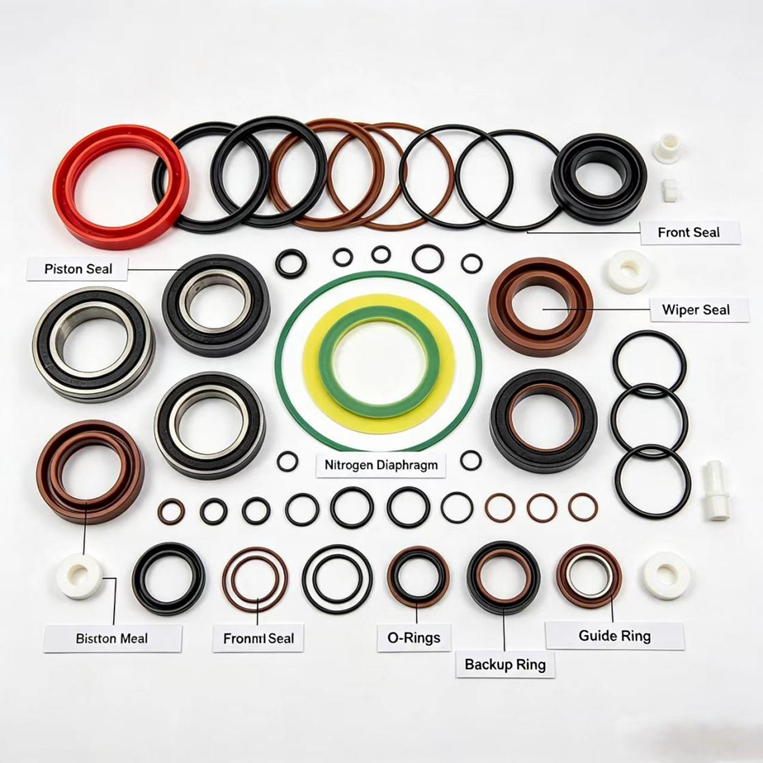
A hydraulic breaker contains several sealing positions that must function together for reliable operation. The piston seal sits in the main bore and is exposed to the full working pressure on each power stroke. It must contain the hydraulic oil in the drive chamber, withstand the impact shock as the piston reverses direction, and survive repeated compression and extension cycles without fatiguing or extruding into the clearance gap.
The front seal or intermediate seal separates the hydraulic circuit from the lower housing where the chisel is held. It is exposed to hydraulic pressure on the hydraulic side and to percussive shock transmitted through the tool body on the other. Dust wiper seals sit at the lower end of the tool housing, around the chisel guide bushing, and prevent abrasive particles from entering the housing as the chisel reciprocates. These are among the most frequently replaced seals because they are directly exposed to the working environment.
O-ring seals are used at static faces, port connections, and end caps throughout the housing. Though static, they must remain compressed and chemically stable across wide temperature and pressure ranges. The accumulator diaphragm or membrane is the sealing element that separates the nitrogen pre-charge from the hydraulic oil. Unlike all other seals in the breaker, it operates in a flexing rather than a sliding mode, accumulating and releasing energy on every cycle.
Chinese maintenance literature classifies breaker leakage by where it occurs [1]. Static-seal leakage arises at the piston ring and middle cylinder, the middle cylinder and nitrogen chamber, the valve sleeve and valve body, the valve cover and valve body, the valve body and middle cylinder, and at the pipe fittings. Dynamic-seal leakage arises at the front end of the middle cylinder where the piston passes, at the rear end and piston ring area, and between valve spool and sleeve. By direction, external leakage is oil escaping to the environment, while internal leakage is oil passing from the high-pressure side to the low-pressure side inside the tool, usually because of a pressure difference combined with seal failure. A breaker that cannot build system pressure because of leakage is effectively out of service [1].
The tool rod deserves separate attention. It is exposed outside the breaker, and the same source points out that there is no seal between the rod and the guide sleeve or intermediate support ring; the dust seal and seal in the front central bore of the middle cylinder are therefore the barrier, and some dust and dirt will inevitably be carried into the tool, where it accelerates wear of the seals and of the piston surface [1].
What Materials Are Specified for Hydraulic Breaker Seals?
Polyurethane (PU) is the dominant material for dynamic seals in hydraulic breakers — particularly the piston seal and the front seal — because it combines high tensile strength, excellent abrasion resistance, and the elasticity needed to form a reliable sealing contact under cyclic loading. PU resists extrusion better than NBR under the pressure levels typical of breaker hydraulic circuits, and it retains its mechanical properties through the thermal cycling caused by impact friction.
The compound hardness is selected based on the clearance between the piston and the bore. A wider clearance requires a harder compound to resist extrusion; a tighter clearance allows a softer compound that conforms better to surface imperfections and provides lower breakout friction. PTFE-composite step seals are used in some breaker designs where a combination of low friction and reliable pressure sealing is required — the PTFE sliding face is energized by a compressed rubber O-ring behind it.
Dust wiper seals at the chisel guide are typically made from PU or a harder elastomeric compound, formulated to withstand the abrasive particle sizes typical of concrete demolition and rock breaking. NBR or HNBR O-rings are used for static sealing positions throughout the housing. The accumulator diaphragm is normally NBR or HNBR, with compound selection matched to the hydraulic oil type and operating temperature range. At Bauma China, ask suppliers to confirm the base polymer, hardness, and compound designation for each seal position rather than accepting generic material category labels.
How Do Percussion Loads Affect Seal Life?
The service life of a hydraulic breaker seal is determined primarily by three factors: the amplitude and frequency of the pressure cycling, the quality and cleanliness of the hydraulic oil, and the extent to which the dust wiper system protects the dynamic seal surfaces from abrasive contamination.
Each impact event creates a pressure spike in the drive chamber that is transmitted through the oil to the piston seal. The magnitude of the spike depends on the working pressure setting, the chisel contact condition — whether the tool is against a hard rock surface, a soft material, or in mid-air — and the condition of the nitrogen pre-charge. A depleted nitrogen charge amplifies the spike because there is less stored energy to absorb the reverse pressure wave.
High percussion frequency also generates frictional heat at the piston seal contact surface. If the hydraulic oil temperature rises significantly during extended operation, seal compounds that are marginally rated at ambient temperature may exceed their service limit. The combination of elevated temperature and pressure cycling is the typical cause of premature piston seal hardening, cracking at the lip root, and loss of sealing contact pressure.
Oil temperature is the variable most often under the operator's control. Maintenance sources give a rule of thumb that seal life halves for every 10 °C rise in oil temperature, and recommend keeping the oil below about 65 °C by designing an efficient circuit or fitting cooling [1][4]. Expressed as a relationship between life L at oil temperature T and the life L0 at a reference temperature T0:
L(T) ≈ L0 · 2−(T − T0)/10 (2)
This is an empirical rule of thumb consistent with the Arrhenius behavior of rubber ageing, not a guarantee for any particular compound; its use is to show how steeply life falls as oil temperature climbs. The same sources identify three contamination routes that attack seals and piston surfaces [1][4]:
- Gas contamination. Hydraulic oil at atmospheric pressure can hold roughly 10% dissolved air, and more at high pressure. When the pressure alternates rapidly between high and low at the end of each impact, bubbles form high-temperature spots on the high-pressure side and collapse on the low-pressure side, sending oil at high speed onto the piston surface and accelerating wear and leakage.
- Particle contamination. Because the tool rod is exposed, dust and debris enter through the front end and score the seals and piston; particle contamination is described as one of the fastest-acting causes of breaker damage.
- Water contamination. In damp working conditions water reacts with the oil to form acidic products and sludge, lowers lubricity, accelerates wear, and can make control valve spools stick and score the seals.
What Failure Modes Should Maintenance Teams Recognize?
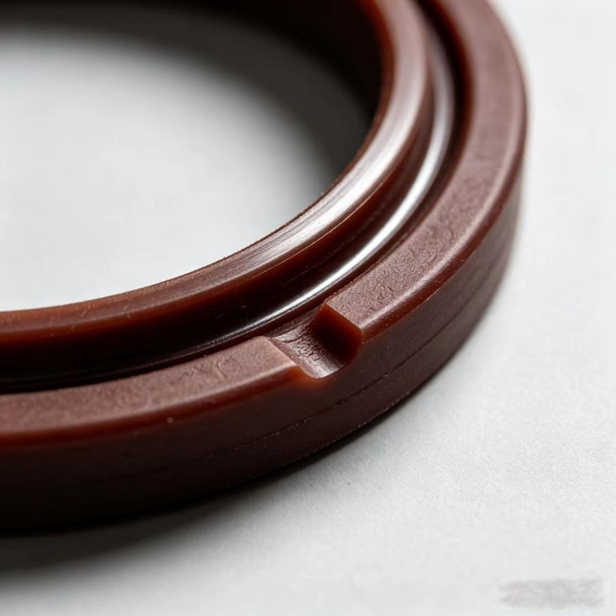
Recognizing the failure mode helps identify whether the seal, the hydraulic circuit, or the operating practice is the root cause. Three failure modes account for the majority of hydraulic breaker seal replacements.
Extrusion failure occurs when the seal material is forced into the radial clearance between the piston and the bore during the power stroke. The symptom is a torn, nibbled, or rolled edge at the high-pressure face of the seal. This failure mode is caused by excessive working pressure relative to seal hardness, incorrect seal specification for the bore clearance, missing backup rings, or bore wear that has widened the clearance beyond the seal's tolerance. A single extrusion event often removes enough material from the seal edge to initiate progressive leakage.
Abrasive wear on the dust wiper appears as scoring or channeling on the wiper lip, combined with fine grit accumulation in the seal groove. When the wiper fails to keep particles out of the housing, the piston seal surface and the bore are the next components to show damage. Early identification of wiper deterioration is the most cost-effective intervention in the hydraulic breaker seal maintenance sequence.
Nitrogen membrane failure presents as an immediate and significant drop in impact energy, sometimes accompanied by oil contamination of the gas space. The membrane may split, crack, or lose adhesion to its housing seat. A membrane that is approaching failure often shows surface hardening or crazing before the final split — regular inspection at overhaul intervals can allow replacement before failure.
A published maintenance guide links the appearance of a failed main seal to its likely cause, which makes teardown inspection more productive [1]:
- Hardened surface or cracks on the sliding face: abnormally high speed or excessive pressure.
- Premature deterioration: oil temperature too high, or oil and seal material incompatible.
- Uneven mirror-like wear with swelling: excessive side load or eccentricity, or an unsuitable oil or cleaning fluid.
- Scratches and wear marks on the sliding face: poor plating quality, rust spots, rough mating surface, or unsuitable rod material.
- Torn lip or pressure marks at the lip tip: improper assembly chamfer, or improper installation or storage.
- Carbonized, burnt seal: residual air causing adiabatic compression; replace the seal.
- Extruded or cracked seal root: pressure too high, extrusion gap too large, misused support ring, or a poorly designed groove.
Some leak patterns point away from the seal itself [1]. A breaker that leaks at low pressure but not at high pressure usually has poor surface roughness at the assembly face; the guide is to improve the surface to roughly Ra 3.2 to 6.3 μm and use a softer seal. A rod that shows an oil ring and drips a few drops every stroke suggests the dust seal lip is scraping off the oil film, so the wiper type should be changed. Leakage when cold that disappears when hot suggests the seal material is not suited to low temperature. The same guide adds that a leak does not always justify replacing parts; the right response depends on the specific pattern found at inspection.
A less obvious seal killer is radial force on the piston. When oil pressure around the piston is not uniform, the net radial force is the circumferential integral of that pressure, and it is zero only if the pressure is symmetric:
Fr = ∫02π p(θ) · R · L · cos θ dθ (3)
A CFD study of the oil-return hole region in the front chamber of a breaker found that heat-treatment distortion of the relief grooves (up to 2 mm) and machining error (radial offset of up to 0.36 mm) leave the grooves wavy and uneven, which unbalances the pressure on the piston, produces a high radial force, and scuffs the piston surface during high-speed reciprocation [2]. For the original flow-channel model (oil density 860 kg/m³, dynamic viscosity 0.03956 Pa·s, inlet 3 MPa, outlet 0.3 MPa), the simulated radial force was about 566 N in the X direction and about 394 N along the combined diagonal. Two modified channels, one with randomly placed recesses and one with the ramp shifted 0.36 mm, reduced the X-direction force to about 0.5 N and 1.7 N [2]. A scuffed piston surface in turn cuts the seals as they pass over it, so seal life in a breaker depends on component geometry as much as on the seal.
What Should a Buyer Check When Evaluating Seal Suppliers at Bauma China?
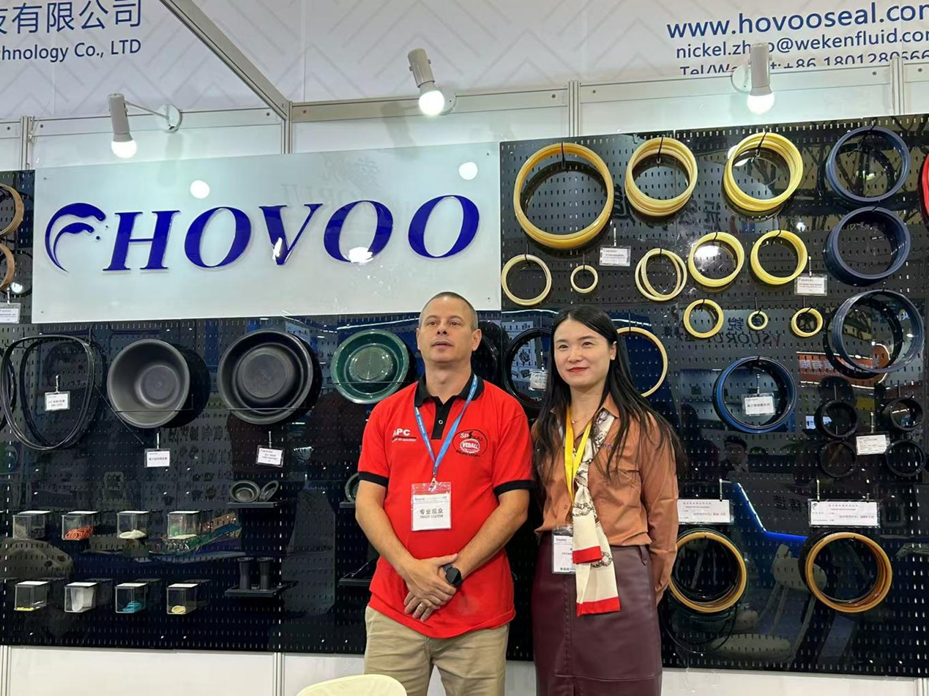
A trade show booth evaluation requires a structured approach. The table below summarizes the areas to check and the documentation or answers a credible supplier should provide.
Evaluation area |
What to verify |
Credible supplier evidence |
Seal material specification |
Base polymer, compound designation, hardness range, temperature limits for each position |
Technical datasheet; not a trade name alone |
Dimensional compatibility |
Whether dimensions match your breaker model's housing groove and piston diameter |
Cross-reference list or OEM part number mapping; drawing on request |
Nitrogen membrane range |
Which membrane sizes are stocked and what oil types they are rated for |
Stock list with dimensions and fluid compatibility table |
Quality system |
Material certificates, incoming inspection, dimensional check frequency |
ISO 9001 certificate, batch test records, or third-party lab reports |
OEM or model supply history |
Which breaker models or OEM brands they have supplied |
Specific model or brand references; vague claims should be questioned |
Lead time and stock |
Availability of common seal kits; lead time for non-stocked items |
Stock confirmation; standard and express lead-time statements |
At Bauma China, request physical samples of the piston seal and the dust wiper for your most common breaker models. Visual inspection of the lip geometry, surface finish, and material consistency provides a baseline for comparison before ordering a test quantity.
How Are Hydraulic Breaker Seal Kits Structured?
Most hydraulic breaker servicing is done by replacing a complete seal kit rather than individual seals. A complete kit covers all dynamic and static sealing positions for one major overhaul interval: piston seal, front seal, dust wiper seals, O-rings at port and end-cap positions, and the accumulator membrane. Some kits also include the chisel guide bushing and retaining pins, which wear at a similar rate.
When sourcing a replacement kit, provide the breaker manufacturer's name and the model designation. If the OEM kit part number is available, use it as the cross-reference starting point. Note that seal kits from aftermarket suppliers may cover different positions than the OEM kit — request a position-by-position cross-reference to confirm that no position is omitted. An undersized kit that leaves even one position unsealed can result in a second teardown at short notice.
Storage of seal kits requires attention to packaging. Polyurethane and rubber compounds degrade under UV light, ozone, and temperature extremes even before installation. Seals stored in open bins in a sunny workshop may show surface hardening before they are fitted. Ask suppliers about packaging standards — individually sealed, UV-opaque bags with desiccant are appropriate for long-term storage.
What Are the Hydraulic Fluid Compatibility Requirements for Breaker Seals?
Hydraulic breaker seals are specified for compatibility with the hydraulic oil used in the excavator or carrier circuit. Most construction equipment uses mineral-based hydraulic oil in the ISO VG 46 or VG 68 viscosity grade. Standard NBR and PU compounds are compatible with these fluids across the normal operating temperature range.
Exceptions arise when equipment is used in environments requiring fire-resistant fluid, when the owner has switched to a biodegradable or ester-based fluid for environmental reasons, or when the original specification called for a water-glycol or phosphate-ester fluid. In these cases, standard NBR and PU may swell, harden, or crack. FKM (fluoroelastomer) or EPDM compounds are required for some fluid types, but material selection must be verified against the specific fluid rather than assumed.
At Bauma China, if your fleet uses a non-standard hydraulic fluid, bring the fluid name, type, and viscosity grade when you visit seal suppliers. A supplier who can confirm compatibility from a compound-level fluid immersion test result is more reliable than one who gives a blanket compatibility assurance without testing data.
What Standards Apply to Hydraulic Breaker Seals?
Hydraulic breaker seals do not fall under a single dedicated standard equivalent to ISO 7425 for hydraulic cylinder seals. The applicable standards cover materials testing, dimensional tolerances, and quality systems rather than breaker-specific performance requirements.
Material testing standards from the ISO 37, ISO 815, ISO 1817, and ASTM D families govern tensile strength, compression set, and fluid compatibility of elastomeric and PU seal compounds. Dimensional tolerances for O-rings follow ISO 3601. For bespoke seal profiles specific to individual breaker models, the relevant standard is the customer drawing or OEM specification rather than a published standard.
CE marking for hydraulic breakers as a whole assembly is governed by the Machinery Directive in Europe, but this does not extend to replacement seal components. ISO 9001 quality management certification at the manufacturer level is the most practical quality indicator when evaluating a seal supplier, as it establishes the framework for controlled material sourcing, dimensional inspection, and batch traceability.
How Can Hovoo Seal Help with Hydraulic Breaker Sealing at Bauma China 2026?
Hovoo Seal (Nanjing Hovoo Machinery Technology Co., Ltd) produces hydraulic sealing components for construction equipment applications, including complete seal kits and individual seals for hydraulic breakers and rock drills. The product range includes piston seals in PU and composite materials, front seals, dust wiper seals, O-rings in NBR and FKM, and accumulator membranes. Engineering support covers cross-referencing by OEM part number, compound selection for non-standard hydraulic fluids, and groove geometry review for custom or modified housings.
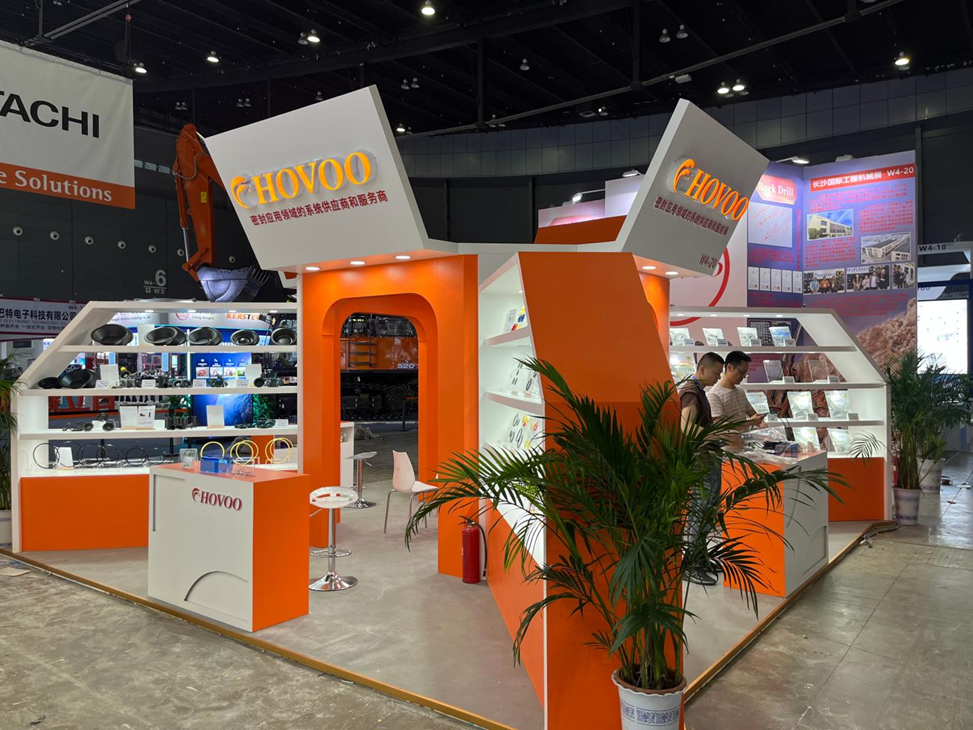
Hovoo Seal will exhibit at Booth W2-579 at Bauma China 2026, Shanghai New International Exhibition Centre (SNIEC), from 24 to 27 November 2026. Visitors can bring OEM part numbers, physical seal samples, or breaker model references to the booth for on-site technical review. The team can confirm dimensional compatibility and recommend compound selection based on the equipment's hydraulic fluid type and duty cycle.
To prepare an inquiry before the show, supply the breaker manufacturer name, model designation, OEM seal kit part number if available, hydraulic fluid type, working pressure range, and photographs of worn or failed seals. This allows the engineering team to prepare a technical recommendation in advance and to have relevant samples on hand at the booth.
Conclusion: Hydraulic breaker seals are maintenance items with a direct impact on breaker performance and repair cost. The piston seal, dust wiper, and nitrogen membrane together define the reliability of the percussion system. Selecting a supplier at Bauma China 2026 is an opportunity to verify material specifications, confirm dimensional compatibility, and establish the technical support relationship needed for efficient fleet maintenance. Visit Hovoo Seal at Booth W2-579 to review the product range and discuss your specific breaker models and operating conditions.
Frequently Asked Questions
Why does my hydraulic breaker lose striking power gradually?
Gradual loss of striking power typically indicates one of three causes: deterioration of the nitrogen pre-charge in the accumulator, progressive leakage past the piston seal that allows oil to bypass rather than drive the piston, or wear at the chisel guide bushing that allows the chisel to misalign slightly on each strike. The accumulator membrane should be inspected first because nitrogen loss is the most common cause and is the simplest to check. If the membrane is intact and the pre-charge pressure is correct, inspect the piston seal at the next teardown.
How often should hydraulic breaker seals be replaced?
There is no fixed interval that applies across all models and applications, and this article does not quote one. Replacement frequency depends on working hours, the hardness of the material being broken, the cleanliness of the hydraulic oil, and the oil temperature; as noted above, a commonly cited rule of thumb is that seal life halves for every 10 °C rise in oil temperature [1][4]. The first sign of external leakage or reduced impact energy should trigger an inspection, and the manufacturer's service manual sets the interval for your model. Inspection should also look for causes outside the seal, such as loose oil-port bolts, damaged hose fittings, or a damaged seal between the tool rod and guide sleeve, before parts are replaced [1].
Can I use seals from a different brand to repair my hydraulic breaker?
Aftermarket seals can be used provided the compound specification and dimensional tolerance match the OEM requirements for each position. The risks of substituting without verification include extrusion if the compound is too soft for the bore clearance, leakage if the seal cross-section is smaller than the groove calls for, and chemical degradation if the compound is incompatible with the hydraulic fluid. Request a dimensional cross-reference and material datasheet from any aftermarket supplier before committing to a kit.
Can I clean seals and rubber parts with petrol during an overhaul?
Not recommended. The maintenance guide cited here advises cleaning with diesel, particularly for seals, dust seals, and O-rings, because petrol ages rubber, removes its elasticity, and reduces sealing function [1]. The same guide says assembly should avoid rough handling: inspect parts before fitting, dip them in a little hydraulic oil, and press them in gently, since excessive force deforms parts and starts leaks before the breaker has worked a single hour [1]. For the grease used on the tool rod, follow the breaker manufacturer's specification and confirm with the seal supplier that it is compatible with the dust seal compound.

References (Chinese-language sources; titles translated)
- Yang Guoping. Leakage causes of hydraulic breaking hammers and solving measures. Construction Machinery, 2009, No. 5, pp. 97–98.
- Zhou Guangxing. Study on the effect of the structure at the oil return hole of a hydraulic breaker on clamping force. Hydraulics Pneumatics & Seals, 2021, No. 5, pp. 68–70. DOI: 10.3969/j.issn.1008-0813.2021.05.018.
- Zhou Zhihong, Ding Hejiang, Tian Xiang. Analysis of piston stressed area of Epiroc's hydraulic rock drills and assessment of the 3-section method. Rock Drilling Machinery & Pneumatic Tools, 2024, No. 3. DOI: 10.19449/j.cnki.2095-6282.2024.03.011.
- Zhang Yue. Leakage of excavator hydraulic systems and preventive measures. China Water Transport, 2008, 8(12), pp. 142–143.
Table of Contents
- How Does a Hydraulic Breaker Generate Impact Force?
- What Are the Primary Sealing Positions in a Hydraulic Breaker?
- What Materials Are Specified for Hydraulic Breaker Seals?
- How Do Percussion Loads Affect Seal Life?
- What Failure Modes Should Maintenance Teams Recognize?
- What Should a Buyer Check When Evaluating Seal Suppliers at Bauma China?
- How Are Hydraulic Breaker Seal Kits Structured?
- What Are the Hydraulic Fluid Compatibility Requirements for Breaker Seals?
- What Standards Apply to Hydraulic Breaker Seals?
- How Can Hovoo Seal Help with Hydraulic Breaker Sealing at Bauma China 2026?


