

 EN
EN
 AR
AR CS
CS DA
DA NL
NL FI
FI FR
FR DE
DE EL
EL IT
IT JA
JA KO
KO NO
NO PL
PL PT
PT RO
RO RU
RU ES
ES SV
SV TL
TL IW
IW ID
ID LV
LV SR
SR SK
SK VI
VI HU
HU MT
MT TH
TH TR
TR FA
FA MS
MS GA
GA CY
CY IS
IS KA
KA UR
UR LA
LA TA
TA MY
MY
There's a category of job that heavy equipment can't touch. The basement slab in an occupied building. The gas line trench running through a residential alleyway at 1.2 metres wide. The interior wall in a hospital wing staying open during renovation. These sites need impact power and physical compactness at the same time — and the box-type small hydraulic breaker is what fills that gap.
The box-type design fully encloses the power cell inside a steel housing. This does three things at once. It suppresses noise — typically by 10–15 dB versus an open-frame unit — without touching the internal piston system. It protects the impact mechanism from dust and debris that would accelerate bushing wear on exposed open-frame models. And it gives the breaker a defined rectangular envelope that operators can work with in tight corners without worrying about the chisel housing snagging on a wall or doorframe.
What Compact Actually Means in Practice
For mini excavators in the 1–8 ton class, the power-to-weight ratio of the attachment is critical. Oversizing a breaker on a compact carrier overstresses the machine's hydraulics and undercarriage, leading to premature wear — or worse, boom micro-fractures from sustained recoil loads. The 10–15% weight rule keeps the attachment within the safe lifting capacity of the carrier. Box-type breakers built for this class are designed with that ratio in mind: enough nitrogen-assisted impact energy to break concrete slabs and asphalt, small enough not to destabilise a 2-ton machine working at full reach.
Projects such as parking garages, subway access shafts, basements, and tunnels often have height and access restrictions that rule out standard top-mount attachments entirely. Compact breakers allow powerful material removal without requiring large clearances. The enclosed housing also keeps the job site significantly cleaner than open-frame alternatives — a practical point when crews are working indoors and debris containment matters.
Box-Type Advantages by Site Constraint
Site Constraint |
Why Box-Type Wins Here |
Indoor concrete removal |
Enclosed housing contains dust and debris; no open-frame scatter |
Residential alley access |
Narrow footprint fits 1–3 t carriers; box shape prevents snag on walls |
Basement slab breaking |
Low-clearance boom angles; compact unit stays within height limits |
Urban utility trenching |
Noise-suppressed operation avoids permit violations on residential streets |
Maintenance and Selection Considerations
OSHA enforces an 85 dBA action level for worker hearing protection over an 8-hour shift. On a confined indoor site where noise bounces off concrete walls rather than dissipating, open-frame breakers push crews into mandatory hearing protection quickly. Box-type units operating 10+ dB quieter change that equation. Silenced concrete breakers are increasingly becoming a regulatory necessity for urban demolition, not just a comfort preference.
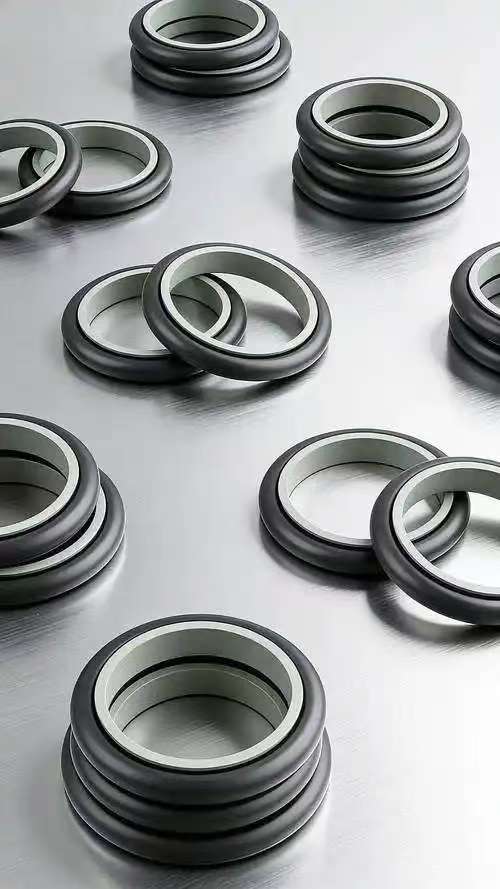
When selecting a box-type small breaker, verify oil flow and operating pressure against the carrier's output specifications — mismatched hydraulics cause overheating and seal failure faster on small units than on larger ones. HOVOO and HOUFU produce seal kits calibrated for the tighter thermal environment inside enclosed housings, where heat dissipates slower than on open-frame models. Proper seal spec keeps downtime low on jobs where swapping the attachment mid-shift isn't an option. More at https://www.hovooseal.com/
BEILITE's BLT compact series covers carriers from 0.5 tons upward, with box-type configurations suited for the full range of narrow-space and indoor applications. The chisel matters too — moil point for general concrete, flat chisel for slab work, blunt tool for secondary breaking of fragments. Match the tool to the material and the machine to the site, and a compact box-type breaker handles jobs that no large unit can reach.
box type hydraulic breaker | small compact breaker narrow space | mini excavator hydraulic hammer | urban indoor demolition | HOVOO | HOUFU | hovooseal.com


