

 EN
EN
 AR
AR CS
CS DA
DA NL
NL FI
FI FR
FR DE
DE EL
EL IT
IT JA
JA KO
KO NO
NO PL
PL PT
PT RO
RO RU
RU ES
ES SV
SV TL
TL IW
IW ID
ID LV
LV SR
SR SK
SK VI
VI HU
HU MT
MT TH
TH TR
TR FA
FA MS
MS GA
GA CY
CY IS
IS KA
KA UR
UR LA
LA TA
TA MY
MY
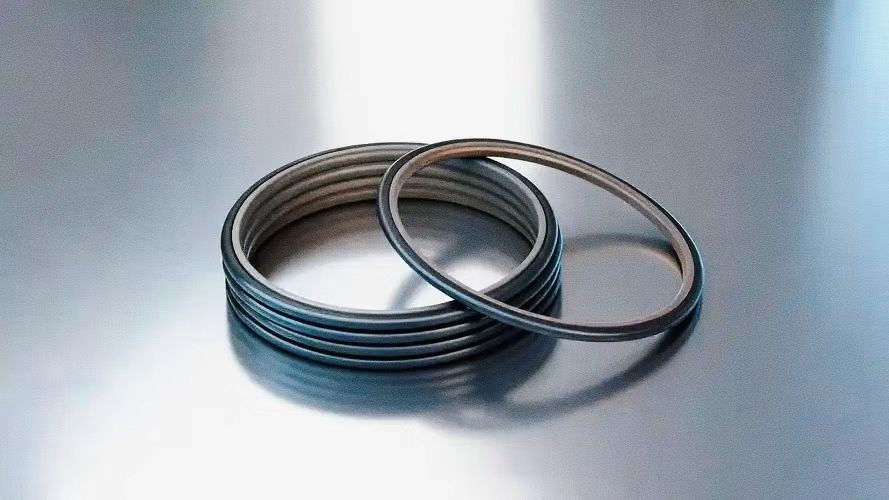
The global hydraulic breaker market is growing at 6.23% annually and is projected to reach USD 5.90 billion by 2032. Behind that number sits a procurement reality that every distributor and contractor eventually confronts: the supplier you choose shapes not just the purchase price, but every hour of uptime — or downtime — that follows.
Choosing a direct hydraulic breaker manufacturer, rather than a trading intermediary, is key to securing factory-direct pricing, consistently reliable quality, and comprehensive technical support. Yet the market is flooded with middlemen who look legitimate on paper but cannot deliver when problems arise. This article sets out what separates a genuine factory from a reseller, what high durability actually means in manufacturing terms, and what global buyers should check before placing an order.
Factory vs. Trading Company: Where the Difference Shows Up
There is a significant difference between a trading company and a true manufacturer. A trader simply resells products from various factories, while a manufacturer has direct control over the entire production process, from raw materials to final assembly. The latter can guarantee consistent quality, traceability, and can offer specialized solutions.
In practice, the gap shows up in three situations. First, when something goes wrong: a trader passes your complaint upstream to the factory while you wait; a manufacturer's own engineers diagnose the issue, often the same day. Second, when you need customisation: adapting a bracket for a less common excavator brand, or specifying a non-standard chisel diameter, requires the factory's machining floor — a trader cannot action that. Third, on price: the direct supply model eliminates the layered markups of intermediaries, offering distributors and end-users the most competitive factory-direct pricing. For long-term partners, this translates into healthier distribution margins and a more stable pricing structure.
Genuine factories also leave evidence of their capabilities. Real manufacturers invest heavily in R&D and tooling, which shows up in their product range. Assemblers focus on a few popular, easy-to-build models because that's all they can handle. A full product line — from a 40 mm chisel unit for 0.5-tonne micro-excavators to a 280 mm unit for 120-tonne carriers — is a tangible signal of real production depth.
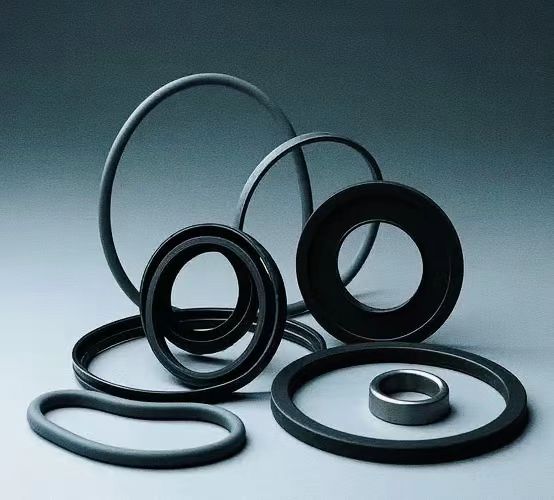
What High Durability Actually Requires
Durability in a hydraulic breaker is not a marketing claim — it is an outcome of specific manufacturing decisions made before the unit leaves the factory floor. The piston and cylinder body are the heart of the breaker, and the raw material grade determines how long they last under continuous impact load. Top-tier manufacturers use steel grades such as 20CrNiMoA for pistons; some lower-cost suppliers use only GCr15 to reduce cost. That single substitution can cut service life by half in hard-rock applications.
Precision machining matters equally. Precise grinding ensures tolerance under 0.01 mm, maintaining strong striking power across the full service life. Liquid nitrogen cooling of the cylinder body changes the microstructure of the steel, increasing wear resistance and damage resistance at the interface with the piston. These are factory-floor operations that cannot be replicated by an assembler buying in components from multiple sources.
Heat treatment of the chisel and wear parts is the third pillar. The front and rear cylinders treated with liquid nitrogen for five hours display a tighter, more uniform grain structure than air-cooled equivalents. Over thousands of operating hours in quarry or mining conditions, that structural integrity difference compounds into measurable differences in replacement frequency — and therefore in total cost of ownership. Factory testing protocols that include rigorous multi-stage quality control have been proven through case studies to extend overall hammer lifespan by over 40% in highly abrasive, continuous-use quarry environments.
Factory vs. Trader: Verification Checklist
Before committing to a supplier, run through the seven criteria in the table below. The contrast between what a genuine factory presents and what a trading company typically shows is usually apparent within a single video call or factory audit.
Criterion |
Genuine Factory |
Trading Company |
Production facility |
On-site CNC machining, heat treatment, welding bays; factory visits welcomed |
Warehouse or office; factory visits deflected or third-party |
Product range |
Mini (BLT-40) to heavy-duty (BLT-280+); R&D investment visible in full lineup |
A few popular mid-range models; gaps in small or very large sizes |
Quality certifications |
ISO 9001, CE, TÜV; participated in national standard drafting |
Certifications may be present but sourced from the actual factory |
Lead time |
2–6 weeks direct from production schedule; faster for in-stock models |
Dependent on factory availability; adds communication lag |
Technical support |
In-house engineers; accumulator settings, leak diagnosis, OEM drawings |
Resells support from the original factory; delays likely |
OEM / private label |
Custom logo, colour, spec changes possible; full traceability maintained |
Brand customisation limited; traceability stops at the factory gate |
Spare parts supply |
Own stock of seals, chisels, pistons; same production standards |
Sourced from market; compatibility and quality not guaranteed |
Reaching the Global Market Reliably
Export-readiness is not simply a matter of filling out shipping documents. True manufacturers adhere to international industrial standards, such as ISO 9001:2015 and CE certifications. Every rock breaker must pass rigorous checks — including performance, leakage, and endurance testing — before shipment. This systemic quality assurance is the foundation upon which distributors build brand credibility in their local markets.
A capable OEM factory does more than just sell products; it actively helps partners build and expand their brands — providing customised logos, packaging, and colours for private label use, offering engineering support for local adaptation and maintenance training, and supplying professional marketing materials including product catalogues and technical data sheets. Through this type of cooperation, distributors can rely on the manufacturer's production stability to gain a competitive edge in local markets under their own brand.
Standard orders from genuine factories typically require 2–6 weeks production time — often faster than going through multiple distributors, because you communicate directly with the production source. The hydraulic breaker market in the UAE, Germany, India, Australia, and the US each carries its own import documentation requirements and carrier compatibility expectations. A factory with 20+ years of export experience carries that institutional knowledge in-house, which reduces the risk of costly delays at customs or incompatibility with local excavator fleets.
A hydraulic breaker is only as reliable as the supply of parts that keep it running. Contractors often overlook this until a chisel or piston breaks mid-project. Sourcing the complete machine and its wear parts from the same factory — same steel grade, same tolerance specs, same heat treatment process — removes the compatibility uncertainty that comes from mixing brands. That continuity is what long-term durability in global field conditions actually looks like.


