

 EN
EN
 AR
AR CS
CS DA
DA NL
NL FI
FI FR
FR DE
DE EL
EL IT
IT JA
JA KO
KO NO
NO PL
PL PT
PT RO
RO RU
RU ES
ES SV
SV TL
TL IW
IW ID
ID LV
LV SR
SR SK
SK VI
VI HU
HU MT
MT TH
TH TR
TR FA
FA MS
MS GA
GA CY
CY IS
IS KA
KA UR
UR LA
LA TA
TA MY
MY
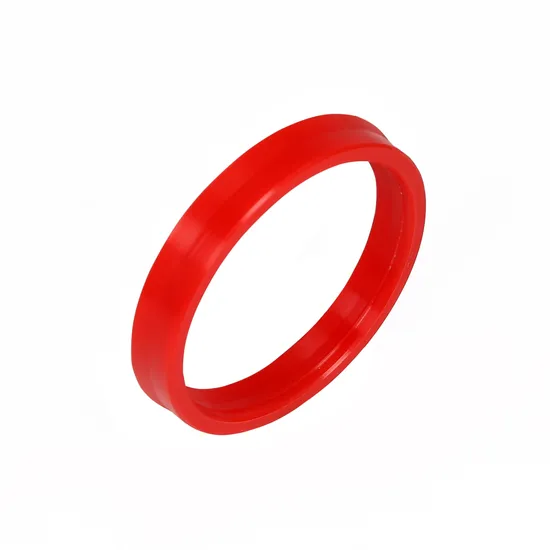
Accumulator seals fail for a different reason than percussion seals — they fail from nitrogen, not from hydraulic oil. The high-pressure accumulator is charged to 50–90 bar N₂ on the gas side. The diaphragm or piston seal separates that gas from the hydraulic oil on the other side at 160–200 bar. The failure mode is gas permeation: nitrogen molecules pass through the rubber matrix of the diaphragm over time, slowly reducing the pre-charge pressure. An accumulator that started at 75 bar N₂ and has dropped to 45 bar pre-charge over 400 hours doesn't leak externally — it gradually reduces percussion energy by 18–22% as the cushion effect diminishes.
Diaphragm compound selection for the accumulator is therefore a nitrogen permeability question, not a hydraulic compatibility question. NBR has moderate nitrogen permeability — acceptable for standard accumulators with 6-monthly pre-charge verification intervals. HNBR has 30–40% lower nitrogen permeability than NBR at equivalent temperatures, extending pre-charge stability between inspections. Bladder-type accumulators in HLX5T longhole drills working at 190–210 bar run at higher N₂ pre-charge pressures (70–90 bar) and see greater temperature cycling from the heavy percussion duty, making HNBR the preferred diaphragm compound for that application.
Accumulator Seal Selection by Type and Pressure Class
Accumulator Type |
Pre-charge Range |
Recommended Seal Compound |
Inspection Interval |
LP buffer accumulator (percussion smoothing) |
4–6 bar N₂ |
NBR diaphragm standard grade |
Check pre-charge every 250 hours; replace diaphragm every 1,000 hours |
HP percussion accumulator (energy storage) |
50–75 bar N₂ |
NBR or HNBR depending on duty cycle temperature |
Check pre-charge every 200 hours; HNBR preferred above 80°C oil temperature |
HP accumulator — heavy longhole production |
70–90 bar N₂, temp cycling ±15°C per shift |
HNBR mandatory — NBR permeation too high for 200-hour stability |
Check pre-charge every 100–150 hours due to temperature cycling effect |
Anti-jam pressure buffer accumulator |
80–100 bar N₂ depending on model |
HNBR — spike pressure of 220–230 bar demands nitrogen retention |
Pre-charge check every 100 hours; replace at first pressure drop sign |
Piston-type accumulator (some Sandvik models) |
55–80 bar N₂ |
NBR piston seal standard + PTFE guide ring |
Check sealing at each 400-hour kit change; replace piston seal at 800 hours |
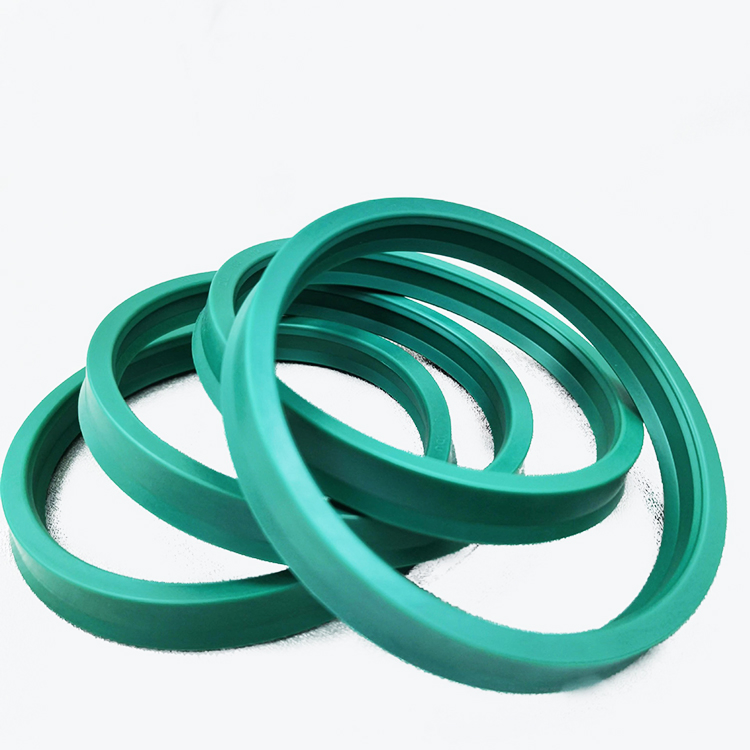
Pre-charge drift of more than 10 bar below specification doubles the percussion energy variation per stroke, which loads the percussion bore seals with non-uniform pressure cycles — that's the accumulator's contribution to premature percussion seal failure. HOVOO supplies accumulator diaphragm kits for Sandvik HLX5T and DD2710 platforms with pre-charge specifications and N₂ permeation data. Full model references at hovooseal.com.


