

 EN
EN
 AR
AR CS
CS DA
DA NL
NL FI
FI FR
FR DE
DE EL
EL IT
IT JA
JA KO
KO NO
NO PL
PL PT
PT RO
RO RU
RU ES
ES SV
SV TL
TL IW
IW ID
ID LV
LV SR
SR SK
SK VI
VI HU
HU MT
MT TH
TH TR
TR FA
FA MS
MS GA
GA CY
CY IS
IS KA
KA UR
UR LA
LA TA
TA MY
MY
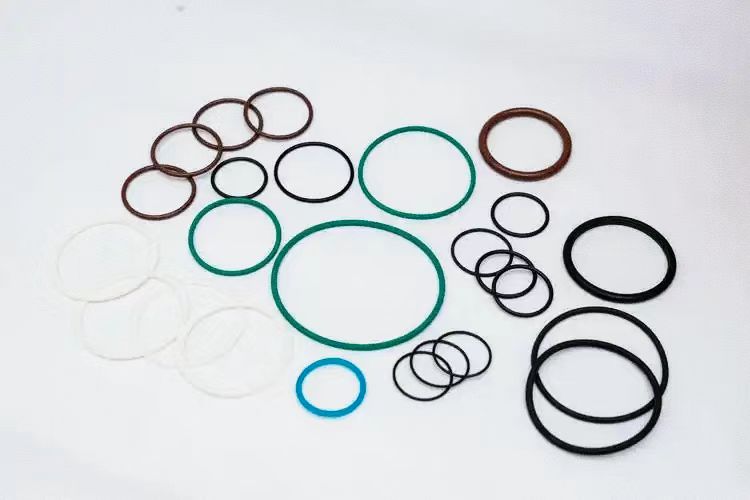
Treating a hydraulic rock drill's sealing system as a collection of individual O-rings to be replaced when they leak misses the point architecturally. The sealing system in a percussion drifter has a structure—dynamic seals in the percussion bore, static seals at all pressure-containing interfaces, flushing circuit seals isolating the water circuit from the oil circuit, and rotation housing seals managing the lubrication boundary between the drive mechanism and the rest of the housing. Each zone operates at different pressures, temperatures, and sliding speeds. The compounds and profiles that perform correctly in one zone can fail rapidly in another.
Understanding the structure of the sealing system—which seals are where, what each one does, and how its failure manifests—is the foundation for writing sensible maintenance intervals and making correct compound selections when resealing.
Zone 1: Percussion Bore Seals
The percussion bore is the most demanding sealing environment in the drifter. The piston reciprocates at 30–65 Hz against a bore wall that's also the pressure boundary for the front and rear percussion chambers. The piston seal must maintain an effective pressure differential across it through hundreds of millions of cycles while the bore surface, oil temperature, and impact loads all vary continuously.
Standard percussion bore seals are PU (polyurethane) compounds: Shore A hardness typically 90–95, operating range −30°C to +90°C, outstanding abrasion resistance under dynamic sliding contact. PU performs well at the contact pressures in percussion bores because its high tensile strength (typically 35–55 MPa) resists the extrusion forces that drive lower-hardness elastomers into the clearance gap at 160–220 bar. When the oil temperature consistently exceeds 80°C—from carrier heat, ambient heat underground, or poor hydraulic oil change compliance—PU compression set accelerates and the seal loses its designed contact force against the bore wall ahead of its nominal service life.
HNBR (hydrogenated nitrile butadiene rubber) is the elevated-temperature alternative: continuous service rating to 150°C, excellent resistance to hot mineral oil and ozone, and better heat-aging resistance than PU. The trade-off is modestly lower abrasion resistance in high-cycle sliding applications compared to high-Shore PU. Operations where return oil temperature at the drifter regularly exceeds 80°C—measurable with an infrared thermometer at the drain port—should specify HNBR percussion kits. Operations with normal oil temperature but high abrasive particle contamination in the hydraulic fluid should stay with PU.
Zone 2: Flushing Box Seals
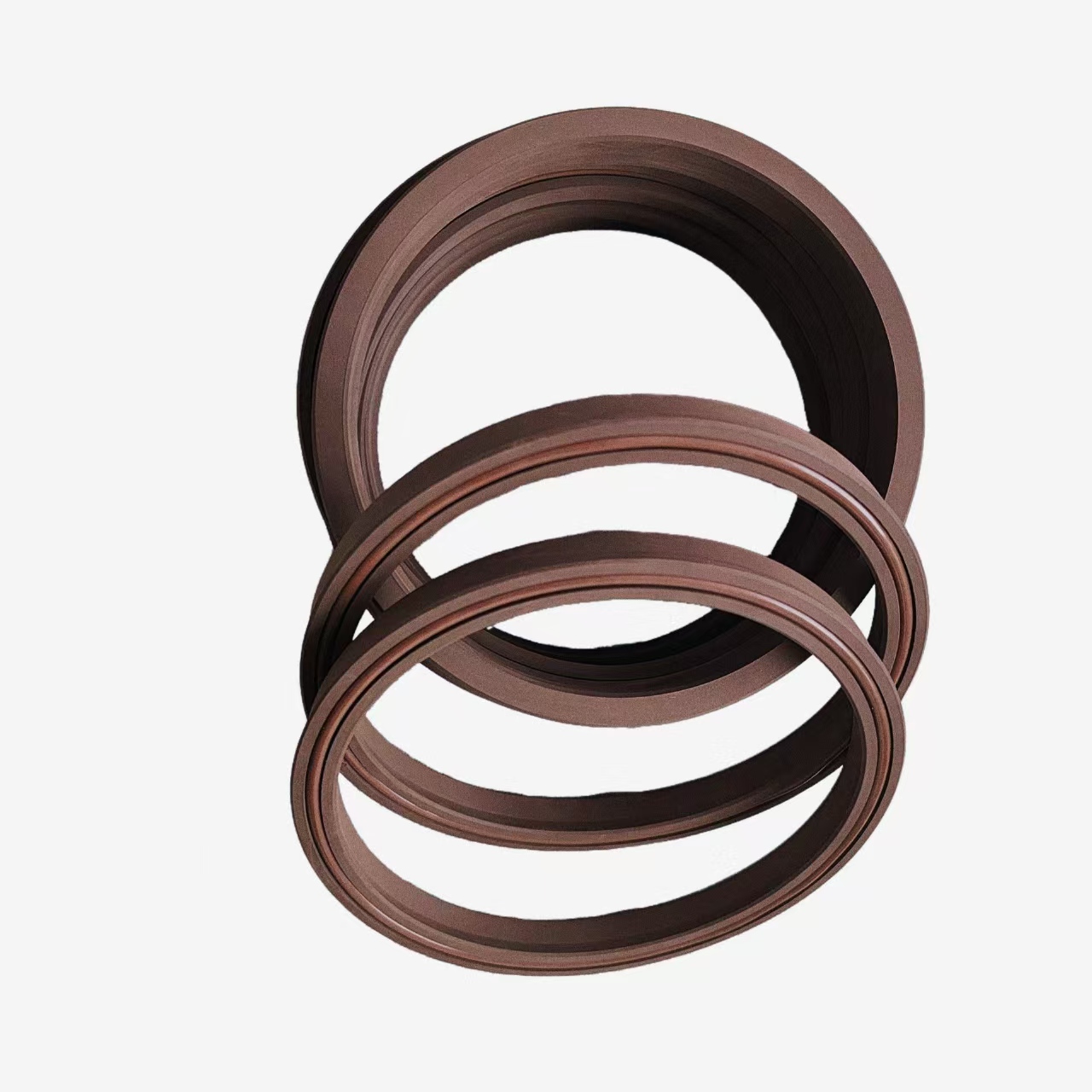
The flushing box seals physically separate the flushing water circuit from the hydraulic oil circuit at the front of the drifter. Flushing water enters through the chuck housing, flows down the shank adapter's through-hole or around it depending on the design, and exits the hole carrying cuttings. The flushing box seals contain this water on the drill string side and the percussion oil on the other.
Flushing box seal failure is the source of the most costly contamination cascade in hydraulic drilling. When the seal wears through, water migrates backward through the guide bushing area into the percussion bore. The emulsified oil that results has roughly 30–40% lower viscosity than clean hydraulic oil at the same temperature, and it carries fine rock particles from the flushing water into the percussion circuit clearances. Both effects accelerate percussion bore wear. The emulsification is visible as milky or cloudy oil in the drifter's drain sample.
PTFE-backed static seals are preferred at the flushing box interface because PTFE is chemically inert to both mineral hydraulic oil and flushing water regardless of its pH or mineral content. The low friction of PTFE is less relevant here than its chemical compatibility across what can be a very mixed fluid boundary in aggressive underground environments.
Zone 3: Static Interface Seals (O-rings and Gaskets)
All pressure-containing joints between drifter body sections—front housing to cylinder, cylinder to rear housing, accumulator port faces, valve block mounting surfaces—are sealed with O-rings in standardized groove geometry. These are static seals: the two surfaces don't move relative to each other during operation.
NBR (nitrile butadiene rubber) is the standard compound for static seals in mineral hydraulic oil circuits. Temperature range −40°C to +120°C, adequate for most percussion circuit operating conditions. The main failure mode for static NBR O-rings in rock drills isn't temperature degradation—it's compression set from prolonged high-pressure loading combined with thermal cycling across multiple shifts. An O-ring that has been compressed against its groove wall at 200 bar for 500 hours has less remaining elastic recovery than a new one; when the joint is disassembled and reassembled, the flattened O-ring may not re-seal without replacement.
Standard practice: replace all O-rings at every full percussion kit change. The cost of the O-rings is trivial relative to the cost of a follow-on leak after reassembly, and the O-rings are in the kit anyway.
Seal Zone Reference: Structure, Material & Inspection Trigger
Seal Zone |
Seal Type |
Standard Material |
Alt. Material |
Inspection / Replace Trigger |
Percussion bore |
Dynamic piston |
PU (Shore 90–95) |
HNBR (oil 80°C) |
400–500 perc. hrs; bypass leakage; energy drop |
Flushing box |
Dynamic / static |
PTFE-backed lip |
NBR if dry flush |
400 hrs; milky oil in drain; oily flush return |
Guide sleeve wiper |
Dynamic wiper |
PU or NBR |
HNBR hot conditions |
Same interval as percussion; shank wobble 0.3 mm |
Accumulator O-ring |
Static face seal |
NBR |
HNBR, FKM |
At any full kit change; oil trace at port face |
Valve block interfaces |
Static O-ring |
NBR |
HNBR |
At disassembly; every full kit change |
Rotation housing |
Shaft seal |
NBR lip seal |
HNBR |
High rotation pressure; oil in drain elevated |
Common Fault Patterns and What They Reveal
Early percussion seal failure—below 200 percussion hours—almost always indicates a root cause beyond seal quality. The three most common: bore scoring from previous metal-particle contamination that was not removed before the new kit was installed; guide sleeve clearance exceeding 0.4 mm, causing off-axis shank loading that concentrates seal lip wear asymmetrically; or oil temperature consistently above 80°C accelerating PU compression set. Identifying which root cause applies requires bore surface inspection (scoring), shank wobble measurement, and oil temperature logging—not simply installing another kit.
Flushing box seal failure in less than 300 hours typically reflects aggressive flushing water chemistry rather than normal wear. Mine water with elevated mineral content or acidic pH attacks nitrile-based flushing seals faster than clean water would. PTFE-backed kits tolerate a wider range of water chemistry and are the appropriate choice for underground operations with known water quality issues.
HOVOO Seal Kits: Matching Compound to Zone
A complete drifter seal kit contains percussion bore seals, flushing box seals, guide sleeve seals, accumulator O-rings, and valve block interface seals. Specifying the wrong compound for even one zone produces selective early failure that can be mistakenly diagnosed as overall kit quality rather than a material selection mismatch. HOVOO supplies model-specific kits for all major drifter brands—Epiroc COP, Sandvik HL/RD, Furukawa HD/HF, Montabert—with compound options in standard PU, HNBR, and PTFE-backed flushing variants. Zone-by-zone compound guidance is available for operations with elevated temperature or aggressive water chemistry. References at hovooseal.com.


