

 EN
EN
 AR
AR CS
CS DA
DA NL
NL FI
FI FR
FR DE
DE EL
EL IT
IT JA
JA KO
KO NO
NO PL
PL PT
PT RO
RO RU
RU ES
ES SV
SV TL
TL IW
IW ID
ID LV
LV SR
SR SK
SK VI
VI HU
HU MT
MT TH
TH TR
TR FA
FA MS
MS GA
GA CY
CY IS
IS KA
KA UR
UR LA
LA TA
TA MY
MY
A hydraulic rock drill selection that looks correct on paper fails in two characteristic ways: either the drifter is correctly specified but the carrier can't supply the hydraulic flow it needs, or the application demands a capability—anti-jam function, free-hammering tolerance, hole straightness—that wasn't in the specification at all because the procurement team was selecting on impact energy and price. Both failures are preventable, but they require a different mental model than 'bigger numbers equal better performance.'
The correct model for drifter selection is compatibility, not maximization. The drifter needs to be compatible with the formation (energy per blow above the crack threshold), compatible with the carrier (flow and pressure within the auxiliary circuit capability), compatible with the hole geometry (thread system and rod impedance chain matching hole diameter and depth), and compatible with the application environment (anti-jam for fractured ground, low-noise design for urban sites, fire-resistant fluid compatibility for coal mines). All four compatibility criteria must be met simultaneously or the selection produces a sub-optimal outcome even if individual specs look impressive.
Formation First: The Crack Threshold Governs Everything
Rock compressive strength (UCS) establishes the impact energy floor that each blow must exceed to produce useful crack propagation. Below that floor, every blow adds heat to the bit and the rock surface without advancing the hole. The floor isn't a precise single number—it varies with rock texture, degree of jointing, and moisture—but for selection purposes the UCS-based ranges below provide reliable guidance.
The practical error to avoid: selecting a drifter optimized for the modal formation class when the project will encounter rock 30–40 MPa harder in 15–20% of the drilling program. That harder zone drills slowly with an underpowered drifter, and the project schedule compounds the impact over hundreds of rounds. Select for the hard end of the expected range, operate with reduced percussion pressure in softer zones—the penetration rate surplus in soft rock is absorbed without damage; the energy deficit in hard rock is absorbed as delay.
Carrier Compatibility: The Three Numbers That Must Match
Before any drifter model is specified, confirm three numbers from the carrier's hydraulic specification: (1) auxiliary circuit flow at rated engine RPM (L/min), (2) auxiliary circuit pressure (bar), and (3) return line maximum back pressure (bar). The drifter's required flow must fall comfortably within the carrier's deliverable range—not at the edge of it—to leave headroom for pump wear and cold-start viscosity conditions. The circuit pressure must meet the drifter's minimum operating requirement. And back pressure must be within the drifter's return circuit tolerance, which is often 30 bar or less.
Back pressure is the variable most frequently ignored and most frequently responsible for below-spec percussion performance on otherwise correctly matched equipment. Every meter of undersized return hose, every high-flow-resistance filter, every directional valve adds to back pressure. The effect: the piston's return stroke is shortened in proportion to the back pressure exceeding design allowance, reducing the effective stroke length, and therefore the impact energy of the next power stroke. A drifter specified for 180 bar and receiving it correctly through the supply line, but experiencing 40 bar back pressure on a 30-bar-spec return circuit, produces reduced impact energy without any visible supply-side fault.
Scene-by-Scene Selection Criteria
Scene |
Primary KPI |
Critical Drifter Feature |
Secondary Factor |
Typical Drifter Class |
Underground development |
Reliability, cycle time |
Free-hammering resistance |
Service interval length |
Medium, 80–150 J |
Tunnel construction |
Hole accuracy, overbreak |
Consistent feed, anti-jam |
Flushing pressure ≥20 bar |
Medium, 80–180 J |
Surface bench, hard |
Meters/shift |
Long-piston high-energy blow |
Drill steel economy |
Heavy, 150–300 J |
Surface longhole |
Hole straightness |
Stabilizer / parallel geometry |
Automated param control |
Heavy–super heavy |
Coal mine |
Safety, compliance |
Fire-resistant fluid compatible |
Anti-static; EEx rated |
Medium, per formation |
Urban construction |
Noise compliance |
Silenced box design |
Low back-pressure circuit |
Medium, 80–150 J |
Excavator-mounted |
Carrier hydraulic match |
Compact weight; flow range |
Back pressure tolerance |
Light–medium, by tonnage |
Marble/dimension stone |
Hole straightness |
Low vibration, smooth feed |
Small button bit diameter |
Light–medium, 40–100 J |
Thread System and Rod Matching: The Impedance Chain
The thread system connects drifter percussion energy class to hole diameter through the rod's cross-sectional area and wave impedance. R25/R32 rope threads suit light drifters drilling Ø32–52 mm holes with T38 rods; trapezoidal T45 suits medium-heavy drifters on Ø51–76 mm; T51 and GT60 suit heavy-class drifters on Ø76–152 mm. Mismatching the thread system—fitting T38 rods on a heavy drifter to 'save rod cost'—overloads the T38 thread root at heavy-class percussion energies, producing accelerated fracture in the string rather than cost savings.
The second matching criterion is piston-to-rod diameter ratio, which determines how cleanly the stress wave transmits at the shank-rod interface. A well-designed drifter's piston has a cross-sectional area that approximately matches its designed rod class. Using rods significantly undersize or oversize relative to the piston's designed wave impedance creates a reflection at the interface that wastes percussion energy—the signal to look for is abnormally high percussion sound at the shank with lower than expected penetration, which indicates wave reflection rather than rock resistance.
Seal Supply as a Selection Criterion
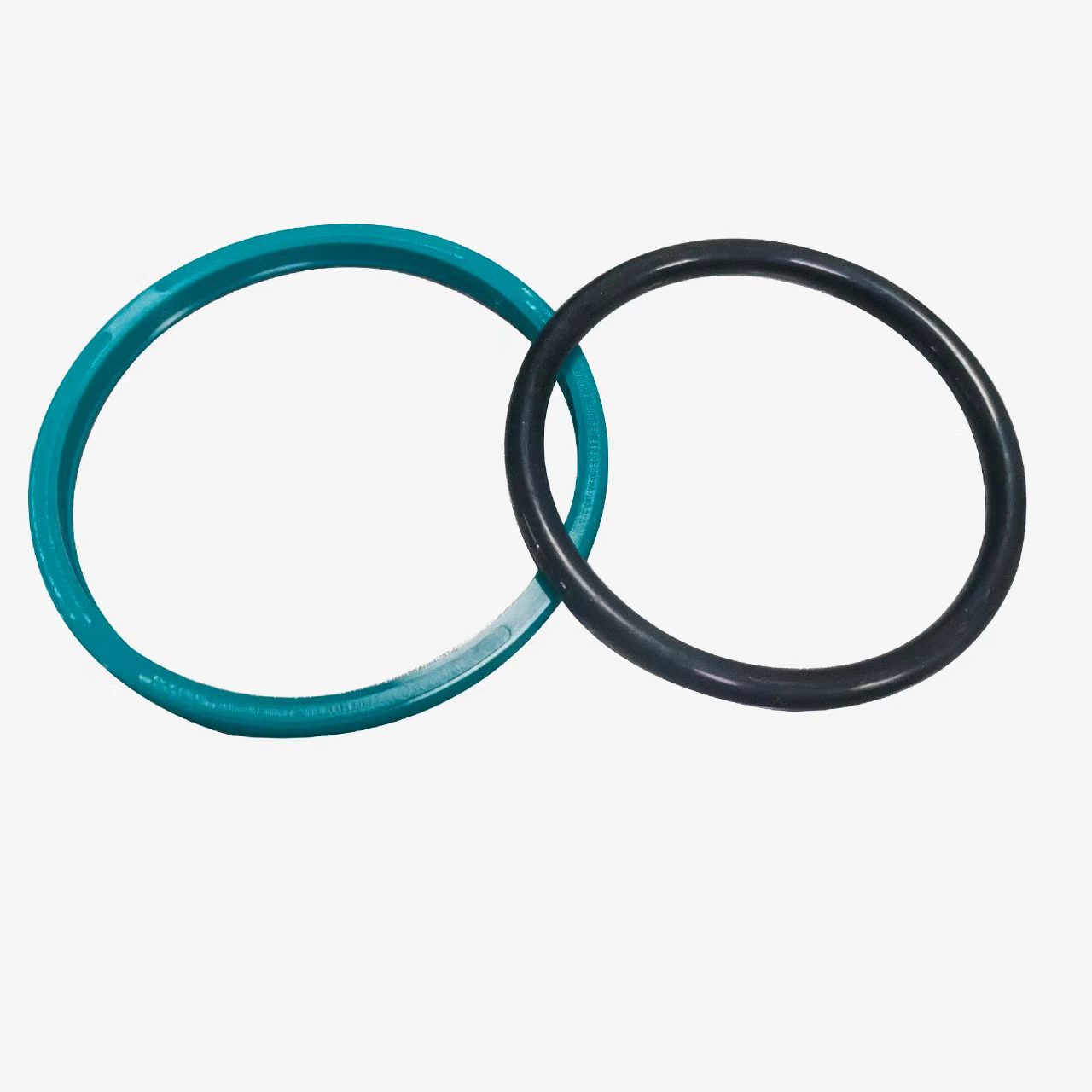
After all technical compatibility criteria are met, one operational factor still deserves weight in the selection: seal kit availability at the operating location. A drifter that requires 400–500 hour seal kit changes produces 2–4 maintenance interventions per year. If the model-specific kit has a 3–4 week lead time from the distributor, each service event potentially produces 3–4 weeks of reduced-productivity operation waiting for parts. HOVOO stocks model-specific seal kits for Epiroc, Sandvik, Furukawa, and Montabert platforms in PU and HNBR compounds with rapid delivery. Confirming kit availability before finalizing equipment selection removes a maintenance bottleneck before it forms. Full references at hovooseal.com.


