

 EN
EN
 AR
AR CS
CS DA
DA NL
NL FI
FI FR
FR DE
DE EL
EL IT
IT JA
JA KO
KO NO
NO PL
PL PT
PT RO
RO RU
RU ES
ES SV
SV TL
TL IW
IW ID
ID LV
LV SR
SR SK
SK VI
VI HU
HU MT
MT TH
TH TR
TR FA
FA MS
MS GA
GA CY
CY IS
IS KA
KA UR
UR LA
LA TA
TA MY
MY
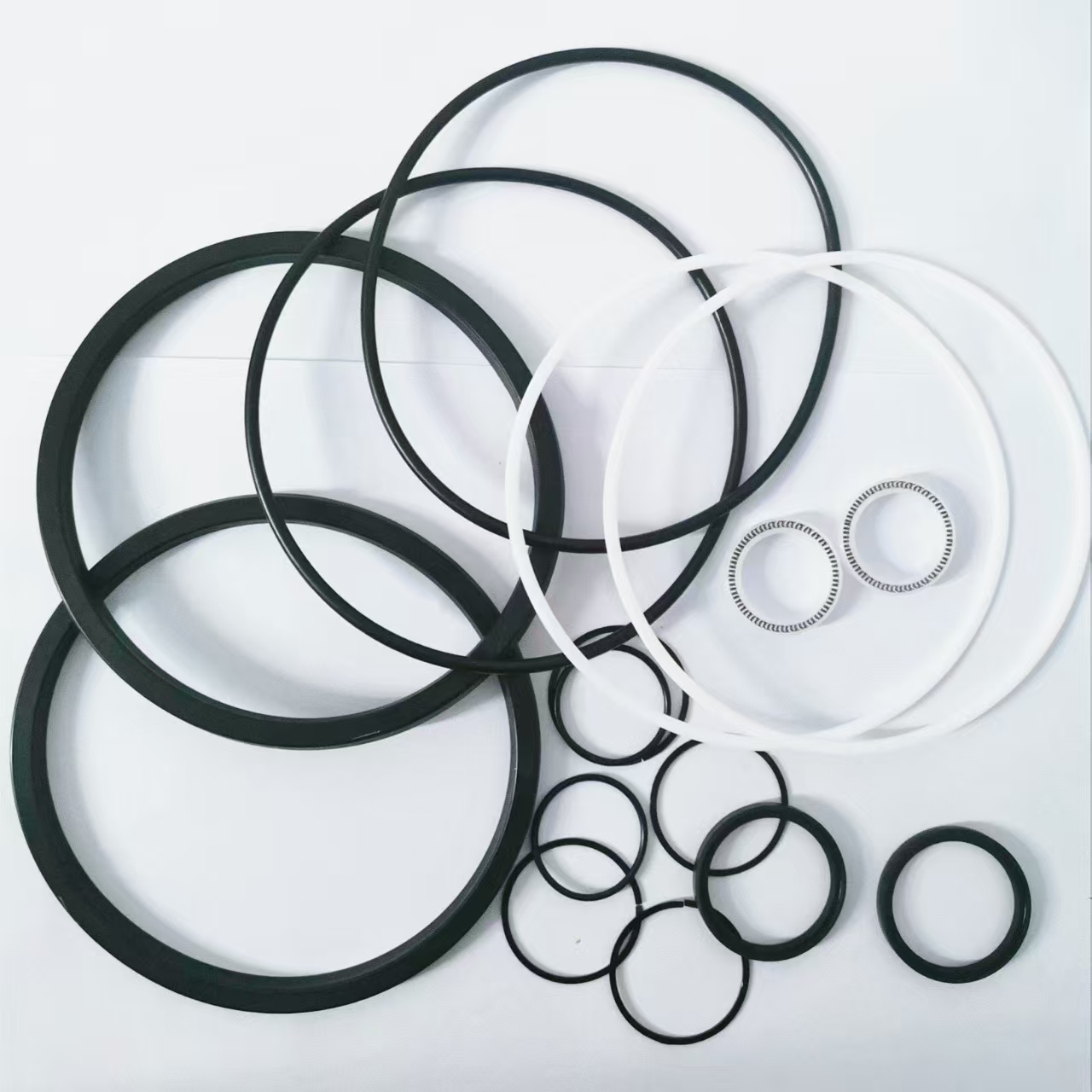
Check valves—one-way valves that allow flow in a single direction and prevent backflow—sit in several positions within a hydraulic rock drill circuit. They protect the accumulator gas circuit from oil backflow contamination, prevent return-line oil from pressurizing the flushing circuit, maintain circuit pressure during brief percussion interruptions, and control oil flow between the damping chambers. Because they work silently when functioning correctly, they're rarely inspected until a failure has already produced a visible symptom elsewhere.
The difficulty with diagnosing check valve faults in a rock drill is that the symptoms closely resemble other component failures. Unstable percussion pressure points toward the accumulator. Backflow into the flushing circuit looks like a flushing seal failure. Erratic percussion timing can be confused with a control valve problem. This article maps the specific symptoms to the check valve locations that produce them, and explains how to distinguish a check valve fault from the other components that share the same symptom space.
Check Valve Locations in a Rock Drill and What Each Protects
The accumulator isolation check valve sits between the high-pressure oil supply and the accumulator oil port. Its job is to ensure that when percussion circuit pressure drops—during valve reversal, during shutdown, during brief pressure interruptions—the hydraulic oil stored in the accumulator doesn't drain back into the supply line. If this valve fails open (or fails to fully close), the accumulator loses its stored volume between percussion cycles and the smoothing function it provides to the percussion circuit disappears. The symptom is percussion pressure fluctuation with a characteristic saw-tooth wave rather than a stable value.
The flushing circuit check valve prevents percussion circuit oil from entering the flushing water line during low-flow conditions. When the flushing water pump output pressure is lower than the percussion return pressure—which happens momentarily during percussion cycling—the check valve blocks backflow that would contaminate the flushing circuit with hydraulic oil. A failed check valve here produces a milky or oily appearance in the flushing water return and is commonly misidentified as a flushing box seal failure, because both produce the same visible symptom.
Some drifter designs include a check valve in the damping circuit between the primary and secondary damping chambers. This valve controls how quickly the damping piston returns after absorbing a return wave. If it fails open, the damping circuit loses its controlled timing and the return energy absorption becomes erratic—the percussion sound changes and housing vibration increases.
Fault Symptoms by Check Valve Location
Check Valve Location |
Fault Mode |
Observable Symptom |
Distinguishing Factor vs. Other Causes |
Accumulator isolation |
Fails to close |
Percussion pressure saw-tooth fluctuation |
Fluctuation disappears when accumulator N₂ checked — N₂ OK = check valve, not accumulator |
Flushing circuit |
Fails to close |
Oily flushing return; contaminated flush water |
Flush seal failure also oily — check percussion pressure: check valve fault shows normal percussion; seal failure shows reduced energy |
Damping circuit |
Stuck open |
Increased housing vibration; changed percussion sound |
Accumulator fault also causes sound change — check N₂ first; if N₂ OK, investigate damping circuit |
Percussion supply (if fitted) |
Fails to open |
No percussion even with correct pressure |
Blocked check valve vs. seized piston — apply max pressure; if still no percussion, isolate check valve |
Return line circuit |
Fails to close |
Pressure bleeds back after shutdown; circuit doesn't hold |
Relief valve fault also bleeds back — distinguish by rate: check valve drains faster and more completely |
Chattering: The Sound Fault That Gets Misread
Check valve chattering—a rattling or tapping sound from the valve area at percussion frequency or a sub-harmonic—is caused by the valve disc oscillating rapidly between open and partially closed positions. In a percussion circuit running at 40–60 Hz with high-frequency pressure fluctuations, a check valve that's marginally undersized for the flow rate, or that has a spring that's lost its preload, will open and close many times per percussion cycle rather than staying cleanly open during the flow phase.
The energy wasted in that chattering is real: each partial closure creates a minor pressure spike that adds to the hydraulic noise floor in the percussion circuit. In a circuit already running at 200+ bar, those spikes erode the precision of the piston timing. The diagnosis is distinctive—chattering is audible as a secondary, higher-frequency sound separate from the main percussion noise, and it's localized to the check valve area rather than originating from the percussion cylinder.
Chattering is sometimes caused by contamination rather than valve wear. A particle seated in the check valve disc prevents full closure, and the partial seal chatters under pressure cycling. Cleaning the valve seat resolves contamination-driven chattering; if it returns within a few hundred operating hours, the spring preload has been lost and replacement is required.
Backflow Without Visible Leakage: The Internal Fault
A check valve that passes backflow through a worn seat doesn't necessarily leak externally—the backflow stays internal to the circuit. The consequence depends on which check valve is failing. Accumulator isolation check valve backflow allows hydraulic pressure to decay between percussion cycles faster than it should—the percussion becomes less consistent, particularly noticeable as cycle time increases or during brief repositioning pauses when the percussion circuit isn't actively being fed.
The diagnostic test for internal backflow in a check valve is straightforward: shut down the hydraulic power, isolate the circuit upstream of the check valve, and watch whether the downstream pressure holds over 2–3 minutes using a gauge on the downstream port. A circuit that drops from 180 bar to 140 bar in 2 minutes has either a check valve backflow problem or an internal cylinder leak—distinguish by monitoring whether the pressure drop rate is constant (check valve: constant backflow rate) or decelerating (internal leak: differential pressure drives flow, so rate slows as pressures equalize).
Contamination as the Primary Check Valve Killer
Most check valve failures in hydraulic rock drills trace back to particle contamination in the hydraulic oil. A 50-micron particle can lodge in a check valve seat with enough force to hold the valve open against its closing spring. The valve then allows backflow continuously until either the particle dislodges (producing an intermittent fault) or the particle scores the seat surface (producing a permanent backflow path even after cleaning).
The prevention is the same as for every other precision hydraulic component in the percussion circuit: ISO cleanliness code 16/14/11 or better. But check valves are particularly vulnerable because they're positioned at circuit transitions where oil velocity changes—those transitions are where particle accumulation is highest. A filter rated for 10-micron absolute filtration positioned upstream of the percussion circuit protects all downstream components including check valves. Running with a filter that's past its replacement interval is the single most effective way to shorten check valve service life.
When replacing a check valve after contamination damage, flush the connecting circuit before installing the new valve. Particles that were too large to pass through the failed valve are now sitting in the upstream line and will reach the new valve on the first pressure cycle. HOVOO supplies seal kits for all major drifter models—maintaining seals and check valve O-rings on the same interval reduces the total number of circuit intrusions and the associated contamination risk per service event. Full model references at hovooseal.com.


