

 EN
EN
 AR
AR CS
CS DA
DA NL
NL FI
FI FR
FR DE
DE EL
EL IT
IT JA
JA KO
KO NO
NO PL
PL PT
PT RO
RO RU
RU ES
ES SV
SV TL
TL IW
IW ID
ID LV
LV SR
SR SK
SK VI
VI HU
HU MT
MT TH
TH TR
TR FA
FA MS
MS GA
GA CY
CY IS
IS KA
KA UR
UR LA
LA TA
TA MY
MY
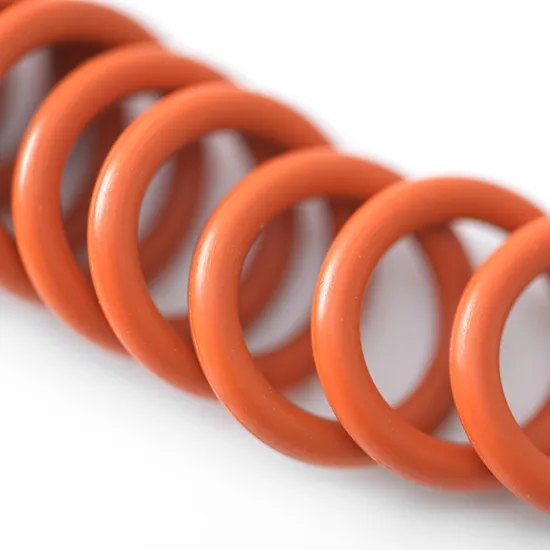
ISO 6194 specifies requirements for rotary shaft lip-type seals — not percussion seals. A supplier citing ISO 6194 certification as evidence of percussion seal quality is either confused about which standard applies or hoping the buyer is. The relevant standards for rock drill percussion seals are ISO 3601 (O-ring dimensional tolerances), ASTM D2000 (elastomer material classification), and DIN 53505 (Shore hardness test method). ISO 6194 certification on rotation motor shaft seals is legitimate and relevant. The same certification applied to percussion seals is either an error or misdirection.
The standards that actually matter for percussion seal quality assurance: ASTM D2000 classifies the elastomer compound by base polymer and temperature/fluid resistance grade, giving a two-letter-plus-number code (e.g., BF610 for standard NBR) that encodes compound identity and test performance. A supplier who can provide the ASTM D2000 designation for their percussion seal compound has traceable compound identity. A supplier who cannot is supplying an unidentified compound. DIN 53505 specifies the Shore A hardness test method — ensuring that Shore 95 from one supplier and Shore 95 from another have been measured the same way, with the same dwell time and indentor geometry.
Applicable Standards for Rock Drill Seal Quality
Standard |
Scope |
Relevant For Rock Drills? |
What to Ask Supplier |
ISO 6194 |
Rotary shaft lip-type seals — dimensional and performance requirements |
Yes for rotation motor shaft seals only — NOT percussion seals |
Ask for Part 1 and Part 2 compliance for shaft seal positions only |
ISO 3601 |
O-ring dimensional tolerances — ID, cross-section, and surface quality |
Yes for all O-ring positions throughout the drill circuit |
Ask for tolerance class (Class A precision or Class B general purpose) for each O-ring position |
ASTM D2000 |
Rubber compound material classification by polymer type and performance |
Yes for ALL elastomeric seals — most important certification |
Ask for ASTM D2000 designation code per compound — e.g., BF610 for NBR, CH614 for HNBR |
DIN 53505 |
Shore A hardness test method — indentor, dwell time, measurement procedure |
Yes — standardizes Shore A comparison between suppliers |
Ask whether Shore A measurement follows 1-second or 3-second dwell (3-second gives lower reading by 2–4 points) |
ISO 16/14/11 (oil cleanliness) |
Hydraulic fluid cleanliness classification — particle count per mL |
Indirectly — cleanliness standard for installation environment |
Not a seal certification — a circuit operating standard the installer must meet |
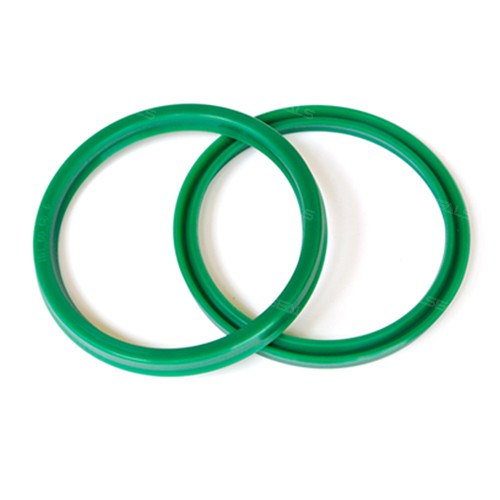
The most useful quality question to ask any seal supplier is not 'do you have ISO certification' but 'what is the ASTM D2000 code for your PU percussion seal compound and can you provide the test data.' A supplier who can answer that specifically has traceable quality. HOVOO provides ASTM D2000 compound codes and test data documentation with all percussion seal kits. References at hovooseal.com.


