

 EN
EN
 AR
AR CS
CS DA
DA NL
NL FI
FI FR
FR DE
DE EL
EL IT
IT JA
JA KO
KO NO
NO PL
PL PT
PT RO
RO RU
RU ES
ES SV
SV TL
TL IW
IW ID
ID LV
LV SR
SR SK
SK VI
VI HU
HU MT
MT TH
TH TR
TR FA
FA MS
MS GA
GA CY
CY IS
IS KA
KA UR
UR LA
LA TA
TA MY
MY
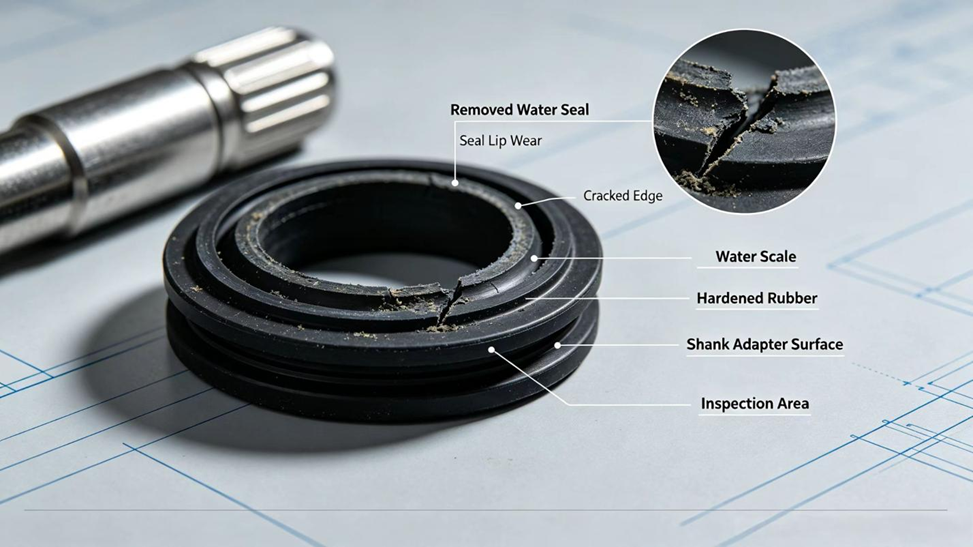
A rock drill's cup seal has an unusual job for an elastomer part: it has to hold back flushing water while riding against a shank adapter that is rotating and hammering at the same time, often for thousands of hours before replacement. The material it is molded from has a direct effect on how long it survives that combination of motion, pressure, and water exposure. This article looks at the materials most commonly used for rock drill cup seals, why they were chosen for this specific job, and what that means for how they behave in service.
What Is a Rock Drill Cup seal Made Of?
Rock drill cup seals are most commonly molded from polyurethane (PU) or fluoroelastomer (FKM), rather than the general-purpose nitrile rubber (NBR) used for many other hydraulic seals on the same machine. Depending on the manufacturer, the same component may be listed as a cup seal, flushing seal, or front head seal, but all of these refer to the sealing element fitted around the shank adapter inside the water box.
Why Does Cup seal Material Matter More Than It Looks Like It Should?
Most hydraulic seals on a rock drill only have to deal with oil, temperature, and pressure. A cup seal has to deal with all of that plus water itself — fresh, mineralized, or in many mine and quarry settings, mildly saline or acidic — plus continuous rotation of the surface it seals against, plus the fine abrasive rock fines that inevitably find their way into the flushing circuit. A material that is a poor match for any one of these conditions shows it quickly: swelling or softening from water absorption, accelerated wear from poor abrasion resistance, or a shortened service life from chemical attack by the specific water chemistry on site.
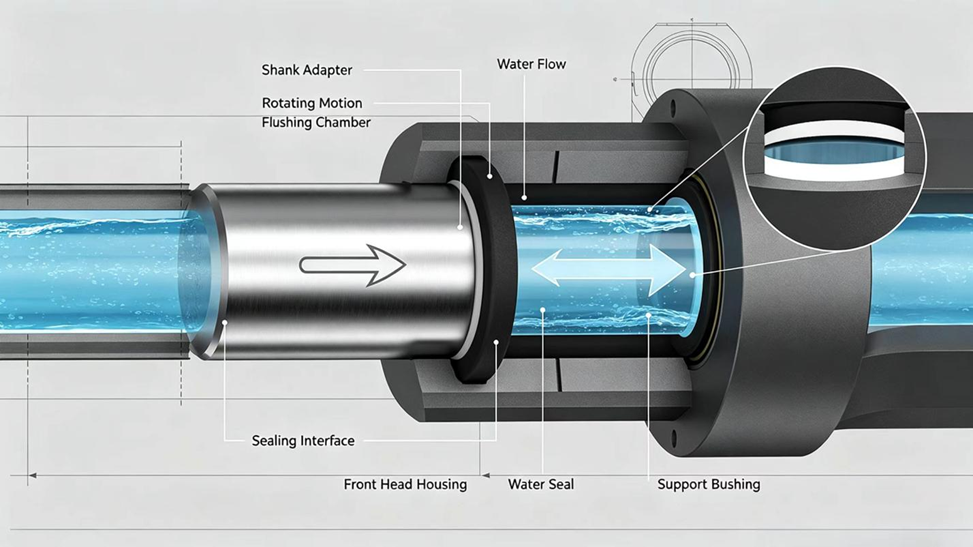
Photo1:Cross-section of cup seal assembly
What Is Polyurethane (PU) and Why Is It Common for Cup seals?
Polyurethane is generally not a conventional vulcanized rubber but a cast or molded elastomeric polymer built around urethane linkages, and its standout property is abrasion and tear resistance well ahead of most rubber compounds. That property lines up closely with what a cup seal actually needs: it is not just holding back water, it is doing so while pressed against a continuously moving, occasionally gritty surface, and the fine rock particles that inevitably reach the seal area behave like a slow-motion abrasive.
PU cup seals also tend to be a cost-effective default for fresh or moderately mineralized flushing water at ordinary ambient and operating temperatures. Their main limitation is a lower continuous-use temperature ceiling than FKM, and somewhat reduced flexibility in very cold conditions, both of which matter more on some sites than others.
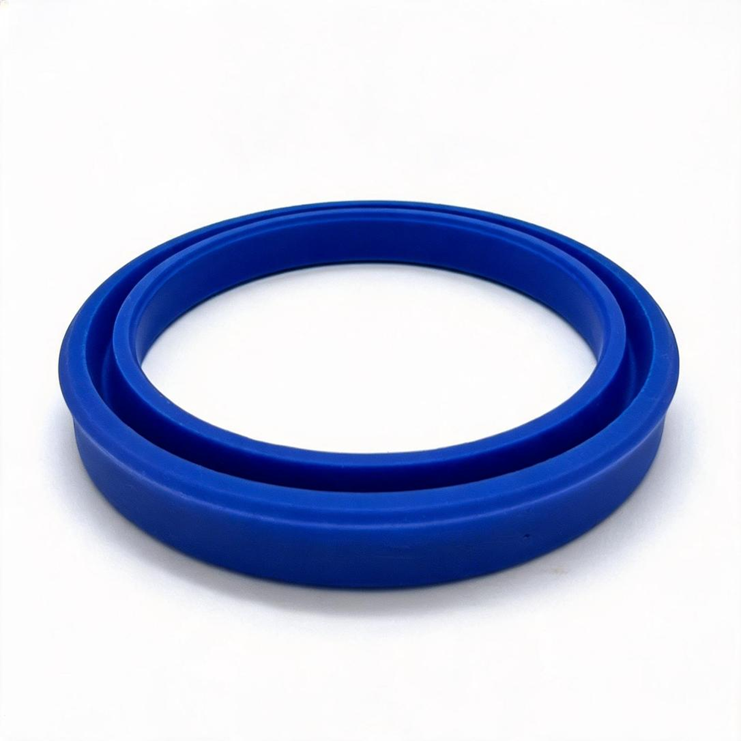
Photo2:Molded lip profile of polyurethane (PU) cup seal
What Is FKM and When Is It Preferred Over Polyurethane?
FKM (fluoroelastomer) offers broader chemical resistance than polyurethane, including better tolerance of aggressive or chemically treated flushing water, along with a higher continuous-use temperature ceiling. Where a site's flushing water is acidic, contains chemical additives, or the drill runs hot for sustained periods, FKM is generally the more resilient choice.
The trade-off is cost and, in some formulations, somewhat lower abrasion resistance than a good PU compound. This is why the two materials tend to coexist as alternatives for the same cup seal position on many rock drill models, rather than one simply replacing the other: the right choice depends on the water chemistry and temperature at a given site more than on any universal ranking between the two.
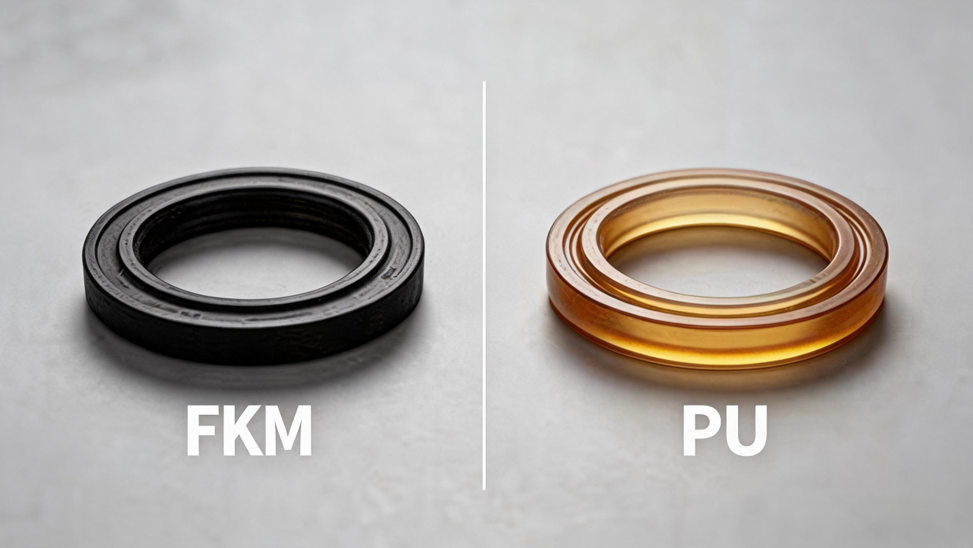
Photo3:Side‑by‑side visual comparison of FKM and PU cup seal samples
Why Not Just Use Standard NBR Like Other Hydraulic Seals?
NBR is the default material for many hydraulic seals precisely because of its strong resistance to mineral hydraulic oil, but that strength does not carry over well to sustained water exposure or to the abrasive duty a cup seal experiences. NBR compounds are more prone to swelling with prolonged water absorption and generally offer less abrasion resistance than PU under the kind of gritty, particle-laden conditions common in flushing water. For that reason, NBR is rarely specified for the cup seal position itself, even though it remains the standard choice for the drill's oil-side seals, including the accumulator diaphragm.
It is worth noting that NBR is not even the best-performing rubber in pure water exposure; multi-factor durability testing of rubber seals for water supply and drainage pipework has found that EPDM and silicone rubber (SR) generally hold up to sustained water contact and thermal-oxidative aging better than NBR or HNBR do. In that testing, raising the temperature to 70°C pushed HNBR and NBR compression set above 15% and their rebound below 85%, while EPDM and silicone showed far smaller deformation increases in the sewage-like test medium. The reason EPDM and silicone are still not used for rock drill cup seals is not water resistance but oil compatibility: both swell badly in mineral hydraulic oil, and a cup seal sits close enough to the drill's lubricated mechanism that oil compatibility is a real requirement, not an edge case. This is a useful reminder that the “best” material in isolation is not always the right material once every exposure the part will actually see is accounted for.
How Do These Materials Compare Side by Side?
The table below summarizes the general trade-offs described above. Exact performance depends on the specific compound formulation used by a given manufacturer.
Material |
Abrasion Resistance |
Water/Chemical Resistance |
Temperature Range |
Typical Limitation |
Polyurethane (PU) |
Very good, generally the best of the group |
Good with fresh to moderately mineralized water |
Moderate ceiling, roughly up to 80–90°C |
Can swell with prolonged water exposure; lower heat ceiling |
FKM |
Good, though usually behind a strong PU compound |
Very good, including acidic or chemically treated water |
High, commonly up to 200°C |
Higher cost; stiffer in cold conditions |
NBR |
Moderate |
Fair; more prone to swelling with sustained water contact |
About −30°C to 100–120°C |
Not usually specified for this position despite general hydraulic use |
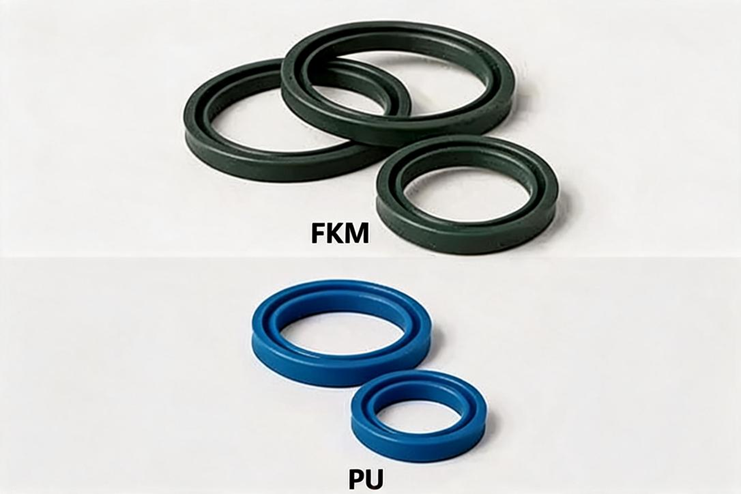
Photo4:Physical sample comparison between PU and FKM replacement cup seals
How Does Water Chemistry (Fresh, Saline, or Acidic) Affect Material Choice?
Flushing water quality varies enormously by site. Fresh surface water on an ordinary quarry job is a comparatively mild environment for either PU or FKM. Saline water, common at some coastal or arid-region sites where groundwater is mineralized, accelerates corrosion of the shank adapter's sealing surface and can shorten the working life of a seal material that is only marginally resistant to it. Acidic or chemically treated water, sometimes encountered in mine dewatering or certain process environments, more clearly favors FKM's broader chemical resistance over standard PU.
Because the flushing water itself varies so much between sites, the same rock drill model may reasonably use different cup seal materials at different job sites, and matching the seal to the actual water quality on hand is generally more important than defaulting to whichever material came with the machine originally.
How Does the Rotating-and-Reciprocating Motion Affect Wear Life?
Unlike a static O-ring, a cup seal is in constant relative motion against the shank adapter: rotating continuously and moving slightly in the axial direction with every impact cycle. That motion means the seal's wear life depends heavily on maintaining a thin lubricating film of water (or water-air mixture) between the lip and the adapter surface. If that film breaks down — from inadequate flushing pressure, contamination, or a scored adapter surface — the seal runs against the metal essentially dry, and both abrasion and heat buildup accelerate sharply, regardless of which material it is molded from.
This is one reason cup seal wear life is not purely a material question: the condition of the mating surface and the consistency of flushing pressure both influence how long even the best-matched seal material actually lasts.
How Does Temperature Affect Cup seal Material Performance?
Cup seal temperature exposure is generally milder than what an oil-side seal like the accumulator diaphragm experiences, since flushing water carries heat away from the front head area as it flows. Even so, drills operated at a high duty cycle in hot climates, or with reduced flushing flow, can see elevated temperatures at the seal position. PU's lower continuous-use ceiling makes it more sensitive to this than FKM, which is part of why sustained high-temperature operation is one of the more common reasons to specify FKM even when water chemistry alone would not require it.
At the other extreme, very cold ambient conditions can stiffen either material somewhat, though PU generally retains usable flexibility across a wider practical range than the coldest end of FKM's rated range.
How Can You Identify the Right Material for Your Site Conditions?
Because cup seal material choice depends on site-specific factors — water chemistry, abrasive content, ambient and operating temperature, and duty cycle — the most reliable approach is to describe those conditions to whoever is supplying the replacement part rather than assuming the original material is automatically the best fit. A seal that has been failing prematurely on a particular site is sometimes better addressed by switching material than by simply repeating the same replacement.
Where records or a parts catalog are available, they will usually specify the material originally fitted; where they are not, a supplier familiar with the rock drill model can generally confirm the standard specification and advise on whether the site's water conditions justify a different choice.
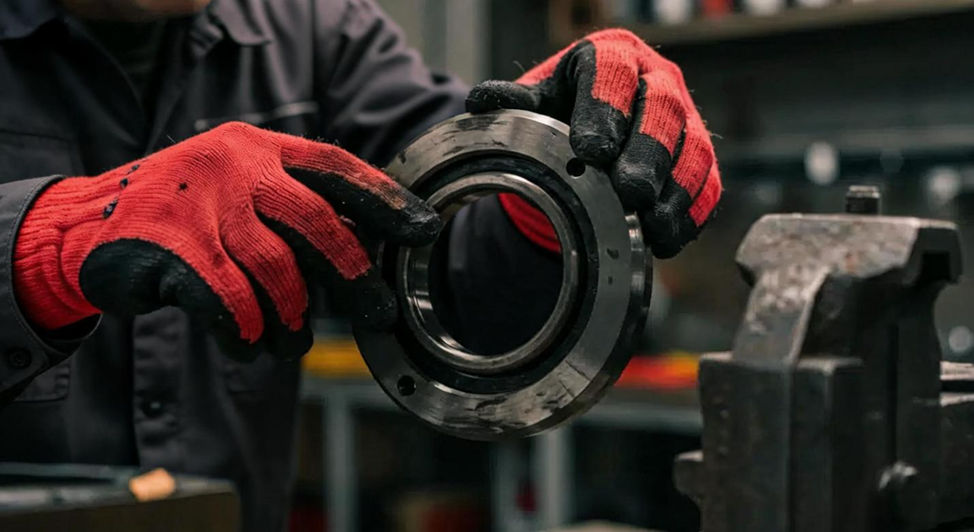
Photo5:Seal and water inspection for material selection
Selected technical references consulted for this article:
- Hu X. “Compression Rebound and Durability of Rubber Sealing Materials for Building Water Supply and Drainage under Multi-Factor Coupling.” Fly Ash Comprehensive Utilization, 2026, (04): 155–161.
- Zhou B., Zhao Y., Zhang H., Liu F., Zhu W. “Analysis of the Effect of Flushing on Mechanical Seal Performance.” Mechanical & Electrical Engineering Technology, 2023, 52(05): 269–272.
Table of Contents
- What Is a Rock Drill Cup seal Made Of?
- Why Does Cup seal Material Matter More Than It Looks Like It Should?
- What Is Polyurethane (PU) and Why Is It Common for Cup seals?
- What Is FKM and When Is It Preferred Over Polyurethane?
- Why Not Just Use Standard NBR Like Other Hydraulic Seals?
- How Do These Materials Compare Side by Side?
- How Does Water Chemistry (Fresh, Saline, or Acidic) Affect Material Choice?
- How Does the Rotating-and-Reciprocating Motion Affect Wear Life?
- How Does Temperature Affect Cup seal Material Performance?
- How Can You Identify the Right Material for Your Site Conditions?


