33-99No. Mufu E Rd. Gulou District, Nanjing, China [email protected] | [email protected]
33-99No. Mufu E Rd. Gulou District, Nanjing, China [email protected] | [email protected]

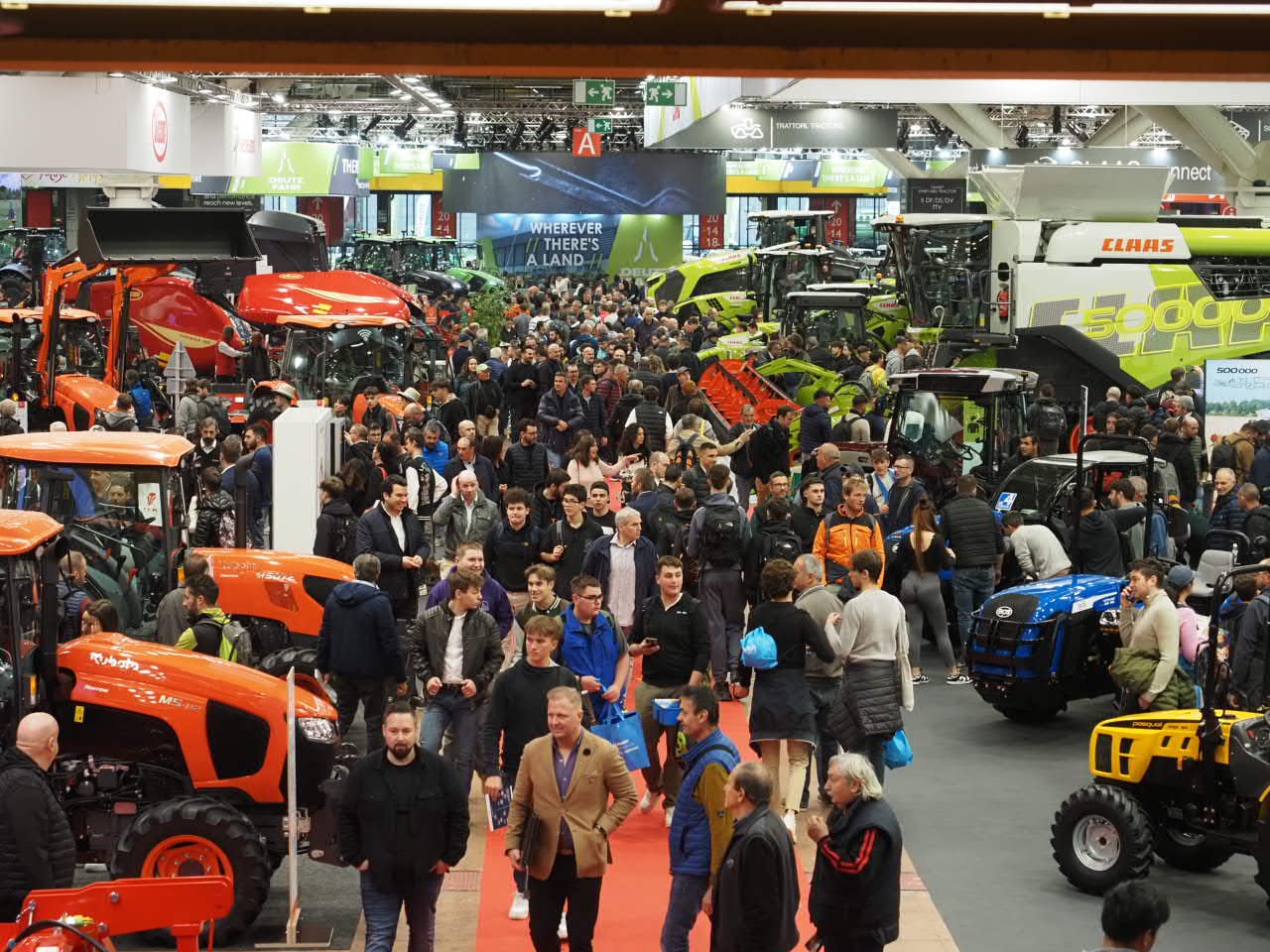
A modern combine harvester contains more hydraulic circuits than most people would guess. The header drive, the threshing cylinder speed adjustment, the unloading auger positioning, the cab suspension, the four-wheel-drive engagement, the header height control, and the grain tank extension all use hydraulic actuation or hydrostatic drives. The hydraulic pump system in a large combine — typically a tandem gear pump arrangement drawing up to 100 litres per minute — is one of the most continuously loaded hydraulic systems in any mobile machine. The buyers who specify those systems, and the OEMs who manufacture the machines around them, attend EIMA International every two years in Bologna.
EIMA International 2026 runs in November at BolognaFiere, the Bologna exhibition complex that has hosted the show since 1969. Now in its partnership with FederUnacoma — the Italian agricultural machinery manufacturers' federation — EIMA is the world's second-largest agricultural machinery show by exhibitor count, exceeded only by Agritechnica in Hannover. The 2024 edition brought over 1,800 exhibitors from more than 50 countries and attracted more than 300,000 visitors over five days. The hydraulic technology segment at EIMA is proportionally significant — agricultural equipment is one of the largest single-market consumers of mobile hydraulic pumps, motors, and cylinders globally.
Agricultural hydraulics has evolved substantially in the past decade. The shift from fixed-displacement gear pumps to variable-displacement axial piston pumps in tractor and harvester applications has been driven by efficiency requirements — fuel consumption regulations and operator cost pressure have made the relatively simple fixed-displacement architecture commercially uncompetitive in high-power applications. Load-sensing hydraulic systems, which vary pump output to match exactly the instantaneous demand of the work function, have become standard on large tractors and are moving down into medium-power machines.
Electro-hydraulic systems are the current development frontier. Electrohydraulic hitch control, electrohydraulic remote valve management, and the integration of CAN bus communication with hydraulic function control are standard features on premium agricultural equipment and are migrating to volume segments. EIMA 2026 will show where those developments have reached across the full range of equipment categories — from compact utility tractors to the largest self-propelled sprayers and combine harvesters.
Category |
Details |
Event Name |
EIMA International 2026 |
Dates |
November 2026 (biennial; confirm exact dates at eima.it) |
Venue |
BolognaFiere, Viale della Fiera 20, 40128 Bologna, Italy |
Scale |
1,800+ exhibitors from 50+ countries; 300,000+ visitors; organised by FederUnacoma |
Italy is one of the largest agricultural machinery manufacturing countries in Europe, with a dense cluster of OEMs and component suppliers in the Po Valley and Emilia-Romagna region. Companies including SAME Deutz-Fahr, Argo Tractors (Landini, McCormick), Carraro, and CNH Industrial's Italian operations all have manufacturing and engineering presence in northern Italy. The hydraulic component supply chain that feeds those OEMs — Italian and international pump, valve, cylinder, and hose manufacturers — uses EIMA as the primary biennial platform for product launches and relationship development with agricultural equipment engineering teams.
For hydraulic pump manufacturers targeting the agricultural equipment market, EIMA 2026 in Bologna offers access to OEM engineering and procurement teams in a setting where the products under discussion are being evaluated for their specific agricultural application requirements: contamination tolerance in dusty harvesting conditions, cold-start performance in northern European winters, and the software configurability needed for integration with CAN-based precision agriculture control systems. Those application-specific conversations are more productive in Bologna in November than at general industrial shows where agricultural equipment is one buyer segment among many.

Welcome to HOVOO, a Chinese seal factory. Production of PU, Rubber and PTFE seals. The seals include O-ring, piston seal, rod seal, Gray ring and gas seal.


 EN
EN
 AR
AR CS
CS DA
DA NL
NL FI
FI FR
FR DE
DE EL
EL IT
IT JA
JA KO
KO NO
NO PL
PL PT
PT RO
RO RU
RU ES
ES SV
SV TL
TL IW
IW ID
ID LV
LV SR
SR SK
SK VI
VI HU
HU MT
MT TH
TH TR
TR FA
FA MS
MS GA
GA CY
CY IS
IS KA
KA UR
UR LA
LA TA
TA MY
MY
