33-99No. Mufu E Rd. Gulou District, Nanjing, China [email protected] | [email protected]
33-99No. Mufu E Rd. Gulou District, Nanjing, China [email protected] | [email protected]

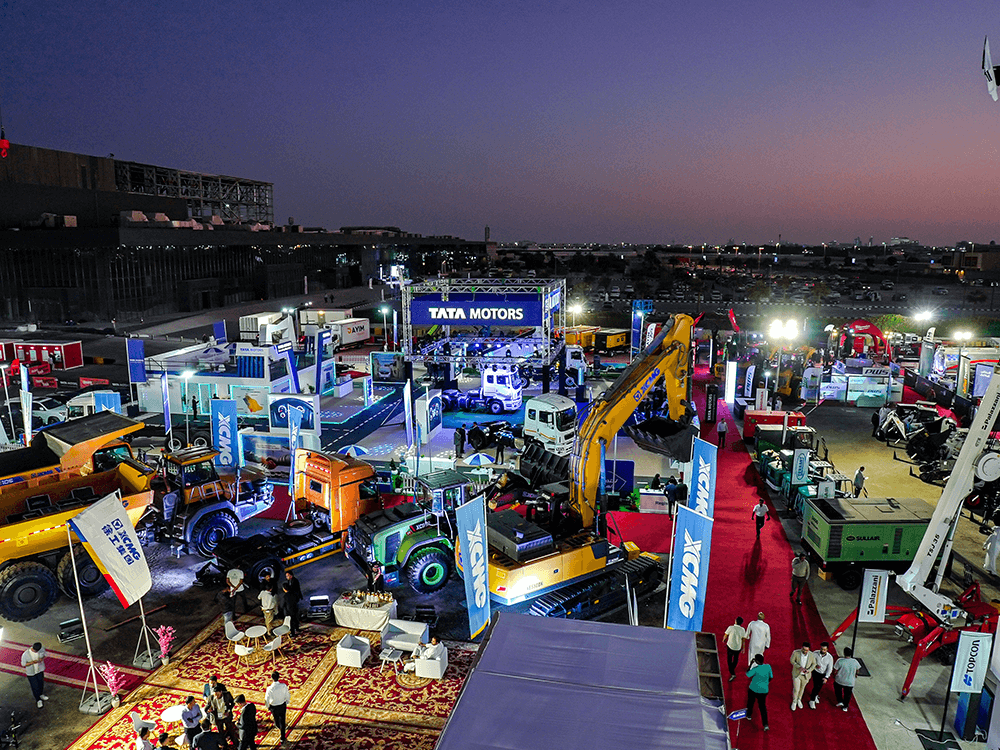
Saudi Arabia is mid-way through one of the most concentrated infrastructure build-outs anywhere in the world. NEOM, the Red Sea Project, Diriyah, Qiddiya, King Salman Park — these are not isolated projects. They represent a coordinated, government-directed transformation of the Kingdom's built environment, backed by hundreds of billions in spending over the coming decade. All of it needs heavy equipment. A lot of it.
The Heavy Equipment Connect Forum & Expo (HEC 2026) runs February 2 to 4, 2026, at the Dhahran International Exhibitions Centre in Dammam — the capital of Saudi Arabia's Eastern Province and the heart of its industrial zone. It's the Kingdom's only dedicated exhibition and conference focused exclusively on the heavy equipment and construction machinery sector.
HEC 2026 is hosted by the National Industrial Development Center (NIDC) and co-hosted by the Ministry of Industry and Mineral Resources. The event runs under the direct patronage of the Minister himself — Bandar bin Ibrahim Al-Khorayef. That level of government involvement shapes everything about the show: the attendee profile, the topics on the forum agenda, and the kinds of conversations that happen on the exhibition floor.
This isn't a commercial trade show that happens to attract some government visitors. It's a policy instrument. The Saudi government is using the event to push a specific agenda — industrial localisation, domestic manufacturing capability, and reducing dependence on imported equipment by building Saudi production capacity. International suppliers who come to HEC looking only to sell finished products may find the more interesting conversations are about joint ventures, technology transfer, and local assembly partnerships.
Vision 2030 is Saudi Arabia's economic diversification programme, and its ambitions directly translate into equipment demand. The country's construction equipment market is projected to reach 50,000 unit sales annually by 2030, growing at roughly 6% per year. That growth is driven by giga-projects requiring earthmoving, lifting, demolition, and materials handling machinery on a scale that few markets outside China can match.
The Eastern Province, where Dammam sits, is particularly active. It's the location of the Kingdom's oil infrastructure and a growing number of industrial zones, including King Salman Energy Park (SPARK), which spans over 50 square kilometres and is designed to become a hub for energy sector manufacturing and services. Construction of industrial facilities in zones like SPARK creates sustained demand for demolition, site preparation, and heavy lifting equipment that will run for years.
Category |
Details |
Event Name |
Heavy Equipment Connect Forum & Expo 2026 (HEC 2026) |
Dates |
February 2–4, 2026 |
Venue |
Dhahran International Exhibitions Centre (DIEC), Dammam, Saudi Arabia |
Organiser |
National Industrial Development Center (NIDC), Ministry of Industry & Mineral Resources |
HEC 2026 runs a two-day high-level forum alongside the three-day exhibition. The forum brings together senior government officials, OEM executives, and private sector leaders for structured discussions on equipment policy, localisation targets, and investment frameworks. Sessions cover procurement trends from major project owners, the regulatory environment for foreign manufacturers, and the government's roadmap for domestically produced machinery.
The exhibition hosts more than 100 regional and international exhibitors across construction machinery, lifting equipment, power systems, and smart technology. JCB confirmed participation at the 2026 edition with a live machine demonstration programme. The Dhahran International Exhibitions Centre itself sits in Dammam on the coastal road, within an hour's drive of Kuwait, Bahrain, and Qatar — a geographic position that gives the show a genuine Gulf-wide reach rather than just a Saudi audience.
For companies in the hydraulic breaker and attachment segment, the Eastern Province is a strong target market for practical reasons. Demolition of older industrial structures, rock breaking for utility trenching through the region's hard limestone geology, and site preparation for new industrial zones all create active demand for breaking equipment. Saudi contractors are sophisticated buyers — they operate large fleets, demand reliable after-sales support, and make decisions through structured procurement processes rather than informal channels. Getting in front of those buyers at a government-endorsed event, in the region where the projects are happening, is a more direct path than distributor introductions alone.

Welcome to HOVOO, a Chinese seal factory. Production of PU, Rubber and PTFE seals. The seals include O-ring, piston seal, rod seal, Gray ring and gas seal.


 EN
EN
 AR
AR CS
CS DA
DA NL
NL FI
FI FR
FR DE
DE EL
EL IT
IT JA
JA KO
KO NO
NO PL
PL PT
PT RO
RO RU
RU ES
ES SV
SV TL
TL IW
IW ID
ID LV
LV SR
SR SK
SK VI
VI HU
HU MT
MT TH
TH TR
TR FA
FA MS
MS GA
GA CY
CY IS
IS KA
KA UR
UR LA
LA TA
TA MY
MY
