

 EN
 AR
 CS
 DA
 NL
 FI
 FR
 DE
 EL
 IT
 JA
 KO
 NO
 PL
 PT
 RO
 RU
 ES
 SV
 TL
 IW
 ID
 LV
 SR
 SK
 VI
 HU
 MT
 TH
 TR
 FA
 MS
 GA
 CY
 IS
 KA
 UR
 LA
 TA
 MY

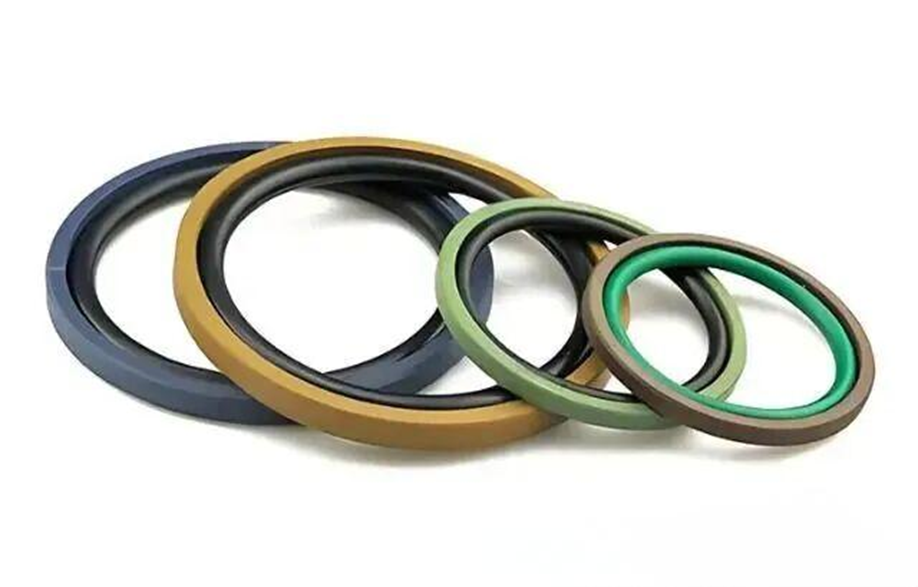
“Is your Glyd Ring just a Step Seal?” I answer this question dozens of times a year.
It is not only customers who are confused; many new buyers and designers cannot tell them apart either. The names all end in “ring,” and they look much alike, but their structure, sealing direction and pressure capability are completely different. Choose wrong, and it leaks as soon as it is installed.
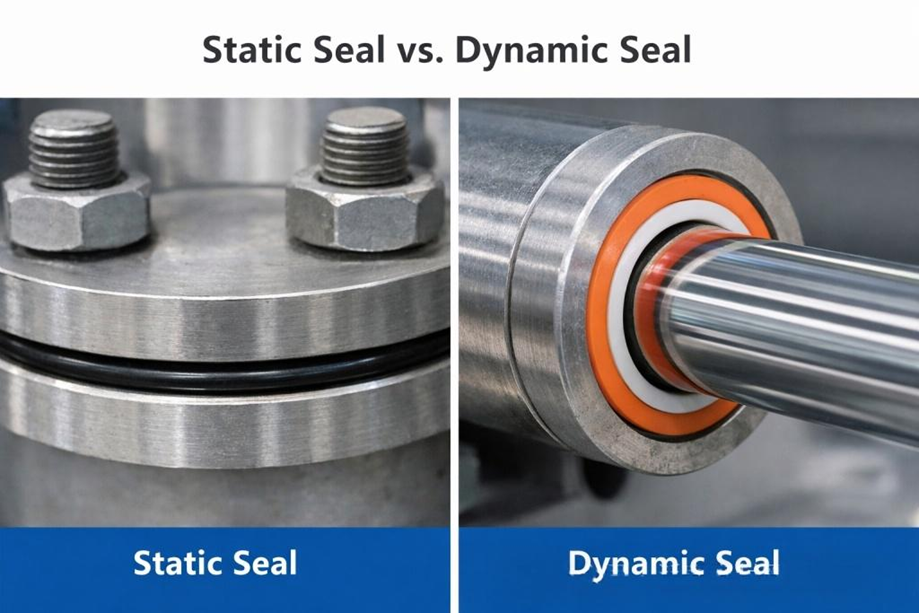
1. First Cut: Split Them into “Static” and “Dynamic” Families
Static seals go between two parts that do not move, such as flanges, end caps and plugs, and only need to be pressed tight. Dynamic seals go between parts in relative motion, such as a rotating shaft or a reciprocating piston rod.
After this cut, the material, hardness and structure are all different. A static seal can be hard and pressure-resistant; a dynamic seal must balance friction and heat, so the logic of material choice is entirely different. So the first step is never “which ring to pick,” but “does it move?”
2. Second Cut: Is It “Single-Acting” or “Double-Acting”?
This is the key to telling these rings apart, and the point most easily overlooked.
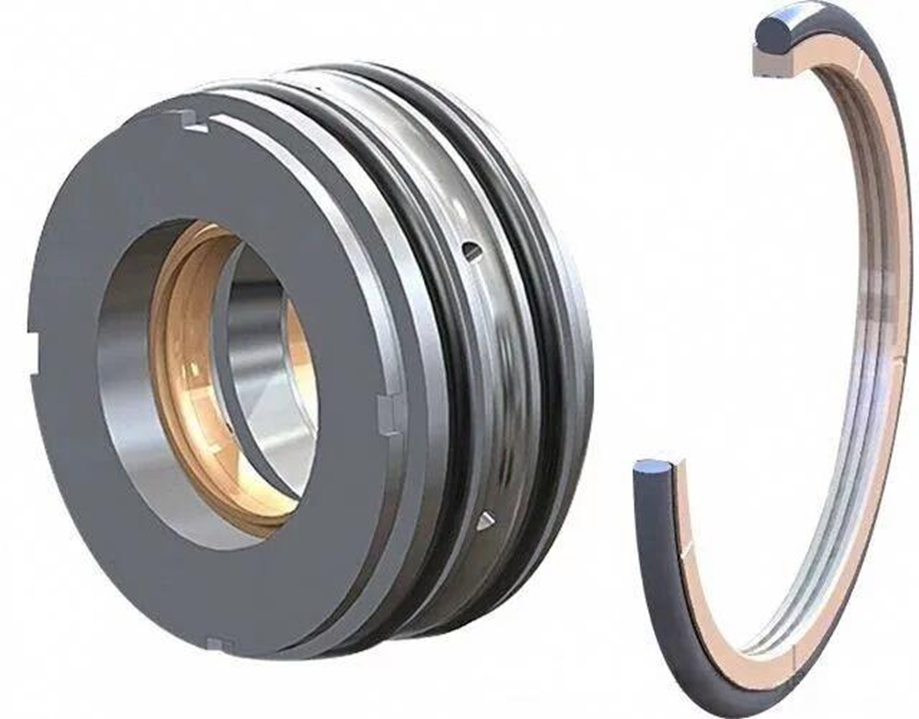
Lip seals (Y-rings, U-rings, Step Seals) are mostly single-acting: pressure enters from one particular side and presses the seal tighter. So they can only be fitted facing one pressure direction, and fitting them backwards means failure. A Glyd Ring, by contrast, is double-acting and symmetrical on both sides, so it seals as the piston moves in either direction, which is why it is often used as the piston seal in hydraulic cylinders.
Remember this and you can answer the most common question: why is a piston rod usually fitted with a Step Seal and a piston with a Glyd Ring? Because the piston rod is mostly pressurized in one direction, while the piston takes load in both.
3. One Table to See How They Differ
Name |
Construction |
Sealing direction |
Typical use |
Y-ring / U-ring |
Rubber lip-shaped part |
Single-acting, pressure self-energizing |
Pneumatic cylinders, low-to-medium pressure hydraulics |
V-ring set |
Multiple stacked layers |
Single-acting, adjustable layer by layer |
High pressure, long stroke, serviceable |
Glyd Ring |
PTFE wear ring + O-ring |
Double-acting, symmetrical |
Hydraulic cylinder pistons; low friction, long life |
Step Seal |
PTFE stepped slipper ring + O-ring |
Single-acting |
Piston rods, often paired with a wiper |
Spring-energized seal |
PTFE lip + metal spring |
Mainly single-acting, preloaded by the spring |
Cryogenic, ultra-high pressure, vacuum |
PTFE rotary shaft seal |
PTFE lip + metal case |
Rotary, single-acting |
High-speed, chemical-resistant, high-temperature shafts |
O-ring |
Round cross-section rubber ring |
Double-acting, by compression |
The workhorse of static sealing; dynamic sealing needs assistance |
4. Three Practical Rules of Thumb for Telling Them Apart
Rule one: look at what presses it tight. Rubber lip seals self-energize on media pressure; PTFE types are preloaded by a rubber ring or a spring. For the former, the higher the pressure, the tighter the seal; the latter depends on initial preload. This also explains why a spring-energized seal still seals at low temperature and at low-pressure start-up.
Rule two: look at how many sealing faces it has. A single-acting seal can take pressure in one direction only; a double-acting one is laid out symmetrically. Fitting one the wrong way round uses its capability backwards.
Rule three: wherever PTFE appears, friction is low. PTFE has a low friction coefficient and is chemical- and heat-resistant, but it rebounds poorly and cold-flows, so it almost never works alone and always needs a rubber part or spring to provide preload. This is why the Glyd Ring, Step Seal and spring-energized seal are all “combination” seals.
5. Once the Structure Is Set, the Material Still Has to Match
Choosing the structure is not the end of the job. For the same Glyd Ring, whether the slipper ring is pure PTFE or filled, and whether the energizing ring is NBR or FKM, can make a big difference in life.
The matching logic is actually clear: the slipper ring provides wear resistance and low friction, and the rubber ring provides preload and rebound. So the slipper ring material goes toward “wear-resistant, low friction,” while the rubber part goes toward “temperature- and media-resistant,” each doing its own job.
Pure PTFE has the lowest friction and is the softest, but its wear and creep resistance are average, so it suits low-to-medium pressure and long strokes. Filled PTFE contains carbon fiber, glass fiber or bronze powder, which lifts hardness and wear resistance a notch at the cost of slightly higher friction, and suits high pressure and high-frequency motion. As for the rubber ring, use NBR for hydraulics at normal temperature, FKM for high temperature, and HNBR for low temperature combined with good aging resistance. Simply choose according to the operating conditions.
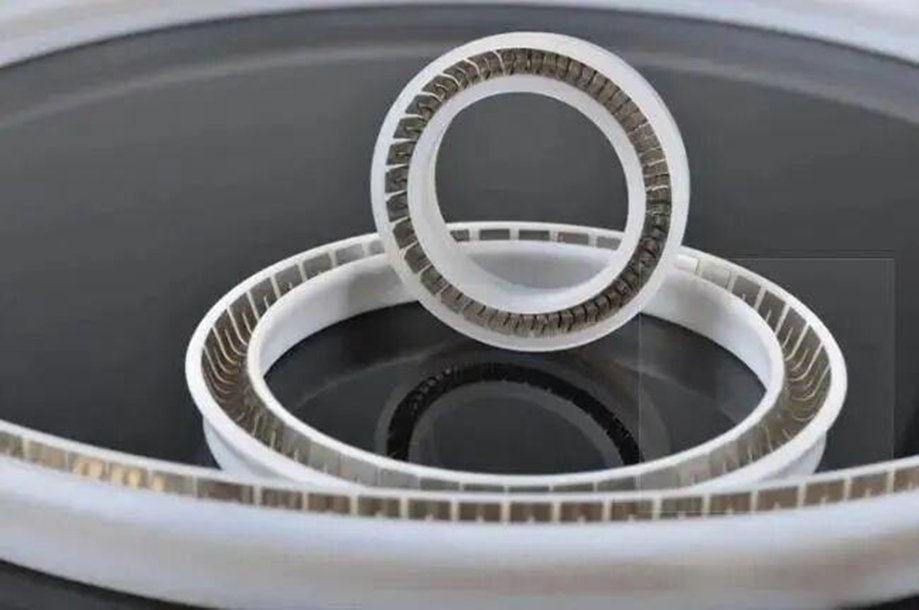
The spring-energized seal has one more variable: the spring. Common types are V-springs, helical springs and leaf springs. V-springs have high spring force and good stroke adaptability; helical springs are softer and more even; leaf springs are stiffer. A wrong spring type clearly weakens sealing at low-temperature start-up or in very low-pressure service, which is why spring-energized seals “look the same but perform very differently.”
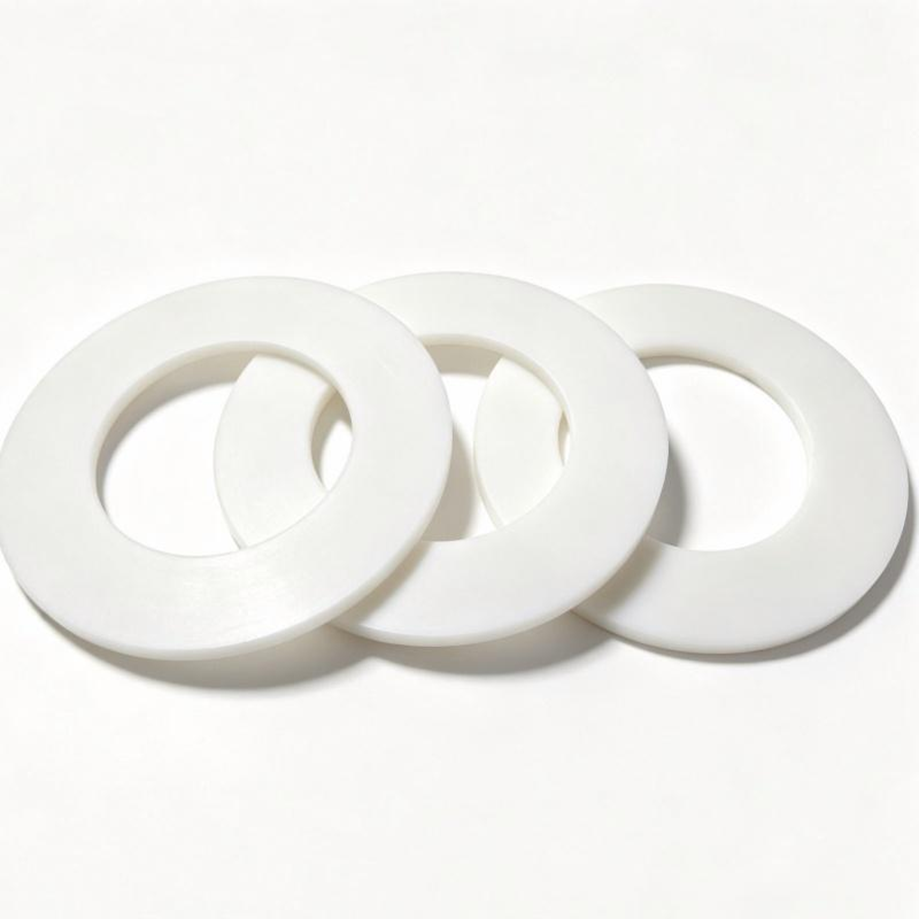
6. The Four Pairs Most Easily Confused
Glyd Ring and Step Seal: both have a PTFE slipper ring and an O-ring, and look very alike. There is only one difference: the Glyd Ring is double-acting and the Step Seal is single-acting. Buy the wrong one, and it does not go in the same position.
Y-ring and U-ring: the two are very close, both single-acting lip seals, differing mainly in cross-section details and groove fit. In practice, the key is not which name it carries, but getting the groove dimensions and operating conditions right.
Spring-energized seal and a plain PTFE ring: the biggest giveaway is the metal spring. Only one with a spring counts as a spring-energized seal; it solves the problem of a plain PTFE ring having “insufficient rebound and poor contact” at low temperature or low pressure.
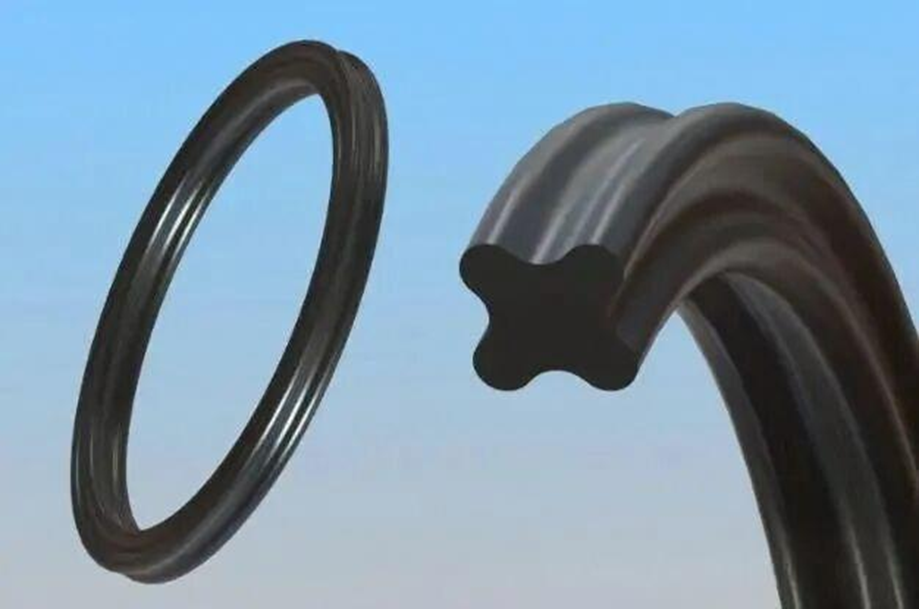
O-ring and X-ring (quad ring): both are double-acting and look similar. The difference is in the cross-section: the X-ring has a four-lip structure, with more even friction distribution and better resistance to twisting, so in reciprocating motion it usually outlasts an O-ring. Telling them apart is easy: look at whether the cross-section is round or X-shaped.
In a nutshell: seal names come in endless variety, but the logic of judgment has only three steps: does it move, in which direction does it seal, and what presses it tight. Once you go through these three steps, most of the “name anxiety” disappears.
Table of Contents
- It is not only customers who are confused; many new buyers and designers cannot tell them apart either. The names all end in “ring,” and they look much alike, but their structure, sealing direction and pressure capability are completely different. Choose wrong, and it leaks as soon as it is installed.
- 1. First Cut: Split Them into “Static” and “Dynamic” Families
- Static seals go between two parts that do not move, such as flanges, end caps and plugs, and only need to be pressed tight. Dynamic seals go between parts in relative motion, such as a rotating shaft or a reciprocating piston rod.
- After this cut, the material, hardness and structure are all different. A static seal can be hard and pressure-resistant; a dynamic seal must balance friction and heat, so the logic of material choice is entirely different. So the first step is never “which ring to pick,” but “does it move?”
- 2. Second Cut: Is It “Single-Acting” or “Double-Acting”?
- This is the key to telling these rings apart, and the point most easily overlooked.
- Lip seals (Y-rings, U-rings, Step Seals) are mostly single-acting: pressure enters from one particular side and presses the seal tighter. So they can only be fitted facing one pressure direction, and fitting them backwards means failure. A Glyd Ring, by contrast, is double-acting and symmetrical on both sides, so it seals as the piston moves in either direction, which is why it is often used as the piston seal in hydraulic cylinders.
- Remember this and you can answer the most common question: why is a piston rod usually fitted with a Step Seal and a piston with a Glyd Ring? Because the piston rod is mostly pressurized in one direction, while the piston takes load in both.
- 3. One Table to See How They Differ
- 4. Three Practical Rules of Thumb for Telling Them Apart
- Rule one: look at what presses it tight. Rubber lip seals self-energize on media pressure; PTFE types are preloaded by a rubber ring or a spring. For the former, the higher the pressure, the tighter the seal; the latter depends on initial preload. This also explains why a spring-energized seal still seals at low temperature and at low-pressure start-up.
- Rule two: look at how many sealing faces it has. A single-acting seal can take pressure in one direction only; a double-acting one is laid out symmetrically. Fitting one the wrong way round uses its capability backwards.
- Rule three: wherever PTFE appears, friction is low. PTFE has a low friction coefficient and is chemical- and heat-resistant, but it rebounds poorly and cold-flows, so it almost never works alone and always needs a rubber part or spring to provide preload. This is why the Glyd Ring, Step Seal and spring-energized seal are all “combination” seals.
- 5. Once the Structure Is Set, the Material Still Has to Match
- 6. The Four Pairs Most Easily Confused


