33-99No. Mufu E Rd. Gulou District, Nanjing, China [email protected] | [email protected]
33-99No. Mufu E Rd. Gulou District, Nanjing, China [email protected] | [email protected]

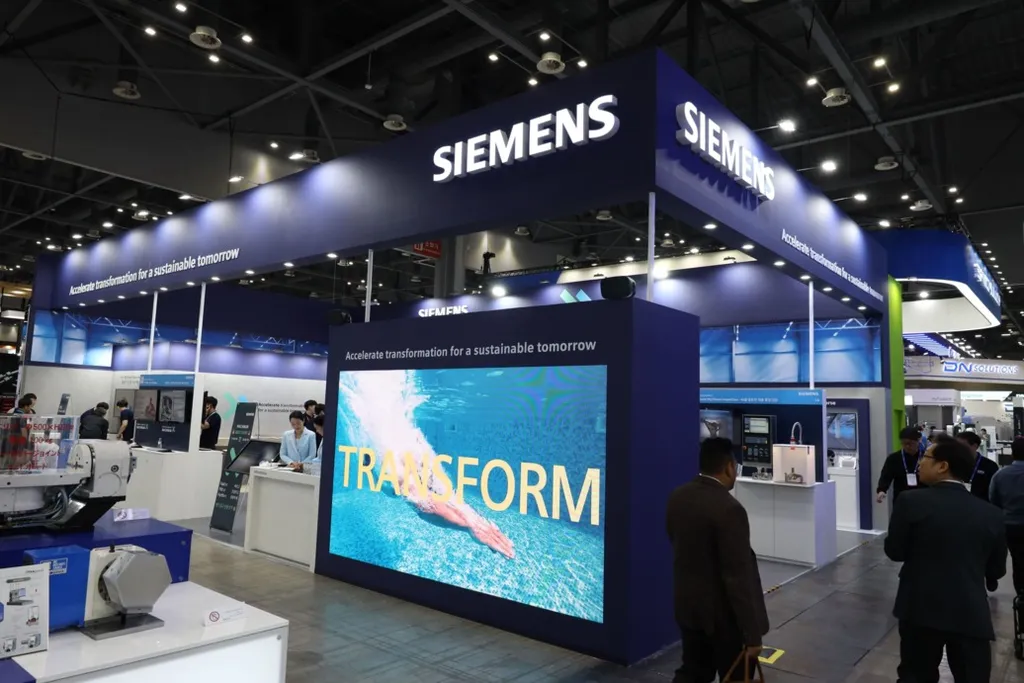
South Korea manufactures semiconductors, ships, automobiles, and the precision industrial machinery that produces all of those things. The hydraulic systems running in Korean manufacturing plants are not incidental to that output — they are structural. Every hydraulic press line at Hyundai Steel, every clamping system at Samsung SDI's battery cell production equipment, every deck crane on a Korea Shipbuilding & Offshore Engineering vessel depends on hydraulic pumps, valves, and cylinders performing reliably in continuous industrial service. SIMTOS is the biennial show where the suppliers of that technology meet the Korean manufacturing community that buys it.
SIMTOS 2026 — the Seoul International Manufacturing Technology Show — runs at KINTEX, the Korea International Exhibition Center in Goyang, adjacent to Seoul, on a biennial schedule. The 2024 edition demonstrated the scale of Korean industrial technology investment: over 1,200 exhibitors, 100,000-plus visitors across five days, and an exhibitor list that covered the full spectrum of manufacturing technology from CNC machining centres and grinding systems through to measurement, testing, and the fluid power technology that supports precision manufacturing operations.
Korean machine tool hydraulics operates at a high technical level. The clamping and fixturing systems on precision machining centres used in semiconductor equipment and aerospace component manufacturing require hydraulic systems with extremely consistent pressure control — a clamping force variation of a few percent can affect machined surface quality on tight-tolerance components. Korean machine tool builders — Hyundai WIA, DN Solutions (formerly Doosan Machine Tools), Hwacheon, and SMEC — specify hydraulic components to international standards and evaluate suppliers on the technical basis that high-precision manufacturing demands.
The shipbuilding hydraulic market adds a distinct dimension. Korean shipyards — HHI, Samsung Heavy Industries, Daewoo Shipbuilding — are the world's most productive, and the hydraulic systems in vessels they build range from anchor windlass drives and hatch cover actuators through to the steering gear systems of the largest LNG carriers and ultra-large container ships. Hydraulic pump manufacturers qualifying their products for marine classification society approval and shipyard use often do so through the Korean market first, because the volume and technical rigor of Korean shipbuilding procurement makes it a reliable qualification pathway.
Category |
Details |
Event Name |
SIMTOS 2026 – Seoul International Manufacturing Technology Show |
Dates |
2026 (biennial; confirm exact dates at simtos.org) |
Venue |
KINTEX, 217-60 Hallyu World Road, Ilsanseo-gu, Goyang-si, Gyeonggi-do, South Korea |
Scale |
1,200+ exhibitors; 100,000+ visitors; organised by KOMMA |
Korean manufacturing is undergoing a significant automation investment cycle, driven by rising labour costs, precision requirements in semiconductor and battery manufacturing, and the global competitiveness pressure that Korean export industries face from Chinese manufacturers closing the quality gap. Industrial robots, collaborative automation systems, and the hydraulic and pneumatic actuation technology that integrates with those systems are all in active procurement. Hydraulic press technology for battery cell and module manufacturing — a market that barely existed five years ago and is now one of the fastest-growing hydraulic application segments in Asia — is being specified and purchased by Korean battery manufacturers at a pace that rewards direct engagement with the Korean engineering community at SIMTOS.
For hydraulic pump and component manufacturers whose products serve precision manufacturing applications, SIMTOS provides access to a technically sophisticated Korean buyer community that evaluates products on performance data rather than price alone. Korean industrial procurement teams are experienced international buyers — they know what specifications to ask for, they request detailed test data, and they expect application engineering support that goes beyond a product catalogue. The companies that establish technical credibility at SIMTOS tend to hold their Korean market positions for long periods, because the qualification investment by the Korean buyer creates switching costs that protect established supplier relationships.

Welcome to HOVOO, a Chinese seal factory. Production of PU, Rubber and PTFE seals. The seals include O-ring, piston seal, rod seal, Gray ring and gas seal.


 EN
EN
 AR
AR CS
CS DA
DA NL
NL FI
FI FR
FR DE
DE EL
EL IT
IT JA
JA KO
KO NO
NO PL
PL PT
PT RO
RO RU
RU ES
ES SV
SV TL
TL IW
IW ID
ID LV
LV SR
SR SK
SK VI
VI HU
HU MT
MT TH
TH TR
TR FA
FA MS
MS GA
GA CY
CY IS
IS KA
KA UR
UR LA
LA TA
TA MY
MY
