33-99No. Mufu E Rd. Gulou District, Nanjing, China [email protected] | [email protected]
33-99No. Mufu E Rd. Gulou District, Nanjing, China [email protected] | [email protected]

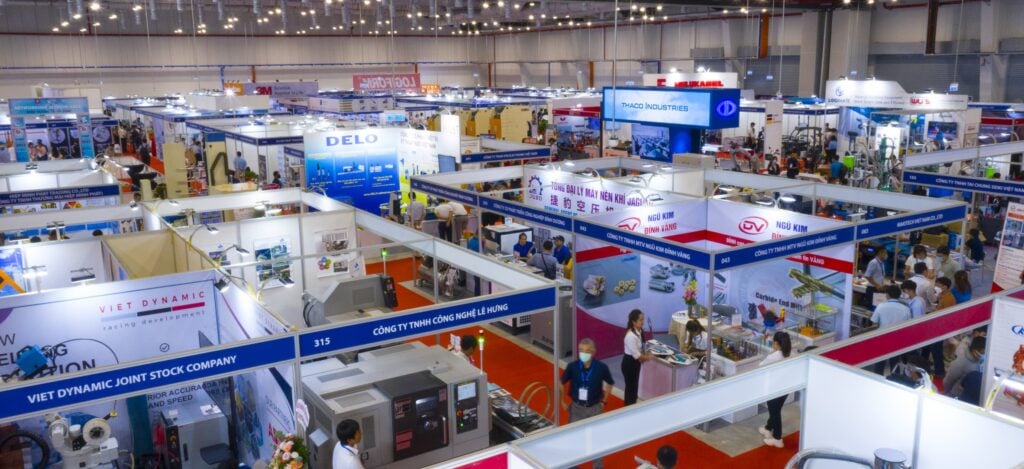
Vietnam's manufacturing sector has been one of the primary beneficiaries of the supply chain diversification that accelerated after 2018, as electronics assemblers, automotive component makers, and a wide range of light manufacturing companies sought production capacity outside China. That shift has been visible in foreign direct investment figures for years, but it is equally visible on the floor of Vietnam Manufacturing Expo, where the exhibitor and visitor profile has grown year over year alongside the country's manufacturing base.
Vietnam Manufacturing Expo 2026 runs in August at the Hanoi International Center for Exhibition, organised as part of a series that has built steady momentum across recent editions. The show covers metalworking technology, machine tools, sheet metal processing, tooling, automotive and ship component manufacturing, welding technology, CAD/CAM/CAE systems, and the test equipment that supports precision manufacturing — with hydraulic and pneumatic components appearing throughout these categories as essential inputs to the machine tools and production equipment on display.
Vietnam's manufacturing geography splits roughly between the south, anchored by Ho Chi Minh City and historically stronger in electronics and consumer goods assembly, and the north, anchored by Hanoi and increasingly important for automotive components, machinery manufacturing, and heavier industrial production. Samsung's enormous electronics manufacturing complex sits in Bac Ninh province near Hanoi, and the supplier ecosystem that has grown around it — including precision metal components, plastic injection moulding, and the machine tools that produce them — represents a substantial hydraulic equipment market concentrated specifically in the northern Vietnamese industrial corridor that Vietnam Manufacturing Expo serves directly.
The shipbuilding and automotive component sectors add further hydraulic relevance. Vietnam has a developing shipbuilding industry, particularly in Hai Phong, that uses hydraulic systems in vessel construction and outfitting. Automotive parts manufacturers serving both the domestic Vietnamese market — growing steadily as the country's middle class expands — and export supply chains for regional assembly operations require hydraulic press and stamping equipment that meets increasingly exacting quality standards as Vietnamese suppliers move up the value chain from simple components toward more sophisticated parts.
Category |
Details |
Event Name |
Vietnam Manufacturing Expo (VME) 2026 |
Dates |
August 2026 (confirm exact dates at vme-expo.com) |
Venue |
Hanoi International Center for Exhibition (I.C.E. Hanoi), Hanoi, Vietnam |
Scale |
100+ brands from 10+ countries (2025 data); annual |
Vietnam Manufacturing Expo places significant emphasis on structured business matchmaking — pre-arranged meetings between international suppliers and Vietnamese manufacturers, organised around specific procurement needs rather than relying on organic floor traffic. This format reflects a practical reality of the Vietnamese market: many manufacturing companies, particularly mid-sized domestic firms supplying into multinational supply chains, are still building the international purchasing relationships that larger, more established Asian manufacturing economies developed over previous decades. The structured matchmaking format accelerates that relationship-building process for both sides.
For hydraulic pump and component manufacturers, Vietnam Manufacturing Expo offers access to a market that is earlier in its development curve than Korea, Japan, or even Thailand — meaning the relationships established now have longer runway for growth as Vietnamese manufacturing continues to climb the value chain. Suppliers who establish themselves as trusted partners to Vietnamese machine tool builders and component manufacturers during this growth phase are positioning for a market that multiple industry forecasts expect to continue expanding substantially through the rest of the decade, driven by continued supply chain diversification away from single-country concentration.

Welcome to HOVOO, a Chinese seal factory. Production of PU, Rubber and PTFE seals. The seals include O-ring, piston seal, rod seal, Gray ring and gas seal.


 EN
EN
 AR
AR CS
CS DA
DA NL
NL FI
FI FR
FR DE
DE EL
EL IT
IT JA
JA KO
KO NO
NO PL
PL PT
PT RO
RO RU
RU ES
ES SV
SV TL
TL IW
IW ID
ID LV
LV SR
SR SK
SK VI
VI HU
HU MT
MT TH
TH TR
TR FA
FA MS
MS GA
GA CY
CY IS
IS KA
KA UR
UR LA
LA TA
TA MY
MY
