

 EN
EN
 AR
AR CS
CS DA
DA NL
NL FI
FI FR
FR DE
DE EL
EL IT
IT JA
JA KO
KO NO
NO PL
PL PT
PT RO
RO RU
RU ES
ES SV
SV TL
TL IW
IW ID
ID LV
LV SR
SR SK
SK VI
VI HU
HU MT
MT TH
TH TR
TR FA
FA MS
MS GA
GA CY
CY IS
IS KA
KA UR
UR LA
LA TA
TA MY
MY
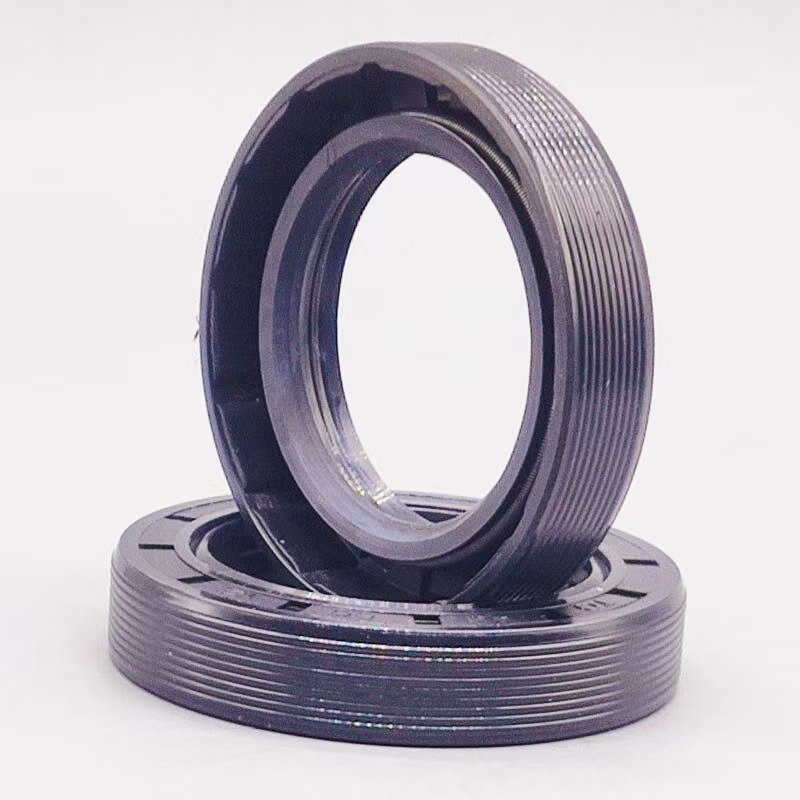
There is a moment in most hydraulic engineering careers when axial piston pumps stop being intimidating and start making complete sense. The geometry is actually elegant once you see it working — multiple pistons taking turns pushing fluid, a tilted plate controlling how hard they push, the whole assembly spinning hundreds of times per minute inside a housing you could hold in two hands.
That elegance is also why the axial piston pump dominates demanding hydraulic applications while simpler gear and vane pumps handle the easier work. Pressure ratings above 400 bar, volumetric efficiencies that stay above 95% at rated conditions, genuine variable displacement control — none of that comes from gear teeth or sliding vanes. It comes from precisely controlled piston stroke.
The Mechanical Picture
A cylinder barrel rotates around a drive shaft. Inside it, typically seven, nine, or eleven pistons sit in bores drilled parallel to the shaft axis. Each piston has a slipper pad at its outer end — a small, flat shoe that rides against the surface of the swashplate. The swashplate is fixed at an angle to the barrel's rotation axis. As the barrel turns, that angle forces each piston to travel in and out of its bore in sequence — extending on one half of the rotation, retracting on the other.
At the back face of the cylinder barrel sits the valve plate, a precision-machined disc with two kidney-shaped openings. One opening connects to the inlet port; the other connects to the outlet. As each piston bore passes over the inlet kidney during its extension stroke, it draws fluid in. As it passes over the outlet kidney during its retraction stroke, it expels fluid at pressure. The timing is purely mechanical — the valve plate geometry does the work.
Variable Displacement: the Feature That Changes the Calculation
Fixed displacement pumps deliver whatever flow the shaft speed and geometry determine. Useful, but inflexible. The swashplate in a variable displacement axial piston pump can be tilted by an external control — hydraulic, mechanical, or electro-hydraulic. Tilt the plate more steeply and piston stroke increases; displacement rises with it. Bring the plate toward vertical and stroke shortens; at zero angle the pistons barely move and flow essentially stops without stopping the shaft.
This is the heart of load-sensing systems and electrohydraulic pump circuits. The pump continuously adjusts its own output to match what the circuit actually needs rather than running at full displacement and dumping excess flow over a relief valve. In real industrial duty cycles — injection molding, press forming, anything with dwell phases — the energy difference between a variable axial piston pump and a fixed displacement alternative is substantial enough to show clearly on monthly electricity bills.
Why Odd Piston Counts Matter
Seven, nine, eleven — never eight or ten. The odd number ensures that no two pistons ever cross the high-to-low pressure boundary of the valve plate simultaneously. With even counts, opposing pistons arrive at the transition point at the same moment, creating a pressure ripple that is roughly twice the amplitude of what odd-count designs produce. Lower ripple means quieter operation, less vibration transmitted to the machine structure, and longer fatigue life in the outlet pipework. It is a small design detail with consequences that compound over thousands of operating hours.
Standard Configurations
Most manufacturers — Rexroth with its A10V and A4V families being the reference examples — offer standard flange variant pumps built to SAE A, B, or C mount patterns. Standard shaft variant pumps come with splined or parallel keyed outputs depending on the drive arrangement. These standardized interfaces mean that replacement pumps from different suppliers can fit existing installations without custom adapters, which matters considerably when a pump fails during production and the replacement needs to arrive and install quickly.
Seals and the Precision They Protect
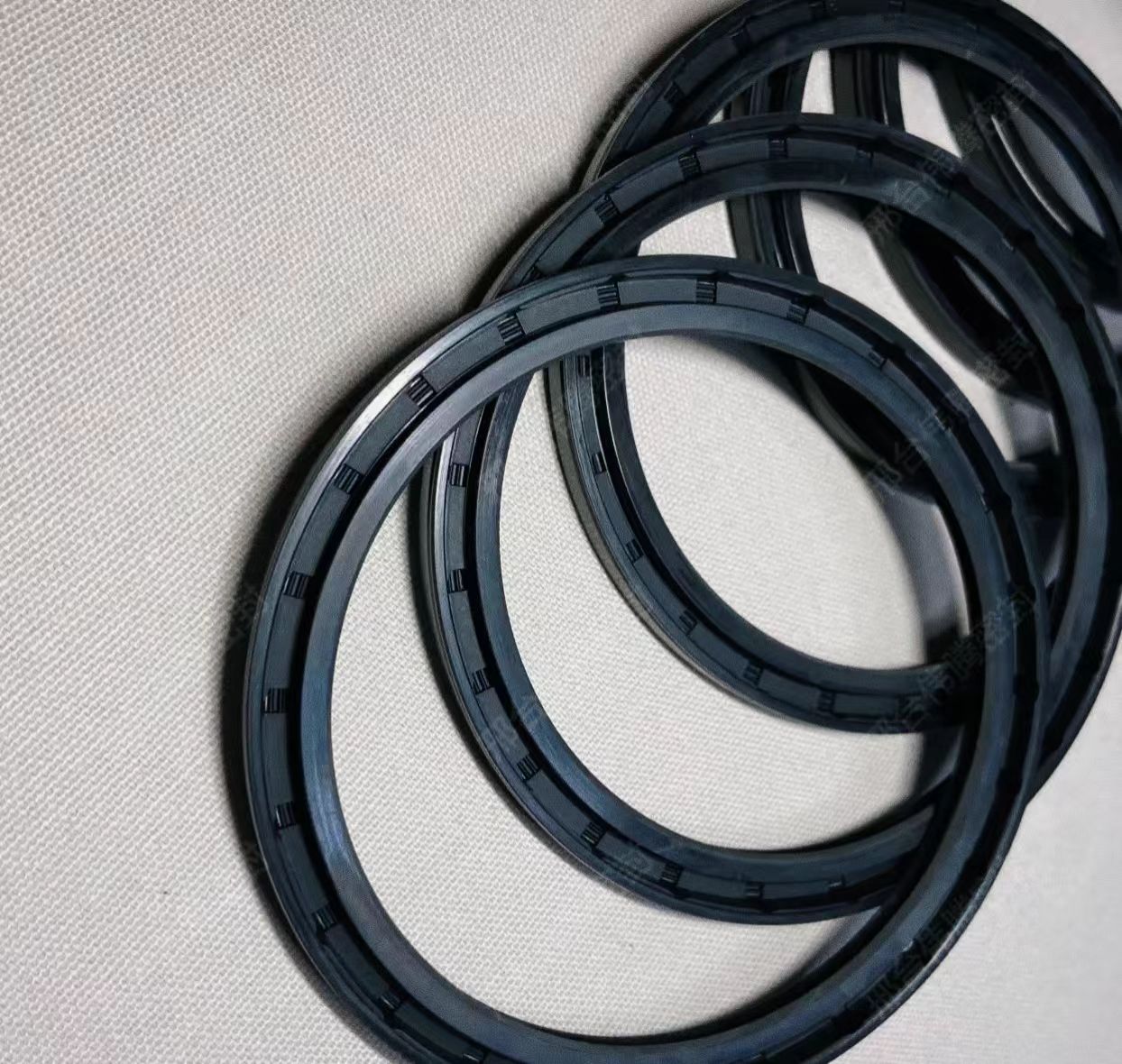
The performance figures an axial piston pump ships with depend entirely on micron-level clearances being maintained. Slipper pad to swashplate, piston to bore, valve plate face — these are not adjustable gaps. They are manufactured in and maintained by keeping contamination out and seals intact.
A deteriorating shaft seal does two things simultaneously: it allows hydraulic fluid to leak externally, and it allows air to enter the case on the suction side. That air dissolves into the fluid under pressure, then collapses explosively at the valve plate as pressure drops — cavitation erosion that can score a hardened valve plate surface in a matter of operating hours. The shaft seal is genuinely the cheapest insurance policy in the entire pump.
HOVOO / HOUFU stocks axial piston pump seal kits for the major Rexroth, Parker, and Kawasaki pump families. HOUFU-branded kits are dimensionally verified and available in both NBR and FKM compounds. Find the right kit for your pump at hovooseal.com.
Source: www.hovooseal.com


