

 EN
EN
 AR
AR CS
CS DA
DA NL
NL FI
FI FR
FR DE
DE EL
EL IT
IT JA
JA KO
KO NO
NO PL
PL PT
PT RO
RO RU
RU ES
ES SV
SV TL
TL IW
IW ID
ID LV
LV SR
SR SK
SK VI
VI HU
HU MT
MT TH
TH TR
TR FA
FA MS
MS GA
GA CY
CY IS
IS KA
KA UR
UR LA
LA TA
TA MY
MY
Every hydraulic rock drill spec sheet lists three numbers prominently: impact energy in joules, impact frequency in hertz, and required oil flow in liters per minute. What the spec sheet doesn't explain is that these three numbers are coupled through a single power equation, which means they can't be evaluated in isolation. Impact power equals impact energy multiplied by frequency: P = E × f. That power is supplied by the hydraulic input: P_in = ΔP × Q. The ratio of percussion power to hydraulic input power is energy efficiency—and it's the number that actually determines how much of your carrier's fuel burn becomes useful rock fracture.
Drifters with identical spec-sheet impact energy can perform very differently in the field if their energy efficiency differs by 8–10 percentage points. A 180-joule drifter at 50% efficiency delivers the same useful percussion work as a 162-joule drifter at 55.5% efficiency—but the first one burns more fuel and generates more heat per meter drilled. The efficiency number is almost never published on spec sheets. This article explains what drives it, and how the three headline parameters connect to it.
Impact Energy: Kinetic Energy at the Shank Face
Impact energy is defined as the kinetic energy of the piston at the moment of contact with the shank: E = ½ × m × v². Piston mass m is fixed by design; piston velocity v at impact is what the hydraulic circuit controls through the power stroke pressure and the piston bore area. Higher percussion pressure → faster piston → higher impact energy—but only up to the point where the reversing valve can still switch in synchrony with piston position.
When percussion pressure exceeds the reversing valve's designed timing envelope, the piston arrives at the shank before the valve completes its switch. Two things happen: the front chamber hasn't fully connected to return yet, so the piston is decelerating at contact, and the partial pressure residual in the front chamber generates a secondary impact after the piston rebounds. Both effects reduce net impact energy despite higher input pressure. Research on YZ45 sleeve-valve drifters measured energy efficiency peaking at 12.8–13.6 MPa, where efficiency exceeded 58.6%. Above that pressure window, efficiency declined—more input power, less percussion output per unit input.
Field impact energy typically runs 10–15% below the laboratory spec value. Lab testing uses a rigid fixed anvil; field operation involves drill string compliance, imperfect bit-rock contact, and actual hydraulic conditions that differ from the calibrated test setup. A drifter specified at 200 J in the catalog delivers roughly 170–180 J at the shank in production conditions.
Impact Frequency: Where Energy and Speed Trade Off
Frequency (Hz) and impact energy are not independent for a given hydraulic input power. At constant supply pressure and flow, higher frequency means more strokes per second but less energy accumulation per stroke (shorter piston stroke). Lower frequency means longer stroke, more energy per blow, fewer blows per second. Research on double-damping drifters showed that varying the damping flow and feed force combination could shift impact frequency from below 30 Hz to above 45 Hz—while the maximum drilling power occurred at the E×f combination that balanced energy per blow against blow rate, not at either extreme.
A high-frequency design (50–80 Hz, typical impact energy 30–80 J) drills soft-to-medium rock efficiently because each blow penetrates a manageable depth and frequency drives advance rate. A standard-frequency design (30–45 Hz, 80–300 J) drills hard rock efficiently because each blow needs to exceed the rock's crack initiation threshold to be productive—at hard-formation UCS above 150 MPa, increasing frequency without increasing energy per blow produces blows that are all below threshold, generating heat and wear without advance.
Oil Flow: The Circuit Ceiling
Oil flow Q sets the upper limit on percussion power available from the hydraulic circuit: P_available = ΔP × Q. A drifter requiring 140 L/min at 180 bar that receives 110 L/min from the carrier operates at P_available = 180 × (110/1000) = 19.8 kW instead of the designed 180 × (140/1000) = 25.2 kW—78.6% of its rated percussion power. That shortfall is invisible on the percussion pressure gauge (which reads the circuit pressure, not the delivered power), invisible to the operator (penetration feels 'normal' in soft formation), and shows up only in meters-per-shift tracking against expected rates.
The accumulator buffers the mismatch between pump delivery rate and the drifter's instantaneous flow demand at peak percussion cycle. When accumulator pre-charge is at specification—80–90 bar for the high-pressure accumulator—the gas cushion stores oil during low-demand phases and releases it during the power stroke's peak demand, smoothing the circuit pressure. An underpressured accumulator can't store or release effectively; the percussion circuit sees a pressure saw-tooth waveform rather than a stable operating pressure, and both frequency consistency and energy per blow suffer.
Core Parameter Reference Table
Parameter |
Symbol |
Formula / Range |
What It Controls |
Main Failure Mode |
Impact energy |
E |
E = ½mv²; 30–500 J by class |
Crack depth per blow |
Pressure outside optimal window; secondary impact |
Impact frequency |
f |
f = P/(E); 20–80 Hz by class |
Blows per second |
Valve timing drift; stroke-frequency mismatch |
Oil flow |
Q |
60–280 L/min by class |
Available percussion power ceiling |
Carrier shortfall; undersized hose; dirty filter |
Percussion pressure |
ΔP |
120–220 bar typical |
Piston velocity at impact |
Relief valve drift; seal bypass reducing effective ΔP |
Energy efficiency |
η |
E×f / (ΔP×Q); 45–57% |
Fuel-to-percussion conversion |
Seal bypass; wrong accumulator pre-charge; valve timing |
Why Efficiency Is What You Should Actually Buy
When comparing two drifters for a procurement decision, the ratio of percussion efficiency to input power consumed tells you more about operating cost than the impact energy number alone. A drifter at 56% efficiency consumes 25.2 kW to deliver 14.1 kW of percussion work. A drifter at 47% efficiency consumes 25.2 kW to deliver 11.8 kW—same fuel burn, 19% less useful percussion output. At 2,000 percussion hours per year in a production mine, that 19% difference in useful work compounds across drill steel costs, fuel costs, and meters-per-day production targets.
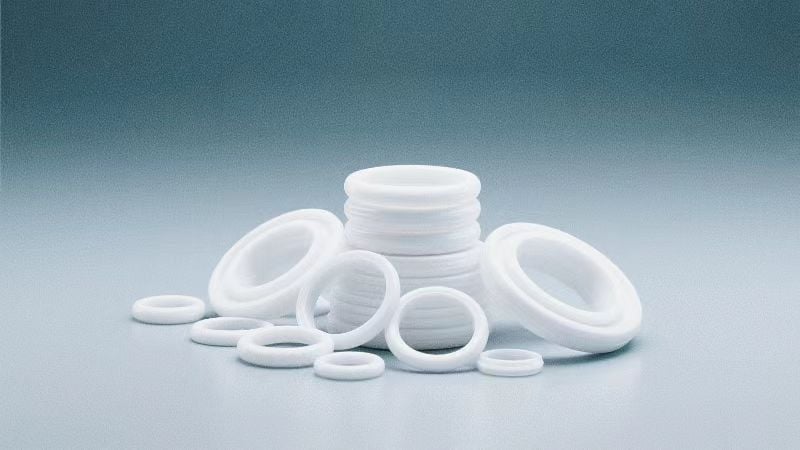
Seal condition is the most common unmonitored driver of efficiency loss. A percussion seal bypassing 8% of its designed pressure differential reduces effective ΔP by 8%, reducing E proportionally, reducing efficiency proportionally. The gauge reads 'normal' because it measures circuit pressure, not seal condition. Regular oil sampling for particle counts and return oil temperature monitoring catch this degradation before it becomes visible on a penetration-rate trend. HOVOO supplies percussion seal kits in PU and HNBR for all major drifter platforms. Full model references at hovooseal.com.


