

 EN
EN
 AR
AR CS
CS DA
DA NL
NL FI
FI FR
FR DE
DE EL
EL IT
IT JA
JA KO
KO NO
NO PL
PL PT
PT RO
RO RU
RU ES
ES SV
SV TL
TL IW
IW ID
ID LV
LV SR
SR SK
SK VI
VI HU
HU MT
MT TH
TH TR
TR FA
FA MS
MS GA
GA CY
CY IS
IS KA
KA UR
UR LA
LA TA
TA MY
MY
The intuition that a bigger drill on a bigger excavator always means more productivity is wrong in a specific and costly way. An oversized drill attachment draws more hydraulic flow than the carrier's auxiliary circuit was designed to supply, forcing the excavator's engine to run at higher load during every drilling cycle. Fuel consumption rises. The hydraulic oil runs hotter. The carrier's auxiliary pump works outside its rated efficiency zone, shortening its service life. And the attachment itself—receiving insufficient flow at the drifter's minimum operating pressure—doesn't deliver the percussion energy its specification promises.
The 10–15% weight ratio rule is the starting point for matching drill attachments to excavators: the drill and feed system combined should weigh between 10% and 15% of the carrier's operating weight. A 20-ton excavator should be paired with a drill attachment in the 2,000–3,000 kg range. Beyond weight, hydraulic flow compatibility and back-pressure tolerance determine whether the match actually works in the field.
Why Weight Ratio Is the Foundation, Not the Whole Answer
The 10–15% rule addresses structural compatibility: the boom cylinders, stick pivot pins, and carrier counterweight are all dimensioned for loads within that ratio. An attachment significantly heavier than 15% of carrier weight creates front-heavy instability during tramming, overloads the boom pivot bushings during positioning, and produces excessive vibration transmission into the carrier frame during percussion. Over time, that manifests as cracked weld joints at the stick attachment point and worn boom cylinder seals—damage that accumulates invisibly until a field inspection reveals it.
But weight alone doesn't tell you whether the hydraulic system can actually power the drill. A 20-ton excavator with a hammer circuit delivering 80 L/min at 150 bar has fundamentally different drilling capability than one delivering 160 L/min at 200 bar, even at the same machine weight. For rock drill attachments—which are more hydraulically demanding than breaker hammers—the flow rate and operating pressure the carrier actually delivers at the auxiliary circuit determine the drifter's real-world percussion power, regardless of what the attachment specification says.
Reading the Hydraulic Compatibility Specs Correctly
Every drill attachment manufacturer publishes minimum and maximum hydraulic flow (L/min) and operating pressure (bar) requirements. The attachment will work within that window; outside it, either the percussion is underpowered (below minimum flow) or the hydraulic system overheats and seals blow (above maximum flow). The carrier spec that matters is the auxiliary circuit flow at rated engine RPM—not the main circuit, not the hydraulic system relief pressure, specifically the auxiliary hammer circuit output at working RPM.
Back pressure in the return line is a matching factor that most buyers ignore. Every additional meter of hydraulic hose, every fitting, every directional valve adds resistance to the return flow. A drill attachment that specifies 'maximum back pressure 30 bar' will have its percussion piston return stroke shortened if actual return-line back pressure is 35–40 bar. The piston doesn't complete its full return, the next power stroke starts from a shorter position, and impact energy per blow drops. Checking back pressure with a gauge at the return port of the attachment—not just measuring pressure at the supply circuit—confirms whether this is affecting performance on a specific carrier.
Drill Attachment Matching by Excavator Tonnage Class
Excavator Class |
Operating Weight |
Rec. Drill Weight |
Typical Flow |
Drilling Capability |
Mini |
1.5–6 t |
150–600 kg |
20–60 L/min |
Anchor holes, utility work, Ø28–45 mm |
Compact |
6–14 t |
600–1,400 kg |
50–100 L/min |
Foundation drilling, Ø38–64 mm, 5–10 m |
Mid-size |
14–22 t |
1,400–2,200 kg |
80–140 L/min |
Construction anchoring, quarry, Ø45–76 mm |
Standard |
22–35 t |
2,200–3,500 kg |
120–180 L/min |
Bench drilling, blast holes, Ø64–102 mm |
Large |
35–55 t |
3,500–5,500 kg |
160–240 L/min |
Production mining, Ø76–115 mm, deep holes |
Heavy |
55–100 t |
5,500–10,000 kg |
200–300+ L/min |
Heavy surface, Ø89–152 mm |
These ranges are indicative for top-hammer drill attachments specifically. Breaker hammers, rotary heads, and DTH attachments have different weight-to-flow relationships. A DTH drill drawing 200 L/min on a 22-ton excavator will exceed the carrier's hydraulic capacity in most cases; the same excavator can handle a 12–16 kW top-hammer drill attachment comfortably if the flow specification matches.
The Blank Firing Problem and Why It Destroys Mismatched Pairings Quickly
'Blank firing'—percussion running without bit-to-rock contact—is the fastest way to damage a drill attachment on an undersized carrier. When the bit breaks through a rock face or the operator positions between holes, the percussion circuit still pressurizes if the operator doesn't shut it off. With no rock resistance, the percussion piston returns too fast, the accumulator is overdischarged, and the hydraulic system experiences pressure spikes that exceed the carrier's circuit relief valve setting.
On a correctly matched carrier, the relief valve handles these spikes within its design tolerance. On an undersized carrier whose hydraulic pump is already working at the edge of its rating to supply the drill, those spikes push the system into overload. Modern premium drill attachments include auto-stop systems that detect blank firing and shut down within milliseconds—but budget-tier attachments don't, and this is where carrier hydraulic seal failures from overpressure originate.
Hydraulic Hose Sizing and Circuit Layout for Drill Attachments
The hydraulic hoses between carrier and drill attachment are part of the matching equation. Undersized hoses—typically older breaker hoses repurposed for a drill attachment—have a smaller bore that increases flow velocity and pressure drop. If the supply hose to the drifter has a 20 bar pressure drop at the required flow rate, the drifter receives 20 bar less than the carrier circuit provides. For a percussion circuit specified at 180 bar minimum, a carrier delivering 190 bar through undersized hoses effectively delivers 170 bar at the drifter—below minimum operation pressure.
Hose bore diameter should be specified to keep supply-line pressure drop below 5 bar at the maximum required flow. Return lines should be equally sized—back pressure is a return-line phenomenon, and undersized return hoses are the most common cause of inexplicably poor percussion performance on an otherwise correctly matched carrier-drill combination.
Seal Kit Supply as Part of the Matching Decision
Correct tonnage matching protects the carrier and the drill attachment from structural and hydraulic overload. It also affects the consumable supply chain: a drill attachment that runs correctly on its carrier experiences predictable seal wear at the manufacturer's design interval. One that's marginally undersupplied by its carrier runs hot, cycles more slowly, and produces inconsistent percussion—which generates irregular seal loading and unpredictable replacement intervals that make stocking management harder.
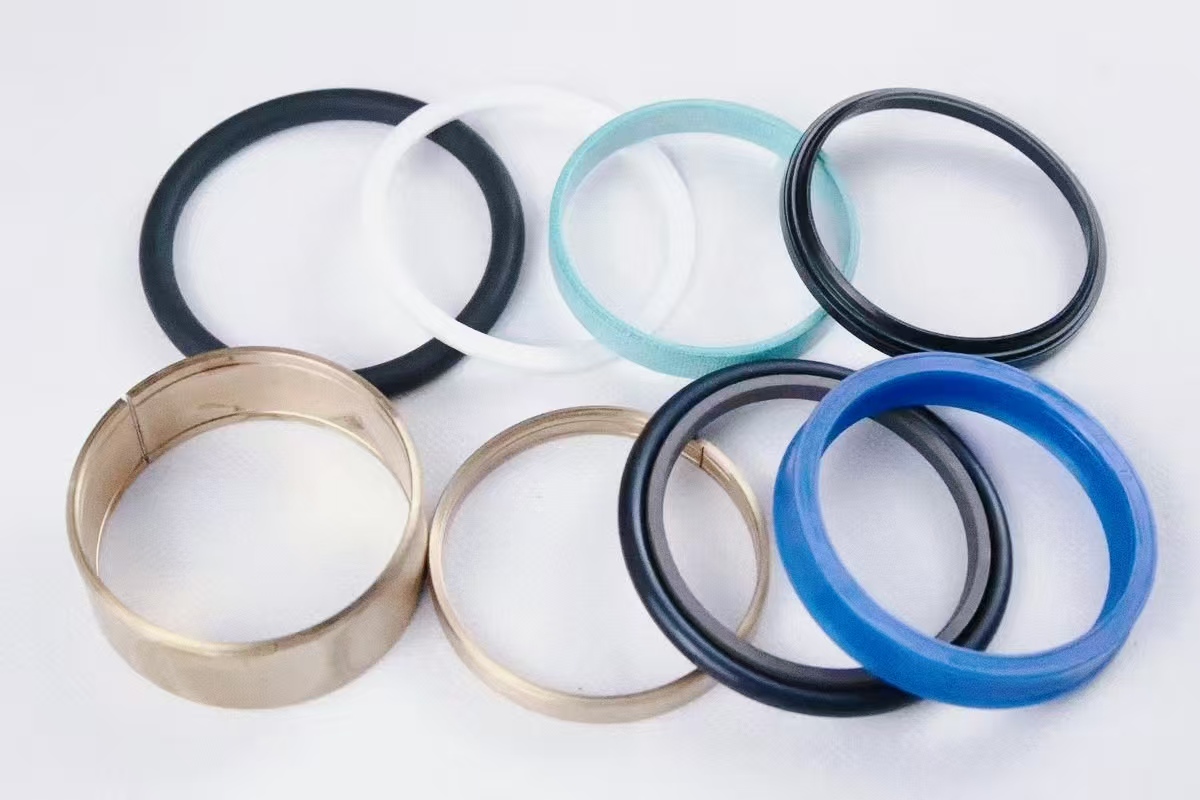
HOVOO supplies seal kits for the major drill drifter brands used in excavator attachment configurations—Epiroc, Sandvik, Furukawa, Montabert—in PU and HNBR compound options. Establishing the seal kit supply relationship when specifying the drill attachment removes one operational variable from the carrier-drill matching decision. Full model references at hovooseal.com.
Table of Contents
- Why Weight Ratio Is the Foundation, Not the Whole Answer
- Reading the Hydraulic Compatibility Specs Correctly
- Drill Attachment Matching by Excavator Tonnage Class
- The Blank Firing Problem and Why It Destroys Mismatched Pairings Quickly
- Hydraulic Hose Sizing and Circuit Layout for Drill Attachments
- Seal Kit Supply as Part of the Matching Decision


