

 EN
EN
 AR
AR CS
CS DA
DA NL
NL FI
FI FR
FR DE
DE EL
EL IT
IT JA
JA KO
KO NO
NO PL
PL PT
PT RO
RO RU
RU ES
ES SV
SV TL
TL IW
IW ID
ID LV
LV SR
SR SK
SK VI
VI HU
HU MT
MT TH
TH TR
TR FA
FA MS
MS GA
GA CY
CY IS
IS KA
KA UR
UR LA
LA TA
TA MY
MY
On a fixed-displacement pneumatic system, every liter of air the compressor produces that the drill doesn't use immediately vents through the relief valve and disappears. On an open-loop hydraulic system without load sensing, excess oil flow does the same thing—it bypasses back to tank through the relief valve, converting all that pressure energy into heat. A drill running at 50% of its rated percussion duty cycle burns full pump power for the entire shift, half of it as waste heat, when the pump has no way to reduce output during idle phases.
That's the core energy problem that load-sensing hydraulic systems solve. The pump reads the actual circuit demand and produces only what the percussion, rotation, and feed circuits need at that moment. During collar work, repositioning, and rod changes—probably 30–40% of any shift—the pump destroke reduces flow and pressure together, cutting fuel consumption by 15–20% on closed-loop systems versus open-loop equivalents. It's not a small margin over an equipment lifetime.
Hydraulic vs. Pneumatic: The Energy Gap Is Structural
Hydraulic rock drills consume roughly one-third the energy of pneumatic equivalents drilling the same formation. That's not a marketing claim—it's a consequence of medium incompressibility. Air is compressible: energy goes into compressing it, and some of that energy is lost as heat during expansion. Hydraulic oil is incompressible; the pump delivers pressure energy that transmits directly to piston motion with minimal conversion loss. Hydraulic drills also deliver higher impact energy per blow than equivalent pneumatic models because higher operating pressure (160–220 bar for hydraulic vs. 6–10 bar for pneumatic) allows a smaller, lighter piston to carry the same or greater momentum.
The second structural advantage is that hydraulic systems integrate naturally with variable-displacement load-sensing pumps. Fixed-displacement pneumatic compressors run at constant output—there is no equivalent of a load-sensing swashplate on a screw compressor. The excavator or drill rig's hydraulic pump, by contrast, can reduce displacement to near-zero during idle periods and ramp back to rated output within milliseconds when percussion pressure is demanded. In real duty-cycle conditions that translates to 15–30% fuel reduction compared to fixed-displacement systems doing the same work.
Where the Savings Come From: Four Mechanisms
Load-sensing variable displacement captures the largest portion of energy savings—15–20% across a full shift on well-matched systems. The second mechanism is impact circuit optimization: reducing throttling losses in the percussion valve by widening oil galleries and using two-diameter piston designs cuts internal bypass from 50–55% hydraulic input conversion to 56–57%. The third is heat management—less wasted energy means cooler return oil, which means less load on the cooler and lower viscosity degradation, translating to longer oil change intervals. The fourth is flushing circuit efficiency: right-sizing the flushing water pump to actual borehole demand rather than running at fixed capacity reduces auxiliary power consumption, particularly in tunnels where the flushing circuit runs continuously even between holes.
Energy Efficiency Comparison: Pneumatic, Standard Hydraulic, and Optimized Hydraulic
System Type |
Energy Input |
Conversion Rate |
Idle Phase Loss |
Noise Level |
Pneumatic rock drill |
Compressor power |
~25–30% to percussion |
Fixed compressor runs full |
95–116 dBA at operator |
Standard hydraulic (open-loop) |
Diesel-hydraulic |
~45–50% to percussion |
Relief valve bypass |
~50% lower than pneumatic |
Hydraulic + load sensing |
Diesel-hydraulic |
~45–50% to percussion |
Pump destrokes 15–20% savings |
~50% lower than pneumatic |
Optimized hydraulic (2-diameter piston) |
Same carrier |
~55–57% to percussion |
Pump destrokes + internal losses reduced |
~50% lower than pneumatic |
The 25–57% conversion rate range matters because the baseline matters. At 25% (pneumatic), you're throwing away three-quarters of the input energy before a single millimeter of rock is drilled. At 57% (optimized hydraulic), the loss is down to 43%—still substantial, but the improvement is large enough that it changes the economics of what's worth drilling. Deep holes in marginal formations that aren't viable with pneumatic systems become productive with efficient hydraulic equipment.
Long-Run Fuel Cost: The Compounding Effect
A 20 kW hydraulic drifter operating 250 days per year, two shifts, at 4 hours of actual percussion per shift runs approximately 2,000 percussion hours annually. The power pack supporting it operates for a wider window—including setup, repositioning, and idle. A system with load-sensing captures 15–20% fuel savings on all those non-percussion hours that a fixed-displacement system burns at full output.
At a conservative 10 liters per hour difference between a load-sensing system and a fixed-displacement equivalent (accounting for idle phases), over 3,000 carrier operating hours per year that's 30,000 liters of diesel annually. At $1.00/liter—a conservative figure for most mining markets—that's $30,000 per machine per year. Over a 5-year equipment life, the energy savings alone justify a significant premium for load-sensing hydraulics over fixed-displacement designs.
Seal Condition and Energy Efficiency: The Hidden Link
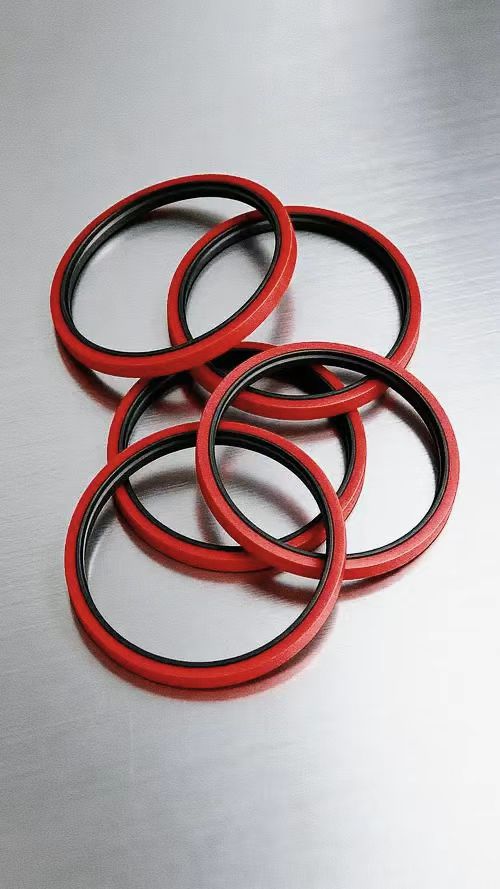
Hydraulic energy efficiency isn't static over the equipment life. A percussion piston seal in good condition passes minimal oil from the high-pressure side to the low-pressure side during power stroke—essentially all available pressure differential accelerates the piston. As the seal wears, bypass flow increases. For every percentage point of additional bypass, effective percussion pressure drops and the oil converting to heat in the return circuit increases. A seal worn enough to produce 8–10% bypass flow returns the drifter to roughly the efficiency of a non-optimized design, negating the hardware improvements.
Keeping a well-engineered energy-saving drill at its designed efficiency rating means treating seal replacement as a performance maintenance task, not just a leak-prevention task. HOVOO supplies seal kits for major drifter models—PU for standard operating ranges, HNBR for high-temperature applications where elevated oil return temperature would degrade PU ahead of schedule. Model references at hovooseal.com.


