

 EN
EN
 AR
AR CS
CS DA
DA NL
NL FI
FI FR
FR DE
DE EL
EL IT
IT JA
JA KO
KO NO
NO PL
PL PT
PT RO
RO RU
RU ES
ES SV
SV TL
TL IW
IW ID
ID LV
LV SR
SR SK
SK VI
VI HU
HU MT
MT TH
TH TR
TR FA
FA MS
MS GA
GA CY
CY IS
IS KA
KA UR
UR LA
LA TA
TA MY
MY
The engineering case for an integrated hydraulic rock drill isn't about fewer parts—it's about fewer joint faces. Every bolted interface between a percussion module and a housing section is a potential leak path, a potential loosening point under vibration, and a tolerance stack-up that affects the coaxiality of the piston, shank, and drill rod. A well-designed integrated body eliminates those interfaces entirely, keeping all the percussion geometry fixed in a single machined housing.
That rigidity produces the stability advantage that integrated designs are associated with. When the piston, distribution valve, and rotation motor all share one housing with no intermediate flanges, the alignment between the shank adapter and the piston bore stays consistent across the full percussion frequency range. That consistency is what makes integrated drifters the default choice for face drilling jumbos and compact underground units where bore straightness and collar accuracy matter as much as penetration rate.
What Compact Structure Means for Boom Geometry
An integrated drifter has a smaller overall length and lighter weight than an equivalent-power split design—because the connection hardware, additional sealing faces, and module-to-module coupling elements add mass without adding percussion capability. On a single-boom jumbo covering a 7–12 m² cross-section, the drifter length directly constrains how close the bit can get to the tunnel walls and the crown.
The Sandvik RD520, for example, is designed specifically for close-reach drilling near walls on development jumbos. Its sleek integrated body lets the boom position the bit within the profile boundary that the blast pattern requires, without the feed beam needing to clear extra length for module joints. In a 4 m × 3.5 m drift, 15 cm of extra drifter length isn't a cosmetic problem—it's a hole that misses its collar position.
Compact integrated designs also simplify the hydraulic circuit routing. A split design requires flexible hoses between each module—percussion, rotation, flushing—that run alongside the body and add both weight and potential failure points. An integrated body routes internal galleries through the housing casting, eliminating external hose runs entirely on most models.
Stability Under Hard Rock Percussion: The Joint-Face Argument
Percussive drilling at 45–65 Hz transmits cyclic tensile and compressive stress waves through the drifter body. At each joint face in a split design, some portion of that wave reflects rather than transmitting cleanly through. The reflection amplitude depends on the acoustic impedance mismatch at the joint, which is a function of contact pressure and surface condition. A bolt that loosens 0.05 mm under thermal cycling changes that impedance mismatch measurably—the percussion efficiency drops before any external symptom appears.
Integrated housings have no mid-body joint faces. The stress wave travels through a single material from the accumulator end to the shank chuck without impedance discontinuity. This is partly why integrated designs dominate in tunneling jumbos where the drill runs thousands of hours against abrasive hard rock: the percussion circuit stays consistent across the service interval, not just in the first few hundred hours after a module reassembly.
Integrated Design Comparison Across Application Classes
Model / Type |
Body Design |
Power Class |
Application |
Compact Advantage |
Sandvik RD520 |
Integrated, single casting |
~15 kW |
Face drilling, wall-collar |
Slim profile for close-wall reach |
Epiroc COP 1638+ |
Integrated, dual-damping |
~16 kW |
Underground drifting |
Floating adapter in integrated body |
Doofor DF538L-BLTG |
Integrated, multi-function |
~12 kW |
Construction, anchoring |
Single unit handles wedge + drill + anchor |
HYCON HRD28X |
Compact integrated, handheld |
~4 kW |
Urban utility, anchoring |
Full percussion in handheld form factor |
ZY104M (stepped piston) |
Integrated, stepped bore |
~20 kW |
Tunnel jumbo, high-freq |
Stepped geometry within single housing |
The Doofor DF538L-BLTG is worth noting as an example of how compact integrated design enables multitasking on construction sites. The single-body unit supports wedge drilling, blast-hole drilling, and anchor installation without changing the drifter—the compact housing accommodates the hydraulic circuits for each function within one package. A split design that attempted the same multi-function capability would add module interconnects at each functional boundary.
Maintenance Reality for Integrated Drifters: The Tradeoff
Integrated designs do carry one genuine disadvantage relative to split bodies: when a component deep inside the housing fails, the entire unit typically needs to go to a service center rather than having the affected module swapped in the field. For operations with good workshop access and reliable logistics, this is manageable. For remote sites running 24/7 with no backup drifter, it's a more serious constraint.
The response on well-run operations is to hold a complete spare drifter rather than spare modules. The integrated unit comes off the boom, the spare goes on, and the service work happens on a schedule rather than as an emergency. Total inventory cost is similar to holding spare modules for a split design; the operational model is just different.
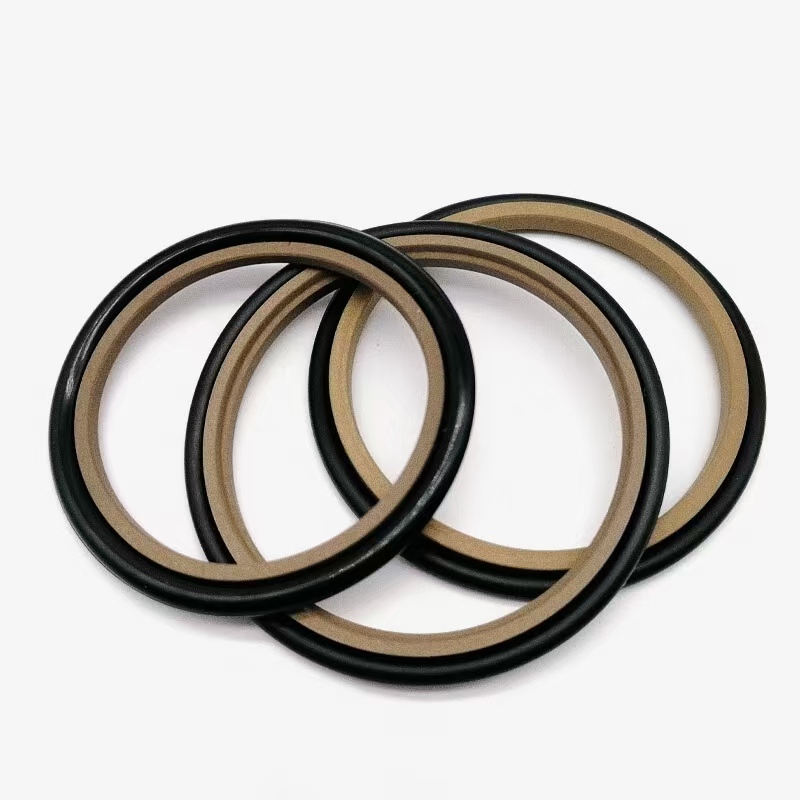
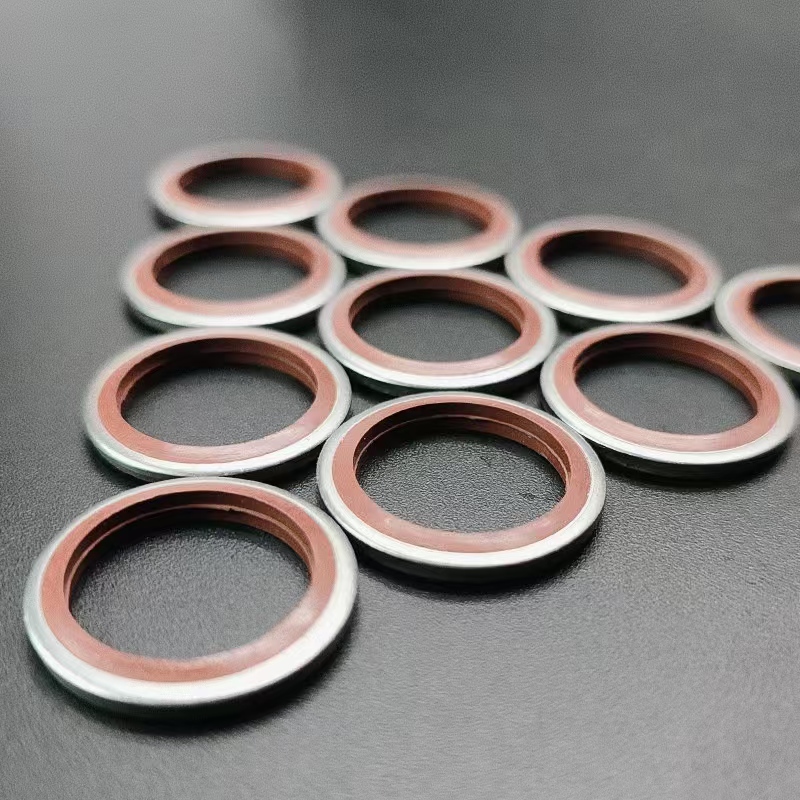
Seal maintenance follows the same logic. The percussion piston seal, flushing box seal, and rotation motor seals are replaced as a combined kit at the scheduled service interval—typically 400–500 percussion hours for hard rock applications. HOVOO supplies complete integrated drifter seal kits for the major models in the face drilling and compact jumbo categories, with PU and HNBR compound options matched to formation type and temperature range. Full model references are at hovooseal.com.


