

 EN
EN
 AR
AR CS
CS DA
DA NL
NL FI
FI FR
FR DE
DE EL
EL IT
IT JA
JA KO
KO NO
NO PL
PL PT
PT RO
RO RU
RU ES
ES SV
SV TL
TL IW
IW ID
ID LV
LV SR
SR SK
SK VI
VI HU
HU MT
MT TH
TH TR
TR FA
FA MS
MS GA
GA CY
CY IS
IS KA
KA UR
UR LA
LA TA
TA MY
MY
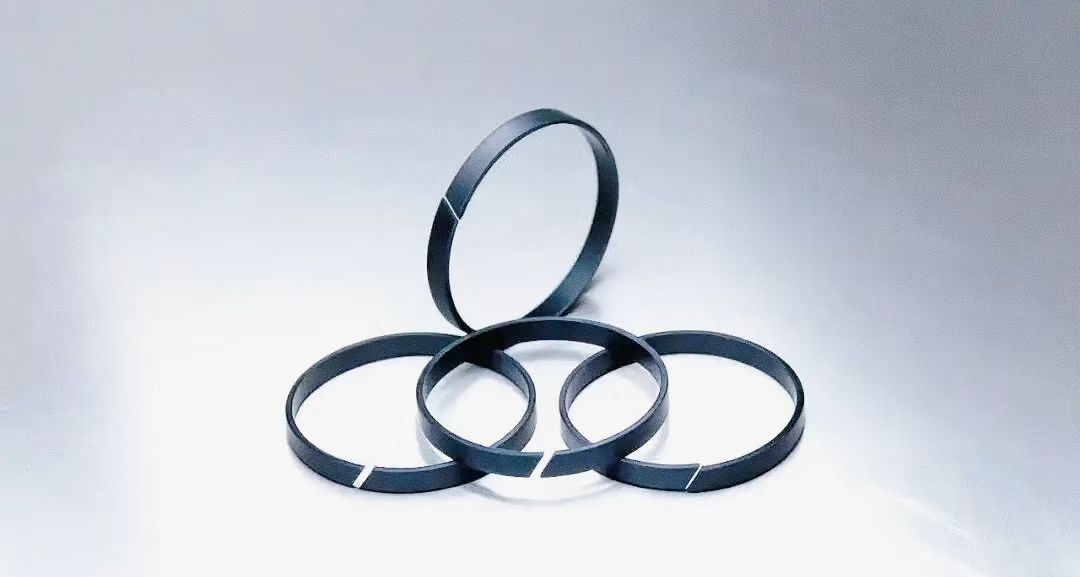
The maintenance cost argument for split-body rock drills doesn't come from the marketing sheet—it comes from what happens when something fails inside a conventional monolithic drifter. The percussion module, rotation motor, and flushing box are all sealed inside a single housing. A bearing failure in the rotation unit means pulling the entire drifter from the boom, shipping it to a service center, and waiting. The machine sits idle while one component—often a $40 bearing—gets replaced alongside $200 worth of labor and $300 worth of transport.
Split-body design separates those functional modules into independently accessible sections. The percussion module, the rotation unit, and the flushing box each have their own housing with independent sealing faces. When the rotation bearing fails, you remove the rotation module, repair or swap it, and reinstall—the percussion module never leaves the feed beam. That's the maintenance cost reduction in practice, and it's not marginal.
Structural Logic of the Split Design
A split hydraulic rock drill typically divides the drifter into three discrete modules joined by side bolts or quick-connect couplings: the front flushing box, the central percussion body, and the rear rotation motor housing. The joint faces between modules are sealed with O-rings or face seals rather than machined surfaces—meaning replacement doesn't require lapping or precision fitting at the drill site.
The Sandvik HL1560ST, for example, uses a three-module body tied together with short side bolts. The percussion module—containing only the piston and the distributor sleeve—has no contact with the body structure during operation. That physical separation means piston wear particles stay within the percussion circuit rather than migrating into the bearing or rotation gear oil, which is a common failure escalation path in single-body designs running at high percussion hours.
Each module typically weighs under 30 kg independently. A technician working alone in an underground heading can remove, replace, and reinstall a single module without lifting equipment—a practical reality that matters when the nearest crane is 500 meters up a ramp.
Split vs. Integrated: Maintenance and Access Comparison
Factor |
Split-Body Design |
Integrated (Monolithic) Design |
Module access |
Individual module removal without disturbing others |
Full drifter removal required for internal access |
Repair scope |
Replace only the failed module |
Full overhaul often triggered by single component |
Underground repair |
Feasible with hand tools; no crane needed |
Usually requires surface workshop access |
Seal replacement |
Circuit-by-circuit replacement |
Combined kit replacement common |
Fault isolation |
Easy—each module has defined circuit boundaries |
Harder—faults can cross circuit boundaries |
Transport for repair |
Module only (~25–30 kg) |
Full drifter (~80–150 kg) |
Inspection interval |
Per-module tracking possible |
Single-interval approach for all circuits |
Where the Cost Difference Actually Accumulates
The maintenance cost gap between split and monolithic designs is smallest on a well-run surface site with good workshop access and reliable logistics. It's largest in remote mining operations, mountain terrain, or any project where getting equipment off-site for service takes days rather than hours.
Consider a drifter running 400 percussion hours per month in an underground longhole application. If the rotation unit needs attention every 1,200 hours, an integrated design sends the full drifter out of service three times in a 3,600-hour equipment life cycle. A split design takes the rotation module out while the percussion body keeps drilling on a spare rotation unit. Over that cycle, the additional production time from reduced downtime often covers the modest premium of the modular design within the first year.
Fuel consumption is another angle. Smaller components per service trip require less transport—no diesel-heavy haul of a 150 kg drifter to a distant service center when a 30 kg module can go in a field vehicle. In operations tracking carbon or fuel spend, that arithmetic matters.
Assembly in the Field: What Quick-Connect Designs Actually Require
Not all split designs are equal in assembly speed. Quick-connect hydraulic couplings with dustproof sealed interfaces—standard on newer designs—reduce hydraulic line reconnection to seconds per port and eliminate the contamination risk from open-line exposure during module swap. Older designs with threaded hydraulic fittings take 15–20 minutes per port and require careful flushing to avoid particle contamination entering the percussion circuit through the reconnected line.
Pin-shaft installation between modules—where the connection is mechanical rather than threaded—allows angle adjustment at the split joint without tools. L-shaped triangular swing articulated structures go further, letting the drilling head angle be set independently of the carrier orientation. That's useful on sloped ground or angled drilling faces where the boom can't compensate for the required drill geometry.
Seal Kits for Split-Body Drifters: Circuit-Specific Replacement
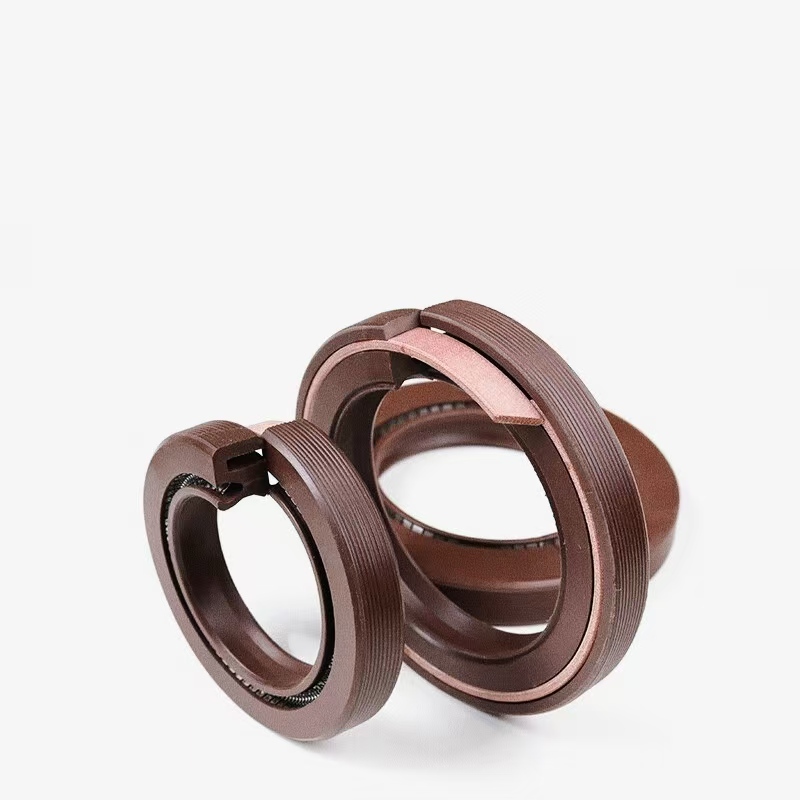
The practical benefit of a split design extends to seal maintenance. Because the percussion circuit, rotation circuit, and flushing circuit are physically separated at the module joints, each can be serviced independently. The percussion piston seal wears fastest in hard rock; the flushing box seal degrades faster in contaminated water; the rotation motor seals follow their own cycle based on torque load and lubricant condition.
HOVOO supplies seal kits by individual circuit for split-body drifters—percussion kit, flushing kit, and rotation kit are available as separate items rather than a combined overhaul set. This approach aligns with the actual wear pattern of split-body designs and avoids replacing seals that still have service life remaining. Model-specific references for Sandvik HL series, Epiroc COP, and Montabert split-body models are at hovooseal.com.


