

 EN
EN
 AR
AR CS
CS DA
DA NL
NL FI
FI FR
FR DE
DE EL
EL IT
IT JA
JA KO
KO NO
NO PL
PL PT
PT RO
RO RU
RU ES
ES SV
SV TL
TL IW
IW ID
ID LV
LV SR
SR SK
SK VI
VI HU
HU MT
MT TH
TH TR
TR FA
FA MS
MS GA
GA CY
CY IS
IS KA
KA UR
UR LA
LA TA
TA MY
MY

Rock drilling in a city is not just an engineering problem. It's a permit problem. OSHA's permissible noise exposure for an 8-hour shift sits at 90 dBA at the operator's position—that's a worker protection standard. The adjacent residential building 30 meters away operates under a completely different regime: many municipalities cap construction noise at 70–80 dBA at the property line during permitted hours, and in Manhattan that window closes at 6 p.m. on weekdays without an after-hours variance.
A standard hydraulic rock drill running in an urban foundation excavation can push 110–114 dBA at close range. Even at 50 feet, that reading rarely drops below 80 dBA in hard soil. Silenced drill systems close that gap, not by making the percussion quieter at the source, but by controlling how the noise travels—and in some designs, by fundamentally changing the rock-breaking mechanism.
Where the Noise Actually Comes From
Percussion drilling generates sound through three channels that behave differently and require different mitigation approaches. The first is airborne impact noise—the acoustic shockwave from the piston striking the shank, which radiates directly through the drill body into surrounding air. The second is structure-borne vibration: the carrier frame, feed beam, and boom transmit percussion energy as mechanical vibration, which re-radiates as sound from every surface in contact with the ground or adjacent structures. The third is exhaust noise from pneumatic flushing air, which for hydraulic drills running water flushing is largely eliminated—one concrete advantage of hydraulic over pneumatic systems in urban settings.
Engineering controls attack the first two channels. Vibration isolators between the drifter mount and the feed beam reduce structure-borne transmission by 8–10 dB—a figure that was demonstrated commercially as far back as early industrial pavement breaker development. Acoustic enclosures around the drifter body add another layer, directing residual airborne noise upward rather than horizontally toward neighboring buildings. Hydraulic power inherently produces less exhaust noise than pneumatic operation, which is why the FHWA construction noise handbook explicitly notes that hydraulic-powered equipment is quieter than pneumatic equivalents.
Noise Levels Across Urban Construction Equipment
Equipment |
Typical Level at 50 ft |
Typical Level at Operator |
Urban Compliance Status |
Jackhammer (pneumatic) |
75–85 dBA |
100–116 dBA |
Commonly exceeds limits without mitigation |
Hydraulic rock drill (standard) |
73–82 dBA |
95–110 dBA |
Marginal; site barriers usually required |
Silenced hydraulic rock drill |
65–75 dBA |
85–95 dBA |
Within range for most daytime ordinances |
Hydraulic breaker on excavator |
72–80 dBA |
96–114 dBA |
Exceeds limits in sensitive zones |
Concrete saw |
~78 dBA |
~90 dBA |
Generally compliant at distance |
Rotary drill rig (truck-mount) |
~70 dBA |
~80 dBA |
Typically compliant |
The 6 dBA attenuation per doubling of distance (point-source rule) means a silenced drill at 70 dBA at 15 feet drops to approximately 64 dBA at 30 feet and 58 dBA at 60 feet—comfortably within the 65 dBA daytime commercial zone limit used by jurisdictions including Washington D.C. A standard drill at the same distances stays well above that threshold.
Hydraulic vs. Pneumatic: The Urban Case Is Settled
Pneumatic rock drills need a compressor. In a dense urban site, that compressor sits somewhere on the block, running continuously, adding 80–90 dBA to the ambient soundscape regardless of whether drilling is actively happening. Hydraulic systems draw power from a compact power pack or the carrier's existing circuit—no separate compressor, no continuous engine exhaust noise, no second noise source to manage.
Field testers comparing hydraulic and pneumatic rock drills on granite consistently report that hydraulic units feel more stable under load and require less operator effort to hold position. Stability matters in urban excavation where hole alignment affects the depth of foundation piles or anchor rods—a deflected hole in a basement excavation creates rework that's far more disruptive to neighbors than the original drilling.
Scheduling and Barrier Strategy: Engineering Controls Aren't Enough Alone
Even a well-silenced drill needs to fit within the municipal time window. New York City requires after-hours authorization for any work outside 7 a.m.–6 p.m. on weekdays. San Diego restricts residential zone drilling before 7 a.m. and after 7 p.m. Monday through Saturday. The best equipment choice doesn't override these windows—it maximizes the productive hours within them by reducing the risk of noise complaint stops.
Temporary acoustic barriers placed between the drill and the nearest receptor—solid hoarding panels rated for noise reduction, or modular acoustic walls—add 5–10 dB of additional attenuation at the boundary. Combined with a silenced hydraulic drill, that margin typically brings the site within municipal limits even in high-density residential zones. Strategic positioning of the power pack behind a site office or hoarding adds another 3–5 dB from structural shielding.
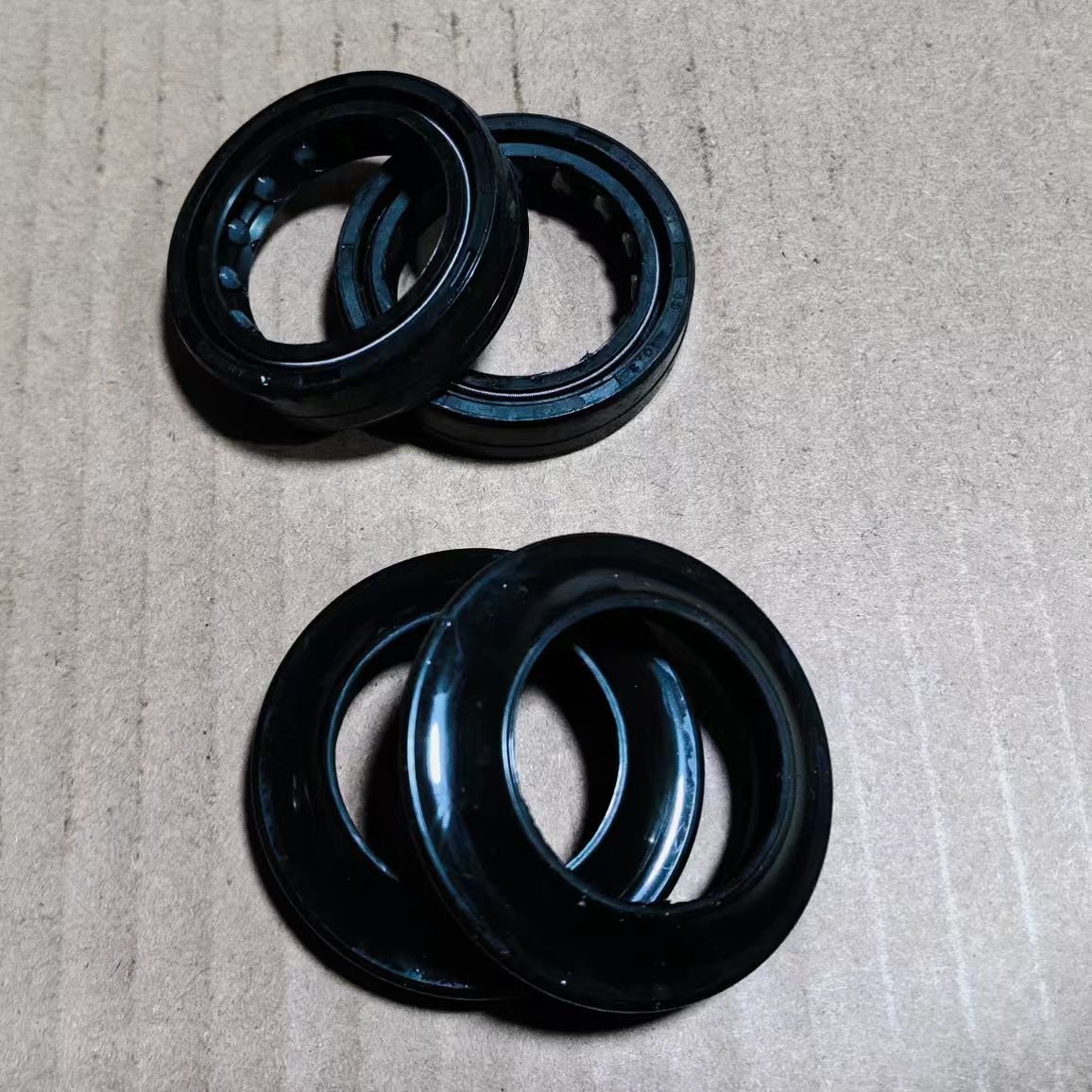
Seal Maintenance in Urban Cycles: Short Shifts, Many Setups
Urban construction drills don't run continuous 10-hour shifts. They run 2–3 hours of actual percussion time, stop for neighboring building inspections or noise monitoring checks, reset, and run again. The number of cold starts per percussion hour is much higher than on a mining site. Cold-start cycles—where the percussion circuit pressurizes from ambient—put a different stress pattern on the piston seals than sustained high-temperature cycling.
HOVOO supplies rock drill seal kits with PU compounds that maintain elasticity across a wide temperature range, handling the cold-to-hot thermal cycling that characterizes urban operations. For drills that sit idle overnight and restart at morning ambient temperature, low-temperature flexibility in the seal compound matters as much as high-temperature durability. Model-specific seal kit references are at hovooseal.com.


