

 EN
EN
 AR
AR CS
CS DA
DA NL
NL FI
FI FR
FR DE
DE EL
EL IT
IT JA
JA KO
KO NO
NO PL
PL PT
PT RO
RO RU
RU ES
ES SV
SV TL
TL IW
IW ID
ID LV
LV SR
SR SK
SK VI
VI HU
HU MT
MT TH
TH TR
TR FA
FA MS
MS GA
GA CY
CY IS
IS KA
KA UR
UR LA
LA TA
TA MY
MY
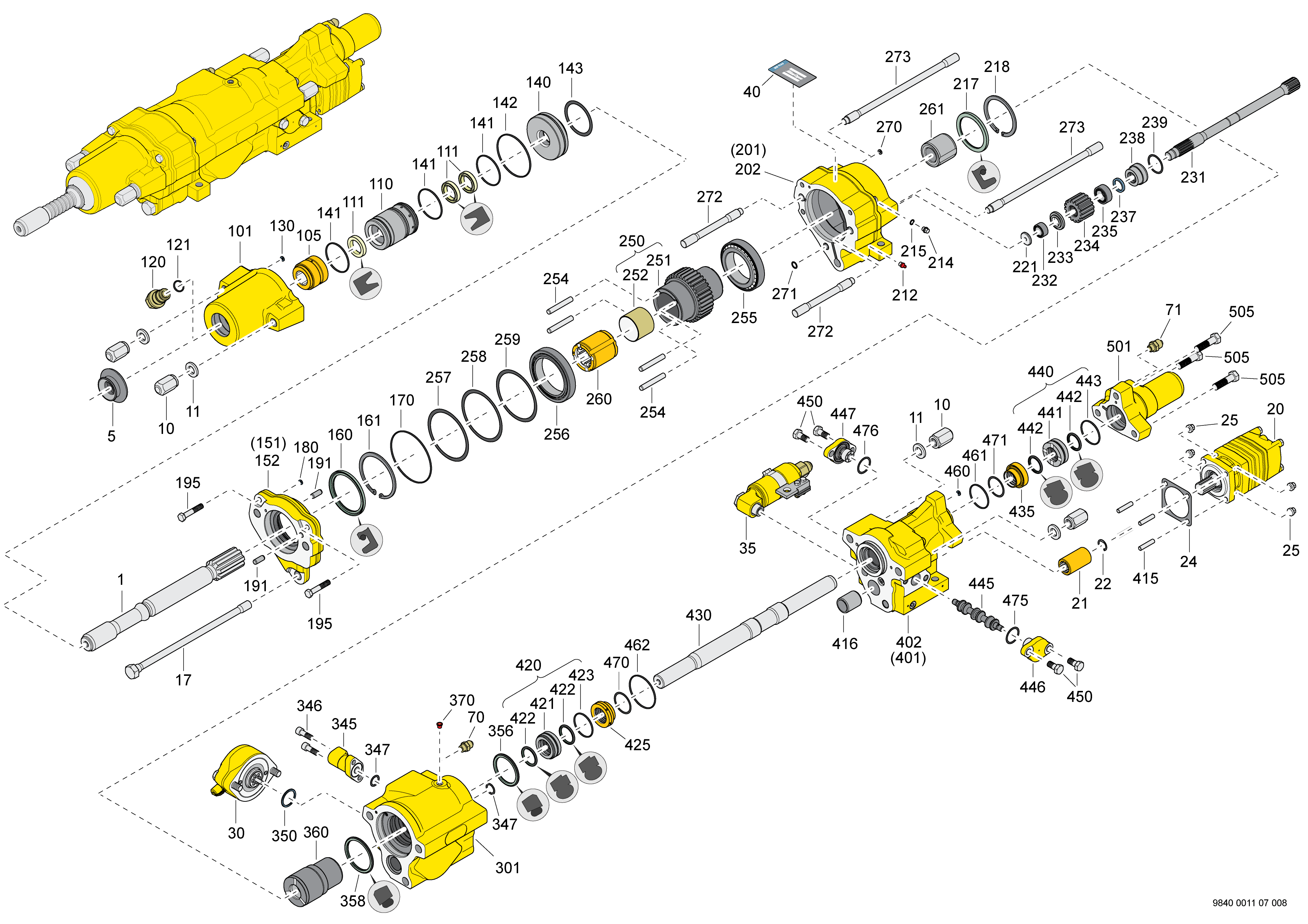
When procurement teams compare hydraulic rock drills, they usually line up impact energy figures and move on. What makes Epiroc's COP series hold its position across deep-level gold mines, Chilean copper operations, and Scandinavian tunneling projects isn't a single number—it's how the percussion, damping, and rotation systems work together under conditions that make lesser components fail within a few hundred hours.
This article looks at what separates Epiroc's product line technically, where it performs best, and what seal maintenance actually looks like when these drills are running at capacity in aggressive ground.
The COP Series: Built Around the Damping Problem
Every hydraulic drifter faces the same physics challenge: the piston hits the shank, a stress wave travels into the drill rod, and a reflected wave comes back. If the drill body isn't designed to absorb that return energy, it accelerates fatigue failure in the housing and creates erratic percussion behavior at the face.
Epiroc's COP lineup addresses this through a hydraulic dual-damping system with a floating adapter. The floating adapter isn't a marketing term—it physically decouples the percussion module from the body structure during the return-wave phase, reducing the force transmitted into the drill housing. The COP 1838+ and COP 2238+ both use this architecture, and it's a large part of why the drill steel economy on these units is measurably better than earlier-generation designs in hard formation drilling.
The COP 3060MUX takes it further: percussion mechanism efficiency reaches 70% through updated casting technology, which is a meaningful figure when you're running 300+ bar systems in uninterrupted long-hole applications underground.
Key Model Comparison: COP Series at a Glance
Model |
Application |
Key Feature |
Hole Diameter |
COP 1638+ |
Underground drifting |
Dual damping, 25-bar flushing water |
43–64 mm |
COP 1838+ |
High penetration underground |
Floating adapter, stepless rotation |
51–76 mm |
COP 2238+ |
Hard rock production |
High torque, variable rotation motor |
64–89 mm |
COP 2550UX+ |
Long-hole underground |
Uninterrupted heavy drilling |
76–102 mm |
COP 3060MUX |
Heavy underground applications |
70% percussion efficiency, extractor |
89–127 mm |
COP 4050MUX |
Large underground applications |
Built-in extractor, heavy-duty body |
102–152 mm |
The built-in extractor on the MUX models deserves attention. When a drill string jams at 30+ meters in fractured ground, the extractor allows the piston to strike during pullback—sending percussive stress waves into the rod to break it free. Without that, a stuck string means a manual recovery operation that can cost half a shift or worse.
Rotation Motor Design: Why Stepless Control Matters in Variable Ground
Mining faces are not uniform. A single production round can move from competent granite at 200 MPa to a fractured clay-filled zone within a meter. Fixed-speed rotation motors force the operator to stop and adjust parameters manually or accept the penalty of either a jammed string or a stripped thread.
The stepless variable and reversible rotation motor on the COP 1838+ and 2238+ allows the operator—or the rig's automated control system—to adjust rotation torque and speed continuously as ground conditions change. In automated rigs, this becomes a primary factor in reducing unplanned downtime between the scheduled 500-hour service intervals that Epiroc targets with their MD20 platform.
The COP MD20, optimized specifically for mine drifting, pushes this further: improved resistance to free-hammering (percussion without rock contact) means fewer housing failures during setup moves when the bit isn't yet engaged. That alone reduces breakdown frequency at the start of each drilling round.
Seal Maintenance Reality at 200+ Bar Operating Pressure
Epiroc recommends OEM-specification seal kits for all COP series models, and the reason is mechanical, not commercial. The flushing water circuit on the COP 1638+ handles up to 25 bar of water pressure operating simultaneously with the 160–220 bar percussion circuit. A seal that holds in one circuit but weeps into the other contaminates the flushing system and changes the effective percussion pressure—neither outcome is visible until performance has already degraded.
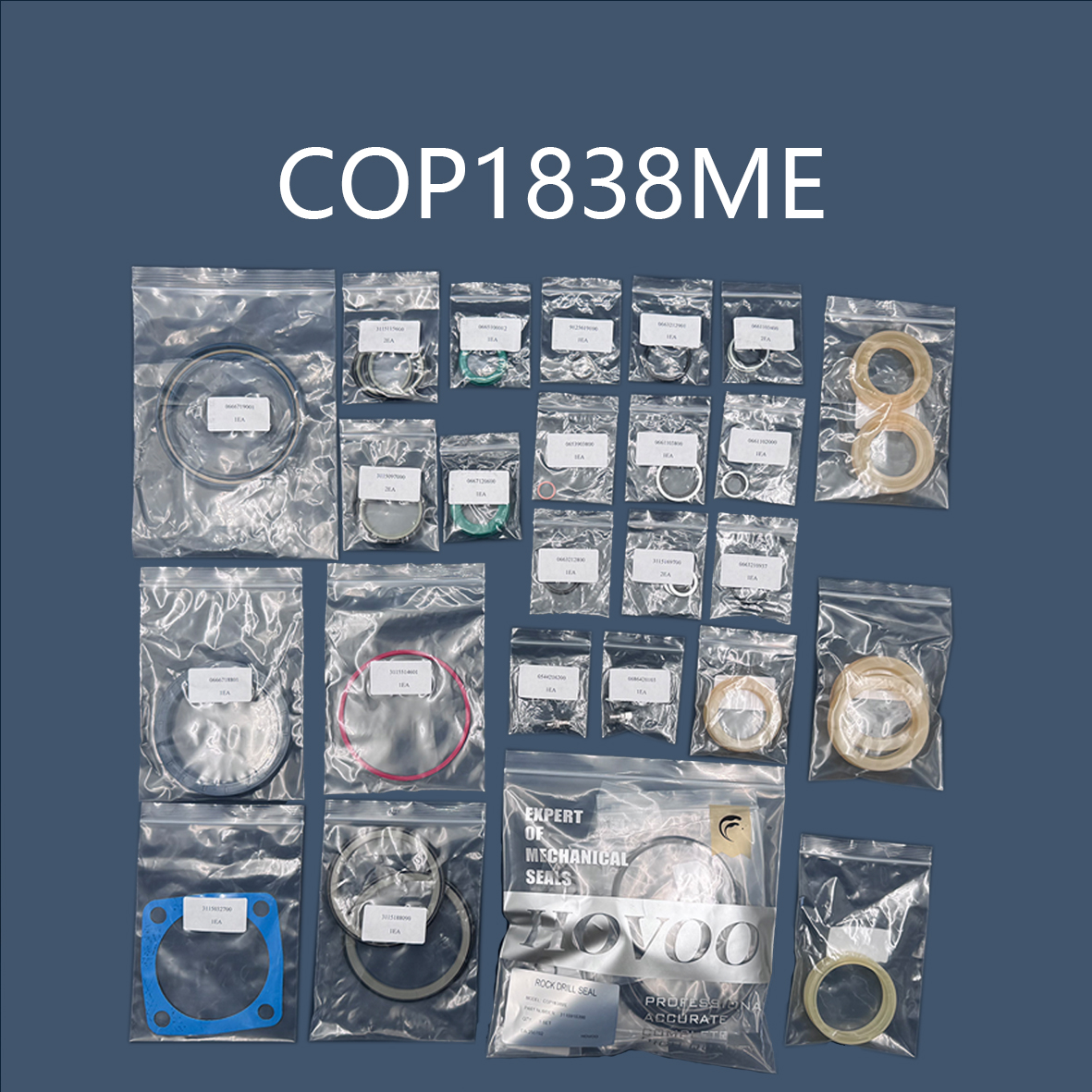
HOVOO manufactures rock drill seal kits dimensioned to OEM specifications for Epiroc COP models, using PU and HNBR compounds verified under cyclic load testing. The full seal kit reference list for Epiroc/Atlas Copco models is at hovooseal.com. When replacing seals on COP units, verify the flushing box seal separately from the percussion chamber kit—they wear at different rates depending on water quality and formation abrasion.
Where Epiroc Drills Are Best Matched—and Where They're Not
Epiroc's COP series is engineered for underground work: tunneling jumbos, longhole production rigs, bolting applications in development headings. The dual-damping system and floating adapter architecture are optimized for the confined, high-cycle environment of an underground face, where the drill runs continuously for hours per shift.
Surface bench drilling applications can use Epiroc equipment, but the RD series (RD8, RD14U, RD18U) is better matched there—simpler design, lower maintenance overhead, suited to the open-air heat dissipation and wider operator access of surface operations. Specifying a COP 4050MUX for a surface quarry application where a simpler unit would do adds cost without adding performance.
For buyers sourcing replacement seal kits or wear parts for existing Epiroc-equipped fleets, matching by model designation is the only reliable method. Generic seal kits sized by bore diameter alone frequently miss the flushing box geometry or the specific O-ring durometer required for the percussion fluid.


