

 EN
EN
 AR
AR CS
CS DA
DA NL
NL FI
FI FR
FR DE
DE EL
EL IT
IT JA
JA KO
KO NO
NO PL
PL PT
PT RO
RO RU
RU ES
ES SV
SV TL
TL IW
IW ID
ID LV
LV SR
SR SK
SK VI
VI HU
HU MT
MT TH
TH TR
TR FA
FA MS
MS GA
GA CY
CY IS
IS KA
KA UR
UR LA
LA TA
TA MY
MY
Talk to a mine maintenance manager who has run both Epiroc and Sandvik equipment on the same site and the conversation rarely stays on spec sheet comparisons for long. It moves quickly to consumables logistics, service interval behavior, and what happens when a part fails at 2 a.m. on a Sunday. Those are the variables that determine fleet cost over a 5-year operating period—and they're exactly what spec sheets don't cover.
Both companies are Swedish engineering groups with over a century of percussion drilling development behind them. They watch each other closely and have converged on similar product architectures for good reasons—the physics of percussive rock drilling doesn't offer wildly different solutions. What they have diverged on is damping system philosophy, automation architecture, and the consumables/service model. Those three differences determine which brand fits a specific operation better.
What the Percussion Systems Actually Do Differently
Epiroc's COP series uses a hydraulic dual-damping system with a floating adapter. In practical terms: after the piston strikes the shank, the reflected stress wave traveling back up from the rock face is absorbed by the damping mechanism rather than transmitted into the drifter housing. The floating adapter physically allows the percussion module to move slightly on the return cycle, decoupling it from the body structure at the moment of maximum return-wave stress. That's where the drill steel economy improvement comes from—fewer high-stress events on the housing per percussion hour.
Sandvik centers its design on the stabilizer—a hydraulically controlled actuator that keeps the shank adapter in optimal geometry relative to the piston throughout the drilling cycle. The Sandvik approach manages contact quality before each blow rather than managing return energy after it. The stabilizer absorbs recoil energy and holds bit-rock contact consistent between impacts. On surface longhole rigs where hole straightness determines blasting effectiveness, this consistent contact geometry produces a measurable advantage in penetration rate and rock tool life.
Neither approach is objectively superior. They suit different drilling patterns. The floating adapter advantage is strongest in underground applications with high continuous percussion hours. The stabilizer advantage is strongest in surface longhole work where hole geometry and bit-rock contact consistency matter more than shock absorption per se.
Core Product Comparison: Where Each Excels
Feature |
Epiroc COP Series |
Sandvik HL / RD Series |
Damping mechanism |
Floating adapter absorbs return-wave energy |
Stabilizer controls shank-piston contact geometry |
Best application |
Underground continuous drilling, face work |
Surface longhole, bench, production drilling |
Flushing water pressure |
Up to 25 bar (COP 1638+) |
Up to 20 bar (HL1560ST) |
Percussion efficiency |
70% (COP 3060MUX — casting technology) |
Optimized pulse form (RD1840C long piston) |
Drill steel economy |
Strong — floating adapter reduces housing fatigue |
Strong — stabilizer extends rock tool life |
Automation platform |
6th Sense: Control, Optimize, Information |
AutoMine (autonomous), iSure (drilling), OptiMine (analytics) |
Automation learning curve |
Consultants included; full integration support |
AutoMine rated easier to install and onboard |
Service interval design |
COP MD20: extended interval for mine drifting |
RD520: upgrade kits extend between major rebuilds |
Underground Development and Tunneling: Epiroc's Strongest Ground
Epiroc has built its core identity around underground drilling since the Atlas Copco days, and the COP lineup reflects that focus. The COP MD20 was designed specifically for mine drifting—its improved resistance to free-hammering (percussion without rock contact during repositioning) reduces housing failures between holes that previous-generation designs suffered in high-cycle tunnel development. The COP 1838AW+ targets aggressive underground environments explicitly: it handles contaminated flushing water, elevated operating temperatures, and continuous high-percussion-hour cycles without performance degradation.
The floating adapter's return-wave absorption extends directly into drill steel and boom joint service life on high-utilization underground jumbos. Less shock energy transmitted into the boom structure means lower pivot pin wear rate. Over a fleet of three or four jumbos running two shifts underground, that maintenance interval extension adds up to real production time recovered per year.
Surface and Longhole Production: Sandvik's Strongest Ground
Sandvik's stabilizer system produces its biggest advantage in surface longhole drilling—exactly the application the RD1840C and RD930 were built for. In a 36-meter production hole, bit bounce from inconsistent contact wastes impact energy and generates uneven carbide wear. The stabilizer eliminates that inconsistency, keeping the shank at the geometry the piston was calibrated to strike. Sandvik's DL422i longhole production drill, using the HF1560ST drifter with automated drilling control, reports up to 10% more drilled meters per shift specifically because the stabilizer and automation work together to eliminate the manual parameter adjustment delays that interrupt continuous production.
The three rotation motor variants available on the HL710 give surface operations a practical advantage: torque and RPM can be matched to hole diameter and formation without changing the drifter body. T51 rods in hard granite, HL38 rods in softer limestone, and the same carrier handles both without modification. That flexibility reduces fleet inventory complexity for operations drilling a range of hole sizes.
Automation: Similar Capability, Different Philosophy
Both companies offer comparable tiers of automation—from semi-automated single-hole drilling to fully autonomous face coverage. The meaningful difference is in how the platforms integrate. Sandvik's AutoMine has a reputation in the industry for requiring less onboarding time to get running, with pricing tiers that let mines scale automation incrementally. Epiroc's 6th Sense includes an application team of consultants as part of the offering, which suits mines that want a vendor-managed integration but adds cost if the mine has its own engineering capacity.
Sandvik's OptiMine analytics platform runs on IBM's Watson IoT infrastructure, which provides fleet connectivity across both Sandvik and non-Sandvik equipment. Epiroc's 6th Sense optimization layer covers production capacity improvement from the same equipment—a different framing of the same objective. For mines already committed to one platform's ecosystem, switching equipment brands mid-fleet lifecycle creates integration friction that outweighs most drifter-level performance differences.
Seal Kits: Model-Specific, Not Brand-Interchangeable
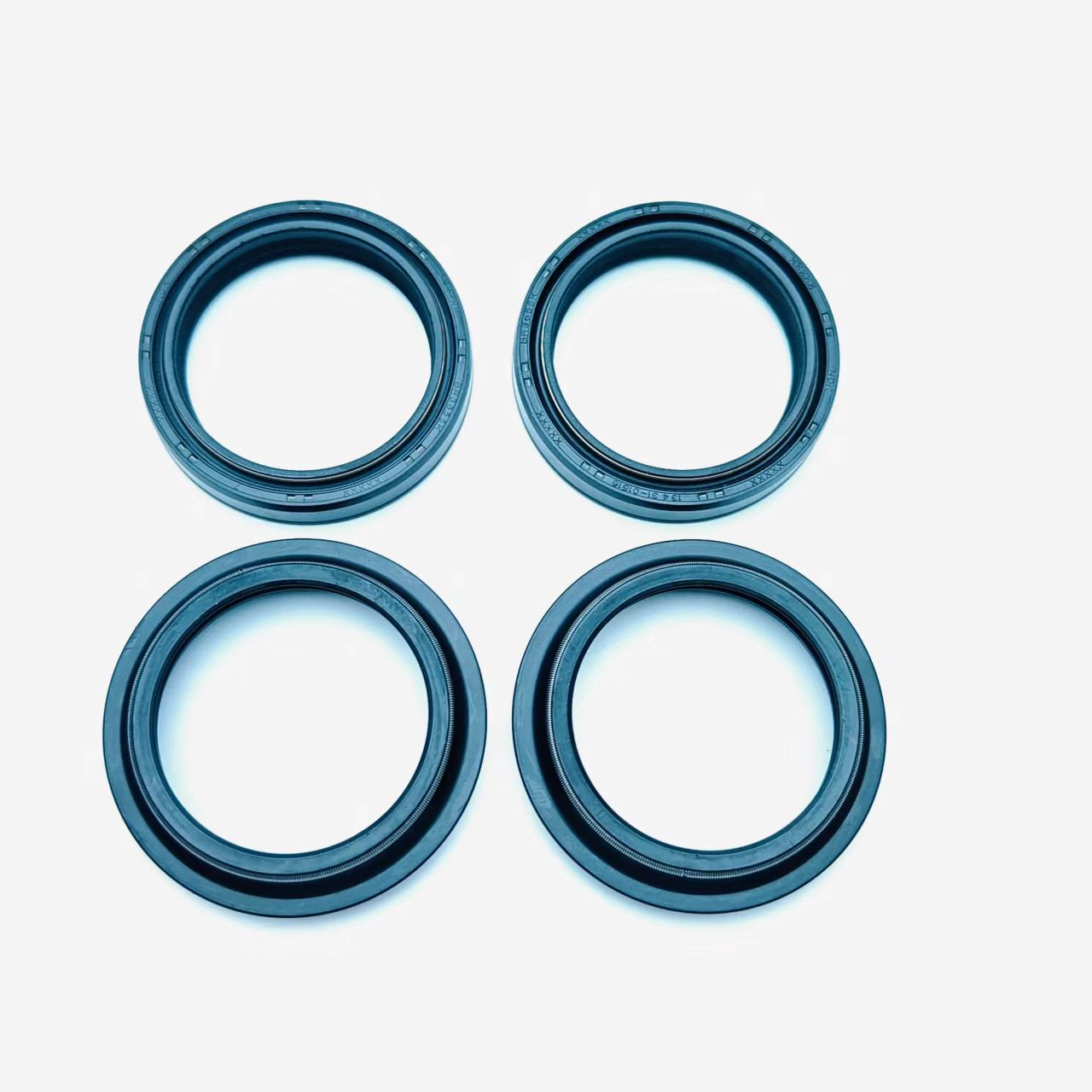
One operational reality that affects both fleets equally: Epiroc and Sandvik seal kits are not interchangeable between brands, and within each brand the kits are model-specific. Bore dimensions, flushing circuit geometry, and accumulator port O-ring specifications differ between COP models and HL/RD models in ways that make cross-substitution produce early failure. Mixed fleets need separate kit inventories. HOVOO supplies model-specific seal kits for both Epiroc COP and Sandvik HL/RD series in PU and HNBR compound options. Correct compound selection by operating temperature and environment matters as much as bore-dimension matching. References at hovooseal.com.
Table of Contents
- What the Percussion Systems Actually Do Differently
- Core Product Comparison: Where Each Excels
- Underground Development and Tunneling: Epiroc's Strongest Ground
- Surface and Longhole Production: Sandvik's Strongest Ground
- Automation: Similar Capability, Different Philosophy
- Seal Kits: Model-Specific, Not Brand-Interchangeable


