

 EN
EN
 AR
AR CS
CS DA
DA NL
NL FI
FI FR
FR DE
DE EL
EL IT
IT JA
JA KO
KO NO
NO PL
PL PT
PT RO
RO RU
RU ES
ES SV
SV TL
TL IW
IW ID
ID LV
LV SR
SR SK
SK VI
VI HU
HU MT
MT TH
TH TR
TR FA
FA MS
MS GA
GA CY
CY IS
IS KA
KA UR
UR LA
LA TA
TA MY
MY
Contractors who already own a 20–35 ton excavator are sitting on most of the capital they need to drill blast holes, install soil nails, or core through concrete foundations. What they're missing is the feed mast, the drifter, and the hydraulic circuit routing—which is exactly what an excavator rock drill attachment provides. The capital cost is a fraction of a dedicated drill rig, and the machine goes back to bucket and breaker work as soon as the drilling is done.
The actual switch takes 20 minutes on most modern attachment designs with quick-connect couplers. That mobility advantage matters on hillside projects, urban sites with restricted access, and any job where the geology changes fast and drilling needs to follow.
How the Hydraulic Circuit Works—and Why Carrier Matching Matters
An excavator drill attachment draws hydraulic power from the carrier's existing hammer circuit. No additional hydraulic plumbing is required on properly configured machines—the attachment connects through the dipper stick lines and uses the excavator's pump output for both impact and rotation functions. The carrier's hydraulic flow rate and operating pressure set the ceiling on what the drifter can deliver.
Mid-sized to large excavators in the 20–35 ton class generally provide sufficient flow (100–200 L/min) and pressure (180–220 bar) for top hammer drifters in the 10–20 kW range. Going below that carrier weight usually means the hydraulic pump output can't sustain the percussion circuit at rated pressure under continuous drilling—performance drops and heat builds up in the return lines. Going significantly above 35 tons doesn't help either; the attachment's feed mast and drifter are sized for a specific force range, and excess carrier weight doesn't translate into more drilling power.
Attachment Configurations by Application
Configuration |
Carrier Size |
Drifter Type |
Hole Range |
Typical Scene |
Compact mast, single-axis tilt |
3–12 t |
Light pneumatic / hydraulic |
28–45 mm |
Stone quarrying, marble, small bench |
Standard HEM mast, 360° swivel |
12–22 t |
Top hammer, R32–T38 |
45–76 mm |
Blast hole, soil nailing, anchoring |
Heavy HEM, extended stroke |
20–35 t |
Top hammer, T45–T51 |
64–102 mm |
Mining bench, pre-shear, rock bolting |
Long-mast system with rod adder |
25–40 t |
Drifter + rod-adder feed |
76–115 mm |
Micropile, 12 m+ deep drilling |
360° dual-positioner system |
30–50 t |
High-frequency top hammer |
89–140 mm |
Confined access, angled installations |
The 360-degree swivel is the feature that separates excavator attachments from other drilling platforms in terms of versatility. Where a dedicated drill rig needs to reposition the carrier to change drilling angle, the swivel lets the operator work from crown to floor and sidewall without moving the machine. In confined sites—urban foundations, highway cuts, slope stabilization—that reach advantage can compress a multi-day setup into a single shift.
Automatic Stroke Adjustment: What It Does in Practice
Some drifter designs used in excavator attachments incorporate Automatic Stroke Adjustment (ASA). The mechanism brings the hammer to idle when the drill string is not under load—if the bit lifts off the rock between positioning moves, the percussion stops rather than running free. Free hammering (impact without rock contact) is one of the fastest ways to fatigue the drifter housing because the return wave from the shank has nowhere to dissipate.
When the operator puts weight on the drill string and bit-to-rock contact is established, ASA brings the hammer up to full power automatically. On sites with frequent repositioning between holes—blast patterns with tight spacing, soil nail rows on a slope—this removes the operator's need to manually throttle the percussion circuit at every move. Drifter housing fatigue incidents drop sharply, and percussion hours per service interval extend accordingly.
Flushing Options and the Water-Supply Constraint
Most excavator drill attachments support air, water, or grout flushing through a built-in swivel. For top hammer applications in dry rock, compressed air flushing works well and requires only a compressor connection. Water flushing is more effective in deep holes or fine-grained rock where cuttings pack around the bit—but it requires a water source and a return circuit that doesn't flood the collar.
The John Henry JH16/170, for instance, carries a 60-gallon stainless steel tank with a hydraulically driven duplex pump feeding water into the flushing air stream. That self-contained supply works in remote sites where no water connection is available. For hollow-bar anchor installations where grout is the flushing medium, the swivel accepts grout injection directly—eliminating the separate grouting step that conventional drilling requires after the hole is complete.
Seal Maintenance on Excavator-Mounted Drifters
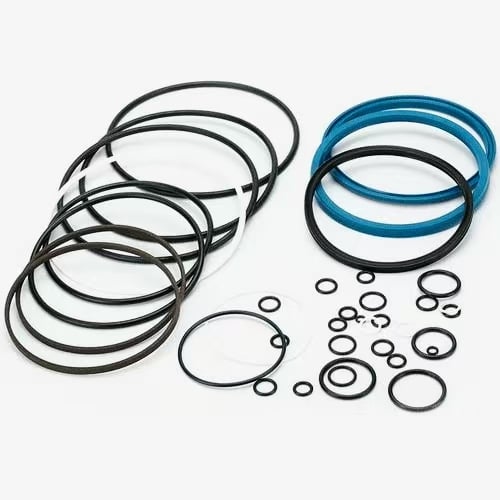
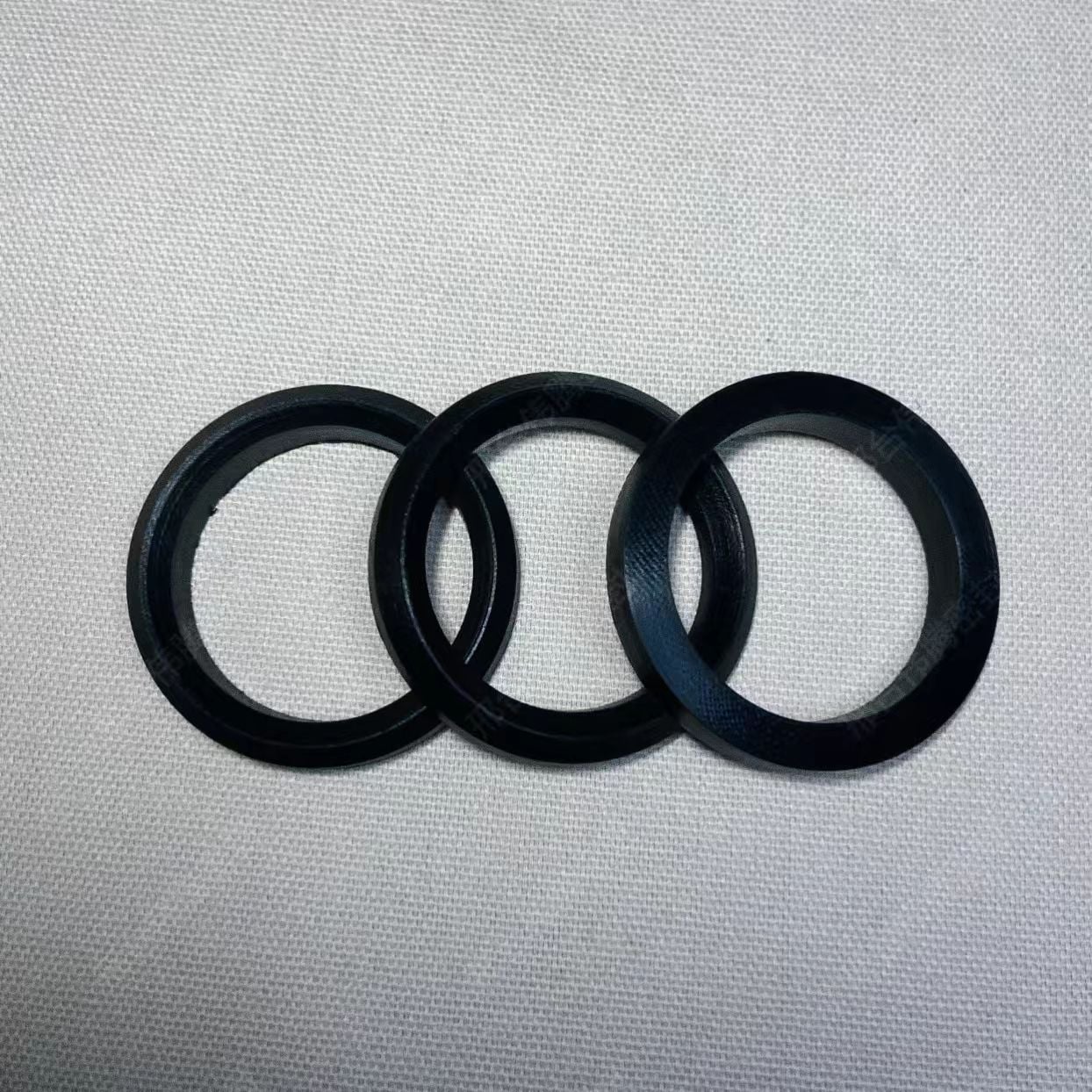
Excavator-mounted drifters run in more variable orientation than fixed jumbo applications—the 360-degree swivel means the drifter can be inverted, horizontal, or at any angle. Seal kits for these units need to handle hydraulic load in positions where gravity assists oil migration into circuits it shouldn't reach. HOVOO supplies rock drill seal kits for drifter models used in excavator attachment platforms, dimensioned to OEM specification with PU and HNBR compound options. For sites running continuous multi-angle drilling cycles, the flushing box seals should be inspected at shorter intervals than the percussion kit—the variable orientation accelerates wear on the dynamic flushing seals faster than it does on the percussion piston seals. Model-specific kit references are at hovooseal.com.


