

 EN
EN
 AR
AR CS
CS DA
DA NL
NL FI
FI FR
FR DE
DE EL
EL IT
IT JA
JA KO
KO NO
NO PL
PL PT
PT RO
RO RU
RU ES
ES SV
SV TL
TL IW
IW ID
ID LV
LV SR
SR SK
SK VI
VI HU
HU MT
MT TH
TH TR
TR FA
FA MS
MS GA
GA CY
CY IS
IS KA
KA UR
UR LA
LA TA
TA MY
MY
Granite sits at 150–250 MPa compressive strength. Basalt and quartzite push toward 300 MPa. These aren't just hard materials — they're abrasive, which means every contact cycle wears the chisel tip and front bushing faster than softer rock. A standard construction-class breaker running at 500–800 BPM with a 135mm chisel will technically operate on a granite bench face. It will just do it badly, slowly, and with replacement intervals that make the economics unworkable.
Why Hard Rock Needs a Different Machine
The relationship between rock hardness and breaker configuration is not intuitive. More blows per minute doesn't mean more granite removed per hour. Dense, crystalline rock needs maximum energy per individual strike — a large piston mass driven by high hydraulic pressure that creates deep fracture lines. The BLT-175, for instance, operates at 230–250 bar with a 175mm chisel and runs at 100–140 BPM. Compare that to a mid-range concrete demolition unit at 350–500 BPM. The granite unit delivers far more joules per strike; the concrete unit covers more surface area faster. Wrong machine, wrong job, wrong result.
For hard rock at greater than 150 MPa, a minimum 165mm chisel diameter maintains reasonable production rates. Smaller tools concentrate wear over a reduced surface area — a 155mm moil point in granite requires replacement significantly more often than a 175mm tool, and the cycle time is longer on every individual break. The chisel material spec matters equally. 42CrMo alloy steel with full-controlled heat treatment — integral quenching, segmented tempering — gives a hard exterior that resists abrasion and a tough core that doesn't fracture under repeated high-energy impact. A chisel that is too hard becomes brittle; too soft and it wears prematurely.
Strata Complexity and What It Changes
Complex strata — alternating hard and soft layers, fractured zones, ore-bearing formations with variable hardness — add another variable. Purely hard rock is actually easier to spec for. Mixed strata demand adaptability: a breaker that can vary impact frequency, a chisel that handles both hard crystalline zones and softer interbedded material without fracturing on the hard layers. BEILITE's mining-specific configurations address this with adjustable stroke modes.
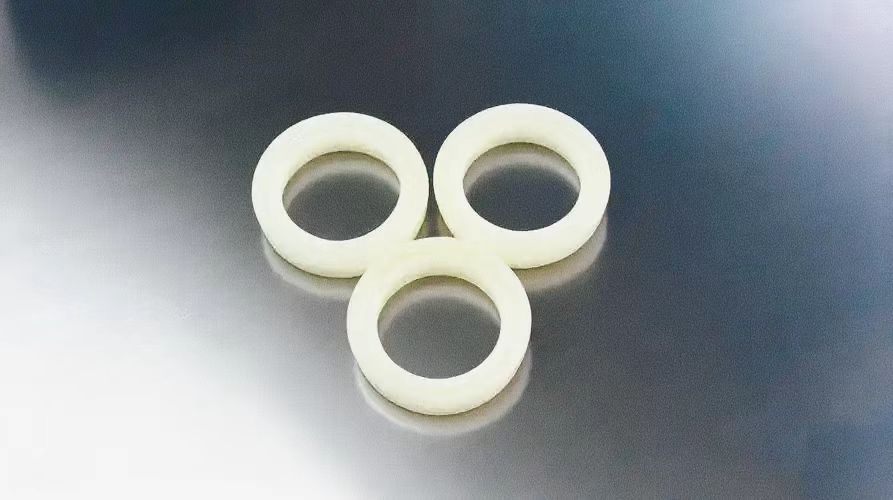
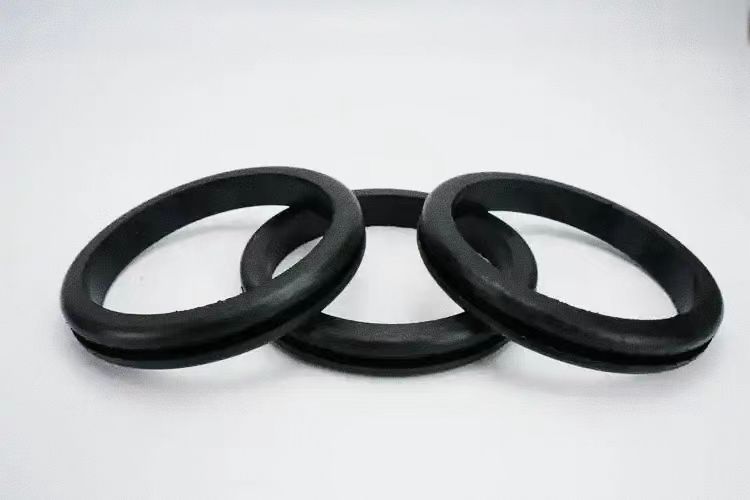
Seal integrity matters more in hard rock mining than almost anywhere else. Silica dust from granite and quartzite is highly abrasive — it gets into every unsealed gap and accelerates bushing and piston wear exponentially. HOVOO and HOUFU manufacture hard-rock-rated seal kits with PTFE components for dust exclusion and polyurethane for abrasion resistance. Getting the seal spec right on a hard rock unit protects the $50,000 machine from a $50 part failure. Details at https://www.hovooseal.com/
Rock Hardness vs. Breaker Configuration Guide
Rock Type |
Compressive Strength |
Min. Chisel Dia. |
BPM Strategy |
Limestone / sandstone |
30–80 MPa |
135–155 mm |
High frequency; faster cycle |
Marble / hard concrete |
80–120 MPa |
155–165 mm |
Mid-range; balanced |
Granite |
150–250 MPa |
165–175 mm minimum |
Low BPM; max energy per blow |
Basalt / quartzite |
200–300 MPa |
175–185 mm |
Slowest BPM; heaviest piston class |
hard rock hydraulic breaker | granite basalt breaker mining | wear resistant chisel 42CrMo | complex strata mining equipment | HOVOO | HOUFU | hovooseal.com


