

 EN
EN
 AR
AR CS
CS DA
DA NL
NL FI
FI FR
FR DE
DE EL
EL IT
IT JA
JA KO
KO NO
NO PL
PL PT
PT RO
RO RU
RU ES
ES SV
SV TL
TL IW
IW ID
ID LV
LV SR
SR SK
SK VI
VI HU
HU MT
MT TH
TH TR
TR FA
FA MS
MS GA
GA CY
CY IS
IS KA
KA UR
UR LA
LA TA
TA MY
MY
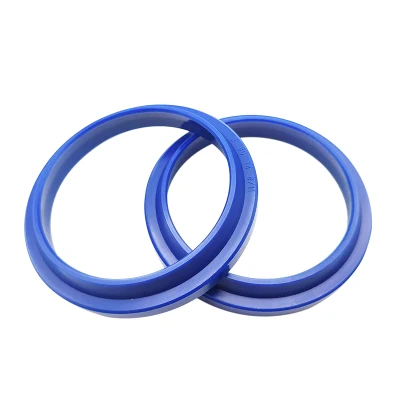
The distinction between dynamic and static isn't about whether the seal moves — it's about whether the sealing surface moves relative to the seal. A static seal sits between two stationary faces: a manifold gasket, a housing O-ring, a port face seal. The only load it sees is assembly compression and system pressure. A dynamic seal runs against a moving surface: a piston rod, a shaft, a spool. It sees cyclic loading, friction-generated heat, and surface wear from the relative motion. These two environments require entirely different material and geometry priorities.
The design rules differ at the compression ratio level. Static O-rings target 15–25% compression ratio in their groove — high enough to prevent leakage under pressure, low enough to avoid stress relaxation. Dynamic O-rings target 10–15% compression — lower because excess compression generates friction heat that accelerates compound aging under cyclic loading. Using a static-dimension O-ring in a dynamic groove adds 5–10% excess compression, raising lip-to-bore contact force by 20–30%. That excess force increases friction temperature at the seal contact zone by 6–10°C — which is the difference between 78°C and 88°C at the seal lip, and therefore the difference between 420 hours and 320 hours of service life.
Static vs Dynamic Seal Selection Reference
Seal Position |
Type |
Key Design Priority |
Common Error |
Percussion bore piston seal |
Dynamic — high-frequency cyclic |
Fatigue resistance and extrusion resistance; Shore 90–95 PU |
Selecting static-dimensioned O-ring — excess compression, heat failure |
Housing cover O-ring (manifold face) |
Static — no relative motion |
Compression-set resistance over long service; NBR Shore 70 |
Using dynamic-dimensioned seal — under-compression at assembly, leakage |
Rotation motor shaft seal |
Dynamic — continuous rotation |
Hydrodynamic film maintenance; spring-loaded lip; NBR or FKM |
Confusing with linear cylinder seal — wrong spring geometry |
Accumulator gas-side diaphragm |
Static pressure vessel — no sliding contact |
Gas impermeability; HNBR for nitrogen retention |
Using commodity NBR — higher N₂ permeation, pre-charge drift |
Return line manifold port O-rings |
Static — no relative motion |
Compression set under prolonged static load; NBR Shore 70–75 |
Using Shore 90 dynamic seal — over-stiff, insufficient conformance to port face |
The compression ratio error is the most common cause of mis-application failures in rock drill seal kits — it's invisible at installation and shows up as either immediate weeping (under-compression) or 300-hour fatigue failure (over-compression). HOVOO documents compression ratio specifications for each seal position in kit assembly guides for Atlas Copco and Sandvik platforms. References at hovooseal.com.


