

 EN
EN
 AR
AR CS
CS DA
DA NL
NL FI
FI FR
FR DE
DE EL
EL IT
IT JA
JA KO
KO NO
NO PL
PL PT
PT RO
RO RU
RU ES
ES SV
SV TL
TL IW
IW ID
ID LV
LV SR
SR SK
SK VI
VI HU
HU MT
MT TH
TH TR
TR FA
FA MS
MS GA
GA CY
CY IS
IS KA
KA UR
UR LA
LA TA
TA MY
MY
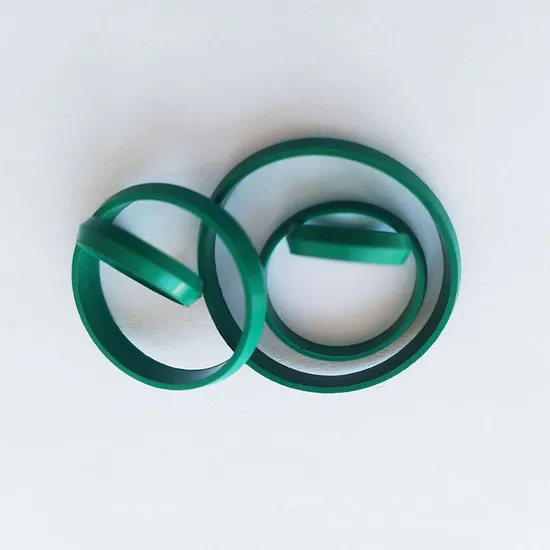
Rotary motor seals run against a continuously rotating shaft — typically 200–600 RPM in rock drill rotation motors — at modest interface velocities. Linear cylinder seals run against a reciprocating rod at higher peak velocity but much lower average velocity with frequent direction reversals. The lubrication regimes are fundamentally different. The rotary seal runs in hydrodynamic lubrication for nearly its entire operating life — the rotating shaft generates a self-renewing oil wedge under the seal lip by the rotation itself. The linear seal cycles through mixed and boundary lubrication at each reversal point, which is where the highest wear occurs.
The consequence for seal design: rotary motor shaft seals use elastomeric lips with a spring-loaded garter spring to maintain constant contact pressure regardless of shaft position — the continuous rotation makes contact pressure uniformity the key design parameter. Linear percussion bore seals use stiffer compound and larger cross-section because the reversal shock loads require resistance to fatigue rather than flexibility for rotation conformity. Replacing a linear seal with a rotary seal in the percussion bore — a substitution error that happens when parts bins are poorly labeled — produces immediate bypass because the rotary seal's garter spring design cannot handle the axial shock loads at percussion frequency.
Rotary vs Linear Seal Design Comparison
Design Parameter |
Rotary Motor Shaft Seal |
Linear Cylinder Percussion Seal |
Consequence of Substitution |
Primary failure mode |
Lip hardening from heat at shaft interface over 800–1,200 hours |
Lip fatigue fracture from cyclic stress at reversal points |
Linear seal in rotary position — excessive contact force causes shaft scoring |
Lubrication regime |
Hydrodynamic — continuous film from shaft rotation |
Mixed/boundary — film gaps at reversal stroke endpoints |
Rotary seal in linear position — insufficient lip stiffness for percussion shock |
Spring loading |
Garter spring — constant radial load against shaft |
No spring — interference fit maintains contact under hydraulic pressure |
Garter spring in percussion bore — spring fatigue failure at 40–55 Hz within 80 hours |
Operating speed |
200–600 RPM continuous shaft rotation |
0 at reversal; peak velocity mid-stroke |
Speed incompatibility makes direct substitution unreliable |
Service interval |
800–1,200 hours in clean oil (lower cyclic fatigue rate) |
400–480 hours (high cyclic fatigue from percussion frequency) |
Mixed-use intervals create unplanned failures in substituted position |
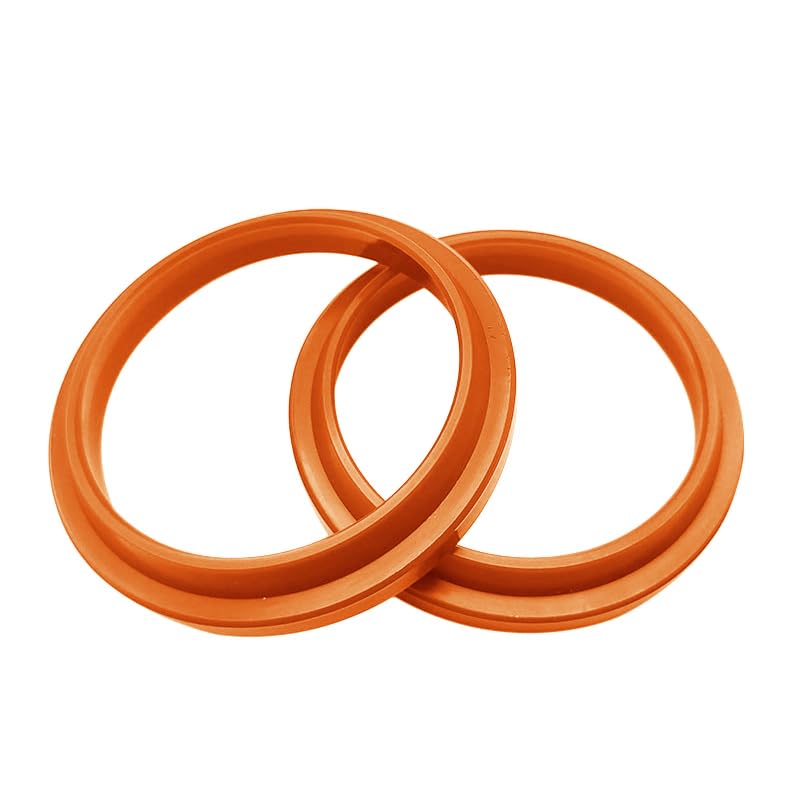
Catalog cross-referencing by dimensional match alone causes this substitution error when part numbers aren't maintained carefully in parts management systems. The dimensional match can be correct; the design is incompatible. HOVOO supplies application-coded seal kits with rotary and linear positions clearly distinguished for DD2710 and DT1131 jumbos. Full specifications at hovooseal.com.


