

 EN
EN
 AR
AR CS
CS DA
DA NL
NL FI
FI FR
FR DE
DE EL
EL IT
IT JA
JA KO
KO NO
NO PL
PL PT
PT RO
RO RU
RU ES
ES SV
SV TL
TL IW
IW ID
ID LV
LV SR
SR SK
SK VI
VI HU
HU MT
MT TH
TH TR
TR FA
FA MS
MS GA
GA CY
CY IS
IS KA
KA UR
UR LA
LA TA
TA MY
MY
Buying a hydraulic rock drill by spec sheet alone usually ends in one of two predictable disappointments. Either the drifter exceeds the carrier's hydraulic capacity and runs at 70% of rated percussion power for its entire service life—quietly wasting fuel and underperforming—or the drifter is correctly sized to the carrier but underpowered for the actual rock, producing acceptable results in the soft zones and failing to meet penetration targets when the hard material shows up.
Both failures share the same root: the selection sequence was backwards. Spec sheets were compared before the formation, the carrier, and the target hole geometry were locked down. This guide covers the four inputs that need to be defined first, in the order that prevents both disappointment types.
Input 1: Formation Hardness Is the Governing Constraint
Uniaxial compressive strength (UCS) is the single number that most directly determines whether a given drifter can sustain a commercially viable penetration rate. A 20 kW class drifter achieves 1.5–2.5 m/min in granite at 250 MPa UCS. The same unit drills limestone at 100 MPa at 2.0–3.0 m/min—fast enough that the choice of 20 kW versus 15 kW barely changes the output, but significantly changes the operating cost.
The second geological variable is abrasivity index (CAI). High-abrasivity rock wears button carbide fast regardless of formation hardness. Quartzite at 200 MPa and granite at 200 MPa may require the same percussion power but will consume bits at very different rates depending on their quartz content. That affects consumable cost per meter, not drifter selection—but it needs to be in the project economics from the start.
If geological data is thin at selection time, use lithology as the proxy. Granite: 150–250 MPa. Limestone: 60–140 MPa. Basalt: 150–200 MPa. Sandstone: 30–100 MPa depending on cementation. These ranges are conservative approximations but accurate enough to define power class before detailed site investigation is complete.
Input 2: Hole Diameter Determines Thread Profile and Torque Requirements
Thread system is not an afterthought—it's the mechanical interface between the drifter's rotation torque and the drill string's ability to transmit that torque without galling or stripping. T38 threads suit holes to approximately 51 mm. T45 covers 51–64 mm reliably. T51 and GT60 are required for 76–115 mm production holes and carry torque requirements of 800–2,500 Nm depending on string length and formation—specifications that only mid-to-heavy drifters meet.
Running T51 rods on an underpowered rotation motor is one of the most common medium-duty selection mistakes. The motor can handle the thread torque in straight, clean holes. Add a 20-meter string, a clay-filled fissure, and a jammed bit, and the rotation motor stalls or strips the thread under the combined torque load. That's not an operational failure; it's a selection failure that happened before the machine arrived on site.
Selection Matrix: Matching Drifter Class to Site Conditions
Application |
UCS (MPa) |
Hole Diameter |
Depth |
Power Class |
Thread |
Anchoring / soil nailing |
30–80 |
38–51 mm |
3–12 m |
8–12 kW |
R25 / T38 |
Underground development |
80–150 |
43–64 mm |
3–5 m |
12–18 kW |
T38 / T45 |
Quarry / surface bench |
60–140 |
64–89 mm |
5–20 m |
14–22 kW |
T45 / T51 |
Underground production |
100–200 |
64–102 mm |
15–54 m |
18–25 kW |
T51 / GT60 |
Heavy surface longhole |
150–250 |
89–152 mm |
20–36 m |
22–35 kW |
T51 / GT60 |
Large blasthole / open pit |
100–200 |
140–250 mm |
20–50 m |
30–60+ kW |
Large rotary |
Input 3: Carrier Hydraulic Output Caps Drifter Performance
A drifter rated at 18 kW needs approximately 140–160 L/min at 180–200 bar to run at its specification. The carrier's pump flow-pressure curve at operating RPM—not the theoretical peak—sets the actual ceiling. Load-sensing variable-displacement pumps operating at 250–350 bar on modern underground rigs can match most drifter demands. Excavators vary widely: some 18-ton machines deliver 160 L/min on the hammer circuit, others deliver 90 L/min at the same machine weight.
The practical check is simple and takes 20 minutes: get the carrier's hydraulic data sheet, find the available flow and pressure at rated engine RPM, and verify those figures exceed the drifter's minimum operating requirement by at least 15%. That 15% margin covers hot-day viscosity changes, worn pump volumetric efficiency, and simultaneous functions. Without it, the drifter runs below rated percussion pressure on any day that's not ideal—which describes most working conditions.
One more thing worth checking: underground mines using electric-hydraulic rigs benefit from consistent power output unaffected by altitude. Diesel-powered carriers at 4,000 meters lose roughly 12–16% engine power, which flows directly into reduced pump output. If the project is at elevation, verify the carrier's derated hydraulic output, not its sea-level spec.
Input 4: Service Access and Consumables Supply Over Equipment Life
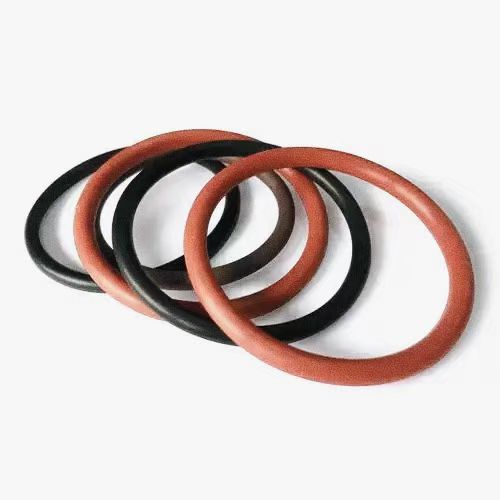
A drifter with no local seal kit supply is a downtime risk on every service interval. This sounds obvious but rarely enters the selection process until a project is running. For operations in Southeast Asia, West Africa, or South America—regions where OEM service centers may be distant—the question of who supplies rock drill seal kits in-region, at what lead time, and in what compound options (PU for standard, HNBR for hot climates) determines real fleet availability over a 5-year equipment life.
HOVOO supplies seal kits for Epiroc, Sandvik, Furukawa, and Montabert drifter models with OEM-matched dimensions and PU/HNBR compound options for global deployment. Establishing that supply relationship before commissioning removes one of the more predictable causes of extended downtime on remote projects. Full model references at hovooseal.com.
Table of Contents
- Input 1: Formation Hardness Is the Governing Constraint
- Input 2: Hole Diameter Determines Thread Profile and Torque Requirements
- Selection Matrix: Matching Drifter Class to Site Conditions
- Input 3: Carrier Hydraulic Output Caps Drifter Performance
- Input 4: Service Access and Consumables Supply Over Equipment Life


