

 EN
EN
 AR
AR CS
CS DA
DA NL
NL FI
FI FR
FR DE
DE EL
EL IT
IT JA
JA KO
KO NO
NO PL
PL PT
PT RO
RO RU
RU ES
ES SV
SV TL
TL IW
IW ID
ID LV
LV SR
SR SK
SK VI
VI HU
HU MT
MT TH
TH TR
TR FA
FA MS
MS GA
GA CY
CY IS
IS KA
KA UR
UR LA
LA TA
TA MY
MY
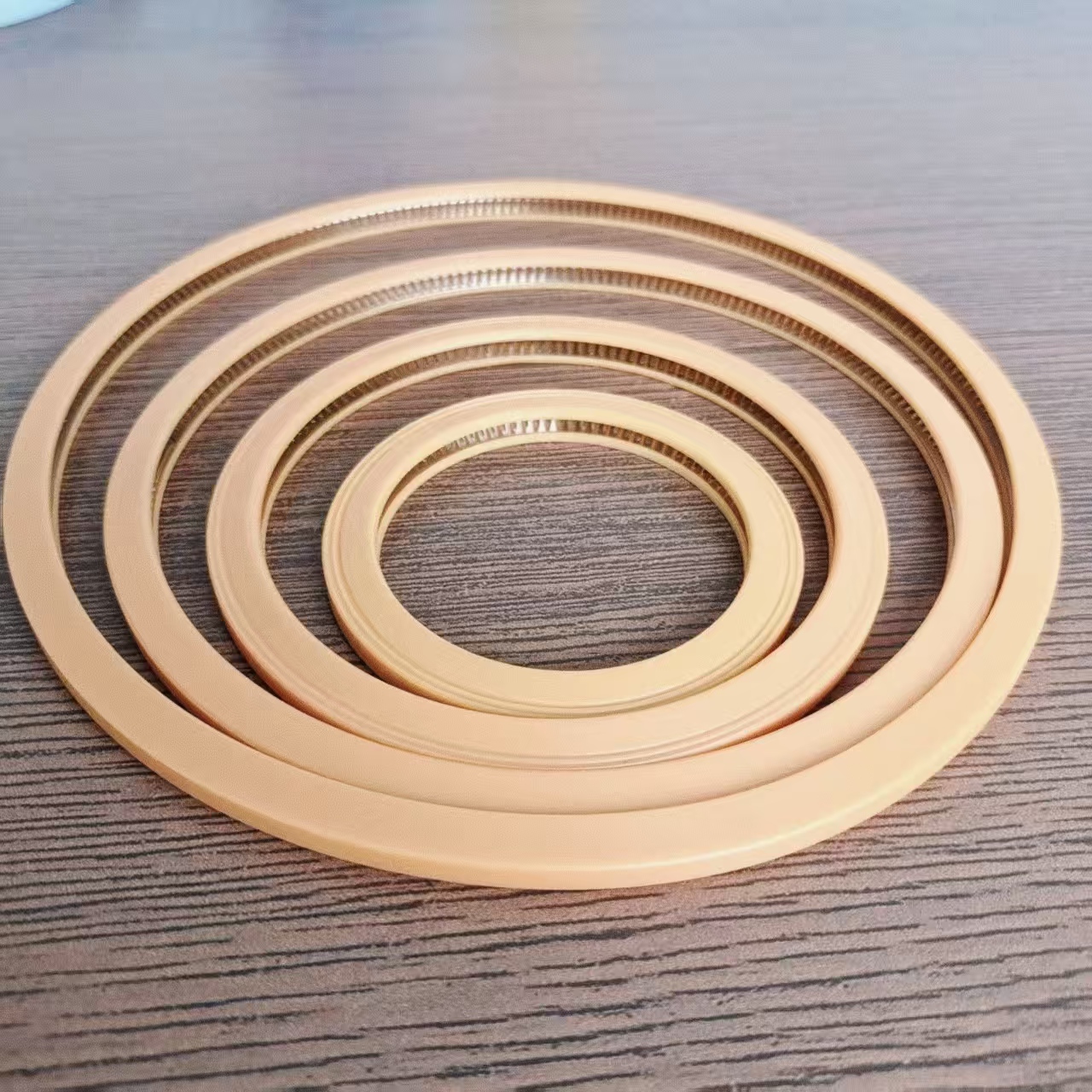
A worn guide sleeve is one of those failures that announces itself through a cascade of other problems before anyone identifies the root cause. The shank adapter starts fracturing at the thread root—engineers blame the adapter manufacturer. Penetration rate drops on hard rock—operators assume feed pressure needs adjustment. The percussion sound becomes irregular—maintenance changes the accumulator pre-charge. All three symptoms can share a single source: a guide sleeve worn past its clearance specification, allowing the shank adapter to swing laterally during the percussion cycle.
The guide sleeve sits at the front of the drifter body and holds the shank adapter in axial alignment with the piston bore. When the clearance between the sleeve's inner diameter and the shank's outer diameter exceeds the design tolerance, the shank can deflect off-axis between blows. That deflection puts bending stress on the shank at exactly the point where it already carries maximum torsional and impact load—the thread root. Fracture follows predictably.
What the Guide Sleeve Actually Does Under Load
During percussion, the piston strikes the shank end face with energy up to several hundred joules at 30–65 Hz. The stress wave travels from the shank into the drill rod and on to the rock. Simultaneously, the rotation motor is applying torque to the shank through the splines. The guide sleeve's job is to constrain lateral movement of the shank while allowing free axial and rotational motion—a tight radial clearance with no axial restriction.
In a new installation, the shank-to-sleeve clearance is typically 0.05–0.15 mm depending on drifter model. At that clearance, lateral shank deflection during percussion is negligible—the shank moves axially and stays on-axis. When wear opens that clearance to 0.3–0.5 mm or more, the shank can deflect 0.2–0.4 mm off-axis on each return stroke. At 50 Hz, that's 3,000 deflection cycles per minute concentrated at the thread root, exactly where fatigue cracks initiate.
Recognizing Wear Before Fracture Happens
The earliest indicator is a change in percussion sound—from a sharp, consistent crack to something slightly duller and less uniform. That change happens because the piston is no longer striking the shank face square-on; the misalignment from guide sleeve wear causes the contact to shift slightly off-center, changing the stress wave propagation. Most operators don't catch this auditory signal because it's gradual.
A more reliable early check is a manual radial wobble test on the shank adapter. With the drifter depressurized and the shank in position, apply lateral force by hand at the front of the shank and feel for play. New guide sleeves show essentially zero perceptible movement. A sleeve approaching replacement limit allows 0.3–0.5 mm of movement that's clearly detectable without instruments. Beyond that, the fit is loose enough that vibration during drilling will produce a visible shank wobble.
Thread damage patterns on the shank adapter also indicate guide sleeve condition. Uniform thread wear across the full circumference is normal. Asymmetric wear concentrated on one side of the thread—where the shank contacts the rod shoulder harder on that side due to deflection—indicates guide sleeve wear is already causing misalignment.
Inspection Interval and Replacement Criteria
Condition |
Shank Wobble |
Thread Pattern |
Action Required |
New / serviceable |
None perceptible |
Uniform thread contact |
Continue normal service |
Early wear (monitor) |
<0.2 mm lateral |
Slight asymmetry beginning |
Increase inspection frequency |
Approaching limit (plan replacement) |
0.2–0.4 mm lateral |
Visible asymmetric wear |
Schedule replacement within 50h |
At limit (replace immediately) |
0.4–0.5 mm lateral |
Heavy asymmetric or thread cracking |
Stop; replace before drilling |
Exceeded limit (inspect shank too) |
≥0.5 mm lateral |
Thread root cracking visible |
Replace sleeve AND inspect shank for fatigue cracks |
The guide sleeve should be inspected at each percussion seal replacement interval—typically every 400–500 hours. In highly abrasive formations or when flushing water carries fine rock particles back into the front chuck area, reduce that interval to 300 hours. The sleeve wears faster when contaminated flushing water runs across the shank-sleeve interface continuously.
Replacement Procedure: Getting the Fit Right
Guide sleeve replacement is straightforward mechanically but requires attention to fit. The new sleeve must be pressed into the front housing bore to its full seating depth—a sleeve that's not fully seated leaves an air gap that allows the shank to deflect at the unsupported section between the sleeve face and the housing shoulder. Press-fit sleeves typically require 5–15 kN of installation force; if the sleeve slides in by hand, the housing bore is worn beyond specification and the housing needs inspection.
After installation, verify the new sleeve's inner diameter matches the shank adapter's outer diameter within the specified clearance. Measure both with a bore gauge and micrometer if the sleeve brand or specification has changed from the previous installation. A nominally correct sleeve from a different manufacturer may have been machined to a slightly different tolerance, either too tight (causing the shank to bind during rotation) or too loose (replicating the clearance problem that triggered replacement).
The Seal Connection: Why Guide Sleeve Wear Affects Percussion Seals
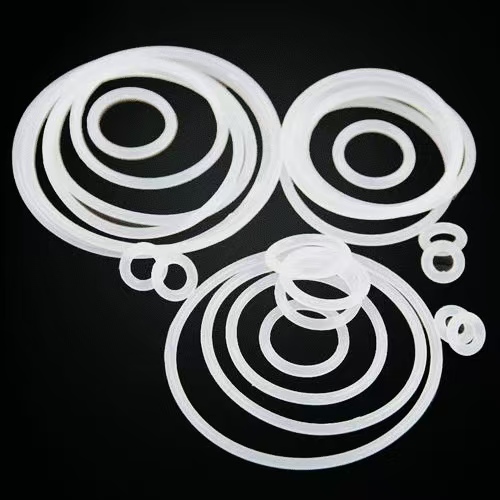
Excessive shank lateral movement from a worn guide sleeve does secondary damage to the front percussion seals. The percussion circuit's wiper seal and guide bushing seals are designed to maintain contact with the shank face under axial load. When the shank deflects laterally during percussion, those seals experience off-axis loading—the seal lip contacts the shank at an angle, concentrating wear on one side of the lip. The result is asymmetric seal face wear that produces bypass leakage before the seal has reached its full design life.
Sites that find percussion seals failing at 200–250 hours when the rated interval is 400–500 hours should check guide sleeve clearance before assuming seal quality is the issue. HOVOO supplies guide bushing seals and front-end seal kits for major drifter models alongside percussion kits—specifying both together for replacement simplifies the service interval and removes the common mistake of replacing the percussion seals while leaving a worn guide sleeve in place. Model references at hovooseal.com.


