

 EN
EN
 AR
AR CS
CS DA
DA NL
NL FI
FI FR
FR DE
DE EL
EL IT
IT JA
JA KO
KO NO
NO PL
PL PT
PT RO
RO RU
RU ES
ES SV
SV TL
TL IW
IW ID
ID LV
LV SR
SR SK
SK VI
VI HU
HU MT
MT TH
TH TR
TR FA
FA MS
MS GA
GA CY
CY IS
IS KA
KA UR
UR LA
LA TA
TA MY
MY
Underground work exposes every breaker failure mode simultaneously and removes the margins that surface operations take for granted. Vibration travels through rock instead of dissipating into open air. Dust has nowhere to go. Heat builds faster in a closed heading than in a quarry. The breaker that runs fine on a surface demolition project can cause structural problems, air quality violations, and equipment failures in the first week of a tunnel job if the operating parameters aren't adjusted.
The Dust and Air Quality Problem
Rock breaking generates respirable crystalline silica. On surface, wind disperses it. Underground, it concentrates. OSHA's tunneling standard (29 CFR 1926.800) mandates a minimum of 200 cubic feet per minute of fresh air per worker underground, with at least 30 feet per minute linear velocity in tunnel bores where drilling or dust-producing operations occur. A hydraulic breaker working a granite face in a 5m-diameter heading can exceed exposure limits within minutes without active ventilation and water suppression. Wet drilling combined with a water mist system on the chisel area is the standard control — water suppresses dust at the generation point before it becomes airborne.
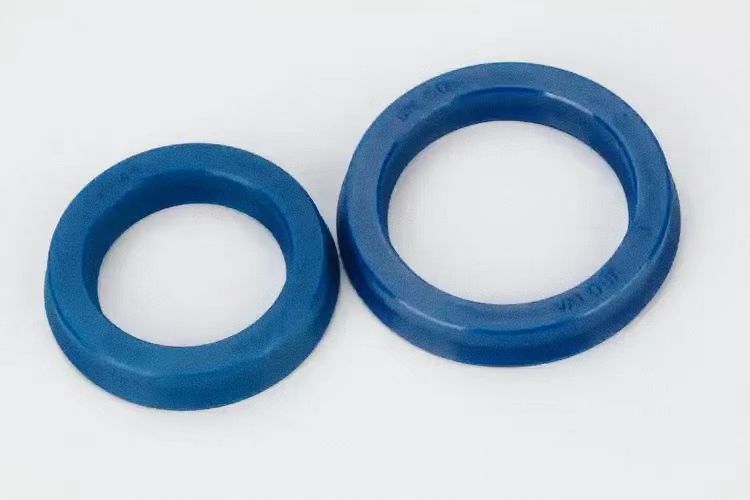
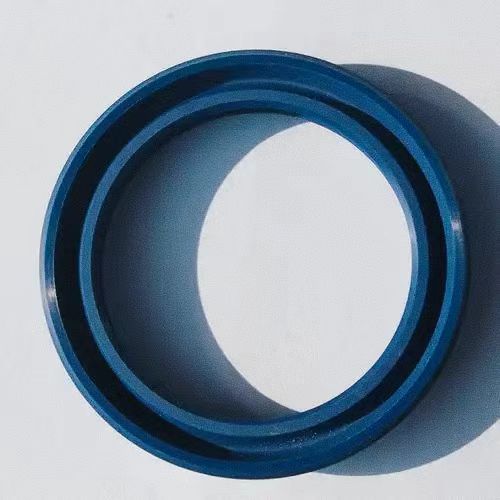
Dust infiltration also accelerates seal wear. The dust seal at the front head is rated for 800–1,500 hours in clean surface environments. Underground in a dusty heading, that interval drops to 400–800 hours. Planning seal kit replacements at the shorter interval, not the standard one, prevents the dust seal failure that introduces abrasive particles into the piston and bushing.
Vibration, Blank Firing, and Structural Risk
In tunnels, recoil from a hydraulic breaker transmits through the rock mass to adjacent lining sections and structures in ways that open-air work doesn't. Blank firing — striking without the chisel firmly against the material — sends an unattenuated shockwave through the breaker body and carrier boom. On surface this damages the breaker. Underground it can induce cracking in shotcrete lining or destabilise unsupported rock spans. Anti-blank-fire protection is standard on most modern breakers precisely because of this failure mode. In fractured rock zones, reducing BPM and using a silenced/enclosed housing limits transmission energy per cycle.
Remote-controlled demolition robots (Brokk and similar) eliminate the operator-proximity risk in confined headings while maintaining productivity. For conventional excavator-mounted breakers, matching the carrier to the tunnel profile — maximum boom reach, minimum footprint — is a logistics decision that determines throughput for the entire project.
HOVOO and HOUFU supply underground-rated seal kits with shorter recommended replacement intervals and dust-resistant compound grades for tunnel and shaft applications. Standard surface-interval maintenance schedules don't transfer directly. Details at https://www.hovooseal.com/
Underground Operation: Key Challenges and Controls
Challenge |
How it differs underground |
Mitigation |
Silica dust |
Enclosed heading concentrates respirable dust beyond surface limits |
Wet drilling + water mist on chisel; seal inspection every 400 hr (vs 800 hr surface) |
Vibration transmission |
Rock mass transmits recoil to adjacent tunnel walls; structural damage risk |
Silenced/enclosed breaker housing; reduce BPM in fractured zones; avoid blank firing |
Ventilation & heat |
Hydraulic breaker generates heat in a closed space; oil temp spikes faster |
Min 200 CFM per worker (OSHA 29 CFR 1926.800); duty-cycle breaks to let oil cool |
Access and clearance |
Carrier and boom limited to tunnel profile; wrong size causes productivity collapse |
Remote-controlled demolition machines or compact carriers with matched breakers |
hydraulic breaker underground tunnel safety | confined space breaker operation | silica dust control | vibration tunnel lining | HOVOO | HOUFU | hovooseal.com


