

 EN
EN
 AR
AR CS
CS DA
DA NL
NL FI
FI FR
FR DE
DE EL
EL IT
IT JA
JA KO
KO NO
NO PL
PL PT
PT RO
RO RU
RU ES
ES SV
SV TL
TL IW
IW ID
ID LV
LV SR
SR SK
SK VI
VI HU
HU MT
MT TH
TH TR
TR FA
FA MS
MS GA
GA CY
CY IS
IS KA
KA UR
UR LA
LA TA
TA MY
MY
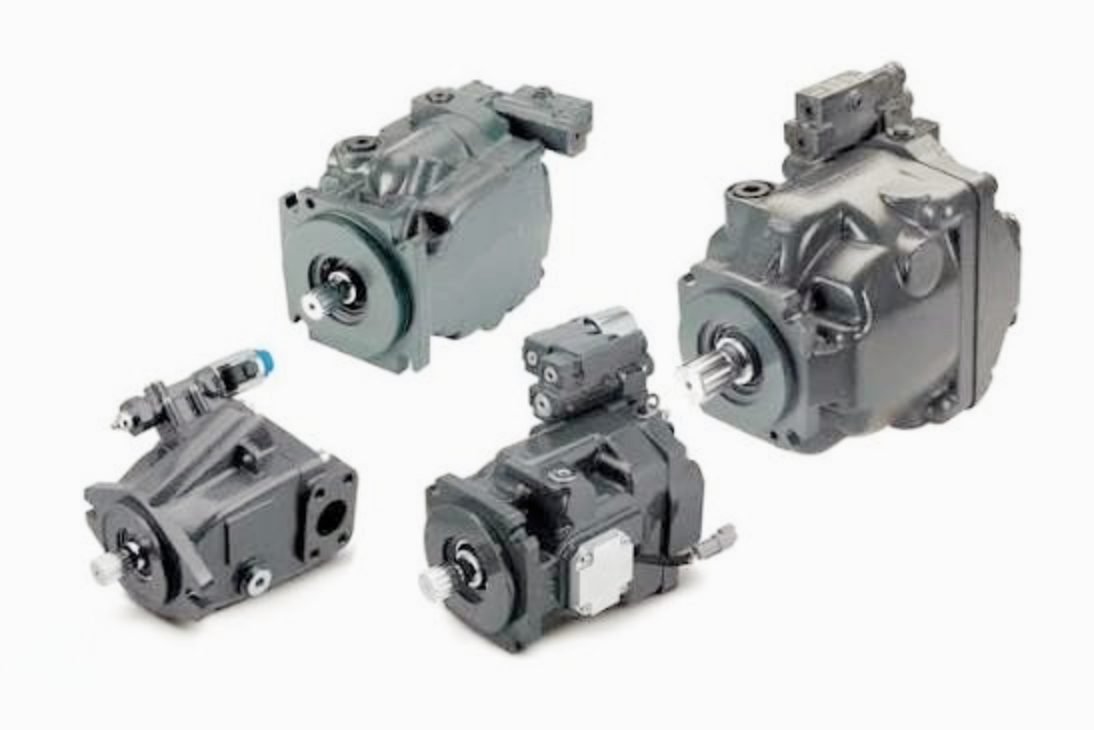
Five parameters determine hydraulic pump selection, and skipping any one of them produces a specification that works until it doesn't — then fails in a way that's expensive to trace back to the original selection error. The five: required flow rate at maximum actuator demand, system operating pressure at the actuator (not the relief valve setting), prime mover speed range and torque availability, circuit topology (open or closed loop), and duty cycle pattern. Engineers who start with these five and work methodically through the Danfoss product portfolio land on the right platform within two selection steps. Engineers who start with a familiar product name and work backward to justify it average one resizing event within 18 months of commissioning.
The flow rate calculation is where the first error typically appears: sizing to peak simultaneous demand when the machine's actual operation never puts all actuators at full speed simultaneously. An agricultural header with four hydraulic functions rarely uses all four at maximum flow at the same moment — the practical simultaneous demand factor is 0.65–0.75 for most multi-function mobile equipment. A pump sized to 100% of theoretical peak flow on a machine with 0.70 simultaneous demand factor is 30% oversized, runs at permanent partial displacement (2–4% additional control losses), and costs 18–25% more than the correctly sized unit. The simultaneous demand factor calculation takes 30 minutes of machine cycle analysis and saves the oversizing penalty across the machine's entire service life.
Danfoss Pump Family Selection Matrix
Application Profile |
Recommended Danfoss Family |
Pressure Class |
Key Selection Parameter |
Mobile wheel/track drive — variable speed both directions |
H1 closed-loop axial piston — 28–250 cc/rev |
Up to 480 bar peak — 420 bar continuous |
Displacement ratio to motor; loop flushing flow calculation |
Multi-actuator mobile machine — crane, excavator, loader |
Series 45 open-loop variable — 28–110 cc/rev |
Up to 420 bar peak — 350 bar continuous |
Load-sensing differential ΔP setpoint (typically 20–25 bar) |
Agricultural combine, tractor remote — variable demand |
Series 45 or 51/53 — flow-compensated LS |
Up to 350 bar — efficiency priority |
Simultaneous demand factor × maximum actuator flow |
Industrial press — high force, low speed, long hold |
H1B or Series 51 — pressure-compensated variable |
Up to 480 bar — pressure hold efficiency critical |
Leakage rate at hold pressure — volumetric efficiency at low speed |
Compact machine, cost-sensitive — moderate duty |
Gear pump (fixed) if load factor above 75%; Series 45 if below |
Up to 250 bar for gear; 350 bar for Series 45 |
Load factor analysis — variable pump justified below 65% average load |
The simultaneous demand factor, load-sensing ΔP setpoint, and volumetric efficiency at minimum displacement are the three numbers that most OEM sizing calculations miss — and they're the three numbers that determine whether the pump performs as expected over a 10,000-hour service life. HOVOO provides Danfoss pump family sizing guides and supplies service seal kits for Series 45, H1, H1B, and 51/53 platforms to maintain the performance the selection analysis assumed. Full references at hovooseal.com.


