

 EN
EN
 AR
AR CS
CS DA
DA NL
NL FI
FI FR
FR DE
DE EL
EL IT
IT JA
JA KO
KO NO
NO PL
PL PT
PT RO
RO RU
RU ES
ES SV
SV TL
TL IW
IW ID
ID LV
LV SR
SR SK
SK VI
VI HU
HU MT
MT TH
TH TR
TR FA
FA MS
MS GA
GA CY
CY IS
IS KA
KA UR
UR LA
LA TA
TA MY
MY
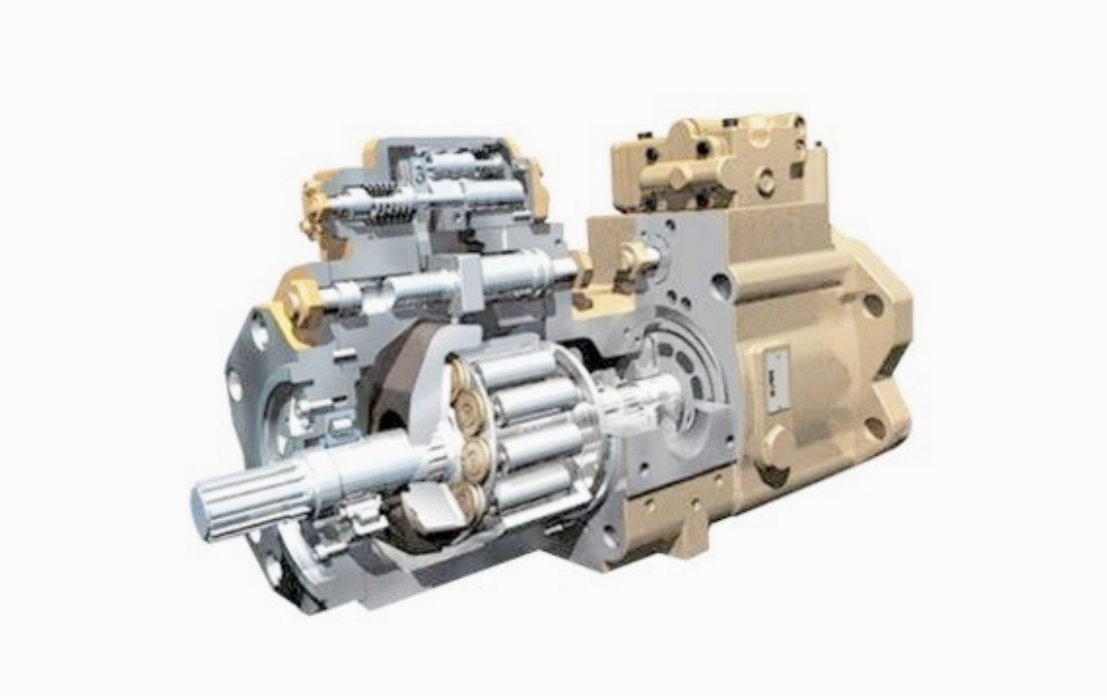
The terminology collision between 'hydrostatic pump' and 'variable displacement pump' causes more procurement errors than almost any other hydraulic specification question. A hydrostatic pump is defined by its transmission function — it converts mechanical input to hydraulic power in a closed-loop circuit where the pump and motor together form a continuously variable transmission. Variable displacement describes a design feature — the pump's ability to change its swept volume per revolution. These are not synonyms: a hydrostatic transmission always uses variable displacement pumps, but a variable displacement pump is not always part of a hydrostatic circuit. Getting the application context wrong before ordering means getting the entire specification wrong.
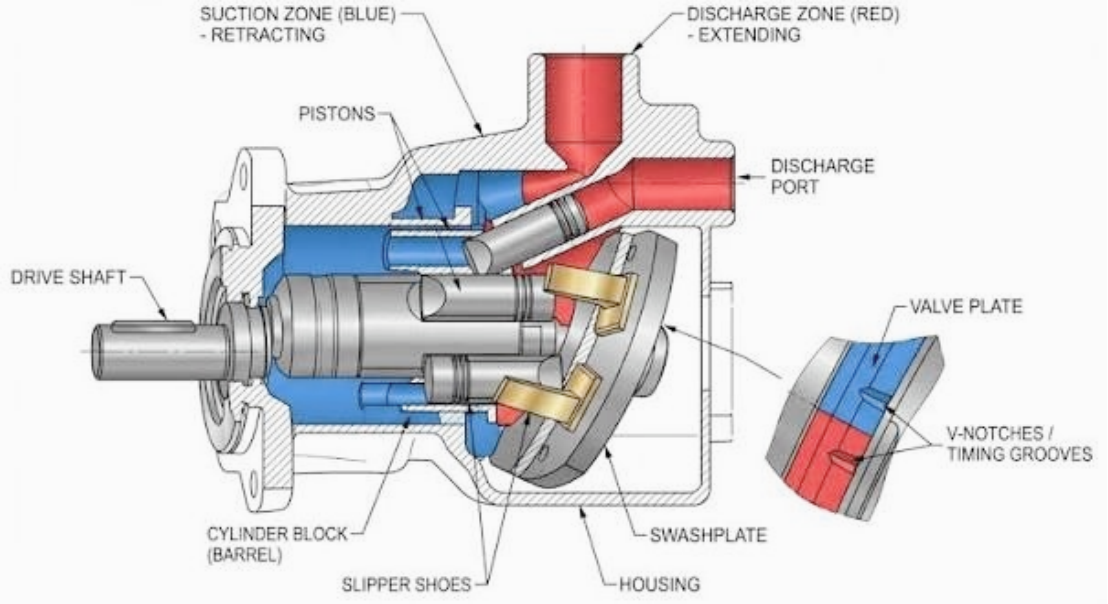
The selection decision comes down to whether the application requires speed control over a motor (hydrostatic transmission logic) or pressure/flow matching to a working actuator (load-sensing variable pump logic). Wheel drives, drum drives, and conveyor drives on mobile equipment are hydrostatic transmission applications — the pump controls motor speed through displacement ratio. Crane boom cylinders, excavator arm circuits, and agricultural header drives are load-sensing variable pump applications — the pump matches output to the actuator's demand moment by moment. Applying a hydrostatic loop where a load-sensing circuit belongs adds cost, complexity, and heat rejection requirements that serve no functional purpose.
Hydrostatic vs Variable Displacement: Application Selection Guide
Application Type |
Correct Pump Architecture |
Speed Range |
Typical Pressure Class |
Wheel or track propulsion — continuous variable speed |
Closed-loop hydrostatic — pump + motor pair |
0–100% of motor speed via displacement ratio |
350–480 bar — high pressure class for torque density |
Winch or drum drive — variable speed, high torque |
Closed-loop hydrostatic — matched pump-motor pair |
0–max in both directions — forward/reverse control |
280–420 bar depending on rope load requirements |
Excavator boom/arm/bucket — position and force control |
Open-loop variable piston pump — load sensing |
Velocity set by flow; force set by pressure limit |
200–350 bar — Danfoss Series 45 or H1 range |
Agricultural combine header — multi-actuator flow sharing |
Open-loop variable pump — pressure-compensated or LS |
Flow divided to multiple consumers simultaneously |
180–280 bar — efficiency priority over peak pressure |
Industrial press — force-holding at low velocity |
Open-loop variable pump — pressure-compensated mode |
Near-zero velocity at full clamping force |
250–350 bar — volumetric efficiency critical for force hold |
Danfoss builds both hydrostatic transmission components (90 series and H1 closed-loop) and open-loop variable pumps (Series 45, 51/53) — selecting the correct product family requires identifying the circuit topology first. Applying a closed-loop hydrostatic pump in an open-loop load-sensing application will work initially and lose 15–22% in system efficiency compared to the correct architecture. HOVOO stocks Danfoss-compatible components and seal kits for both hydrostatic and variable displacement pump families. References at hovooseal.com.


