

 EN
EN
 AR
AR CS
CS DA
DA NL
NL FI
FI FR
FR DE
DE EL
EL IT
IT JA
JA KO
KO NO
NO PL
PL PT
PT RO
RO RU
RU ES
ES SV
SV TL
TL IW
IW ID
ID LV
LV SR
SR SK
SK VI
VI HU
HU MT
MT TH
TH TR
TR FA
FA MS
MS GA
GA CY
CY IS
IS KA
KA UR
UR LA
LA TA
TA MY
MY
The hydraulic rock drill market doesn't move on fashion cycles—it moves on mining investment cycles, regulatory pressure, and the cost arithmetic of automation versus skilled labor in underground environments. The four trends shaping the current development wave aren't arbitrary. High efficiency responds to fuel costs and productivity benchmarks. Low noise responds to urban construction proximity rules and underground worker health regulations. Intelligent systems respond to the economics of autonomous operation in deep, dangerous ground. Heavy-duty designs respond to the shift toward larger-scale ore bodies at greater depths. They're connected, not separate.
The global hydraulic rock drill market was valued at approximately USD 2.1 billion in 2024, with projections pointing toward USD 3.46 billion by 2032 at roughly 5.8% CAGR. Asia-Pacific—led by China, Australia, and India—held the largest revenue share in 2024, driven by concurrent expansion in infrastructure construction and mineral extraction. That geographic concentration of growth is shaping which product characteristics manufacturers are prioritizing.
High Efficiency: Closing the Pneumatic-Hydraulic Gap and Then Some
Pneumatic rock drills convert roughly 25–30% of input energy into percussion work. Early hydraulic designs improved that to 45–50%. Current optimized hydraulic systems—with advanced piston geometry, accumulator pre-charge tuning, and reduced circuit losses—reach 55–57% energy efficiency. That 10-percentage-point advantage over early hydraulic designs translates directly into fuel consumption per meter drilled. At high utilization rates, the fuel saving over a season's drilling campaign is substantial.
The efficiency frontier is shifting toward smarter energy use rather than brute-force parameter maximization. Hydraulic energy recovery systems—recapturing return-stroke energy rather than dissipating it as heat—are in active development. Automatic impact force control, which adjusts percussion parameters in real time based on formation feedback rather than fixed preset values, reduces wasted energy in soft zones and maximizes output in hard zones within a single hole. The IEA projects that demand for critical minerals used in clean energy will quadruple by 2040, driving mining expansion at exactly the moment when fuel efficiency gains become most economically significant.
Low Noise: Regulatory Pressure Reshapes Product Architecture
Underground mining noise regulations in the EU, Australia, and increasingly in Asian markets are tightening the permissible exposure limits for drifter and jumbo operators. Percussion noise exceeding 85–90 dB(A) continuously over a shift requires mitigation—either through hearing protection, which reduces operator situational awareness, or through equipment design. Silenced box-type designs that enclose the percussion module in a damped housing reduce radiated noise by 8–12 dB compared to open-frame drifters, bringing operating levels below the regulatory threshold without hearing protection requirements in many jurisdictions.
The architectural change required for genuine noise reduction is significant: the damping housing must absorb vibration energy rather than simply enclosing the percussion mechanism. Designs that add a box without damping actually concentrate reflected sound within the enclosure. Manufacturers who have solved this correctly—genuine attenuation rather than noise redirection—hold a competitive advantage in markets where regulatory compliance is a purchasing criterion, not an afterthought.
Intelligent Systems: Automation Moving From Option to Baseline
Smart manufacturing technologies in mining and construction equipment could improve overall productivity by up to 25% by 2030, according to projections from technology forecasting bodies. That productivity gain comes specifically from automation reducing the performance gap between optimal and average operators—autonomous systems don't have shift fatigue, distraction, or inconsistent parameter setting. The Sandvik DL422i, running with HF1560ST drifter and automated parameter control, demonstrated up to 10% more drilled meters per shift in production drilling specifically because the automation eliminated the manual adjustment delays that interrupt continuous production.
IoT sensor integration—embedding pressure, temperature, and vibration sensors in the percussion circuit and feeding data to analytics platforms—enables predictive maintenance before failure rather than reactive repair after it. The Sandvik OptiMine platform running on IBM Watson IoT provides fleet connectivity and operational analytics; Epiroc's 6th Sense optimization layer covers parameter adaptation and production data. Both platforms are moving toward AI-driven autonomous drilling where the system selects parameters based on real-time formation interpretation. This capability is starting to influence purchasing decisions even at mid-market mine sizes where full automation ROI wasn't previously positive.
Heavy-Duty: Deeper Mines, Larger Ore Bodies
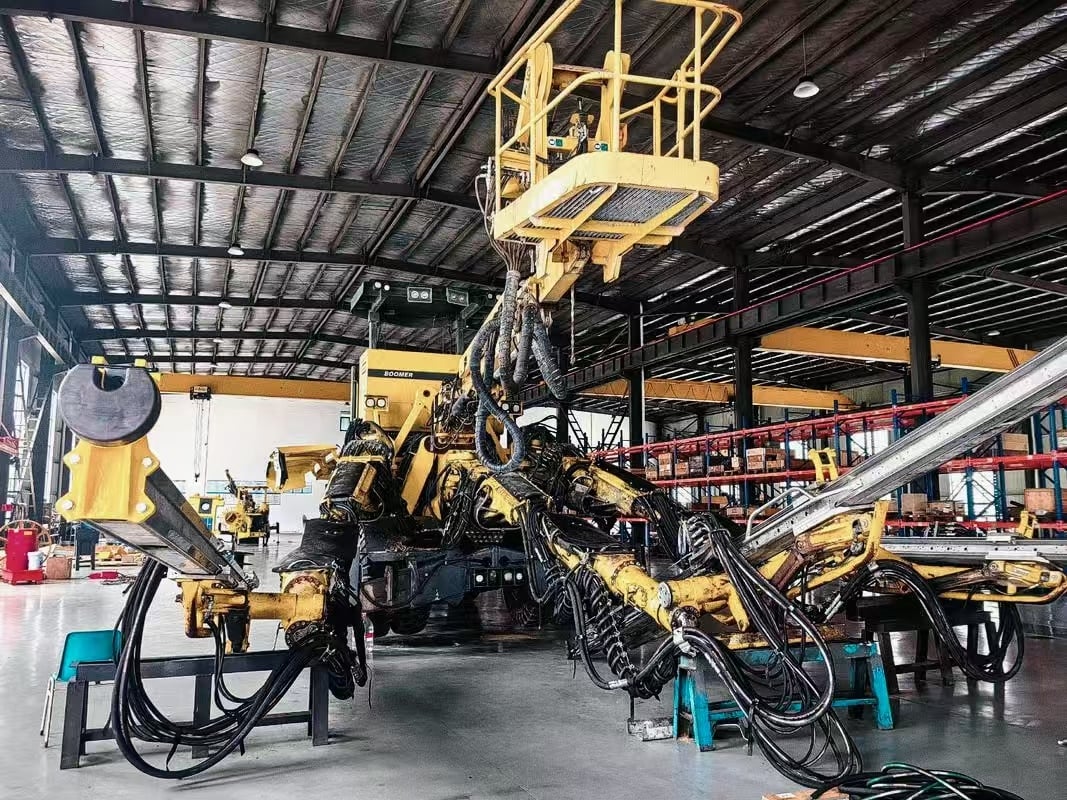
The average depth of new mining projects is increasing as shallow ore bodies are depleted. Deeper mining means more heat, more water, more rock pressure, and longer equipment duty cycles between surface access for servicing. Heavy-duty drifters—those above 280 J impact energy—are growing faster than the overall market because the projects driving new equipment investment are predominantly deep, large-scale operations where the highest available percussion energy reduces the cycle time that determines whether the project's economics work.
The technical challenge at the heavy-duty frontier isn't just making drifters hit harder—it's making them last longer under continuously high percussion hours with infrequent maintenance windows. Dual-damping designs (Furukawa HD700 series), extended-interval percussion seal kits, and mining operation management systems that track percussion hours against service thresholds automatically are all responses to this same operating constraint. The NIST projection that smart manufacturing adoption could improve productivity 25% by 2030 is particularly relevant here: in deep underground operations where every unplanned stop is expensive, the ability to predict component failure before it causes downtime is worth more than marginal percussion energy gains.
Trend |
Current Stage |
Key Technical Driver |
Market Implication (2025–2032) |
High efficiency |
55–57% optimized designs in field |
Piston geometry, accumulator tuning |
Dominant metric in high-fuel-cost markets |
Low noise |
Silenced box mainstream in EU/AU |
Damped housing architecture |
Required feature in regulated markets |
Intelligent |
Semi-auto standard, full-auto growing |
IoT sensors, AI parameter adapt |
25% productivity gain potential by 2030 |
Heavy-duty |
280–500 J class fastest growing |
Dual damping, extended service |
Deep mine expansion drives 6% CAGR |
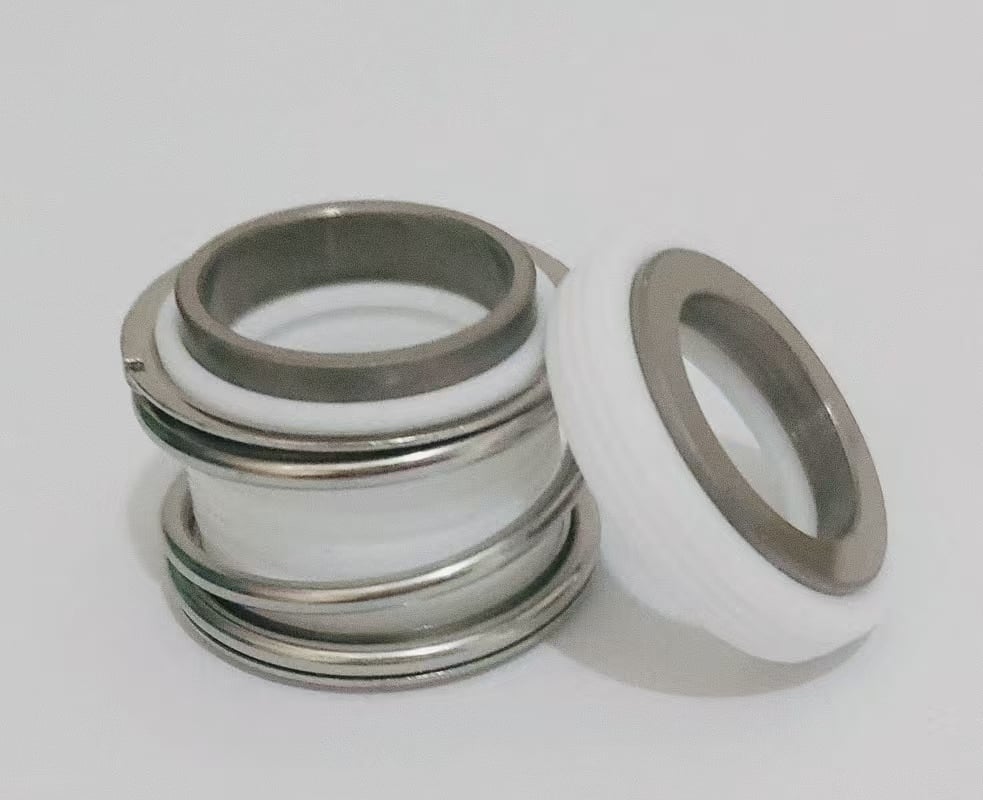
The seal supply chain sits at the intersection of all four trends. High-efficiency drifters running at optimized high-pressure settings accelerate PU seal fatigue. Intelligent systems with IoT monitoring can flag seal-related performance degradation before external leakage develops. Heavy-duty high-hour operation demands HNBR kits rated for elevated oil temperatures. HOVOO supplies seal kits for all major drifter platforms in PU and HNBR compounds, supporting operations across the full spectrum of current market conditions. Full references at hovooseal.com.


