

 EN
EN
 AR
AR CS
CS DA
DA NL
NL FI
FI FR
FR DE
DE EL
EL IT
IT JA
JA KO
KO NO
NO PL
PL PT
PT RO
RO RU
RU ES
ES SV
SV TL
TL IW
IW ID
ID LV
LV SR
SR SK
SK VI
VI HU
HU MT
MT TH
TH TR
TR FA
FA MS
MS GA
GA CY
CY IS
IS KA
KA UR
UR LA
LA TA
TA MY
MY
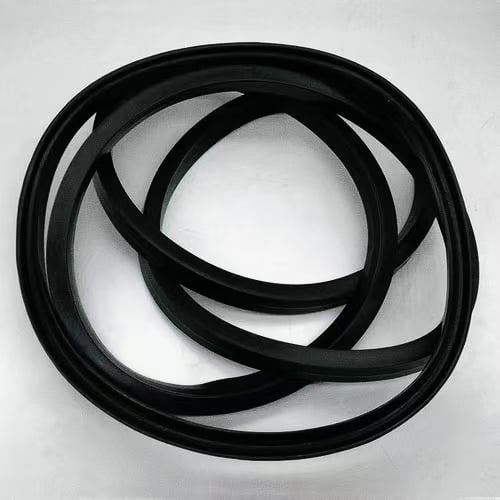
Shock Absorption and High Frequency Are Opposing Demands — Solved by the Same Components
Shock absorption and high-frequency impact look like opposing engineering objectives. Absorbing shock means softening the transmission of energy through the system — attenuating peaks, damping oscillation, isolating the outer structure from the percussion cell. High-frequency impact means the opposite: cycling the piston as fast as possible, which requires components that respond instantly, compress and recover without hysteresis, and do not attenuate the hydraulic signal that times each stroke. The reason modern hydraulic breakers achieve both simultaneously is that the components doing the shock absorption work — the accumulator diaphragm, the polyurethane buffer pads, the valve spool seals — are positioned at interfaces where they absorb the specific energy peaks that need to be dampened without interfering with the hydraulic control signals that set BPM.
The accumulator diaphragm is the clearest example of this precision placement. The diaphragm sits between the nitrogen charge and the hydraulic oil in the accumulator. Its job on the upstroke is to store pressure by compressing the nitrogen; its job on the downstroke is to release that stored energy into the piston's working stroke, adding to the carrier's flow contribution. On both strokes it also absorbs the hydraulic pressure spike that occurs at the moment of flow reversal — the spike that, if transmitted unattenuated, would reach the carrier pump and the main seals and accelerate their wear. A diaphragm that leaks, hardens, or loses elasticity at operating temperature does not just reduce impact energy by 15–25%. It removes the pressure spike buffer entirely, and the carrier pump begins experiencing every percussion event as a direct shock load.
The polyurethane buffer pads work at a different interface: between the percussion cell and the outer housing, and between the outer housing and the carrier mounting bracket. They do not interact with the hydraulic control circuit at all. Their job is purely structural — prevent the vibration generated at the piston-chisel interface from reaching the housing welds, the through-bolts, and the boom pins. The engineering challenge is selecting a compound hardness that absorbs the vibration peak without compressing so much under sustained down-pressure that the pad bottoms out and creates metal contact. Nanjing HOVOO and HOUFU supply PU buffer compounds in application-specific hardness grades matched to carrier class and duty cycle — a detail that generic PU buffer suppliers in the replacement parts market rarely offer with documented specification.
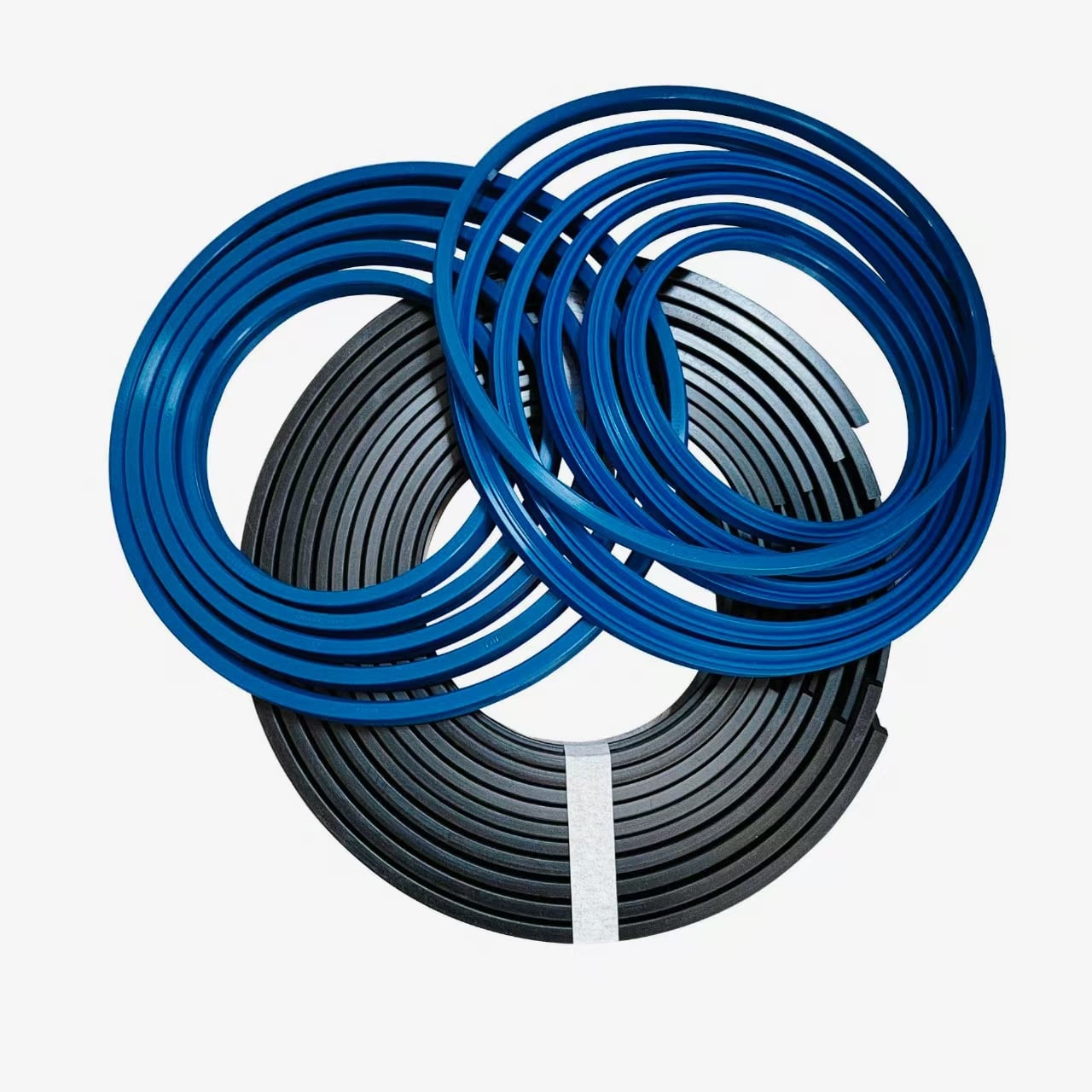
Three Key Technologies — Mechanism, Seal/Material Requirement, Diagnostic Note
The table maps each technology to its physical mechanism, the specific seal or material requirement that determines whether it performs correctly, and the diagnostic error that occurs when the component fails gradually rather than suddenly.
Technology |
Mechanism |
Seal / material requirement |
Diagnostic note |
Nitrogen accumulator (gas-hydraulic damping) |
Pre-charged nitrogen at 10–18 bar stores energy between piston strokes and absorbs hydraulic pressure spikes; on the downstroke, stored nitrogen energy supplements carrier flow — delivering more impact energy than the hydraulic circuit alone could supply at that instant |
Low nitrogen charge removes the pressure spike buffer; unabsorbed spikes reach the carrier pump and the main seals simultaneously; HOVOO/HOUFU FKM accumulator diaphragm seals maintain elasticity across the −30°C to +120°C thermal cycling that occurs between cold start and operating temperature — NBR alternatives harden at low ambient and leak at high temperature |
Without the nitrogen cushion, BPM drops 15–25% and pump seal wear accelerates; with a correctly charged accumulator and a diaphragm seal rated for the thermal range, the breaker delivers consistent per-blow energy from the first strike of the shift to the last |
Polyurethane buffer pads (structural isolation) |
Upper and side PU buffer pads isolate the inner percussion cell from the outer housing; hardness is selected by application — softer grades (Shore A 70–85) for urban demolition where vibration transmission to the carrier boom is the primary concern; harder grades (Shore A 90–95) for mining where pad compression under sustained down-pressure must remain within rated deflection |
Generic rubber buffers harden and crack within 500 hours of percussion cycling at elevated temperature; HOVOO/HOUFU PU compounds retain 90%+ of original hardness after 1,000 hours of service at 80°C ambient, which is the typical buffer zone temperature during sustained hard rock breaking; cracked or hardened pads transmit percussion vibration directly to the outer shell and into the boom pins |
Pad hardness selection is application-specific, not universal — specifying a demolition-grade soft pad on a mining breaker causes pad over-compression and metal contact under sustained load; HOUFU compound grades are matched to carrier class and duty cycle in the product selection guide |
Valve timing & high-frequency control |
The control valve directs hydraulic oil to alternate sides of the piston at rates up to 1,400 cycles per minute in compact class; precise valve timing determines BPM consistency — drift in the valve switching point causes uneven piston acceleration and BPM variation that is felt as impact irregularity |
Valve spool seals are the limiting wear component for high-frequency consistency; at 1,400 BPM the valve seal completes 1.4 million compression-expansion cycles per hour; HOVOO PTFE-lined composite seals provide low-friction, low-wear performance at this cycling rate where NBR seals develop fatigue grooves within 200–400 hours in compact high-frequency models |
High-frequency performance degrades gradually rather than failing abruptly; an operator running a 1,200 BPM compact breaker at 800 BPM due to worn valve seals often attributes the loss to carrier flow rather than seal wear — the correct diagnosis requires a valve inspection, not a carrier flow test |
Why Seal Compound Grade Determines the Practical BPM Ceiling
The theoretical maximum BPM of a hydraulic breaker is set by valve timing design and carrier flow capacity. The practical BPM that a unit sustains over thousands of operating hours is set by seal compound wear rate at the valve spool. At 1,200 BPM, the valve seal completes over 72 million cycles per hour of operation. Standard NBR seals rated for industrial hydraulic applications at this cycling rate develop circumferential fatigue grooves within 200–400 hours in compact high-frequency models. The groove does not cause immediate seal failure. It creates a micro-leakage path that introduces variability into the hydraulic signal timing the valve — and BPM drifts downward by 50–150 BPM over the following 200 hours before the operator notices.
HOVOO's PTFE-composite seals and HOUFU's high-cycle NBR variants address this through different mechanisms. The PTFE-composite relies on low dynamic friction — the seal wears slowly because friction-induced temperature at the spool face stays below the compound's fatigue threshold even at 1,400 BPM. The HOUFU high-cycle NBR uses a modified compound formulation with higher cross-link density that resists the fatigue crack initiation that standard NBR experiences at high cycling frequency. Both approaches extend the practical service interval before BPM drift becomes measurable — from 200–400 hours on standard NBR to 600–900 hours on application-specific grades. That extension is not a product claim; it is the difference between a seal kit replacement at every 500-hour service and one at every 1,000-hour service in compact class breakers running in high-frequency demolition applications.
The broader principle is that shock absorption and high-frequency performance are not achieved by structural design alone — they are maintained across the unit's service life by the wear rate of the seals and compounds at each critical interface. A well-designed accumulator with a standard NBR diaphragm that hardens after 800 hours provides shock absorption for 800 hours and then stops. A well-designed accumulator with a HOVOO FKM diaphragm that retains rated elasticity to 1,500 hours provides shock absorption to 1,500 hours. The design is the same. The service life of the technology is set by the component material specification, not by the mechanical architecture.


