

 EN
EN
 AR
AR CS
CS DA
DA NL
NL FI
FI FR
FR DE
DE EL
EL IT
IT JA
JA KO
KO NO
NO PL
PL PT
PT RO
RO RU
RU ES
ES SV
SV TL
TL IW
IW ID
ID LV
LV SR
SR SK
SK VI
VI HU
HU MT
MT TH
TH TR
TR FA
FA MS
MS GA
GA CY
CY IS
IS KA
KA UR
UR LA
LA TA
TA MY
MY
The most expensive mistake in hydraulic breaker procurement is selecting by excavator weight alone and ignoring the project's actual material and task mix. A 20-ton excavator runs both a 135mm mid-class breaker and a 90mm small-class — the choice between them depends entirely on what the project is breaking and at what rate. Getting that choice wrong in one direction means overkill, unnecessary capital cost, and a machine that's harder to manoeuvre in tight urban sites. Getting it wrong in the other direction means a breaker that simply cannot fracture the primary rock it's being asked to break.
Large-Tonnage: When Energy Threshold Matters
Every rock type has a minimum energy per blow required before fracture initiates. For granite above 150 MPa compressive strength, a 175mm chisel running at 230–250 bar is the minimum configuration that produces productive fracture rates. Below that threshold — energy per blow insufficient for the material — the chisel bounces off the surface and the impact energy transfers into the carrier boom as recoil. This isn't an efficiency issue; it's a binary: the breaker either crosses the fracture threshold or it doesn't.
Large-tonnage breakers (155mm and above on 27–50+ ton carriers) are also the correct specification for quarry secondary breaking at production scale. The BLT-155 at 200–220 bar on a 30-ton carrier clears oversize blasted boulders faster than any two small-class units running simultaneously, because the large blunt tool's shockwave propagates through partially fractured material more efficiently than multiple small-area contacts. Throughput per machine-hour, not impact count, is the relevant metric for secondary breaking at quarry scale.
Small-Tonnage: Precision and Project Geometry
Small-class breakers on 2–15 ton carriers are not limited versions of large ones. They serve a different project geometry. Urban concrete demolition — removing individual sections of slab, foundation blocks, utility trenches — requires a tool that fits in a 3-metre-wide street, produces limited noise, and concentrates work on a small area without disturbing adjacent structures. A 90mm moil on a 5-ton compact excavator does this correctly. A 175mm heavy breaker does not belong in this scenario.
Rural infrastructure construction in developing markets — the largest single-application driver of small-class breaker demand globally — typically uses 5–15 ton excavators on road and channel projects where rock intermittently appears in otherwise soft material. The project doesn't need granite-primary capability; it needs a breaker that can handle unexpected rock patches without changing machines.
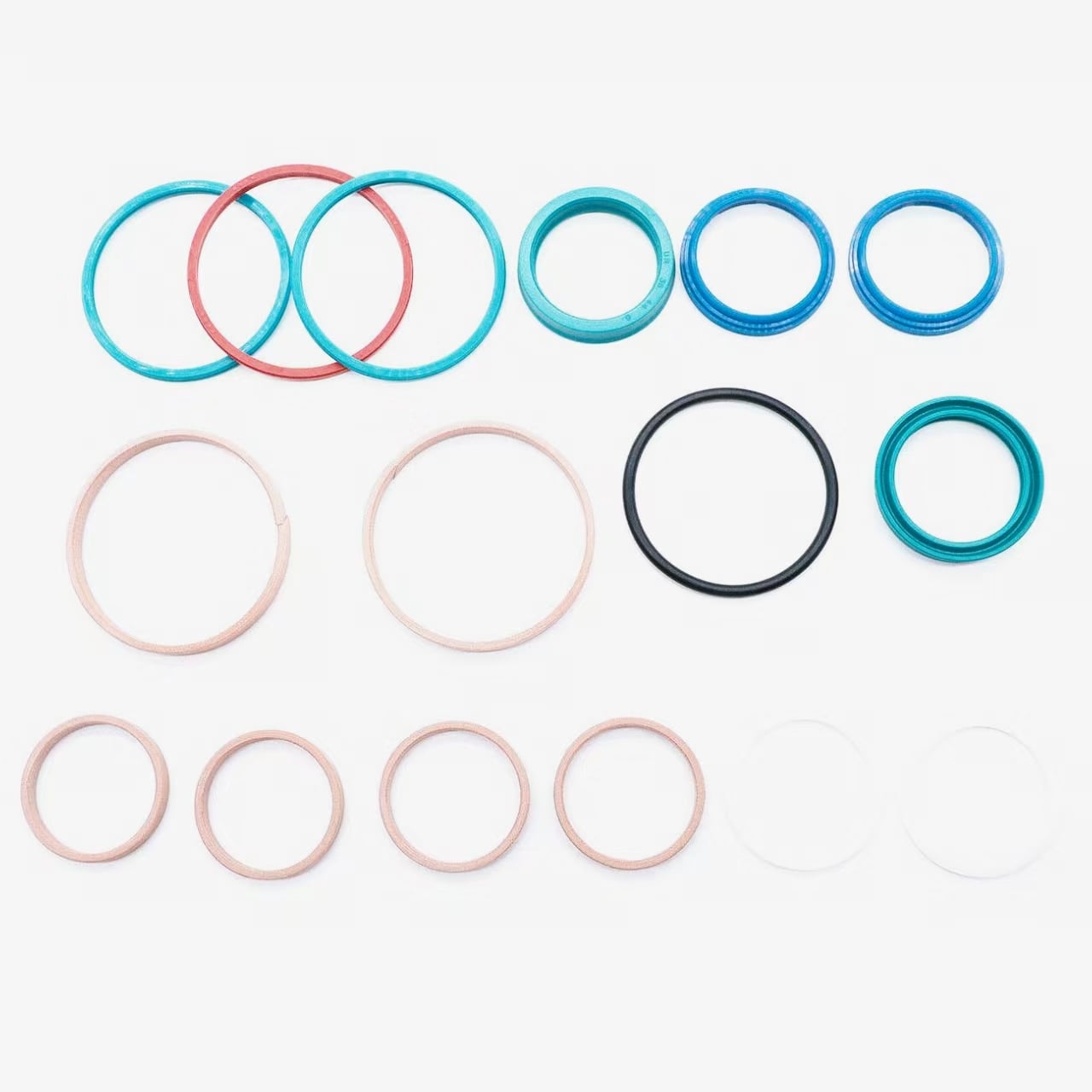
HOVOO and HOUFU supply seal kits across the full tonnage range — from 40mm compact class to 185mm heavy mining class — for BEILITE and major platforms. Details at https://www.hovooseal.com/
Large vs Small Tonnage Selection Reference
Scale indicator |
Large-tonnage breaker (155mm+, 30–100t carrier) |
Small-tonnage breaker (<135mm, 2–20t carrier) |
Primary rock breaking |
Required — below threshold energy on hard rock = no fracture |
Not applicable — machine too light for granite primary |
Urban concrete demolition |
Possible but over-spec for most tasks; higher TCO |
Preferred — precise, lower noise, fits site constraints |
Rural road / trench work |
Overkill unless rock is very hard (150 MPa) |
Correct class — matches rural excavator fleet size |
Quarry secondary breaking |
Mid-heavy class; blunt tool; high throughput per hour |
Undersized — can't clear oversize material fast enough |
Infrastructure (BRI projects) |
Heavy class for foundation rock; mid for general civil |
Mid-to-small for most civil finishwork and trenching |
large tonnage small tonnage hydraulic breaker selection | engineering scale adaptation | breaker size project matching | BLT-155 BLT-175 vs compact breaker | HOVOO | HOUFU | hovooseal.com


