

 EN
EN
 AR
AR CS
CS DA
DA NL
NL FI
FI FR
FR DE
DE EL
EL IT
IT JA
JA KO
KO NO
NO PL
PL PT
PT RO
RO RU
RU ES
ES SV
SV TL
TL IW
IW ID
ID LV
LV SR
SR SK
SK VI
VI HU
HU MT
MT TH
TH TR
TR FA
FA MS
MS GA
GA CY
CY IS
IS KA
KA UR
UR LA
LA TA
TA MY
MY
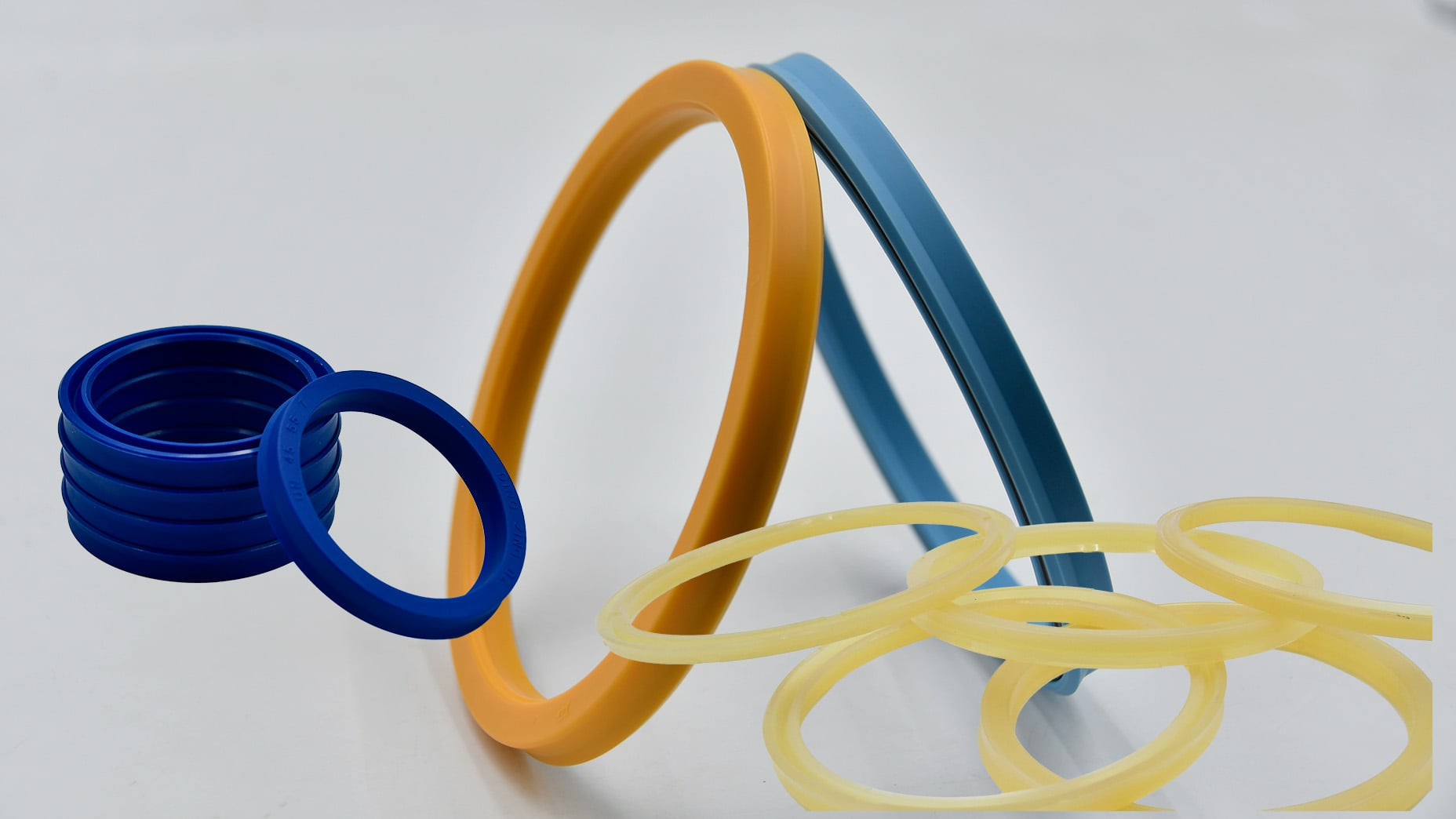
Engineers faced with the choice among NBR, FKM, and PU for a U‑seal application often ask: “Which one is best?” The truthful answer is: it depends. This article provides a three‑dimensional comparison—chemical, physical, economic—and concludes with a rapid‑decision tree.
1. Chemical Resistance Comparison
Fluid NBR PU FKM
Mineral hydraulic oil ★★★ ★★★ ★★★
Water‑glycol ★ ★★ ★★★
Phosphate ester ✗ ✗ ★★★
Gasoline / diesel ★★ ★★ ★★★
Hot water / steam ✗ ✗ ★★
Ozone / UV ★ ★★ ★★★
Interpretation: PU outperforms NBR in water‑glycol but is inferior to FKM. The search term “PU vs TPU U‑type” (520 monthly, USA) reminds us: TPU is a thermoplastic polyurethane with slightly higher temperature capability but marginally lower abrasion resistance.
2. Physical Properties Comparison
Property NBR PU FKM
Hardness range (Shore A) 40–95 70–98 60–95
Tensile strength (MPa) 10–25 30–55 10–20
Abrasion resistance Medium Excellent Good
Low‑temp limit (°C) –30/–55 –20/–50 –15/–45
High‑temp limit (°C) 100 80 200
Compression set Medium Good Excellent
Conclusion: PU is the mechanical properties king; FKM is the thermal/chemical king; NBR is the balanced all‑rounder.
3. Economics & Availability
· NBR: Lowest raw material cost; shared moulds; shortest lead time.
· PU: Raw material cost 1.5–2× that of NBR, but service life in abrasive conditions can be 3–5× longer—lower total cost.
· FKM: Raw material cost 5–8× that of NBR; specify only when temperature or aggressive fluids mandate it.
Search Validation:
India’s 617.7K monthly searches for “PU” dwarf those for “FKM.” This confirms that in cost‑sensitive markets with moderate operating conditions, PU is the preferred NBR replacement.
Decision Tree:
1. Temperature 120 °C? → FKM
2. Temperature < –30 °C? → Low‑temp NBR
3. Water or fire‑resistant fluid? → FKM (first choice) or PU
4. Severe wear, high pressure, abrasive particles? → PU
5. None of the above? → NBR


