

 EN
EN
 AR
AR CS
CS DA
DA NL
NL FI
FI FR
FR DE
DE EL
EL IT
IT JA
JA KO
KO NO
NO PL
PL PT
PT RO
RO RU
RU ES
ES SV
SV TL
TL IW
IW ID
ID LV
LV SR
SR SK
SK VI
VI HU
HU MT
MT TH
TH TR
TR FA
FA MS
MS GA
GA CY
CY IS
IS KA
KA UR
UR LA
LA TA
TA MY
MY
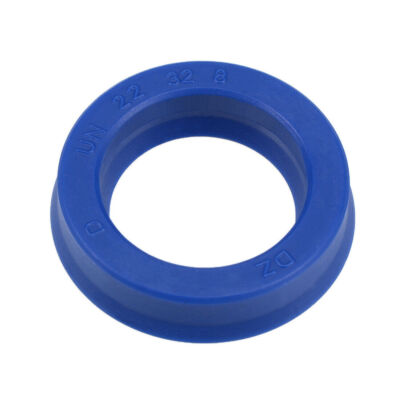
Impact mechanism seals and feed mechanism seals operate in completely different regimes and fail for completely different reasons — yet both are lumped into 'seal kit' ordering without distinguishing them. The impact mechanism seal runs at 40–55 Hz under 160–200 bar percussion pressure with 180,000 contact cycles per operating hour. It's a high-frequency fatigue application. The feed mechanism seal runs a cylinder that moves 1,200–2,000 mm at 0.3–1.2 m/min against 40–80 bar feed pressure, completing perhaps 8–12 full strokes per hour. It's a slow, high-force sliding application.
Those different kinematic regimes require different seal geometry and different compound priorities. Impact seals need maximum fatigue resistance and the ability to maintain lip contact under rapid pressure cycling — that's why PU is preferred. Feed cylinder seals need low breakout force, good wiper performance to keep cutting debris off the rod, and high slide seal efficiency across the full 1,200–2,000 mm stroke — that's why many feed cylinder applications use PTFE-backed lip seals with NBR energizer springs rather than pure PU. Mixing the compounds between circuits doesn't cause immediate failure; it causes accelerated wear that looks like normal service life until a maintenance engineer compares hours-to-failure across two circuits.
Impact vs Feed Mechanism Seal Design Comparison
Characteristic |
Impact Mechanism Seal |
Feed Mechanism Seal |
Consequence of Substitution |
Operating frequency |
40–55 Hz percussion — 180,000 cycles/hour |
8–12 full strokes/hour — quasi-static sliding |
Using feed seal in impact circuit fails within 60–80 hours from fatigue |
Operating pressure |
160–210 bar percussion |
40–80 bar feed circuit |
Impact seal in feed cylinder adds breakout force — stick-slip drilling |
Preferred compound |
PU Shore 90–95 for fatigue resistance |
PTFE-backed NBR or PTFE-backed PU for low friction |
NBR impact seal fails at 2× fatigue rate of PU in percussion bore |
Rod surface speed |
High-frequency micro-strokes — bore surface is critical |
Slow continuous stroke — rod surface finish Ra 0.4–1.6 μm |
Feed cylinder seal in percussion bore — insufficient fatigue resistance |
Service interval (clean conditions) |
400–480 hours for impact seals |
800–1,200 hours for feed cylinder seals |
Replacing feed seals at impact interval wastes 50–60% of remaining life |
Ordering a kit that addresses both circuits simultaneously makes sense for planned major overhauls — the disassembly access to both circuits is available at the same time. But the service intervals differ by 2× or more, so they should be tracked separately in maintenance records rather than synchronized on one schedule. HOVOO supplies separate impact-circuit and feed-circuit seal kits for Sandvik and Atlas Copco jumbos with per-circuit service interval guidance. References at hovooseal.com.


