

 EN
EN
 AR
AR CS
CS DA
DA NL
NL FI
FI FR
FR DE
DE EL
EL IT
IT JA
JA KO
KO NO
NO PL
PL PT
PT RO
RO RU
RU ES
ES SV
SV TL
TL IW
IW ID
ID LV
LV SR
SR SK
SK VI
VI HU
HU MT
MT TH
TH TR
TR FA
FA MS
MS GA
GA CY
CY IS
IS KA
KA UR
UR LA
LA TA
TA MY
MY
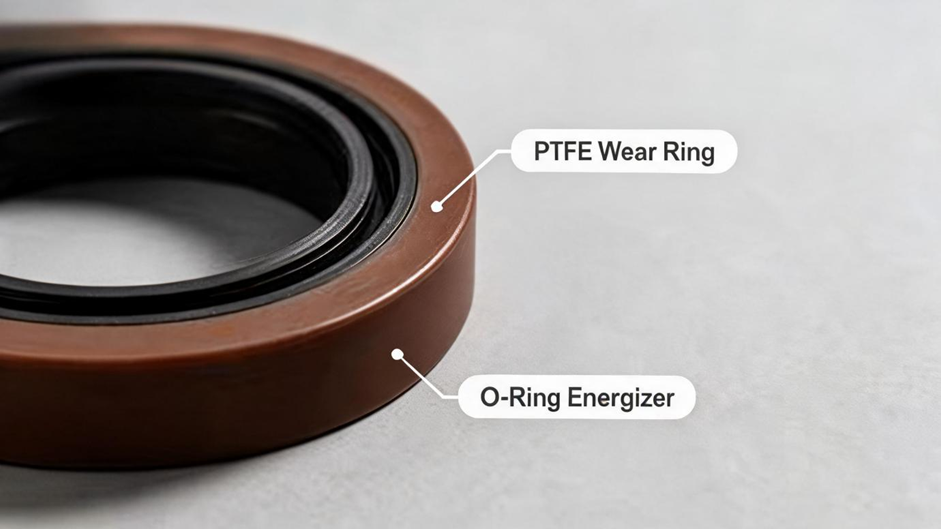
A Glyd Ring or Step Seal is really two materials working together: a rigid PTFE wear ring and a rubber O-ring energizer underneath it. Most of the conversation around these seals focuses on their shape, but the specific PTFE compound and O-ring material chosen for a given application have just as much influence on how long the seal actually lasts. This article looks at what these compounds are made of, why fillers are added to plain PTFE, and how to think about material choice for a given cylinder.
What Material Is a Glyd Ring or Step Seal Made Of?
The wear ring in both designs is made from PTFE (polytetrafluoroethylene), almost always modified with a filler material rather than used in its pure, unfilled form. The O-ring energizer underneath it is a separate, conventional elastomer — commonly NBR, HNBR, or FKM — chosen independently of the PTFE compound based on the hydraulic fluid and temperature the seal will see in service.
Why Is PTFE Used for the Wear Ring Instead of Rubber?
PTFE offers an unusual combination of properties that make it well suited to a sliding wear ring: a very low coefficient of friction, minimal stick-slip behavior (the jerky, uneven motion that can occur when a seal's static and dynamic friction differ too much), broad chemical resistance, and a wide usable temperature range. None of the common rubber compounds match PTFE's combination of low friction and wear resistance in continuous sliding contact, which is exactly the duty a piston or rod seal experiences.
The trade-off is that pure PTFE has relatively poor resistance to abrasive wear and can deform (creep) under sustained load, which is why filled PTFE compounds, rather than virgin PTFE, are almost always used in Glyd Rings and Step Seals.
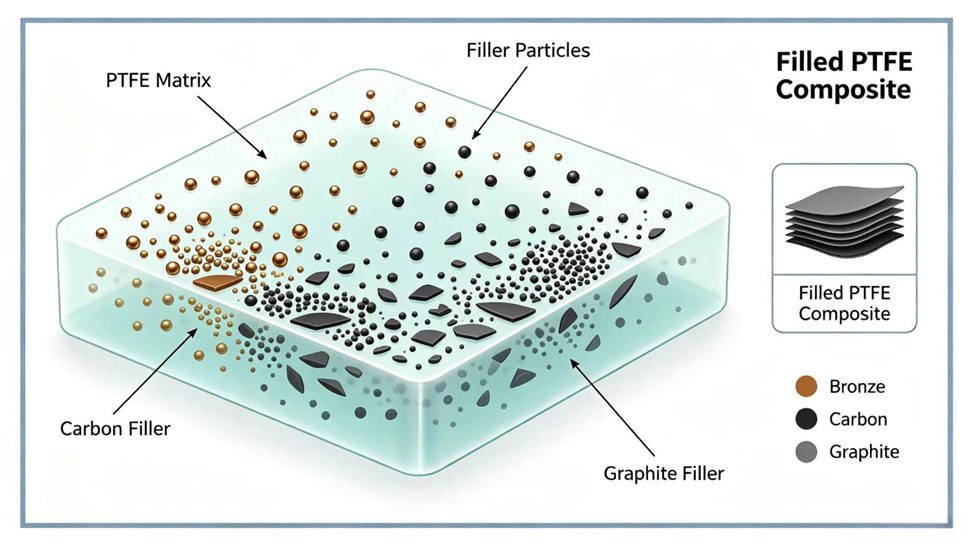
Photo1:Filled PTFE composite: filler particles in PTFE matrix
What Does “Filled PTFE” Mean, and Why Does It Matter?
Filled PTFE is plain PTFE resin with a secondary material blended in — commonly bronze, carbon, graphite, or glass fiber, sometimes in combination — to improve properties where unfilled PTFE falls short. Filling generally improves wear resistance, resistance to creep under load, and thermal conductivity, while preserving most of PTFE's low friction and chemical resistance. The specific filler and its percentage by weight are chosen to match the seal's expected load, speed, and operating environment, which is why “PTFE seal” alone does not fully describe what a given Glyd Ring or Step Seal is made of.
What Is Bronze-Filled PTFE Good For?
Bronze is typically added at a relatively high loading, commonly in the range of 40–60% by weight, and gives filled PTFE its best all-around wear resistance and load-bearing capability among the common filler options, along with good thermal conductivity that helps carry heat away from the sliding contact. The trade-offs are reduced chemical resistance compared with unfilled PTFE, and reduced suitability where electrical conductivity would be a problem, since bronze filling makes the compound conductive.
Bronze-filled PTFE is a common choice for Glyd Rings and Step Seals operating under higher loads or pressures, where wear resistance and dimensional stability under load matter more than the compound's chemical resistance margin.
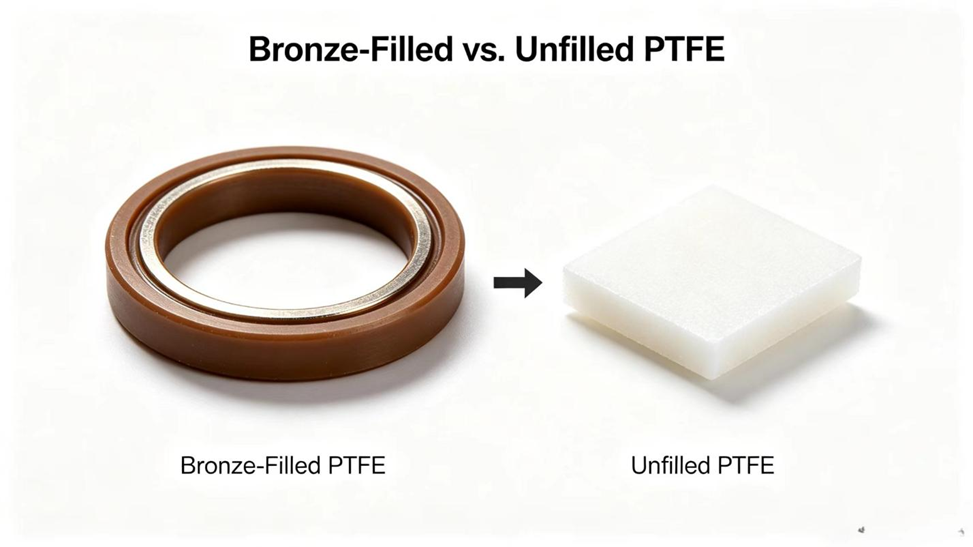
Photo2:Bronze-filled PTFE seal sample vs. unfilled PTFE
What Is Carbon- or Graphite-Filled PTFE Good For?
Carbon filler, typically added at roughly 10–35% by weight, improves wear resistance and resistance to deformation under load while leaving PTFE's chemical resistance largely intact, unlike bronze filling. Graphite is often added alongside carbon, or on its own at a lower percentage, primarily to further reduce the coefficient of friction and improve self-lubricating behavior, though graphite alone does not improve wear resistance as much as carbon does.
Carbon and carbon-graphite blends are a common choice where chemical resistance needs to stay close to that of unfilled PTFE, or where electrical conductivity from a bronze filler would be undesirable, while still needing meaningfully better wear resistance than plain PTFE offers.
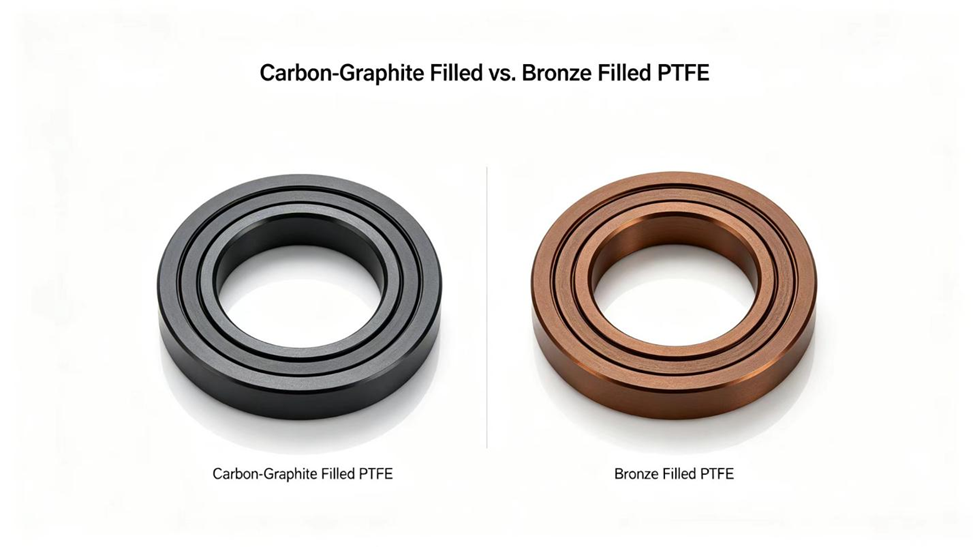
Photo3:Carbon-graphite filled vs. bronze filled PTFE seal comparison
How Do These PTFE Compounds Compare Side by Side?
The table below summarizes general positioning among common filled PTFE options. Exact performance depends on filler percentage and the specific compound formulation used by a given manufacturer.
Filler |
Typical Loading |
Wear Resistance |
Chemical Resistance |
Typical Trade-off |
Bronze |
40–60% by weight |
Best of the common fillers |
Reduced versus unfilled PTFE |
Electrically conductive; lower chemical resistance |
Carbon |
10–35% by weight |
Good, well above unfilled PTFE |
Close to unfilled PTFE |
Somewhat higher friction than bronze in some duties |
Graphite |
5–15% by weight, often blended with carbon |
Modest improvement on its own |
Close to unfilled PTFE |
Lowers friction more than it improves wear resistance |
Glass fiber |
Roughly 5–60% by weight |
Improves durability and compressive strength |
Good, though glass itself resists alkalis poorly |
Can be more abrasive to the mating metal surface |
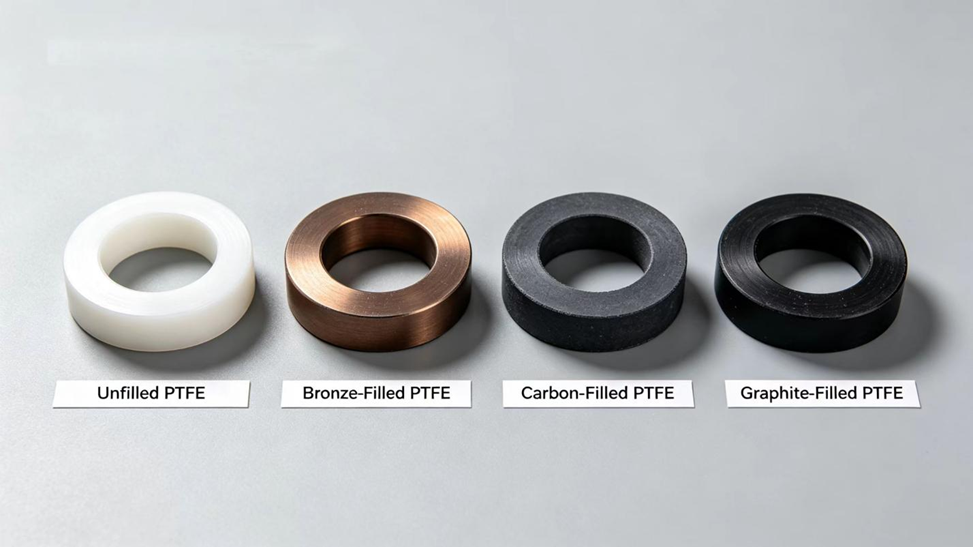
Photo4:Filled PTFE seal compounds side-by-side comparison
What Material Is the O-Ring Energizer Made Of, and Why Does That Choice Matter Too?
The O-ring underneath the PTFE ring is a conventional elastomer, and its material follows the same logic used for any other hydraulic O-ring: NBR for general mineral-oil service at moderate temperatures, HNBR where the application runs hotter or needs better long-term aging resistance, and FKM where chemical resistance or high continuous temperature is the priority. Because the O-ring's only job is to supply consistent spring force to the PTFE ring, its material selection is governed by the same oil-compatibility and temperature questions covered in more general seal material comparisons, rather than by anything specific to the Glyd Ring or Step Seal design itself.
It is worth treating this as a genuinely separate decision from the PTFE compound choice: a seal kit with an excellent bronze-filled PTFE ring but an O-ring energizer poorly matched to the hydraulic fluid in use will still fail early, just from the energizer side rather than the wear ring.
How Does Temperature Affect a PTFE Seal's Performance?
PTFE itself has an unusually wide usable temperature range and tolerates heat well beyond what most rubber compounds can handle, so the PTFE wear ring is rarely the temperature-limiting component in a Glyd Ring or Step Seal. In almost every case, the O-ring energizer underneath it reaches its temperature limit first, which means the seal's effective high-temperature rating is generally set by the O-ring material choice (NBR, HNBR, or FKM) rather than by the PTFE compound.
This is a useful shortcut when troubleshooting a heat-related seal failure: if a Glyd Ring or Step Seal is failing in a high-temperature application, the O-ring energizer is generally the first place to look, even though the PTFE ring is the more visible part of the assembly.
How Does the Filler Choice Affect Friction and Wear Life?
Filler choice is ultimately a balance between friction, wear resistance, and chemical resistance, and improving one generally comes at some cost to another. Bronze gives the best wear resistance and load capacity but the largest reduction in chemical resistance. Graphite lowers friction most effectively but contributes the least to wear resistance on its own. Carbon sits between the two, improving wear resistance meaningfully while keeping chemical resistance close to unfilled PTFE. Combination fillers, such as carbon blended with graphite, are common specifically because they let a compound take on some of the benefits of each rather than committing fully to one trade-off.
In practical terms, higher speed and higher load applications tend to favor bronze or carbon-graphite blends for their wear resistance, while applications where chemical exposure is the bigger concern — unusual hydraulic fluids, or fluids that would react with bronze — tend to favor carbon or graphite filling instead.
Research aimed specifically at predicting Glyd Ring service life has combined an empirical PTFE wear-rate formula with a mechanical model of the seal and a leakage model, producing a wear rate expressed in the general form:
Δω′ = k · Fa · Vb · tc = 6.2×10⁻¹⁷ · F0.4 · V1.09 · t-0.02 (1)
where Δω′ is the volumetric wear rate, F is the contact force between the wear ring and its mating surface, V is sliding speed, and t is operating time, with the exponents fitted from PTFE composite wear testing. Two things stand out in this particular fit: wear rate scales with sliding speed to roughly the first power (an almost linear relationship, and the strongest single influence in the formula), while its dependence on contact force is comparatively weak, and it is close to time-invariant once running. The practical implication is that cylinder speed has an outsized effect on wear-ring life compared with load, more so than intuition based on static contact pressure alone might suggest.
Combined with a model of leakage through the residual clearance around the wear ring — which behaves like flow through a narrow concentric gap, driven partly by the pressure difference across it and partly by the dragging motion of the moving surface — this kind of wear-rate formula lets designers work backward from an allowable leakage rate to a maximum allowable wear volume, and from there to an estimated service life. In one published worked example using this method, a Glyd Ring installed with a specific O-ring pre-compression and running at 28 MPa and 0.1 m/s reciprocating speed was estimated at roughly 2 million seconds of service life (on the order of a few years of typical duty), and the same method showed service life increasing when O-ring pre-compression was adjusted — a concrete illustration of why the O-ring energizer's condition and installation, not just the PTFE compound, sits directly in the service-life calculation.
How Can You Identify the Right PTFE Compound for Your Application?
Because the right filler depends on load, speed, temperature, and hydraulic fluid chemistry together, rather than any single factor, the most reliable approach is to describe the cylinder's actual operating conditions to a seal supplier rather than assuming a generic “PTFE seal” will perform the same regardless of filler. Where an existing seal's part number or manufacturer specification is available, it will usually indicate the filler type; where it is not, a supplier familiar with the cylinder's application can generally recommend a suitable compound based on the duty described.
As with any wear ring and energizer combination, confirming both the PTFE filler and the O-ring elastomer together — rather than focusing on one and assuming the other is a standard default — gives a more complete picture of whether a given replacement seal is actually matched to the application.
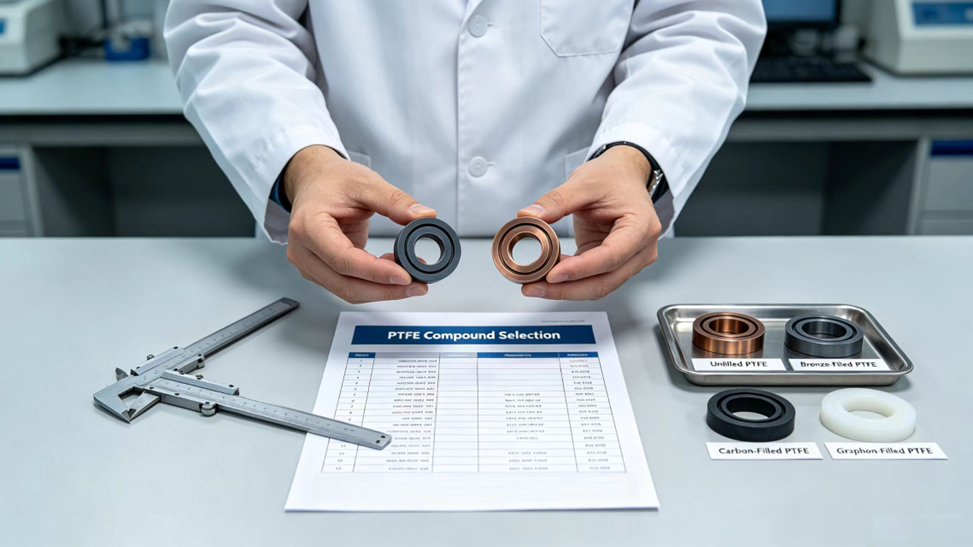
Photo5:Technician verifying PTFE compound
Selected technical references consulted for this article:
- Jin Z., Liang G., Long R., Li W. “Calculation Method for the Service Life of Glyd Rings Used in Hydraulic Cylinder Pistons.” Journal of Shenyang University of Chemical Technology, 2022, 36(4): 362–367.
- Dai L. “Optimization and Experimental Investigation of Hydraulic Reciprocating Glyd Ring Sealing Performance.” Master’s thesis, Jiangnan University, 2025.
- Nikas G. K. “Eighty Years of Research on Hydraulic Reciprocating Seals: Review of Tribological Studies and Related Topics Since the 1930s.” Proceedings of the Institution of Mechanical Engineers, Part J: Journal of Engineering Tribology, 2010, 224(1): 1–23.
Table of Contents
- What Material Is a Glyd Ring or Step Seal Made Of?
- Why Is PTFE Used for the Wear Ring Instead of Rubber?
- What Does “Filled PTFE” Mean, and Why Does It Matter?
- What Is Bronze-Filled PTFE Good For?
- What Is Carbon- or Graphite-Filled PTFE Good For?
- How Do These PTFE Compounds Compare Side by Side?
- What Material Is the O-Ring Energizer Made Of, and Why Does That Choice Matter Too?
- How Does Temperature Affect a PTFE Seal's Performance?
- How Does the Filler Choice Affect Friction and Wear Life?
- How Can You Identify the Right PTFE Compound for Your Application?


