

 EN
EN
 AR
AR CS
CS DA
DA NL
NL FI
FI FR
FR DE
DE EL
EL IT
IT JA
JA KO
KO NO
NO PL
PL PT
PT RO
RO RU
RU ES
ES SV
SV TL
TL IW
IW ID
ID LV
LV SR
SR SK
SK VI
VI HU
HU MT
MT TH
TH TR
TR FA
FA MS
MS GA
GA CY
CY IS
IS KA
KA UR
UR LA
LA TA
TA MY
MY
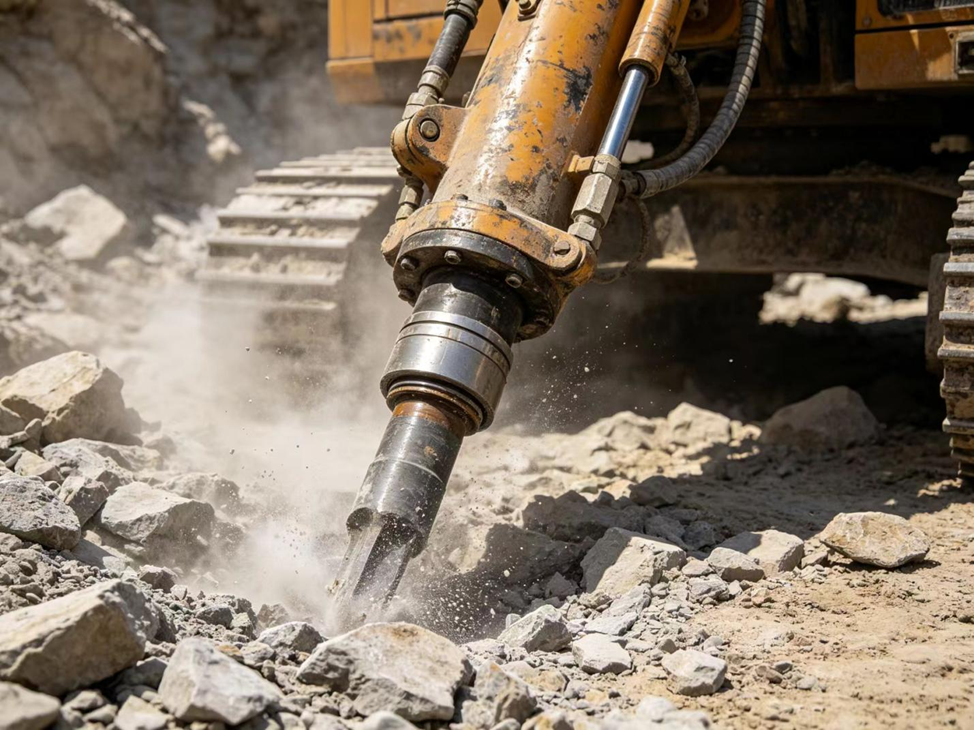
A hydraulic rock drill's front head has to keep two very different things in the right place at the same time: flushing water and lubricating oil have to stay in, and drilling dust and debris have to stay out. The cup seal handles the first job. The dust seal handles the second, and it does that job under some of the dirtiest conditions found anywhere on the machine. This article explains where the dust seal sits, how it excludes contamination from a component that is rotating and hammering at the same time, what failure looks like, and what to check before ordering a replacement.
What Is a Dust Seal in a Hydraulic Rock Drill?
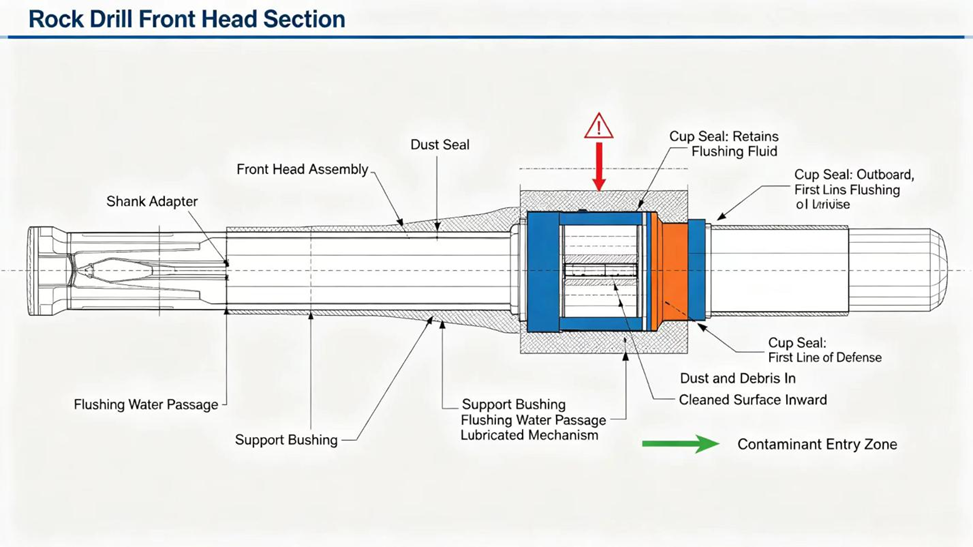
A dust seal, sometimes called a wiper seal, is the outermost sealing element in a rock drill's front head, positioned where the shank adapter exits the machine toward the drill rod and bit. Unlike the cup seal behind it, which holds back pressurized flushing fluid, the dust seal's job is exclusion: keeping rock dust, drill cuttings, and abrasive grit from working their way back into the front head as the shank adapter rotates and reciprocates.
Depending on the manufacturer, this component may also be listed as a wiper seal, scraper seal, or front cover seal. All of these names describe the same basic function: a lip or wiper riding against the shank adapter's outer surface, oriented to scrape contamination away rather than to hold back pressurized fluid.
Where Does the Dust Seal Sit, and What Is It Protecting?
The dust seal sits at the very front of the front head assembly, outboard of the cup seal and any support bushings, at the point where the shank adapter is most exposed to the outside environment. From that position, it is the first line of defense for everything behind it: the cup seal's sealing surface, the support bushings, and ultimately the lubricated rotation and percussion mechanism inside the machine.
This layered arrangement is deliberate. A cup seal designed to hold back pressurized flushing fluid is not necessarily good at excluding dry, abrasive dust, and a seal designed to scrape off dust is not built to hold pressure. Splitting the two jobs between a dust seal and a cup seal lets each one be optimized for what it actually has to do.
How Does a Dust Seal Actually Keep Contaminants Out?
A dust seal typically works as a lip or wiper that maintains light, continuous contact with the shank adapter's outer diameter as it rotates and moves axially. As the adapter withdraws slightly on each return stroke, the lip scrapes accumulated dust and grit off its surface before that material can migrate further inward toward the cup seal and bushings.
Because a dust seal is not holding back significant pressure, its lip geometry and contact force can be tuned mainly for exclusion rather than for a fluid-tight seal. This is a meaningfully different design goal from the cup seal sitting just behind it, even though the two parts can look superficially similar. Published design work on dust seals for other pressure-retaining equipment puts a number on this distinction: a dust seal is typically expected to hold back no more than about 0.1 MPa, essentially a light exclusion duty rather than a genuine pressure-sealing job, with its main mechanical effect on the machine being a small amount of friction against the moving surface it rides on.
Why Does a Rock Drill Need a Dust Seal in Addition to a Cup Seal?
Without a dedicated dust seal, abrasive particles reaching the front head would go straight to work on the cup seal and the shank adapter's sealing surface, the same surface the cup seal depends on for a smooth, low-wear contact. Rock dust and drilling fines are hard, angular, and present in large quantities right at the point where the shank adapter enters the machine, so this is a much harsher exposure than most other seals on the drill see.
- It protects the cup seal's sealing surface on the shank adapter from abrasive scoring, which would otherwise accelerate cup seal wear directly.
- It keeps dust and grit out of the support bushings, reducing abrasive wear that would otherwise increase radial play in the adapter over time.
- It reduces the amount of contamination that can work its way into the lubricated mechanism if the cup seal is ever compromised, effectively adding a second line of defense.
In short, the dust seal is what allows the cup seal and bushings behind it to reach their expected service life in a drilling environment that is, almost by definition, full of abrasive dust.
What Happens When a Rock Drill's Dust Seal Fails?
Because a dust seal is not holding back pressure, its failure does not usually produce a dramatic leak the way a cup seal failure does. Instead, a worn or torn dust seal quietly stops doing its job: abrasive dust and cuttings begin reaching the cup seal and bushings that the dust seal was meant to protect, and wear on those components accelerates from that point on.
This makes dust seal failure easy to overlook. The front head may not show any obvious symptom until the cup seal or bushings it was protecting start showing accelerated wear or the earlier symptoms of their own failure — at which point the dust seal is often part of the root cause, not just a coincidental wear item.
In more severe cases, contamination that accumulates rather than simply accelerating wear can cause a different kind of problem entirely. Engineering work on dust seals for other sliding-and-rotating equipment has documented cases where migrated sediment and debris reacted with process fluids or hardened in place over time, effectively gumming up the moving clearance and causing the component to stick or bind rather than move freely. A rock drill front head is a different application, but the underlying lesson transfers: a dust seal's job is not only to slow wear, but to prevent contamination from accumulating somewhere it can eventually restrict motion altogether.
How Can You Tell If Your Rock Drill's Dust Seal Has Failed?
A failing dust seal is often diagnosed indirectly, through its downstream effects, but a few direct signs are worth checking for:
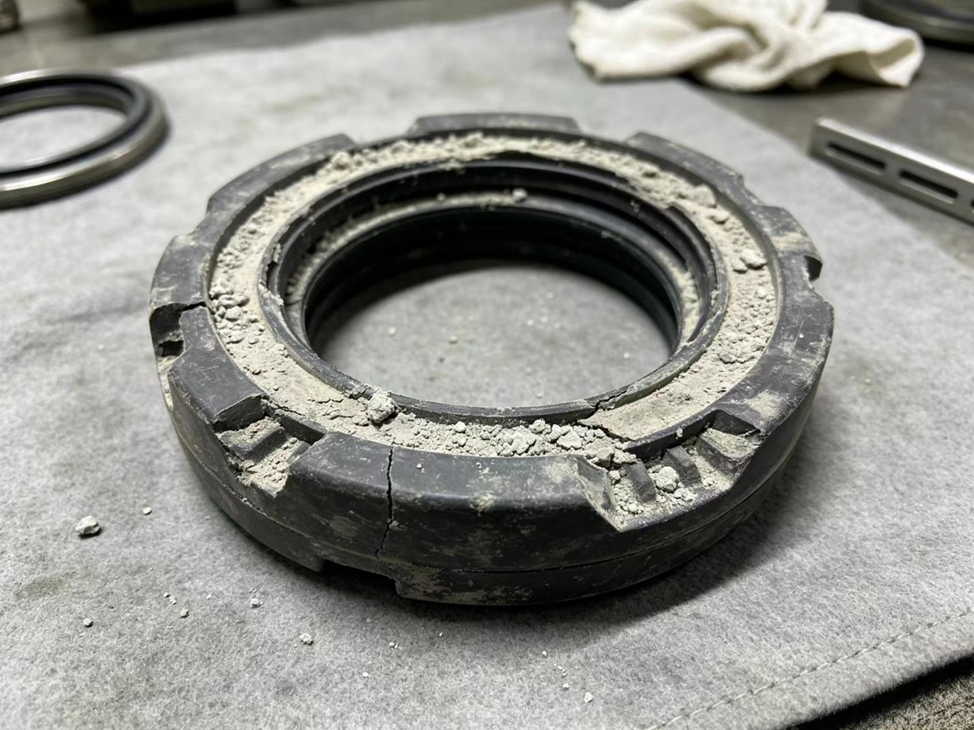
- Visible cracking, tearing, or a hardened, brittle lip on the dust seal itself when the front head is opened for any other service.
- Dust or fine grit visibly packed between the dust seal and the cup seal behind it.
- Faster-than-expected wear showing up on the cup seal or shank adapter sealing surface during a routine inspection, with no other obvious cause.
- Increased radial play in the shank adapter, suggesting bushing wear from contamination that should have been excluded.
The table below connects these signs to likely causes and a sensible next check.
Symptom |
Likely Cause |
Next Check |
Dust seal lip is cracked, torn, or hardened |
Normal wear, ozone/UV exposure, or a material mismatched to conditions |
Replace and inspect the cup seal behind it for contamination damage |
Grit packed between dust seal and cup seal |
Dust seal no longer excluding contamination effectively |
Clean the cavity and inspect both seals before reassembly |
Cup seal wearing faster than expected |
Dust seal failure allowing abrasive contamination through |
Check dust seal condition, not just the cup seal, when diagnosing |
Increased radial play in the shank adapter |
Bushing wear from contamination ingress |
Inspect bushings and dust seal together |
No visible symptom but high operating hours |
Dust seal is a wear item and may be due for replacement on schedule |
Inspect at the next scheduled front head service |
What Causes Premature Dust Seal Wear?
Several conditions shorten a dust seal's service life:
- Highly abrasive drilling dust, common in hard rock and silica-bearing formations, which wears the lip faster than a general-purpose material can tolerate.
- Heat from sustained operation or a hot climate, which can harden and crack an elastomer lip over time, especially at the very front of the machine where cooling is limited.
- Ozone and UV exposure from sunlight and ambient air, which are known to embrittle some rubber compounds over months of outdoor service.
- Scoring or pitting on the shank adapter surface itself, which gives the dust seal lip an uneven surface to ride on and accelerates wear on both parts.
- Installation damage, such as a lip rolled or nicked during fitting, which creates a leak path for contamination from day one.
The shank adapter's own surface hardness plays into this list directly, following the same general wear relationship used across abrasive-wear engineering:
W = K / Hn (1)
where W is wear volume, H is the surface hardness of the harder-wearing component, K is a constant tied to the material pairing and contact conditions, and n is a wear index typically between 1 and 2. Research on the heat treatment of rock-drill shank tail material confirms the practical side of this relationship: quenching parameters that raise surface hardness measurably improve wear resistance, while under-tempered or over-tempered parameters leave residual stress or a coarsened grain structure that undermines it. A shank adapter with a properly hardened, undamaged surface gives both the dust seal and the cup seal behind it a meaningfully easier job than one that has already lost some of that hardness to corrosion or prior wear.
How Does Drilling Environment (Dry Dust vs Wet Mud) Affect Dust Seal Demands?
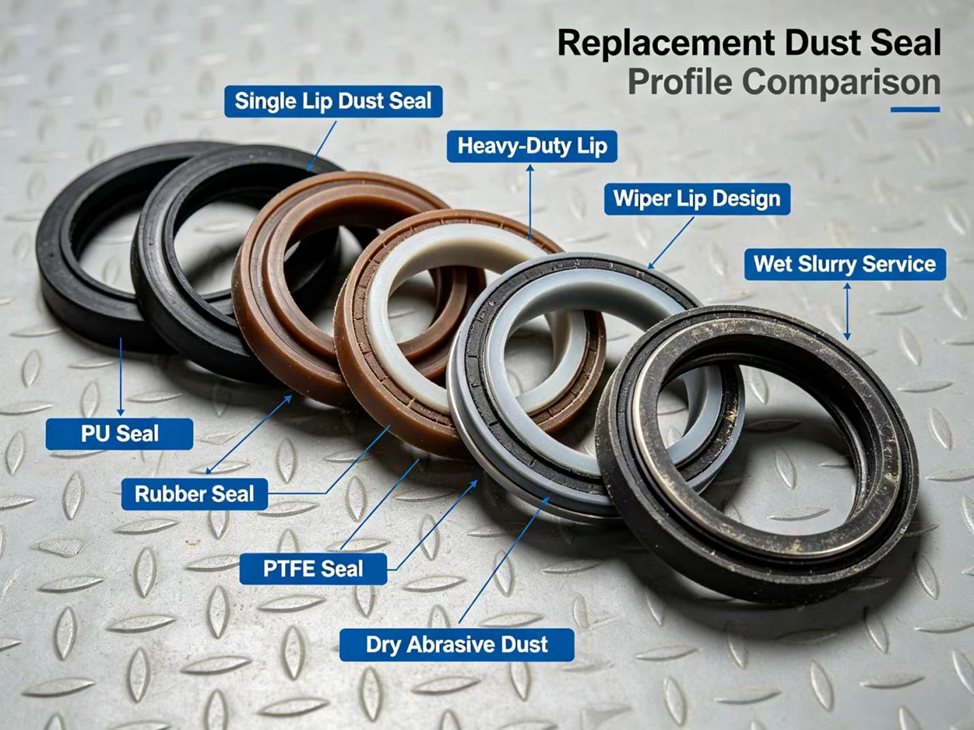
Not every rock drill sees the same kind of contamination. Dry, dusty conditions common in many surface and underground hard-rock operations put a premium on abrasion resistance and a lip design that can shed fine, dry particles effectively. Wet or muddy conditions, common where flushing water mixes with fine rock powder to form an abrasive slurry right at the front head, add a different demand: the dust seal has to exclude a wet, paste-like contaminant that can pack into the lip area rather than simply blowing away.
Because these two environments stress a dust seal differently, the same rock drill model may reasonably use different dust seal materials or lip designs depending on whether it typically drills dry or wet, which is covered in more detail in a companion article on dust seal materials.
How Do You Choose the Right Replacement Dust Seal?
With a confirmed wear item and the front head open, three factors determine the right replacement:
- Exact dimensional and lip-profile match to the OEM part, since dust seal groove dimensions are specific to the rock drill model.
- A material and lip design suited to the site's actual contamination type — dry abrasive dust versus wet abrasive slurry — rather than a generic default.
- Confirmation that the shank adapter's outer surface at the dust seal's contact point is free of scoring or pitting, since a new dust seal riding on a damaged surface will not reach its expected life.
Where Can You Source a Reliable Replacement Dust Seal?
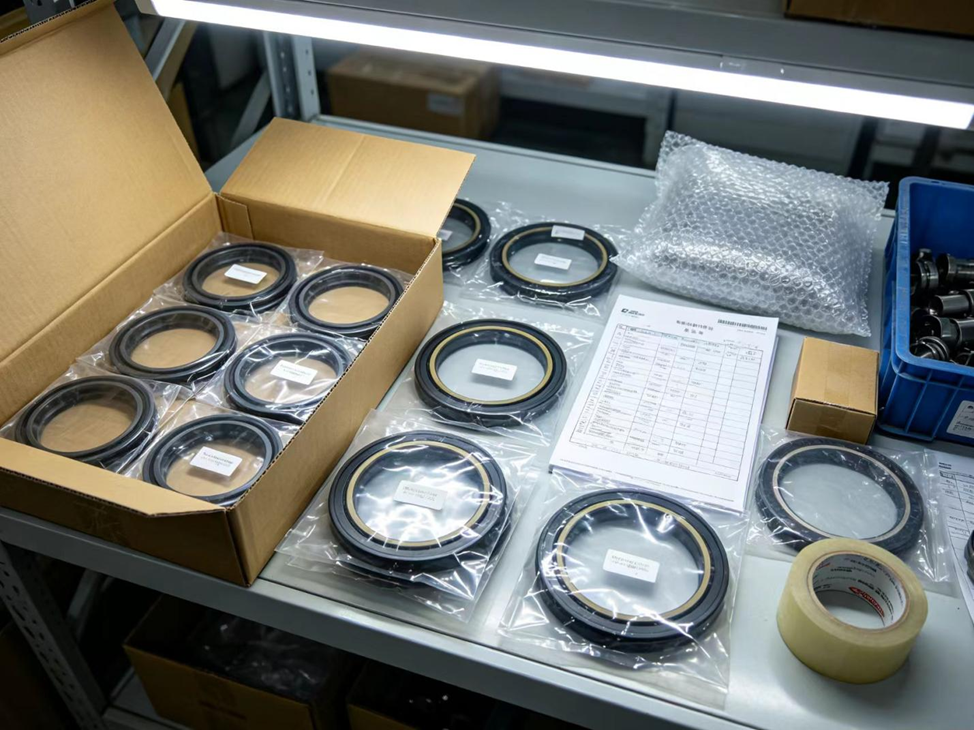
Because dust seal dimensions and lip profiles are specific to each rock drill model, sourcing comes down to finding a supplier who can match your machine's exact part number rather than a generic “dust seal” description.
Nanjing Hovoo Machinery Technology Co., Ltd, a Chinese seal manufacturer founded in 2013, produces PU, rubber, and PTFE sealing components for hydraulic rock drills and hydraulic breakers, cross-referenced to major brands such as Atlas Copco/Epiroc, Furukawa, Montabert, Sandvik, and Tamrock, among others, and states that it provides free technical support to confirm the correct part number, dimensions, and material grade for a given rock drill model before an order is placed.
If you are unsure which dust seal your machine needs, providing the rock drill's model, the front head part number, and a note on your typical drilling conditions (dry and dusty versus wet and muddy) to a supplier that can cross-reference against OEM specifications is the most reliable way to get a seal that actually fits and lasts.
Selected technical references consulted for this article:
- Zhao S., Huo H., Pang C., Cheng W., Wang T., Wei R. “Development and Application of a Corrosion- and High-Temperature-Resistant Dust Seal for Safety Valves.” Equipment Management & Maintenance, 2026 (04).
- Han Z. “Analysis of the Effect of Different Heat Treatment Parameters on the Hardness and Wear Resistance of Rock Drill Shank Tails.” Zhejiang Pulanka Drilling Tools Co., Ltd., technical paper, 2026.
Table of Contents
- What Is a Dust Seal in a Hydraulic Rock Drill?
- Where Does the Dust Seal Sit, and What Is It Protecting?
- How Does a Dust Seal Actually Keep Contaminants Out?
- Why Does a Rock Drill Need a Dust Seal in Addition to a Cup Seal?
- What Happens When a Rock Drill's Dust Seal Fails?
- How Can You Tell If Your Rock Drill's Dust Seal Has Failed?
- What Causes Premature Dust Seal Wear?
- How Does Drilling Environment (Dry Dust vs Wet Mud) Affect Dust Seal Demands?
- How Do You Choose the Right Replacement Dust Seal?
- Where Can You Source a Reliable Replacement Dust Seal?


