

 EN
EN
 AR
AR CS
CS DA
DA NL
NL FI
FI FR
FR DE
DE EL
EL IT
IT JA
JA KO
KO NO
NO PL
PL PT
PT RO
RO RU
RU ES
ES SV
SV TL
TL IW
IW ID
ID LV
LV SR
SR SK
SK VI
VI HU
HU MT
MT TH
TH TR
TR FA
FA MS
MS GA
GA CY
CY IS
IS KA
KA UR
UR LA
LA TA
TA MY
MY
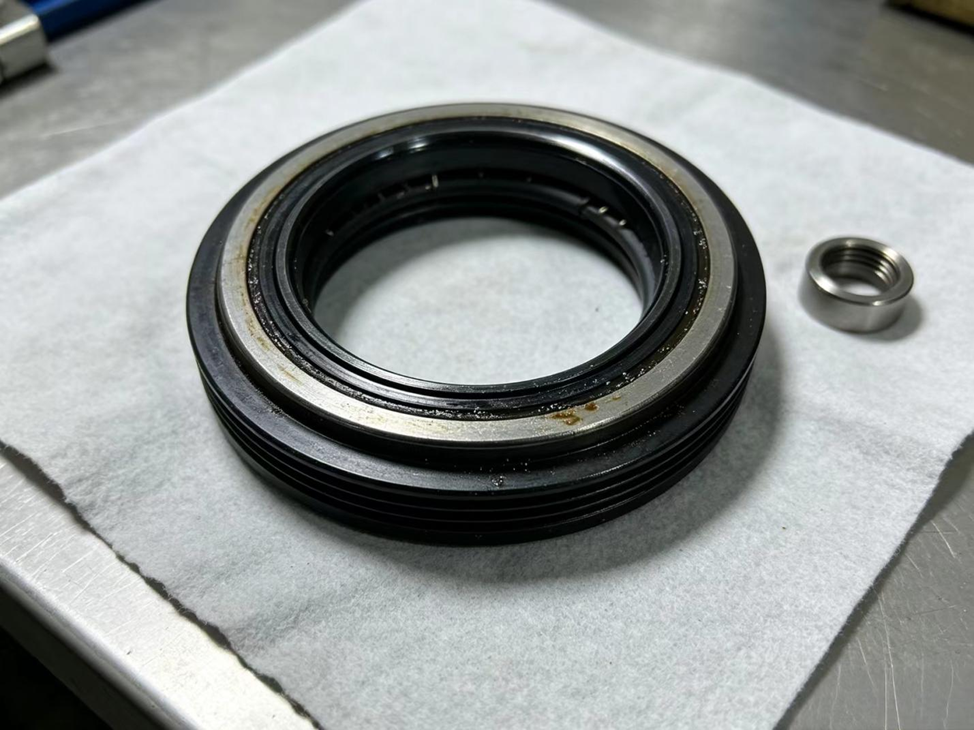
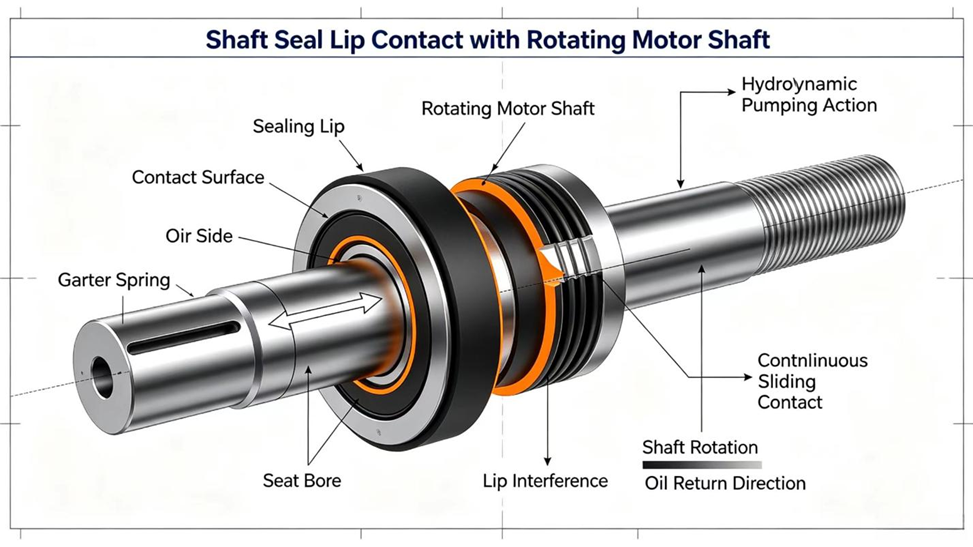
A rotation motor shaft seal spends its entire service life in one continuous state: a flexible lip pressed against a shaft that never stops turning while the drill is running. That constant sliding contact, combined with exposure to the motor's case oil and whatever temperature the motor reaches in service, makes material choice a meaningful factor in how long the seal actually lasts. This article looks at the materials most commonly used for rotation motor shaft seals and what each one is suited to.
What Is a Rotation Motor Shaft Seal Made Of?
Rotation motor shaft seals are most commonly molded from nitrile rubber (NBR), fluoroelastomer (FKM), or polyurethane (PU), paired with a metal or plastic case that holds the seal's shape and a garter spring that maintains the sealing lip's contact force against the shaft. The choice among these three depends mainly on the case oil's operating temperature and the seal's expected duty cycle.
Why Does Shaft Seal Material Matter for a Continuously Rotating Seal?
Unlike a seal that only moves occasionally, such as a cylinder rod seal, a rotation motor shaft seal is in constant sliding contact with its mating surface for essentially the entire time the drill operates. That continuous contact generates continuous frictional heat at the lip, on top of whatever temperature the case oil itself reaches, and it means the material has to sustain its sealing behavior over a very large number of shaft revolutions rather than a comparatively small number of reciprocating cycles.
A material that is a poor match for these conditions shows it through familiar symptoms: the lip hardening and losing contact force from sustained heat, or wearing a visible groove into the shaft faster than expected, or swelling and softening from poor compatibility with the case oil in use.
What Is NBR and Why Is It the Common Default for Shaft Seals?
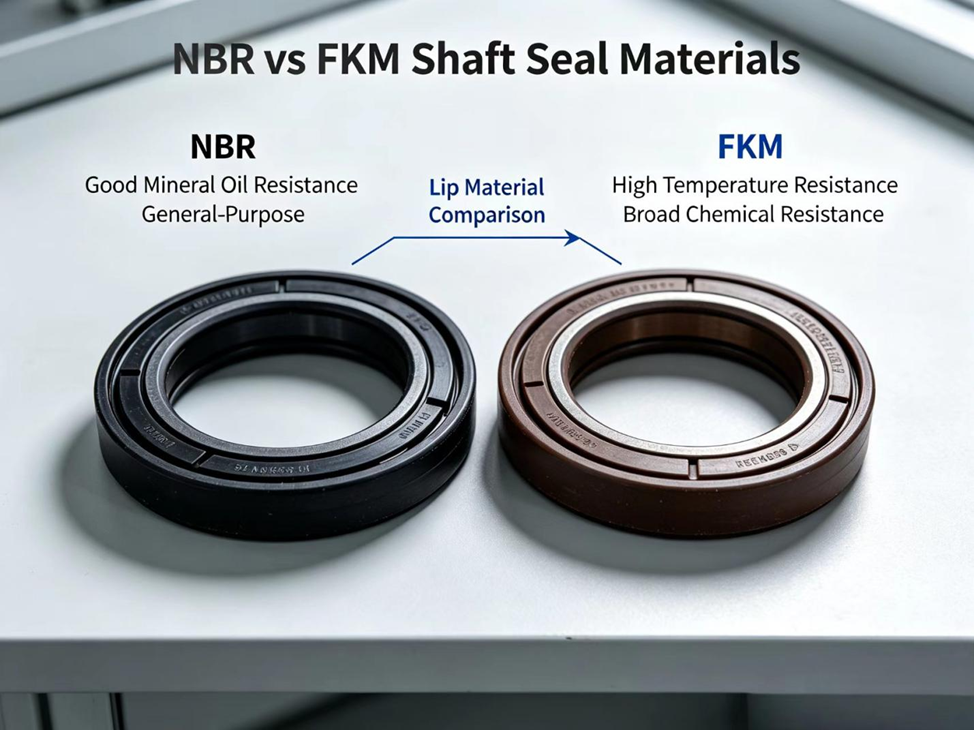
NBR is the general-purpose choice for rotary shaft seals in mineral-oil hydraulic systems for the same reasons it is the default for many other hydraulic seals: strong resistance to mineral-based hydraulic and lubricating oils, reasonable flexibility across a wide temperature range, and moderate cost. For a rotation motor operating at unremarkable case temperatures, NBR is typically the standard specification.
Its continuous-use temperature ceiling, typically cited in the range of roughly 100–120°C depending on the specific compound, is the main factor that eventually pushes a design toward a different material, since the friction-generated heat at a continuously rotating lip can push local temperatures higher than the bulk case oil temperature alone would suggest.
Even within NBR, the antioxidant system built into the compound has a measurable effect on how well that temperature rating holds up over time. Comparative testing between a conventional NBR grade and a version that copolymerizes its antioxidant directly onto the rubber's molecular chain, rather than blending it in as a separate additive, found the modified grade retained better heat-and-oxygen aging resistance across several antioxidant combinations. The reasoning is straightforward: a conventional blended antioxidant can gradually migrate out of the rubber and be leached away by oil, solvents, or sustained heat, while one bonded to the polymer chain stays put for the life of the part. A shaft seal is a good candidate to benefit from this distinction, since it spends its entire service life in continuous contact with case oil at elevated local temperature — exactly the exposure that leaches a conventional antioxidant out fastest.
What Is FKM and When Is It Preferred for Shaft Seals?
FKM offers a meaningfully higher continuous-use temperature ceiling than NBR, commonly cited as high as 200°C, along with broader chemical resistance. For a rotation motor that runs hot — from a high duty cycle, a hot climate, or a case drain circuit that is not managing heat as well as it should — FKM's extra temperature margin can be the difference between a shaft seal that reaches its expected life and one that hardens and fails early.
The trade-off is cost and, in some formulations, reduced flexibility at low temperatures compared with NBR. FKM is generally specified for shaft seals only where the operating temperature or fluid compatibility genuinely calls for it, rather than as a default upgrade.
What About Polyurethane for Shaft Seals?
Polyurethane's abrasion and tear resistance are less central to a shaft seal's job than they are for a dust seal or water seal, since a shaft seal's main wear mechanism is continuous sliding contact rather than abrasive particle exposure. PU does still see use in some rotary shaft seal designs, particularly where extra resistance to nicks and installation damage is valued, but it is less commonly the first choice for this position compared with NBR or FKM.
A fourth option worth knowing about, though it remains a specialty rather than a default choice, is a modified PTFE sealing lip in place of a conventional elastomer. Comparative bench testing of a softened, modified PTFE rotary seal against a standard elastomer lip seal, run under deliberately poor lubrication and mild corrosive conditions, measured a lower operating temperature at the seal (by up to roughly 3.6°C under poor lubrication) and a lower friction torque at the same shaft speed. Under those specific conditions — marginal lubrication or a mildly corrosive case fluid — a PTFE-lipped design can outlast a conventional rubber lip, though it is a more specialized and costly option generally reserved for applications where standard NBR or FKM lips have a documented history of underperforming.
How Do These Materials Compare Side by Side?
The table below summarizes general positioning among the three materials. Exact performance depends on the specific compound formulation used by a given manufacturer.
Material |
Continuous Temperature Range |
Oil Resistance |
Relative Cost |
Typical Limitation |
NBR |
About −30°C to 100–120°C |
Very good with mineral oils |
Lower |
Lower heat ceiling than FKM |
FKM |
Up to about 200°C |
Very good, broader chemical resistance |
Higher |
Higher cost; stiffer in cold conditions |
Polyurethane (PU) |
Moderate ceiling, typically below NBR |
Good |
Moderate |
Less commonly specified for continuous rotary duty |
How Does the Garter Spring Material Factor Into Seal Life?
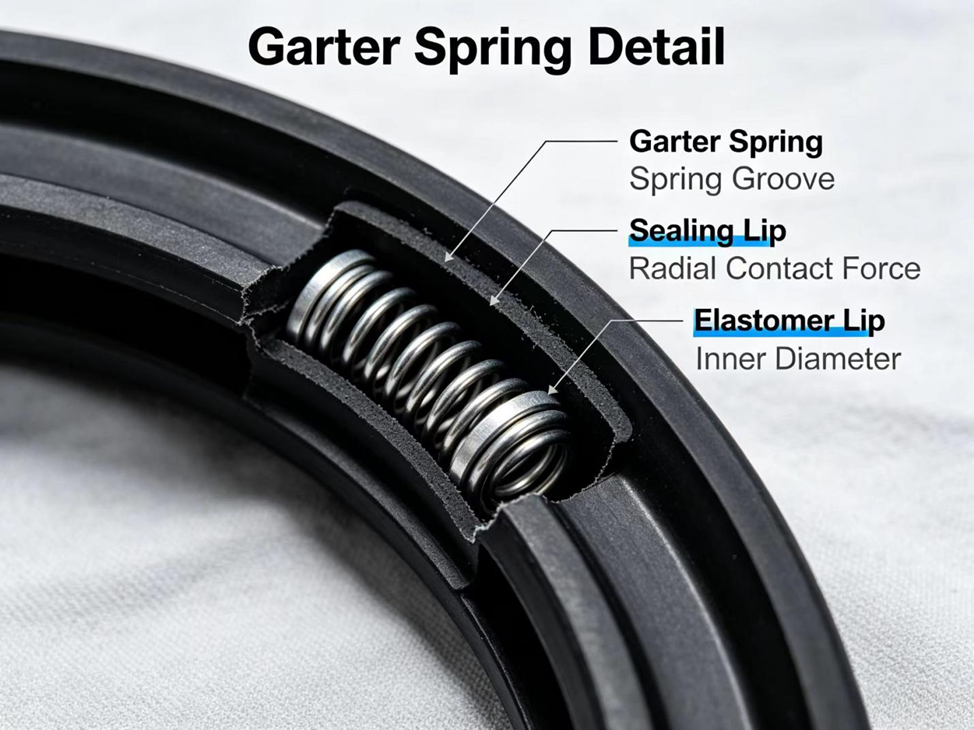
The elastomer lip is only half of what makes a rotary shaft seal work; the garter spring that holds the lip against the shaft is what maintains sealing force as the lip gradually wears. Garter springs are typically a corrosion-resistant metal, and their condition matters just as much as the elastomer's: a spring that has lost tension, corroded, or become dislodged during installation will cause a seal to leak even if the lip material itself is otherwise in good condition.
This is part of why shaft seals are generally replaced as a complete unit rather than having their spring serviced separately — the spring and lip are matched components, and mixing a used spring with a new lip, or vice versa, reintroduces the same uncertainty a full replacement is meant to resolve.
How Does Shaft Surface Condition Interact With Seal Material?
No shaft seal material can fully compensate for a damaged shaft surface. Corrosion, pitting, or a wear groove at the seal's contact point gives even a correctly specified seal an uneven or undersized surface to seal against, and this is a common reason a newly installed seal, of the right material and size, still leaks shortly after replacement.
Where a shaft shows a visible wear groove from a previous seal, options generally include installing a thin repair sleeve over the worn area or, in more involved cases, having the shaft reground or replaced — decisions that depend on the specific motor and are best confirmed against the manufacturer's service documentation rather than assumed.
How Does Temperature and Duty Cycle Affect Material Choice?
A rotation motor that runs intermittently, with time to cool between drilling cycles, places less sustained thermal stress on its shaft seal than one running continuously at a high duty cycle. Ambient climate compounds this: the same motor design may run comfortably within NBR's temperature range in a temperate climate while running hot enough in sustained desert or underground heat to justify FKM instead.
Because friction at the sealing lip adds to whatever heat the case oil itself carries, a seal's effective operating temperature is generally somewhat higher than the bulk oil temperature alone would suggest, which is worth keeping in mind when a seal seems to be failing from heat despite the case oil temperature reading within normal range.
How Can You Identify the Right Material for Your Application?
Because the right shaft seal material depends on operating temperature, case oil type, and duty cycle together, the most reliable approach is to describe the motor's actual operating conditions to a seal supplier rather than assuming a generic replacement will perform the same regardless of material. Where an existing seal's part number or the motor's service documentation is available, it will usually specify the material originally fitted.
Where that information is not available, a supplier familiar with the motor's application can generally recommend a suitable material based on the duty described, and confirming both the elastomer and the garter spring's condition together gives a more complete picture than focusing on the lip material alone.
Selected technical references consulted for this article:
- Zhang B., Gao Z., Liu X., Zhang L., Feng X. “Study on High-Temperature Resistance of Nitrile Rubber ANBR3305 and NBR3305E.” Rubber & Plastics Technology and Equipment, 2026, 52(9): 55–59.
- Liu C., Xiao G., Jia X. “Performance of Modified PTFE Rotary Seal under Condition of Bad Lubrication and Weak Corrosion.” Science Technology and Engineering, 2026, 26(20): 8655–8660.
Table of Contents
- What Is a Rotation Motor Shaft Seal Made Of?
- Why Does Shaft Seal Material Matter for a Continuously Rotating Seal?
- What Is NBR and Why Is It the Common Default for Shaft Seals?
- What Is FKM and When Is It Preferred for Shaft Seals?
- What About Polyurethane for Shaft Seals?
- How Do These Materials Compare Side by Side?
- How Does the Garter Spring Material Factor Into Seal Life?
- How Does Shaft Surface Condition Interact With Seal Material?
- How Does Temperature and Duty Cycle Affect Material Choice?
- How Can You Identify the Right Material for Your Application?


