33-99No. Mufu E Rd. Gulou District, Nanjing, China [email protected] | [email protected]
33-99No. Mufu E Rd. Gulou District, Nanjing, China [email protected] | [email protected]

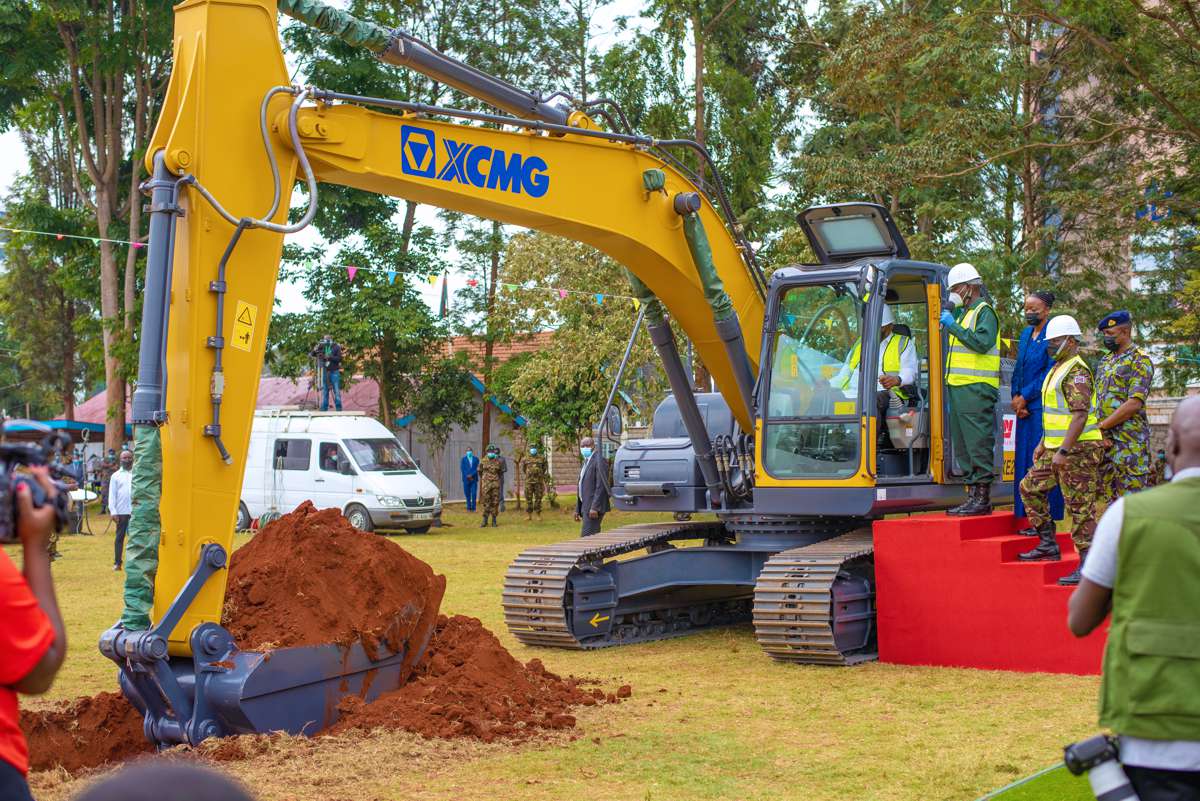
Ethiopia doesn't always appear on the first page of international construction industry planning. It probably should. With a population of over 107 million — second largest in Africa — and a construction sector projected to expand at nearly 8% annually through 2029, the country represents a significant and sustained equipment demand curve that is only beginning to attract serious international attention.
Buildexpo Africa Ethiopia 2026, organised by Expogroup Exhibitions Worldwide, runs February 18 to 20 at Millennium Hall in Addis Ababa. It's the 5th edition of the Ethiopian chapter of the Buildexpo Africa series — a franchise that has operated in Kenya and Tanzania for over two decades before expanding into Ethiopia. That track record in East Africa gives the organiser credibility and a regional buyer network that a first-time event wouldn't have.
The scale of government infrastructure commitment in Ethiopia is hard to overstate. In September 2025, Prime Minister Abiy Ahmed announced a roughly $30 billion infrastructure initiative covering an oil refinery, a gas facility, a new airport, and a target of 1.5 million new housing units by 2031. The national road network is planned to expand from around 142,500 km in 2024 to 245,000 km by 2032. Power generation capacity is targeted to grow from 4.2 GW to 17.2 GW by 2030.
Individually, any one of those numbers would represent a significant construction programme. Together, they describe a market in the middle of a fundamental physical transformation. Roads require earthmoving, grading, and compaction equipment. Housing at scale needs concrete mixing, lifting, and formwork systems. Power infrastructure requires civil and mechanical construction capacity across sites that are often remote and geologically challenging.
The Grand Ethiopian Renaissance Dam — Africa's largest hydroelectric project, inaugurated in September 2025 — stands as the most visible symbol of this ambition. But the pipeline runs far deeper: airport expansions, railway extensions, urban redevelopment in central Addis Ababa, and industrial park construction across multiple regions all sustain demand for heavy equipment across different segments simultaneously.
Buildexpo Africa exhibitions cover construction machinery, building material machines, mining equipment, construction vehicles, and specialist tools. The Ethiopian edition draws exhibitors from more than 28 countries, with strong participation from Indian, Chinese, Turkish, and European manufacturers who have identified East Africa as a priority growth market. Visitors come from Ethiopia and neighbouring countries — Eritrea, Djibouti, Somalia, South Sudan, and Sudan — giving the show a regional footprint beyond its Addis Ababa location.
Millennium Hall is Addis Ababa's primary large-scale exhibition venue, situated in the Bole district near the international airport. It has hosted multiple iterations of Buildexpo alongside other international trade events, which means exhibitors and local buyers are familiar with the logistics. The hall's central location in the commercial district makes it accessible for the contractor teams, procurement officers, and government project managers who form the core visitor base.
Category |
Details |
Event Name |
Buildexpo Africa – Ethiopia 2026 (5th Edition) |
Dates |
February 18–20, 2026 |
Venue |
Millennium Hall, Addis Ababa, Ethiopia |
Organiser |
Expogroup Exhibitions Worldwide |
Ethiopia's construction equipment market operates somewhat differently from mature Western markets. Rental infrastructure is still developing, which means many contractors buy rather than hire equipment — a purchasing pattern that creates more direct OEM relationships than markets where rental companies sit between manufacturer and end-user. Price sensitivity is real, but buyers are also acutely aware of after-sales support challenges in a country where service networks are still thin. A product that breaks down with no local repair capability is worse than an expensive product that keeps running.
Chinese equipment has made significant inroads across East Africa on price, but European and Japanese brands retain strong positions in segments where operational reliability is critical and downtime costs are high. That competitive dynamic creates a genuine opening for suppliers who can demonstrate both reasonable pricing and viable service coverage.
For hydraulic breaker and attachment manufacturers, Ethiopia's profile presents a specific set of opportunities. Urban demolition for redevelopment projects in Addis Ababa, rock breaking for road construction through the Ethiopian highlands, and quarrying for construction aggregates all require breaking equipment. The Addis Ababa market is also increasingly sophisticated — international contractors working on major projects bring procurement standards that align with global supply chains. A presence at Buildexpo Ethiopia places a brand directly in front of the contractors, distributors, and project managers who are shaping how this market equips itself for the decade ahead.

Welcome to HOVOO, a Chinese seal factory. Production of PU, Rubber and PTFE seals. The seals include O-ring, piston seal, rod seal, Gray ring and gas seal.


 EN
EN
 AR
AR CS
CS DA
DA NL
NL FI
FI FR
FR DE
DE EL
EL IT
IT JA
JA KO
KO NO
NO PL
PL PT
PT RO
RO RU
RU ES
ES SV
SV TL
TL IW
IW ID
ID LV
LV SR
SR SK
SK VI
VI HU
HU MT
MT TH
TH TR
TR FA
FA MS
MS GA
GA CY
CY IS
IS KA
KA UR
UR LA
LA TA
TA MY
MY
