33-99No. Mufu E Rd. Gulou District, Nanjing, China [email protected] | [email protected]
33-99No. Mufu E Rd. Gulou District, Nanjing, China [email protected] | [email protected]

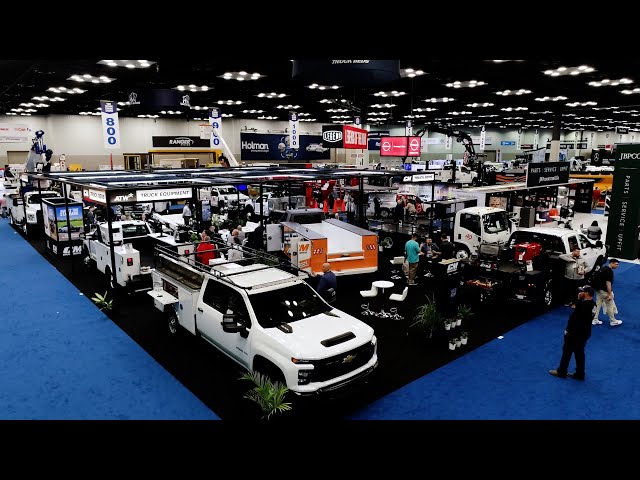
A work truck is fundamentally a chassis with a purpose attached to it — and that purpose, more often than not, is delivered through hydraulics. The dump body that tips a load of gravel, the crane that lifts a generator onto a rooftop, the snow plow that lowers and angles in seconds, the refuse truck that compacts and lifts — all of these depend on hydraulic systems engineered specifically for vocational truck applications. Work Truck Week is the annual event where the upfitters, body manufacturers, and component suppliers serving this market gather, alongside the Green Truck Summit that has become an integral part of the programme.
Work Truck Week 2026 runs in March, continuing the show's established annual format organised by the NTEA — the Association for the Work Truck Industry. The event combines an exhibition floor covering chassis, truck bodies, lift equipment, and the full range of vocational truck components with a substantial educational conference programme. The Green Truck Summit, a one-day programme within the broader event, focuses specifically on alternative fuel and power systems for commercial vehicles — a segment increasingly relevant to hydraulic system design as electrification reshapes how auxiliary hydraulic functions are powered.
Traditional vocational trucks power their hydraulic systems through a power take-off unit connected to the engine — when the truck idles to run the dump body hydraulics or the crane, the engine burns fuel and produces emissions regardless of whether the vehicle is moving. Electric power take-off systems, which use a battery pack and electric motor to drive the hydraulic pump independently of the main engine, have moved from a niche option to a mainstream specification request across the vocational truck market, driven by idle-reduction regulations in multiple US states and by fleet operator interest in reducing fuel consumption during stationary hydraulic operation.
This shift has direct implications for hydraulic pump selection. An electric PTO system typically runs at a fixed or narrow-range motor speed rather than the variable engine speed of a conventional PTO, which changes the optimal pump displacement and control strategy. Hydraulic pump manufacturers serving the work truck market have had to develop products specifically optimised for electric PTO operation — a market shift that Work Truck Week's exhibitor and conference programme tracks closely, with technical sessions addressing exactly this transition.
Category |
Details |
Event Name |
Work Truck Week 2026 (NTEA) |
Dates |
March 2026 (annual; confirm exact dates at ntea.com) |
Venue |
Indiana Convention Center, Indianapolis, IN, USA (recent editions) |
Scale |
Annual; Work Truck Show exhibition plus Green Truck Summit conference |
The vocational truck industry operates through a distinctive supply chain structure: chassis manufacturers — Ford, GM, Ram, Freightliner, International — sell incomplete vehicles to body and equipment upfitters, who install the dump bodies, cranes, lift gates, and hydraulic systems that turn a bare chassis into a functional work truck. This upfitter community is the primary hydraulic component buyer at Work Truck Week, and the relationships are typically deep and long-standing — an upfitter who has standardised on a particular hydraulic pump and valve package across their product line is making a decision that affects every truck they build for years.
For hydraulic pump manufacturers, Work Truck Week offers concentrated access to this upfitter community alongside the fleet operators and municipal buyers who attend specifically to evaluate vocational truck options for their own procurement cycles. The show's educational programme — covering regulatory compliance, fleet electrification strategy, and vocational truck specification best practice — creates a context where hydraulic system performance discussions happen within the broader commercial and regulatory framework that actually drives purchasing decisions in this market.

Welcome to HOVOO, a Chinese seal factory. Production of PU, Rubber and PTFE seals. The seals include O-ring, piston seal, rod seal, Gray ring and gas seal.


 EN
EN
 AR
AR CS
CS DA
DA NL
NL FI
FI FR
FR DE
DE EL
EL IT
IT JA
JA KO
KO NO
NO PL
PL PT
PT RO
RO RU
RU ES
ES SV
SV TL
TL IW
IW ID
ID LV
LV SR
SR SK
SK VI
VI HU
HU MT
MT TH
TH TR
TR FA
FA MS
MS GA
GA CY
CY IS
IS KA
KA UR
UR LA
LA TA
TA MY
MY
