

 EN
EN
 AR
AR CS
CS DA
DA NL
NL FI
FI FR
FR DE
DE EL
EL IT
IT JA
JA KO
KO NO
NO PL
PL PT
PT RO
RO RU
RU ES
ES SV
SV TL
TL IW
IW ID
ID LV
LV SR
SR SK
SK VI
VI HU
HU MT
MT TH
TH TR
TR FA
FA MS
MS GA
GA CY
CY IS
IS KA
KA UR
UR LA
LA TA
TA MY
MY
The cost of an incorrect drifter selection in tunnel construction shows up in an accounting line that most procurement processes don't track: overbreak volume per round. A drifter mismatched to the tunnel cross-section, rock formation, or hole depth generates a blast pattern with uneven burden distribution—the charge per hole has more or less rock to move than designed, the perimeter holes produce ragged walls, and the concrete or shotcrete volume to fill the overbreak is billed on every round for the life of the project. In a 5-kilometer road tunnel averaging 100 rounds, even 0.1 m³ of excess overbreak per round adds 10 m³ of concrete that wasn't in the budget.
That's the operational stake behind drifter selection for tunneling. The technical decisions are about hole accuracy, consistent penetration rate across variable geology, and reliable performance in continuous duty—not peak percussion energy numbers on a spec sheet.
Tunnel Cross-Section Drives Boom Configuration, Which Drives Drifter Class
The starting point is the tunnel cross-section, not the rock type. Cross-section determines how many booms the jumbo needs, which determines the drifter's mechanical envelope constraints. For small tunnels below 20 m² (narrow mining drifts, small access headings), a single-boom rig must reach all holes from one carrier position without repositioning—the drifter needs to be compact enough for the short boom geometry without sacrificing percussion energy. For road tunnels above 80 m², a two- or three-boom jumbo allows simultaneous drilling in multiple face zones; here the drifter selection is about matching the percussion class to the rock while the boom handles the geometric reach.
The practical consequence: in a 6×7 m railway tunnel cross-section (42 m²), a twin-boom jumbo with medium-class drifters (80–150 J) typically outperforms a single-boom heavy drifter setup because the twin-boom completes the 80–120-hole face pattern 40–60% faster per setup. The heavy drifter's extra percussion energy is wasted if the limiting factor is positioning time between holes, not penetration rate within each hole.
Rock Formation Classification for Tunnel Drifter Selection
Tunnel geology changes continuously along the drive—harder than expected in some stretches, softer and more fractured in others. The drifter must perform adequately across the range encountered, not just at the design formation class. Projects that specify a drifter optimized for the modal geology and then encounter 40 m of granite at 180 MPa compressive strength where the design formation was 100 MPa limestone experience penetration rate drops that delay the entire project schedule.
The appropriate selection criterion for variable geology tunnels: choose the drifter class for the hardest 20% of expected formation, not the average. The performance margin in softer ground is absorbed by penetration rate that's higher than the design estimate—a welcome problem. The performance deficit in harder-than-design ground is absorbed by delay.
Drifter Selection Matrix for Tunnel Applications
Cross-Section |
Rock Class |
UCS Range |
Drifter Power |
Recommended Models |
Thread/Hole Ø |
<20 m² (small drift) |
Soft–medium |
40–100 MPa |
12–18 kW |
HD190, RD8, COP 1238 |
R32/T38, Ø38–52 mm |
20–50 m² (dev. heading) |
Medium |
80–150 MPa |
18–25 kW |
HL1560, COP 1638, HD350 |
T38/T45, Ø45–64 mm |
50–80 m² (twin boom) |
Medium–hard |
100–180 MPa |
22–30 kW |
RD930, COP 1838, HD500 |
T45, Ø51–76 mm |
80–120 m² (road tunnel) |
Hard |
120–200 MPa |
25–35 kW |
HL1560T, COP 1838AW+, HD700 |
T45/T51, Ø64–89 mm |
120 m² (large tunnel) |
Hard–very hard |
150–250 MPa |
30–40 kW |
RD1840, COP 4050, HD1000 |
T51, Ø76–102 mm |
Hole Accuracy: The Tunneling-Specific Performance Metric
In surface drilling, hole deviation at depth matters for blast geometry but can often be compensated in the charge design. In tunnel construction, hole deviation determines whether the burn cut functions—the tightly-spaced uncharged relief holes at the center of the face must be within 20–30 mm of their designed positions or the cut sequence fails to pull properly, reducing advance per round. A round with a failed cut produces 1.5–2 meters of advance instead of the designed 4–5 meters and requires re-drilling the next face.
The half-cast factor is the standard measure of contour drilling quality: the ratio of visible blast-hole half-casts on the blasted face to the total contour hole length. In competent rock with well-drilled patterns, half-cast factors of 50–80% are achievable. Poor drifter choice—one with too much free-hammering sensitivity, inconsistent feed control, or insufficient anti-jam function for the geology—produces crooked holes that cut low half-cast factors regardless of explosives quality. Computer-controlled drill jumbos with parallel-holding boom geometry and automatic collaring functions produce significantly better half-cast results in homogeneous rock than manually-set rigs with the same drifters.
Flushing Requirements in Tunnel Environments
Tunnel drilling relies almost exclusively on water flushing, unlike surface bench drilling where air flushing is practical. Flushing water pressure requirements for typical tunneling hole diameters (45–76 mm, depths 3–5 m) range from 15–25 bar. Drifters with higher flushing pressure capacity (Epiroc COP 1638+ at up to 25 bar) maintain cuttings removal as penetration rate increases in soft-moderate formations; drifters at the lower flushing specification (20 bar) can experience cuttings packing if penetration rate is higher than expected.
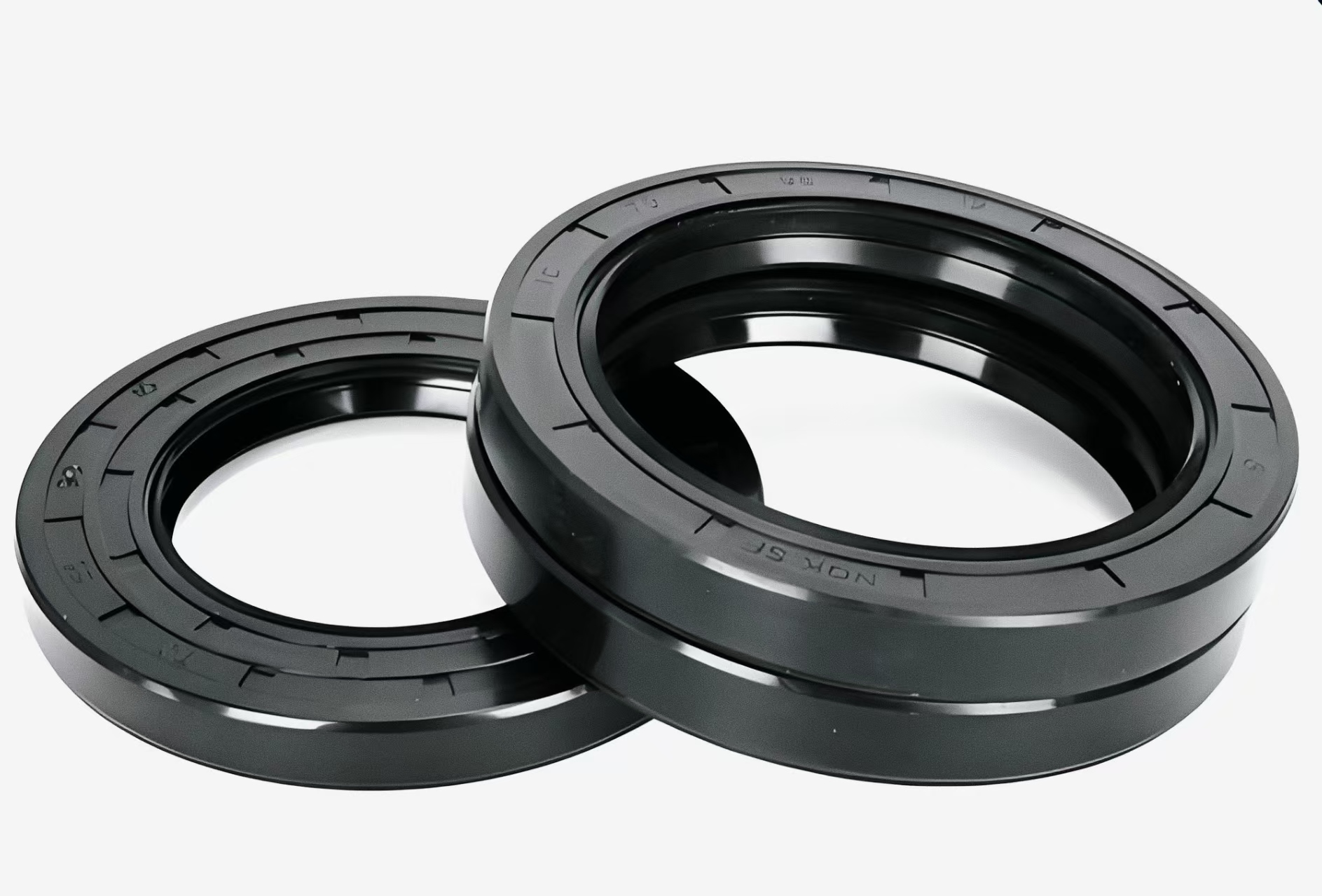
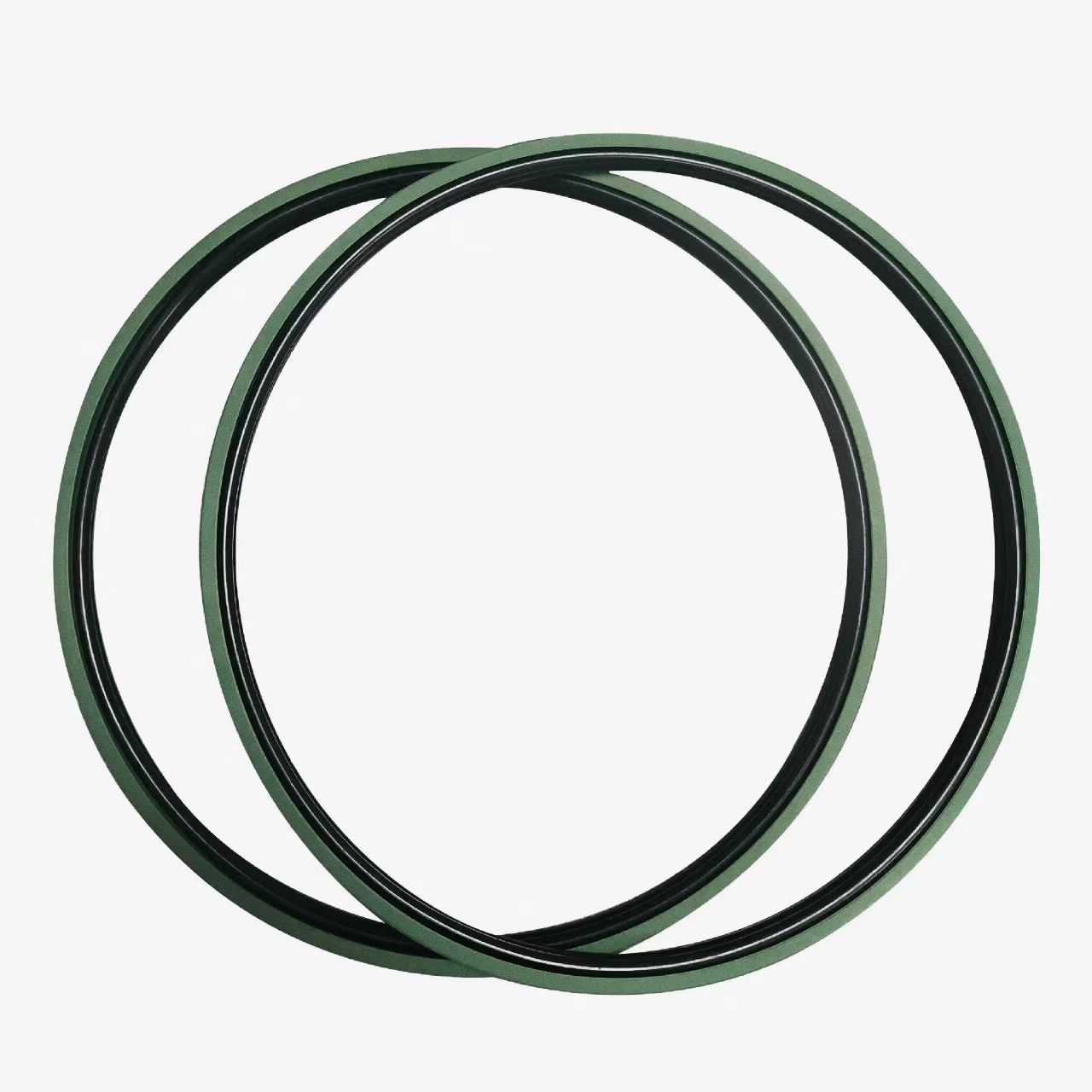
Water flushing also interacts directly with the flushing box seals—the critical boundary between the water circuit and the percussion oil circuit. In tunnels where mine water quality is variable or mineral-laden, PTFE-backed flushing seals outlast standard lip seals significantly. Short seal intervals in tunnel applications (typically 350–400 percussion hours vs. 450–500 on surface) should be planned from the outset. HOVOO supplies PU, HNBR, and PTFE-backed seal kits for all major tunnel drifter models. References at hovooseal.com.


