

 EN
EN
 AR
AR CS
CS DA
DA NL
NL FI
FI FR
FR DE
DE EL
EL IT
IT JA
JA KO
KO NO
NO PL
PL PT
PT RO
RO RU
RU ES
ES SV
SV TL
TL IW
IW ID
ID LV
LV SR
SR SK
SK VI
VI HU
HU MT
MT TH
TH TR
TR FA
FA MS
MS GA
GA CY
CY IS
IS KA
KA UR
UR LA
LA TA
TA MY
MY
A hydraulic pump system failure is rarely just a pump problem. The pump is the most visible component, but it sits within an interdependent assembly where a fault in the reservoir, filtration, valving, or cooling circuit can destroy a perfectly good pump in hours. Understanding hydraulic systems at the component level makes troubleshooting faster and rebuilds more durable.
The Components That Matter Most
The reservoir does more than store fluid. It provides residence time for entrained air to escape before fluid recirculates through the pump. It allows heat to dissipate through the walls. It gives contamination particles a chance to settle. A reservoir that is too small — a common cost-cutting outcome — compromises all three functions simultaneously, shortening pump life regardless of pump quality.
Filtration is the system's immune system. Pressure filters protect the high-pressure circuit; return filters catch wear debris before it recirculates; offline kidney-loop systems polish the fluid continuously during extended operation. The target cleanliness for most axial piston pumps is ISO 16/14/11. Running consistently above that level is simply shortening pump life on a known and preventable schedule.
Relief Valves and Why They Fail Quietly
Relief valves are set-and-forget components until they are not. A relief valve that has drifted low in pressure setting forces the pump to work against premature bypass on every pressure cycle, generating heat and reducing circuit efficiency. One that has drifted high allows pressure transients to reach system components above their design rating. Periodic pressure setting verification is quick and eliminates a source of ambiguous system behavior.
Troubleshooting the Common Symptoms
No flow or low flow points first to pump rotation direction, suction line restrictions, and coupling integrity — all before the pump itself is condemned. Excessive noise almost always indicates cavitation from a restricted suction line, a clogged inlet filter, or cold startup with high-viscosity fluid. Intermittent aeration noise that is worse after seal replacement is a lip direction installation error.
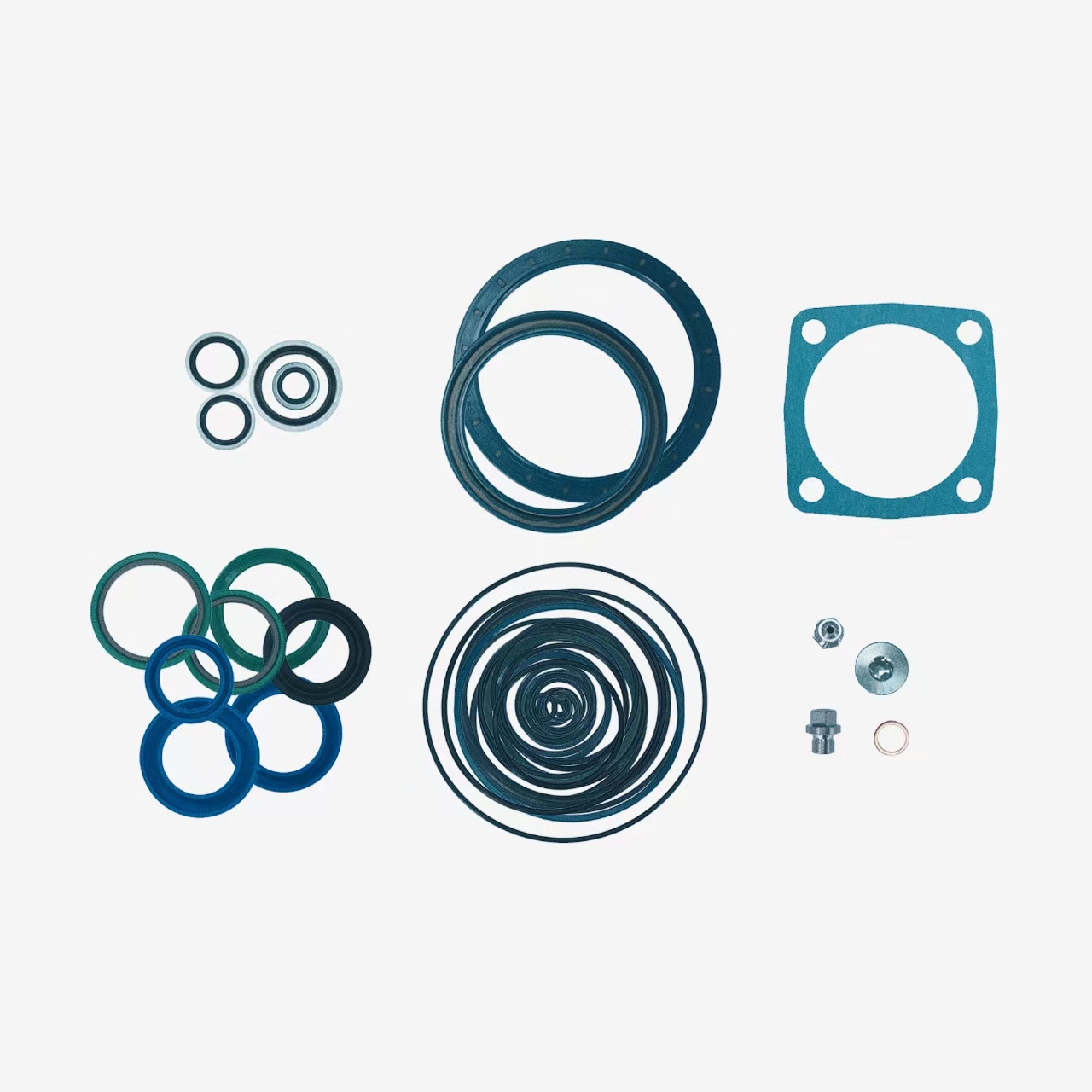
HOVOO / HOUFU hydraulic pump seal kits address the leakage symptoms that underlie many system-level faults. A leaking shaft seal introduces air and contamination simultaneously. HOUFU seals bring the pump back to specification. Details at hovooseal.com.
Source: www.hovooseal.com


