

 EN
EN
 AR
AR CS
CS DA
DA NL
NL FI
FI FR
FR DE
DE EL
EL IT
IT JA
JA KO
KO NO
NO PL
PL PT
PT RO
RO RU
RU ES
ES SV
SV TL
TL IW
IW ID
ID LV
LV SR
SR SK
SK VI
VI HU
HU MT
MT TH
TH TR
TR FA
FA MS
MS GA
GA CY
CY IS
IS KA
KA UR
UR LA
LA TA
TA MY
MY

A mobile hydraulic pump lives a harder life than its stationary industrial cousins. Vibration, temperature swings from pre-dawn cold starts to midday summer heat, contaminated air, and an operator who needs full hydraulic power available immediately — these are the daily realities that distinguish mobile hydraulic engineering from plant design.
The Speed Range Problem
Agricultural tractors run their PTO at 540 or 1,000 RPM depending on the implement attached. Engine speed changes constantly with load. A mobile hydraulic pump fitted to that drivetrain must produce adequate flow and maintain pressure stability across a range that would simply never occur in a fixed industrial installation. Pumps that cavitate at low engine idle or overpressure at peak RPM are a real operational problem, not just a specification footnote.
Excavators and crane carriers face similar challenges. The main axial piston pump on a large excavator is working against the entire machine's hydraulic demand — boom, stick, bucket, travel motors, and swing simultaneously — while the diesel engine speed fluctuates with operator input. Load-sensing controls on these pumps continuously adjust displacement to match demand, which is what makes modern construction equipment both responsive and fuel efficient.
Contamination Is Always Worse Than You Think
A combine harvester working a dusty wheat field generates airborne particulate that gets into everything. A demolition excavator works in environments where hydraulic hoses take impact damage and hydraulic connections are routinely exposed to concrete dust and rebar scale. In these conditions, the hydraulic pump oil seal is the last line of defense against particle ingress into the pump housing. A seal that has hardened from heat cycling or cracked from mechanical fatigue is an open door.
Temperature: The Forgotten Specification
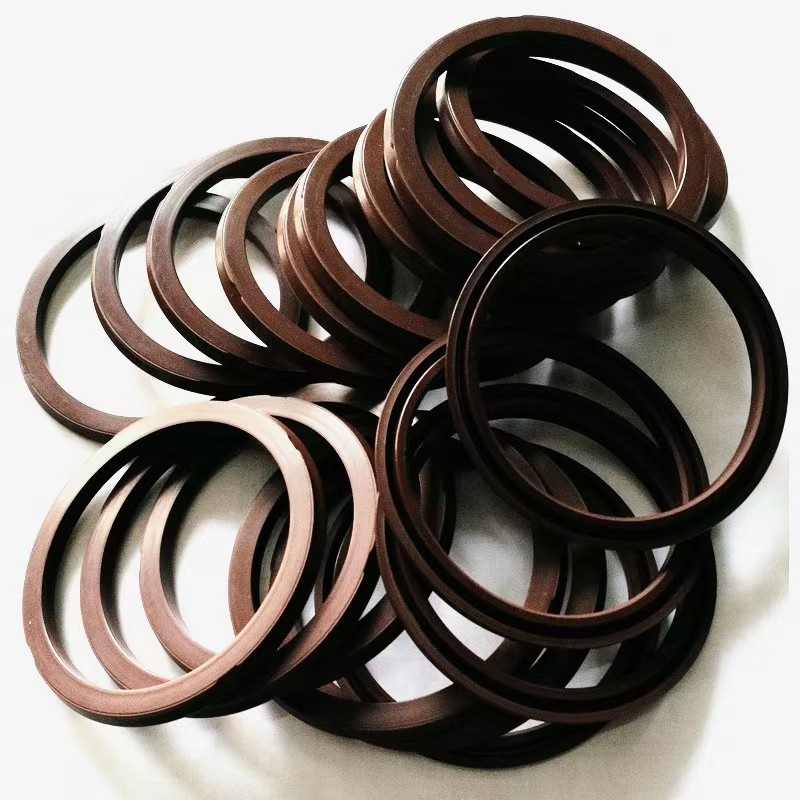
Standard NBR seals begin losing flexibility below roughly -20°C. Combine harvesters in the Canadian prairies, forestry equipment in Scandinavia, and construction machinery in Siberian conditions regularly see startup temperatures well below that threshold. A hydraulic pump seal kit with FKM-compound seals handles down to -40°C without the cold-start leakage that NBR seals develop — and maintains its properties at the high operating temperatures of a fully loaded mobile circuit.
HOVOO / HOUFU manufactures and stocks FKM-compound seal kits validated specifically for mobile hydraulic pump platforms. HOUFU-branded kits are available for the major excavator, agricultural, and forestry pump families with quick delivery. Visit hovooseal.com for application-specific guidance.
Source: www.hovooseal.com


