33-99No. Mufu E Rd. Gulou District, Nanjing, China [email protected] | [email protected]
33-99No. Mufu E Rd. Gulou District, Nanjing, China [email protected] | [email protected]

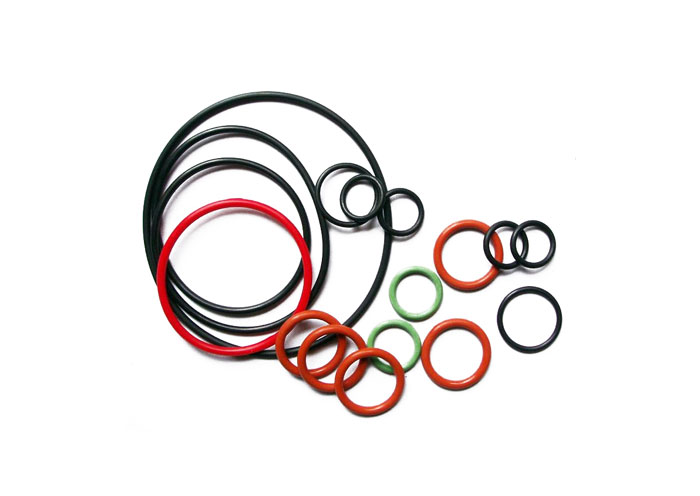
Suitable, but must be limited on the premise of "compliant formula + accepted production + corresponding test documentation."
Silicone here refers to silicone rubber VMQ, not raw silicone oil. VMQ's core value is heat and cold resistance, cleanliness, low odor, good flexible rebound and biocompatibility potential, so it's very suited to food equipment, medical devices, pharma equipment, electronic device sealing and similar scenarios.
But it's not a "universal seal material." VMQ's typical shortfalls are: mediocre mechanical strength, average tear and puncture resistance; often weaker resistance to mineral oil/fuel/aromatic hydrocarbons; for high-speed dynamic seal, sharp-edge assembly, and long-term oil immersion should preferentially consider FKM, FVMQ, EPDM, NBR or other materials. Trelleborg's description of VMQ also emphasizes its outstanding heat, cold, and ozone/UV resistance, and gives a common usage temperature range of about -60°C to +200°C, special grades can reach further; its material data also generally lists VMQ's wear resistance, tear resistance, and oil resistance as middling among common materials.
VMQ's advantage first manifests in a wide temperature range. General rubber easily hardens, loses rebound, or ages at low temperature, or in high temperature; while silicone O-rings can still maintain relatively good flexibility and sealing elasticity in refrigeration, freezing equipment, baking equipment, heat sterilization equipment, lab instrument and similar scenarios.
For food customers, can emphasize: "suits hot/cold alternation, baking, high-temperature cleaning, food-processing-equipment sealing."
For medical customers, can emphasize: "suits medical device components needing cleanliness, softness, heat resistance, testable for biocompatibility."
For electronic customers, can emphasize: "suits electronic-device sealing with high temperature-cycling, outdoor aging, ozone, UV and insulation requirements."
But electronic industry also needs to note component-level low-molecular siloxane volatiles; research points out volatile siloxane can contaminate contact points, sensors, optical parts and relays, causing conductivity problems, so it's recommended to select low-outgassing, post-cured-sufficient VMQ grades for electronics.
Another selling point of silicone VMQ is clean, low gas emission, low leachables, which makes it more easily accepted at food, pharma, medical device, and lab equipment.
But when promoting, avoid writing "all silicone products are natural food-grade/medical-grade." A more accurate statement is:
US FDA 21 CFR 177.2600 specifies material requirements applicable to rubber articles intended for repeated use in food production, processing, packaging, transport or holding; China has issued GB 4806.16-2025 "National Food Safety Standard Food Contact Silicone Rubber Materials and Products," applicable to standards for food-contact silicone rubber materials and products, planned to be implemented on 2026-09-02.
Food-grade silicone O-rings are suited to food machinery, beverage equipment, dairy equipment, baking equipment, packaging equipment, kitchen appliances, cold-chain equipment, valves, pumps, pipe connectors, sight glasses, and other seal parts. Its advantage is not "highest strength," but resistant to low/high temperature + cleanliness + low odor + easy to make compliant documentation for food-contact regulation.
Application Scenario |
VMQ Silicone Advantage |
Notes |
Beverage, dairy, food processing equipment |
Clean, soft, low odor, suited for static seal |
Need to confirm cleaning agent, disinfectant, temperature and contact time |
Baking, retort packaging, thermal equipment |
Excellent high-temperature and thermal-cycle resistance |
Long-term high temperature should confirm compression set and aging |
Cold chain, freezing equipment |
Outstanding low-temperature performance, still soft at low temperature |
Low-temperature dynamic sliding scenarios need caution |
Food packaging machinery |
Good cleanliness, can food-contact, high-speed friction/wear parts not recommended preferential VMQ |
|
Oil/fat-class food contact |
Can food-contact, but must verify requirement |
Long-term hot oil or oil-based media need migration and compatibility verification |
When promoting in the Chinese market, it's recommended to state: "Per target application can provide GB 4806.1, GB 4806.16, FDA 21 CFR 177.2600 and other food-contact compliance documents or third-party test reports." EU also generally requires attention to the food-contact material general safety and inertness principle of Regulation (EC) No 1935/2004, and depending on customer requirements supplement BfR silicone-rubber recommendations, migration testing, sensory testing and other documents.
The medical industry has stricter requirements — "medical-grade silicone" is not simply swapping the name of general silicone, but a comprehensive state built by formula, raw material, cleanroom production, cure system, post-processing, batch traceability, and test reports.
In medical scenarios, VMQ silicone O-rings are commonly used for:
Medical/Pharma Scenario |
Applicability Reason |
Key Requirement |
Medical device housing seal |
Soft, low outgassing, low odor |
Whether skin-contact or non-contact scenario differs |
Respiratory equipment, monitoring equipment |
Clean and rebound |
Need to check outgassing, cleaning agent, disinfection method |
Pharma equipment, lab equipment sealing |
Clean, sterile, suits static seal |
Need batch traceability, cleaning verification, compatibility verification |
One-time or short-term contact parts |
Optional medical-grade VMQ |
Usually need ISO 10993 or USP Class VI support |
Implant or long-term in-vivo contact |
Cannot rely solely on "medical silicone" judgment |
Must have terminal product biological evaluation and regulatory assessment |
FDA's guidance document on ISO 10993-1 explains medical device biological evaluation should be conducted within a risk-management process, used to support 510(k), PMA and other device applications; this means the O-ring's material report is only one piece of evidence, and ultimately still needs to be combined with the finished-product's biological evaluation and regulatory assessment. USP Class VI is usually referenced as material-surface biological reaction test, involving systemic injection, intracutaneous reaction and implantation tests, but it cannot fully replace ISO 10993's complete evaluation.
Recommended sales wording:
When electronics industry customers select silicone O-rings, they mainly look at the following points:
Electronic Application Need |
VMQ Performance |
Temperature cycling |
Advantage obvious, maintains elasticity at low and high temperature |
Outdoor aging |
Ozone resistant, UV resistant, weather resistant |
Insulation properties |
Silicone itself has good dielectric properties |
Soft cushioning |
Suits housing, sensor, connector, lamp, display device sealing |
Clean sealing |
Optional low-outgassing, low-extraction grade |
But electronics industry needs to specifically emphasize one shortfall: silicone's low-molecular siloxane volatiles can affect miniature switches, contact points, sensors, optical lenses, relays and other sensitive components; research points out volatile siloxane can pose conductivity issues to systematically bonded and post-encapsulated devices. So when promoting electronic products, don't just write "silicone material is good" — instead should write:
For electronic, optical, and precision equipment, low-outgassing VMQ formula can be selected, and via post-cure process lower small-molecule volatile risk.
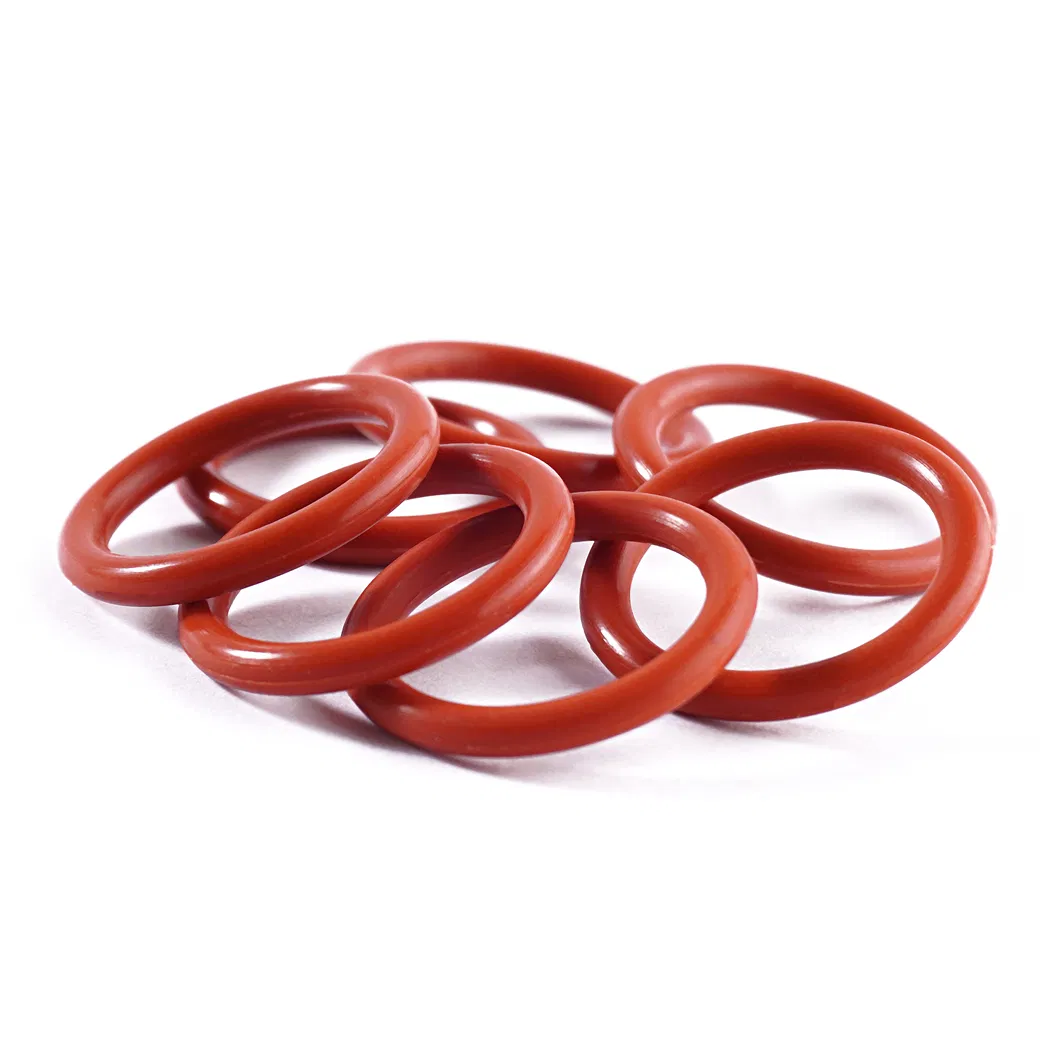
VMQ's cold resistance is a key advantage that distinguishes it from many rubber materials. Used for refrigeration, freezing, outdoor, low-temperature startup equipment, silicone O-rings are not prone to rapid hardening and elasticity loss like general rubber.
Suitable promotional phrase:
Silicone's heat resistance performance is also very outstanding, suited to hot air, baking, thermal-fill, dry-heat equipment, lab instrument and other high-temperature-part scenarios.
Suitable promotional phrase:
VMQ silicone itself can be made transparent, white or light colored, and can also be made into an identifiable color matching customer requirement. For food and medical customers, cleanliness, low odor, low extraction and traceability documents are more important than a simple tensile-strength number.
Suitable promotional phrase:
VMQ has good adaptability against ozone, UV and weathering environments, suited to electronic housing, outdoor instrument, lighting, food equipment external sealing and other applications. Trelleborg's material description of VMQ also lists weather resistance, ozone resistance, UV resistance among its advantages.
VMQ's mechanical strength is usually lower than FKM, EPDM, NBR, HNBR and other materials. Especially in tensile, tear, cut-edge expansion, and abrasion/wear aspects, silicone is not suited to being used as a "high-strength rubber." Material data commonly rates VMQ's abrasion resistance, tear resistance and wear resistance as general or weak.
Not recommended for use in: high-speed reciprocating seal; high-speed rotary seal; strong-friction sliding dynamic seal; grooves easily cut by sharp corners during assembly; positions requiring high tear resistance, high abrasion resistance dynamic seal.
Suggested sales script:
Standard VMQ performs well against air, water, ozone, temperature cycling, but its long-term resistance to mineral oil, fuel, aromatic hydrocarbons, and part of the solvents is usually not as good as FKM, FVMQ or NBR. If the customer's operating condition involves lubricant, fuel, hydraulic oil, engine oil, fat-class high-temperature media, media compatibility must be verified.
Condition |
More Recommended Material |
Mineral oil, engine oil, hydraulic oil |
FKM, NBR, HNBR |
Fuel, aromatic hydrocarbons |
FKM, FVMQ |
High-temperature oil pollution |
FKM or special FVMQ |
Food equipment water/air/low-oil media |
VMQ, EPDM, decide per cleaning agent |
High-temperature steam/hot water long-term use |
EPDM usually superior, VMQ needs verification |
Silicone O-rings are soft, but also easily damaged by sharp corners, burrs, over-stretching, or rough assembly. Food and medical equipment are often frequently disassembled, and if groove design isn't reasonable, silicone rings may be worn down during disassembly.
Recommended addition in product manual:
Customer Industry |
VMQ's Core Recommendation Rationale |
Must-Remind Boundary |
Food industry |
Food-grade silicone can do food contact compliance; clean, low odor, heat resistant |
Not all food-grade is qualified; need to check certification and applicable scope |
Medical industry |
Medical-grade silicone has good biocompatibility foundation |
Need ISO 10993, USP Class VI or terminal-product verification; cannot only look at material name |
Electronics industry |
Heat resistant, insulating, weather resistant, soft, suited to external housing and equipment sealing |
Sensitive contact points and optical lenses should be near low-outgassing formula |
Pharma/lab |
Clean, heat resistant, easy to make compliant documents |
Cleaning agent, sterilization method must be confirmed |
High-friction machinery |
Not recommended primarily VMQ |
Preferentially consider FKM, HNBR, PU and other materials |
Oil-class sealing |
VMQ usually not the primary choice |
Select FKM, FVMQ, NBR or HNBR |
When promoting for food-grade, medical-grade products, it's recommended to "write clearly which documents can be provided," rather than just writing "food-grade/medical-grade."
FDA 21 CFR 177.2600; China's GB 4806.1, GB 4806.16 related test reports; EU Regulation (EC) No 1935/2004 conformity declaration; Germany BfR silicone-rubber recommendation-related testing, migration testing, sensory testing etc. per customer requirement; batch COA, raw-material batch traceability, production records.
ISO 10993 series related test reports; USP Class VI test report; cytotoxicity, skin irritation, sensitization etc. tests, per project requirement; batch COA; raw-material declaration; traceable document; if used for medical device, need to match customer's terminal-product level regulatory evaluation.
Low-outgassing/low-molecular siloxane control statement; post-cure process explanation; material data sheet; high/low-temperature aging test; compression set test; RoHS/REACH and other environmental-compliance documents, per customer market requirement.

Welcome to HOVOO, a Chinese seal factory. Production of PU, Rubber and PTFE seals. The seals include O-ring, piston seal, rod seal, Gray ring and gas seal.


 EN
EN
 AR
AR CS
CS DA
DA NL
NL FI
FI FR
FR DE
DE EL
EL IT
IT JA
JA KO
KO NO
NO PL
PL PT
PT RO
RO RU
RU ES
ES SV
SV TL
TL IW
IW ID
ID LV
LV SR
SR SK
SK VI
VI HU
HU MT
MT TH
TH TR
TR FA
FA MS
MS GA
GA CY
CY IS
IS KA
KA UR
UR LA
LA TA
TA MY
MY
