33-99No. Mufu E Rd. Gulou District, Nanjing, China [email protected] | [email protected]
33-99No. Mufu E Rd. Gulou District, Nanjing, China [email protected] | [email protected]

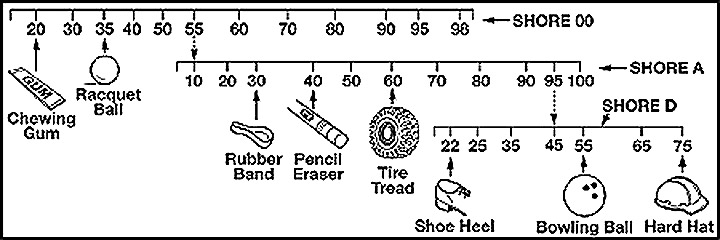
O-ring commonly said "70 degrees, 80 degrees, 90 degrees" usually refers to 70 Shore A, 80 Shore A, 90 Shore A, i.e. rubber hardness. The higher the value, the harder the material, the stronger the extrusion resistance; but at the same time, the assembly force increases, the elastic conformity decreases, and low-temperature rebound also worsens. So, O-ring hardness is not the higher the better.
The general engineering-selection logic is:
70A: default priority. Suits most static seals, conventional oil, water, pneumatic and general maintenance scenarios. 70A's advantage is a relatively balanced combination of elasticity, assembly, sealing-face conformity and general applicability.
80A: intermediate compromise. When 70A has slightly obvious extrusion risk under pressure, groove clearance or slight edge nibbling, but you also don't want the excessive assembly force, friction and low-temperature rebound loss that 90A brings, 80A can be considered.
90A: extrusion-resistance priority. Suits high pressure, large extrusion clearance, hydraulic systems, or conditions that have had bite/extrude/nibble happen before, but 90A should not simply be understood as "more advanced," because it's more demanding on groove, chamfer, assembly lubrication and low-temperature initial sealing.
Shore A is an indentation hardness test system, ASTM D2240 clearly explains this test measures the indentation depth of material pressed under specified conditions, and belongs to an empirical control indicator, and cannot simply be equated with a certain single mechanical performance. In other words, 90A is not "30% higher tensile strength than 70A" — it's just a higher hardness grade.
Item |
70 Shore A |
80 Shore A |
90 Shore A |
Versatility |
Highest |
Medium |
Lower |
Extrusion resistance |
General |
Better |
Strongest |
Applicable pressure trend |
Low to medium pressure |
Medium to slightly-high pressure |
High pressure, large clearance |
Assembly force |
Lower |
Medium |
Notably increases |
Elastic conformity |
Better |
Medium |
Weaker |
Low-temperature rebound |
Better |
Medium |
Weaker |
Groove/chamfer requirement |
Relatively tolerant |
Medium |
Stricter |
Dynamic friction risk |
Lower |
Medium |
Higher |
Typical use |
General seal, maintenance, conventional pressure static seal |
Slightly higher pressure or slightly anti-extrusion demanding condition |
High-pressure large operating condition |
This table needs one added premise: must be compared under the same material system. NBR 70A, FKM 70A, EPDM 70A, VMQ 70A are not the same performance — material decides media compatibility, temperature range, compression set and low-temperature performance, hardness is just one of the parameters within it.
70A's core value is "balance."
An O-ring doesn't rely on "pressing tighter is more reliable" to seal — it relies on the post-installation compression deformation to generate initial contact pressure, then further strengthens sealing under media pressure action. Trelleborg's O-ring material gives typical initial compression recommendations: dynamic application 6–20%, static application 15–30%. This shows an O-ring must first be able to compress reasonably, conform, and rebound, and not solely pursue high hardness.
70A's advantages include:
Easy assembly: Manual assembly, batch assembly, maintenance replacement are all more convenient, not easily causing scoring, scraping, or twisting due to excessive hardness.
Good elasticity and conformity: More tolerant of minor surface roughness, groove-dimension fluctuation, flange non-uniformity.
Low pressure and startup sealing more reliable: Many systems at low pressure, startup, and temperature-change stages need the O-ring to rely on its own rebound to maintain sealing, and 70A is generally more advantageous.
Relatively better low-temperature rebound: Under the same material, hardness increases, low-temperature elasticity tends to be more prone to appear less favorable; when elastic recovery and compression-set variation are transitioning near the glass-transition zone, the effect on O-ring sealing capability is especially critical.
Therefore, unless there's an explicit pressure, extrusion, wear, or structural limitation, 70A is usually the engineering default starting point.
80A is a very valuable transitional hardness, but often overlooked.
Applicable to choosing 80A:
70A has slight edge-extrusion risk under pressure; groove clearance is somewhat larger, but not yet necessarily needing to go to 90A or a back-up ring's extent; system pressure is medium-high; customer feedback of 70A having "biting, nibbling, burring, being extruded into clearance" failure trace; still wants to retain a certain assembly conformity, elasticity and low rebound; assembly is too difficult, or dynamic friction is worn out.
Apple Rubber's design guide has an intuitive example: under 1000 psi pressure, 0.016 in total diameter clearance conditions, 70 Shore A's point falls in an unstable zone, needing raised hardness, an added back-up ring, or reduced clearance; while 80 Shore A's point in the same diagram is in an acceptable range. This shows 80A is not a "cold spec," but a very practical engineering compromise between 70A and 90A.
90A's main goal is not "seal better," but resist extrusion better.
Under pressure, the O-ring gets pushed toward the low-pressure side. If mating clearance is too large or pressure too high, the rubber may get squeezed into the clearance, forming nibbling, cracking, splitting, eventually leaking. Apple Rubber clearly lists common methods to prevent O-ring extrusion by pressure: increase hardness, use a back-up ring, reduce diameter clearance, lower system pressure.
Applicable to choosing 90A:
High-pressure hydraulic; large pressure differential; kinematic auxiliary pair with relatively large extrusion clearance; small-cross-section O-ring bearing relatively high pressure; on-site failure mode is clearly extrusion, biting, nibbling, rather than aging, dissolution or compression set; groove dimension cannot be changed, and a back-up ring is inconvenient; needs to be used together with a back-up ring for even higher pressure reliability.
But 90A's cost is also obvious:
Assembly force notably increases; more easily cut or scraped during assembly; needs a better lead-in chamfer and lubrication; more sensitive to groove dimension, surface roughness, compression amount; low-temperature rebound and initial sealing margin drops; friction, wear and heat generation risk increases in dynamic seal.
Trelleborg's material points out O-ring compression amount is affected by initial pressure, material, hardness, inner diameter and cross-section, and gives NBR 70 Shore A vs. NBR 90 Shore A's compression-load deflection curve; the graph clearly shows the higher the hardness, the higher the compression load required, i.e. the higher the assembly force and compression resistance.
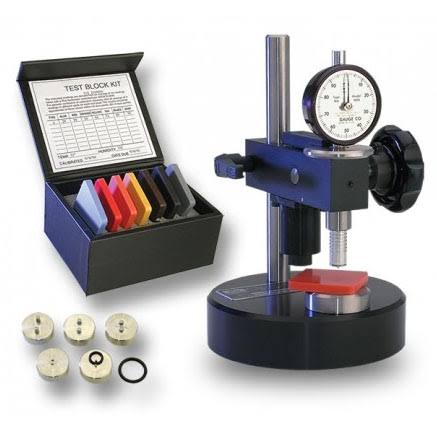
Many customers ask: "how much pressure uses 70? how much pressure uses 90?"
This question can't be answered by only pressure. Whether an O-ring extrudes depends at minimum on: pressure or pressure differential; extrusion clearance; O-ring cross-section dimension; groove structure; material system; hardness; static seal or dynamic seal; temperature; whether a back-up ring exists; whether there's pressure pulsation.
Apple Rubber's material clearly points out an O-ring's extrusion limit is jointly determined by the diametrical clearance under pressure and the material hardness; when the intersection of pressure and clearance falls in an unsafe zone, hardness needs to be raised, a back-up ring used, or clearance reduced.
Trelleborg's reference working pressure for general O-rings also reflects this point: without a back-up ring, common static application is usually a few MPa up to about 10 MPa class, depending on material, cross-section and clearance; after using a back-up ring, pressure-bearing capability can be notably raised; dynamic reciprocating applications without a back-up ring have more limited pressure capability.
So a more accurate statement is:
First judge the media and temperature:
Mineral oil, hydraulic oil: common NBR, HNBR, FKM. Hot water, steam, brake fluid, polar media: common EPDM. High-temperature oil, fuel, chemical media: common FKM, FFKM. Low temperature, air, part of special conditions: may consider VMQ, FVMQ or low-temperature-dedicated NBR/FKM.
Trelleborg's material also shows different elastomers' temperature range and low-temperature flexibility differ greatly, e.g. FVMQ, VMQ have better low-temperature flexibility, while FKM, HNBR, NBR's low-temperature capability still depends on the specific formula.
Don't just say "I need a 70-degree O-ring." Must state the material simultaneously.
Correct expression examples: NBR 70 Shore A O-ring. FKM 75 Shore A O-ring. EPDM 70 Shore A O-ring. HNBR 90 Shore A O-ring.
If pressure is low, clearance is small, static seal, no obvious extrusion risk, prioritize 70A.
If pressure rises or clearance is on the larger side, first consider:
Is the groove dimension correct? Can the extrusion clearance be reduced? Can a back-up ring be added? Is it necessary to move from 70A to 80A? Must it use 90A?
Under high-pressure conditions, adding a back-up ring is often more stable than simply raising hardness. Especially bidirectional pressure should consider back-up rings on both sides, avoiding installation-direction or pressure-direction change causing extrusion.
If the customer's on-site is manual assembly, the groove has sharp edges, no lubrication, needs crossing threads or bores, 90A risk will notably increase.
High-hardness O-ring assembly key inspection points: is there a lead-in chamfer; are burrs removed; is there assembly lubrication; will it cross sharp edges, keyways, threads, oil holes; is an assembly sleeve needed; could it twist, roll, or overstretch.
Trelleborg's material also stresses correct groove design can avoid damaging the seal and sealing failure; the O-ring assembly position needs a lead-in chamfer and fillet.
Under low-temperature conditions, hardness selection should be more cautious.
Under the same material, 90A usually rebounds more slowly at low temperature. For equipment needing cold startup, low-pressure startup, temperature cycling, low-temperature standstill and restart, don't just look at room-temperature hardness. Low-temperature-rebound insufficiency can lead to insufficient contact pressure, resulting in cold leakage.
Priority order for low-temperature selection should be: choose a material or dedicated formula suited to low temperature; ensure a reasonable compression amount; control groove clearance; do low-temperature compression-set or low-temperature rebound verification when necessary.
Flange, end cap, plug, valve body static seal, moderate pressure, standard groove, no obvious extrusion risk:
Priority 70A. Reason is good assembly, good elasticity, reliable low-pressure initial sealing, strong purchasing versatility.
Pneumatic system pressure is usually not high, more focused on low friction, assembly and rebound:
Priority 70A. If it's a dynamic pneumatic seal, 90A often instead brings unnecessary friction and wear risk.
Medium-low pressure, reasonable groove, controlled clearance:
70A or 80A. If slight extrusion, pressure pulsation, or edge biting occurs, can raise from 70A to 80A, or add a back-up ring.
High pressure, large pressure differential, has extrusion clearance:
80A, 90A, or 70A/80A + back-up ring, specific to check groove clearance. If the failure mode is clearly extrusion, 90A has meaning; but if the failure is aging, swelling, compression set, or media incompatibility, switching to 90A doesn't solve the root cause.
Low temperature, cold startup, long-term low-temperature standstill:
Don't blindly raise hardness. Preferentially select low-temperature material or low-temperature formula, hardness generally should not be too high. 70A is usually easier to obtain reliable initial conformity and rebound than 90A.
If piston, cylinder, valve stem or flange mating clearance is on the larger side:
Raising hardness is only one method. A better path is usually: reduce clearance, optimize groove, add a back-up ring, then consider 80A or 90A.
Can quickly judge with the following logic:
No clear extrusion risk, first use 70A.
70A has slight extrusion or pressure margin insufficient, use 80A.
High pressure, large clearance, clear biting failure, then use 90A.
Low temperature, low pressure, difficult assembly, dynamic low friction cannot be solved by hardness, don't easily go up to 90A.
Hardness cannot solve material incompatibility, groove error, and compression-set problems.
Purchasing should not just order per "70 degree" "90 degree." Recommend at minimum confirming the following fields:
Material: NBR, FKM, EPDM, HNBR, VMQ, FFKM etc.; Hardness: e.g. 70 Shore A, 80 Shore A, 90 Shore A; Dimensional standard: GB, ISO 3601, AS568 or non-standard dimension; Hardness tolerance: e.g. 70±5 Shore A, per company drawing or material specification; Color: black, brown, green etc., but color cannot substitute for material confirmation; Condition: media, temperature, pressure, static seal/dynamic seal; Certification: RoHS, REACH, FDA, UL, WRAS, material reports etc.; Batch traceability: COC, COA, material certification, test reports.
Purchasing risk points:
Cannot treat NBR 70A and FKM 70A as equivalent-grade substitutes. Same hardness, but oil resistance, heat resistance, chemical resistance, low-temperature rebound and price may be completely different.
Cannot assume 90A is necessarily better just because it's harder. 90A may cause assembly difficulty, low-pressure leak, insufficient low-temperature rebound or excessive dynamic friction.
When customer drawing writes "70," confirm it's Shore A. Standard notation should be "70 Shore A" or "70 ShA."
At failure, don't only alter the hardness. If swelling, cracking, hardening, permanent deformation occurs, the cause is mostly material, temperature, media, or compression amount, not the hardness.
Can answer this way: 70A is more general-purpose, better elasticity and assembly, suits most conventional seals; 90A is harder, mainly better at resisting extrusion, suits high pressure or large-clearance conditions. But 90A assembly force is higher, low-temperature rebound and sealing conformity may decline, so it isn't the higher the better, and general recommendation is to use 70A first without a clear high-pressure leak risk.
Can answer this way: not necessarily. High-pressure sealing needs to simultaneously look at pressure, groove clearance, cross-section dimension, and whether there's a back-up ring; 90A is more resistant to extrusion, but if groove clearance is too large, relying only on raised hardness is also unreliable — usually still need matched back-up ring or optimized groove.
Can answer this way: need to first look at the leak cause. If the O-ring's edge is extruded, bitten, upgrading to 80A or 90A may work, or a back-up ring can be added. If it's aging, swelling, compression set, cracking or insufficient low-temperature rebound, switching to 90A may not necessarily be effective, and may instead worsen the assembly and rebound.
Can answer this way: yes, 80A is a compromise between 70A and 90A, suited to slightly higher pressure than conventional, worried about extrusion, but also not wanting 90A being too hard and assembly force too large scenarios; often 80A is more stable than directly going to 90A.
Conventional selection: 70 Shore A. This is most O-rings' default hardness, gives consideration to sealing, elasticity, assembly and cost.
Pressure or extrusion-risk elevated: 80 Shore A. This is the compromise transition from general sealing to anti-extrusion sealing.
High pressure, large clearance, clear extrusion failure: 90 Shore A. But simultaneously must check groove, back-up ring, chamfer, lubrication, low-temperature rebound and assembly force.
Summary: 70A is responsible for versatility and balance, 80A is responsible for compromise and remediation, 90A is responsible for extrusion resistance; the higher the hardness, the stronger the extrusion resistance, but elasticity, assembly and low-temperature rebound pay a corresponding price.

Welcome to HOVOO, a Chinese seal factory. Production of PU, Rubber and PTFE seals. The seals include O-ring, piston seal, rod seal, Gray ring and gas seal.


 EN
EN
 AR
AR CS
CS DA
DA NL
NL FI
FI FR
FR DE
DE EL
EL IT
IT JA
JA KO
KO NO
NO PL
PL PT
PT RO
RO RU
RU ES
ES SV
SV TL
TL IW
IW ID
ID LV
LV SR
SR SK
SK VI
VI HU
HU MT
MT TH
TH TR
TR FA
FA MS
MS GA
GA CY
CY IS
IS KA
KA UR
UR LA
LA TA
TA MY
MY
