33-99No. Mufu E Rd. Gulou District, Nanjing, China [email protected] | [email protected]
33-99No. Mufu E Rd. Gulou District, Nanjing, China [email protected] | [email protected]

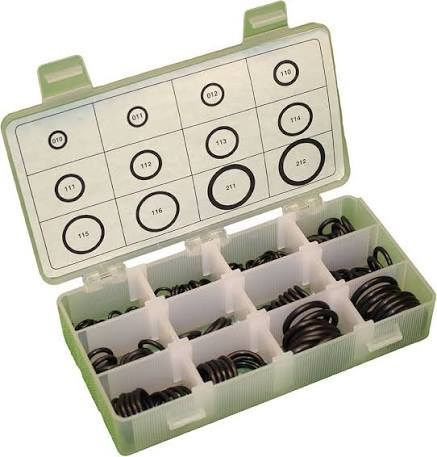
Upgrading from NBR to HNBR is essentially upgrading from "general oil-resistant sealing" to "heat-resistant, ozone-resistant, and abrasion-resistant, higher-reliability sealing."
In automotive, automotive AC, refrigeration equipment, and hydraulic systems, O-rings long endure oil, refrigerant, high temperature, pressure fluctuation, vibration, and ozone aging and other multiple stresses. Standard NBR nitrile rubber has good oil resistance and cost advantage, but as operating temperature rises and service life stretches, sealing member weak points gradually become apparent: heat-aging resistance is limited, ozone resistance is insufficient, and long-term dynamic wear and compression deformation risk is higher.
HNBR, i.e. hydrogenated nitrile rubber, is made by hydrogenating the unsaturated double bonds of the butadiene segment on the basis of NBR, thereby significantly improving heat resistance, ozone resistance, chemical/oil resistance, and mechanical performance. Trelleborg's material for HNBR also indicates HNBR is obtained by selective hydrogenation of the double bonds in NBR's butadiene segment, and this structural change notably improves high-temperature and ozone resistance, while HNBR has good mechanical properties and wear resistance.
Therefore, HNBR O-rings are commonly used in automotive air conditioning, refrigerant seals, fuel systems, oil seals, gearboxes, power-conversion, hydraulic systems and high-temperature oil products contact areas. Its positioning is not simply as a direct replacement for NBR, but as an upgraded higher-performance solution in scenarios where NBR performance is insufficient or FKM cost is too high, or the conditions are not suited for low temperature.
NBR is nitrile rubber formed by copolymerization of butadiene and acrylonitrile. Its advantages are being resistant to mineral oil, lubricant, and low price, mature processing, so it's commonly used for general oil seals, O-rings, gaskets and hydraulic seals.
HNBR is a hydrogenation modification on the basis of NBR. After hydrogenation, the double bonds in the molecular chain decrease, the main chain becomes more stable, and its resistance to heat-air aging, ozone, UV, and part of chemical media improves. GMORS's description of HNBR similarly points out HNBR is a synthetic compound obtained through selective hydrogenation of the double bonds in NBR's butadiene segment, so compared with Nitrile/NBR it has better heat, ozone, chemical, and mechanical properties.
This is exactly the root reason HNBR is more suited than NBR to automotive and AC systems:
Automotive engine compartment, transmission, AC compressor, hydraulic pump temperature is usually not a stable low temperature, but is long-term heat cycling. General NBR under relatively high-temperature air environments easily develops hardening, cracking, elasticity decline, and compression set increase.
Trelleborg's automotive material data shows NBR's highest working temperature is usually limited to +100°C, briefly up to +120°C; while HNBR contacting mineral oil and grease can work at about -30°C to +140°C, briefly up to +160°C, some special models applicable up to -40°C. ARLANXEO also points out its HNBR products are suited for scenarios needing higher heat and fluid resistance, with the specific temperature range dependent on the specific grade and formula.
For customers, in mind: with equally oil-class sealing conditions, NBR suits conventional temperature; HNBR is more suited to hot oil, high-temperature gas, compressors, engine periphery, gearbox and long-term thermal-aging conditions.
Automotive AC pipe, engine compartment seals, refrigeration equipment connectors, and hydraulic system exterior seals often receive ozone, oxygen, UV, and temperature-cycling impact. NBR, due to relatively more unsaturated structure in its main chain, has higher ozone risk, and can easily develop surface cracking with prolonged use.
HNBR notably improves heat-cycle-aging resistance through hydrogenation of the unsaturation degree. Trelleborg clarifies that HNBR's selective hydrogenation notably improves temperature and ozone resistance; ARLANXEO also points out fully saturated HNBR grades have superior ozone resistance.
This is also why HNBR is commonly seen in automotive AC O-rings, automotive oil seals, transmission-system seals, outdoor refrigeration equipment, and hydraulic hoses: these scenarios not only test oil resistance, but also verify long-term outdoor exposure sealing life.
O-rings in many applications are not purely static seals. E.g. automotive AC compressor connector, cylinder head, hydraulic valve, oil pump, and transmission actuating mechanism seal parts endure pressure pulse, vibration, and dynamic wear influence.
Trelleborg points out HNBR is superior to general NBR in strength, wear resistance and dynamic performance, and lists it used for transmission actuator seal and AC applications. Zeon's HNBR material also mentions Zetpol HNBR's heat, oil, wear, and ozone-resistant performance can support high-load-life synchronous belts, V-belts and industrial hose applications, and is applicable to automotive seal parts, O-rings, hydraulic hoses and fender dust boots etc.
For hydraulic customers, this point is very key: HNBR is not just "resistant to oil" — it's that when oil, pressure, friction, temperature, and dynamic load simultaneously exist, it can still maintain better sealing stability.
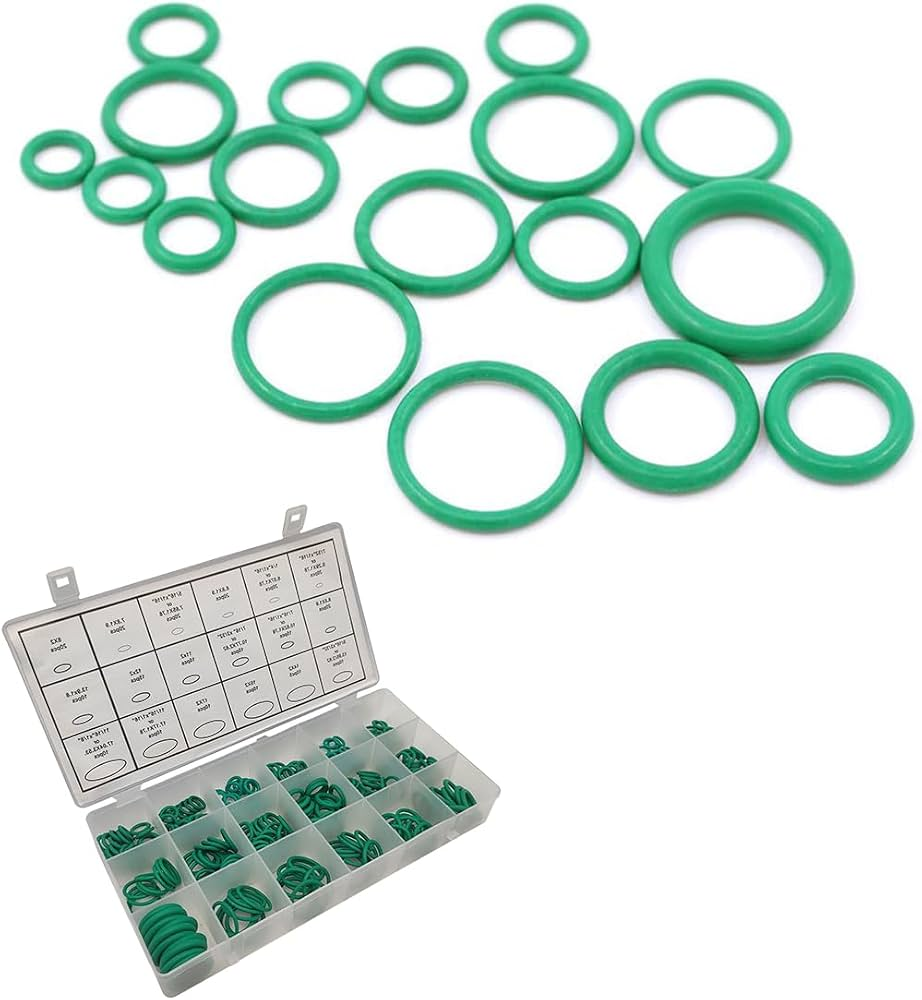
NBR itself is already a typical oil-resistant rubber, so many customers ask: since NBR is also oil resistant, why still use HNBR?
Answer: At room temperature or medium-temperature oil sealing, NBR may already be sufficient; under conditions requiring high-temperature oil, long-term aging resistance, dynamic wear resistance, and longer life, HNBR is more reliable.
HNBR's acrylonitrile content also affects oil and low-temperature performance. Trelleborg explains HNBR's ACN content can vary from about 18% to 50%; higher ACN content improves oil resistance, but low-temperature flexibility correspondingly decreases; ARLANXEO also points out higher ACN content raises HNBR's resistance to oil, fat, fuel and other non-polar media, but low-temperature flexibility correspondingly declines.
So, in market promotion it can be expressed this way:
Automotive AC and refrigeration systems have very complex requirements for O-rings: needing to contact refrigerant, and to contact refrigeration/lubricating oil, while also bearing pressure, temperature cycling and vibration and impact stress. General NBR in some A/C operating conditions can suffer heat aging, expansion/contraction, or elastic response inadequacy, leading to leak risk.
HNBR, due to possessing heat resistance, oil resistance, ozone resistance and better mechanical properties, has become a common material for automotive AC O-rings. FJC's automotive AC O-ring material notes HNBR, i.e. Hydrogenated Nitrile, has good AC applicability; lists it as compatible with R-12, R-134a, R-1234yf and other refrigerants; meanwhile its temperature range can cover about -22°F to 302°F. GMORS also points out HNBR is commonly used for the new generation of eco-friendly refrigerants.
But in actual selection it should still be emphasized:
In automotive fuel systems, engine oil circuits, gearbox oil circuits, and power-steering systems, seal members contact fuel, lubricant, ATF, diesel or other functional fluid, and also endure relatively high temperature and vibration. HNBR by adjusting the formula can simultaneously have better oil resistance, heat resistance and mechanical properties.
ARLANXEO's HNBR material mentions HNBR can be used for power-steering fluid, automatic transmission oil, engine oil, diesel and refrigerant-liquid and other harsh fluid environments, and suits automotive and heavy-duty equipment sealing applications. Zeon also lists HNBR usable for automotive seal parts, O-rings, oil-pan gaskets, drain-plug seals, water-pump seals, as well as biodiesel hoses, industrial hoses and hydraulic hoses.
Point of note:
Oil seal operating conditions often have shaft rotation, lubricant, friction and heat generation. NBR can be used for general oil seals, but at high temperature, long life, or higher rotation-speed scenarios, HNBR's heat resistance advantage is more obvious.
Zeon's description of HNBR's application in synchronous belts, V-belts, fender dust boots, and automotive sealing components shows HNBR's oil resistance, wear resistance, ozone resistance and dynamic performance make it more suited to higher-strength, longer-life automotive-service parts.
Facing automotive customers, it can be worded this way:
Hydraulic systems care about three things: oil resistance, pressure-shock resistance, wear resistance. General NBR is widely applied in mineral-oil hydraulic systems, but in high-temperature, high-pressure, dynamic reciprocating, long-life or outdoor-equipment environments, HNBR is more suited to O-rings, bearing seals, pump/valve seals, and part of hose seals.
Zeon explicitly notes HNBR applies to industrial hoses and hydraulic hoses, and has excellent heat and fluid resistance, extending service life at high temperature.
The core talking point for hydraulic customers can be:
Comparison Item |
NBR Nitrile Rubber |
HNBR Hydrogenated Nitrile Rubber |
Customer Understanding Point |
Material nature |
Butadiene-acrylonitrile copolymer |
Hydrogenated, more fully-saturated NBR |
HNBR is NBR's performance-upgraded version |
Oil resistance |
Good, and stable in high-temperature oil |
|
HNBR is not simply "more oil resistant," but more stable in the thermal-environment |
Heat resistance |
Medium, general NBR higher-temp limit lower |
Notably stronger, applicable to higher temperature range |
Suited to engine compartment, compressor, hot-oil, gearbox |
Ozone resistance |
Relatively weak |
Notably stronger |
Suited to automotive exterior parts, outdoor refrigeration equipment |
Wear resistance |
Good |
Better, more dynamic performance |
Suited to oil seal, hydraulic, compressor and vibration operating conditions |
Refrigerant compatibility |
Need caution |
Common for automotive A/C O-ring |
Suited to R134a, R1234yf and other systems, but must confirm oil |
Cost |
Lower |
Higher than NBR |
Facing mid-to-high-end and long-life applications |
Typical application |
General seal, low/medium-temp automotive oil, oil-quality seal |
HNBR used in mid-to-high-end and long-life applications, where NBR isn't reliable enough |
|
HNBR O-rings are a performance-upgraded material on the foundation of general NBR, while maintaining good oil resistance, they notably improve heat resistance, ozone resistance, wear resistance and long-term sealing reliability, especially suited to automotive AC, refrigeration, fuel systems, oil seals and hydraulic systems.
In automotive engine compartment, AC systems, fuel systems and transmission oil circuits, sealing members are long exposed to high temperature, oil, ozone and vibration environments. HNBR compared with general NBR has better thermal-aging stability, ozone resistance and mechanical strength, and can lower O-ring hardening, cracking, wear and leak risk. Suited to automotive AC O-rings, compressor seals, fuel-related seals, oil seals, transmission actuator seals and power-steering related seals.
O-rings in refrigeration systems need to simultaneously face refrigerant, refrigeration oil, pressure-cycling and temperature-variation challenges. HNBR has good oil and wear resistance, and is widely used in automotive AC and part of HVAC/R connector sealing applications. For R134a, R1234yf, R744, PAG, POE oil and other systems, should select a corresponding HNBR formula per actual media and temperature, to obtain more stable sealing life.
Hydraulic system failures often come from high-temperature oil, pressure pulsation, friction wear, and long-term compression set. HNBR compared to NBR more suits high-load sealing applications, especially applies to pump/valve, joint, oil-cylinder auxiliary seals, hydraulic hoses and mid-to-high-end sealing applications in engineering-machinery equipment.
Core keywords: HNBR, HNBR O-ring, hydrogenated nitrile rubber, heat-resistant O-ring, oil-resistant O-ring, ozone-resistant O-ring, abrasion-resistant O-ring, automotive AC O-ring, refrigerant seal, hydraulic seal, fuel-system seal, automotive oil seal.
Why Are HNBR O-Rings Suited to Automotive AC, Refrigerant, and Hydraulic Systems?
Compared with general NBR, HNBR performs more balanced in heat resistance, oil resistance, ozone resistance and abrasion resistance, and is a common mid-to-high-end sealing material in automotive and refrigeration industries.
HNBR's advantage is very obvious, but confirm the following conditions at selection time:
First, confirm the media: mineral oil, fuel, diesel, refrigeration oil, PAG, POE, refrigerant, hydraulic oil or other chemical media.
Second, confirm temperature: long-term temperature and short-term peak temperature cannot only be looked at per the theoretical range.
Third, confirm pressure and dynamic conditions: high pressure, reciprocating, rotary, vibration operating conditions should consider hardness, wear resistance and anti-extrusion design.
Fourth, confirm low-temperature requirement: high-ACN HNBR is more oil resistant, but low-temperature flexibility may decline.
Fifth, confirm whether replacing FKM is needed: HNBR cost is usually lower than FKM, but under strong corrosion, aromatic high-fuel or extreme-high-temperature scenarios, FKM may still be more suitable.
NBR suits standard oil, low-cost sealing; HNBR suits automotive, AC, refrigeration and hydraulic industries needing higher temperature, longer life, and stronger ozone-and-mechanical-load-bearing sealing scenarios.

Welcome to HOVOO, a Chinese seal factory. Production of PU, Rubber and PTFE seals. The seals include O-ring, piston seal, rod seal, Gray ring and gas seal.


 EN
EN
 AR
AR CS
CS DA
DA NL
NL FI
FI FR
FR DE
DE EL
EL IT
IT JA
JA KO
KO NO
NO PL
PL PT
PT RO
RO RU
RU ES
ES SV
SV TL
TL IW
IW ID
ID LV
LV SR
SR SK
SK VI
VI HU
HU MT
MT TH
TH TR
TR FA
FA MS
MS GA
GA CY
CY IS
IS KA
KA UR
UR LA
LA TA
TA MY
MY
