33-99No. Mufu E Rd. Gulou District, Nanjing, China [email protected] | [email protected]
33-99No. Mufu E Rd. Gulou District, Nanjing, China [email protected] | [email protected]

This material's structure is very clear: the front section discusses the enterprise's capability and service system, the middle section discusses O-ring material, design, installation, quality and dimension standards, the back section discusses special O-rings, back-up rings, spring-energized rings, super-large-format rings, round-wire rings, surface treatment, back-up rings, and ISO 2230 storage specification. The table of contents shows it covers O-ring basics, materials, structural design, assembly guidelines, quality standards, ISO 3601/AS568/JIS/SMS and other dimension systems, FEP/PFA encapsulated rings, PTFE rings, polyurethane rings, super-large-format rings, round-wire rings, surface treatment, back-up rings, and ISO 2230 storage specification.
The underlying logic of this system is: it is not selling a rubber ring, but selling a verifiable, traceable, calculable, selectable, and deliverable sealing solution. Trelleborg emphasizes throughout the handbook its own product design, material development, and testing capability; at the same time it integrates design, prototyping, production, testing, installation, quality assurance and supply chain services into one value chain.
What is most worth Chinese enterprises learning from is that it "disassembles" product capability into six systems: material system, structural design system, quality system, standard dimension system, digital selection system, and customer service system. If Chinese enterprises can learn these six systems, they can significantly raise their ability to enter high-end customers.
The handbook's opening repeatedly emphasizes a "one-stop sealing solutions" approach: including material, design, testing, installation, quality assurance, logistics and service. Trelleborg also lists its global resources: 40+ manufacturing sites, 15 research and development centers, 55+ customer solution centers, 8 supply chain logistics centers, 15 ServicePLUS centers, over 2,000 proprietary material formulations and more than 100 global points of sale.
What Chinese enterprises can reuse is not these specific scale numbers themselves, but their organizational approach: sales end should shift from "quoting a price" to "becoming an application engineer"; R&D end should shift from "custom-making per drawing" to "material-structure-working condition-failure mode linked design"; quality end should shift from "outgoing inspection" to "customer application risk control."
It is recommended Chinese enterprises build "application solution packages," split by industry into: engineering hydraulics, automotive new energy, hydrogen, semiconductor, food medical, chemical, water treatment, aerospace, agriculture, electrification, energy and hydrogen, food quality, industrial automation, water treatment, semiconductor focus markets. Trelleborg has already classified its market this way in market classification, including aerospace, agriculture, automotive, medical, industrial automation, semiconductor, water treatment and other focus markets, this kind of industry-based expression is very worth Chinese enterprises reusing.
The material chapter in the handbook is most worth reusing: it is not simply listing NBR, HNBR, FKM, EPDM, VMQ, but rather combines material, hardness, compression permanent deformation, ozone resistance, certification requirements together for comprehensive evaluation. The handbook explicitly states sealing reliability depends on both the material's own physical performance and sealing design; elastomers can be selected by elasticity, chemical resistance and similar characteristics.
It is especially worth noting: the compatibility data mentioned in the handbook usually comes from public data and immersion testing, and many test results are obtained under laboratory room-temperature conditions, and cannot fully represent actual working conditions; the influence of high temperature on erosive media, compression permanent deformation, hardness, wear and thermal expansion must also be considered together.
Chinese enterprises can directly reuse this idea, building an internal material database with fields at minimum including:
Data Field |
Recommended Content |
Base Material |
NBR, HNBR, FKM, EPDM, VMQ, FVMQ, FFKM, PU, PTFE, FEP/PFA |
Hardness System |
Shore A/D, IRHD, test method and sample conditions |
Temperature Range |
Normal temperature, short-time temperature, media correction coefficient |
Media Compatibility |
Oil, water, steam, fuel, refrigerant, acid-alkali, organic solvent, electrolyte, etc |
Key Mechanical Properties |
Tensile strength, elongation rate, compression permanent deformation, wear resistance, gas permeation |
Regulatory Certification |
Food, drinking water, medical, automotive, aerospace, oil-gas certification |
Application Limits |
Not-recommended media, dynamic limits, pressure limits, installation limits |
Customer Verification Records |
Actual projects, failure cases, test report numbers |
The "preferred materials" in the handbook is also worth learning from. Trelleborg does not list all materials equally, but lists NBR, HNBR, FKM, EPDM, VMQ and similar formed selection materials, and labels attributes with icons such as food, drinking water steam, low-temperature flexibility, ISO 3601-5 and similar attributes. Chinese enterprises can build their own "preferred material family," avoiding sales and engineers starting from scratch each time.
The handbook gives a large amount of executable design rules for O-ring installation, e.g., check for burrs at the lead-in chamfer, bore ports, cover edges before installation, remove sharp edges, clean, confirm lubricant or elastomer compatibility, avoid using tools with double-sided sharpened edges, prevent twisting, avoid over-stretching, avoid passing over threads, keyways and similar edges when installing, and recommend using an assembly guide cone when necessary.
For Chinese enterprises, this part can be directly converted into three types of documents:
First, design review documents. Drawing review must check groove width, groove depth, gap, compression rate, tensile rate, fill rate, chamfer, surface roughness, media, temperature, pressure, motion form.
Second, assembly SOPs. Establish standard operating guide books separately for manual assembly, automated assembly, cross-bore assembly, cross-thread assembly.
Third, failure prevention checklist. Include extrusion, biting, twisting, over-compression, under-compression, poor lubrication, groove overfilling, material incompatibility, burrs and cutting and other failure causes pre-arranged into checkpoints.
Several concrete design parameters are especially worth reusing: the handbook distinguishes O-ring initial compression rate application by category: radial dynamic seal approximately 6-27%, axial static seal approximately 10-35%; simultaneously emphasizes initial compression is used to form initial seal, offset dimensional tolerance, control friction, compensate compression permanent deformation and uneven wear.
Groove fill rate is also very key. The handbook recommends O-ring groove fill rate not exceed 85%, to leave room for thermal expansion, media dissolution and tolerance influence. Many domestic sealing failures come from over-designed grooves that look tight but actually leave no expansion allowance — this should be a hard constraint for Chinese enterprise design specifications.
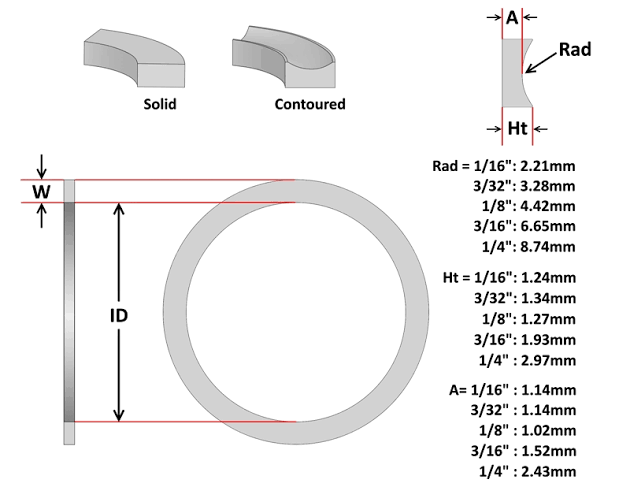
The handbook's positioning of back-up rings is very clear: the back-up ring is not the seal itself, but a support element made of anti-extrusion material, used to prevent the pressurized elastomer from being pushed into the gap of the sealing system. It is used in high-pressure hydraulics, allows use of lower-hardness O-rings, compensates for radial sealing gaps, applicable to reciprocating and rotating motion, and can compensate for relatively large temperature fluctuation. Typical applications include piston rods, molds, presses, excavators, agricultural machinery and hydraulic valves.
This is a direction very worth Chinese enterprises entering. Many domestic enterprises still treat back-up rings as "accessories," not as part of a high-pressure system design. Back-up rings can be made as standard solutions.
Working Condition |
Recommended Strategy |
Low-to-Medium Pressure Static Seal |
Single O-ring is sufficient, focus on controlling groove and gap |
High-Pressure Single-Directional Pressure |
O-ring + downstream single-side back-up ring |
Bi-Directional Pressure |
O-ring with a back-up ring added on each side |
High Pulse Pressure |
Prioritize concave-shape back-up ring, increase contact support area |
Closed Groove |
Choose open-cut or spiral back-up ring |
Large Temperature Fluctuation |
Spiral back-up ring can compensate for temperature and tolerance change |
The handbook's material for back-up rings is standardized as PTFE, and also indicates that fiberglass, bronze, carbon and other filled PTFE can be used, that high-pressure situations can also use rigid thermoplastic material. Technical data indicates back-up ring static applications can reach up to about 250 MPa, high-pressure applications can also reach about 40 MPa, slow-speed oscillation/rotation can reach about 15 MPa, but these extreme values depend on material and sealing components.
Trelleborg's quality chapter is very worth domestic enterprises learning from. Its quality O-rings use internal standard TBS-00024, corresponding to ISO 3601-3 Class B; appearance quality uses TBS-00005, based on ISO 3601-3 Grade N; surface defects follow ISO 2859-1 AQL 1.0, general inspection level II, and normal inspection execution.
This gives Chinese enterprises the insight: don't just claim "quality good" or "top quality," but standardize quality language. It is recommended to build internal standards, such as:
Module |
Internal Standard Domestic Enterprises Should Build |
Dimension Tolerance |
Align with ISO 3601-1 Class A/B, supplement GB/customer-specific requirements |
Surface Defects |
Manage by Grade N/S, define flash, mold mismatch, missing rubber, dents, flow marks, foreign matter |
Sampling Rules |
ISO 2859-1, AQL grading, customer special requirement separate definition |
Material Performance |
Hardness, tensile, elongation, compression permanent deformation, thermal aging, media resistance |
Batch Traceability |
Raw material batch, mixing batch, curing batch, inspection batch, shipping batch number |
Certificate System |
COC, COA, material report, RoHS/REACH, food/drinking water/medical certification |
The handbook also specifically explains that O-ring cross-section tolerance and inner-diameter tolerance are usually calculated per ISO 3601-1 Class B, and points out different materials' shrinkage rates may cause dimension differences; if higher precision is guaranteed, sometimes a new mold or repaired mold is needed. This viewpoint is very suitable for domestic enterprise communication with customers: high-precision seals cannot simply be equated to "the same mold, switch materials, produce."
The handbook lists food contact, drinking water, gas, electrical device and other applications' laws and regulations certifications, including EU EC 1935/2004, EU 2011/10, FDA CFR 21, 3-A Sanitary, NSF/ANSI 51, and Chinese food-contact-material-related GB 4806.1, GB 4806.6, GB 4806.7, GB 4806.11 and GB 9685.
High-end sealing parts' barrier is not just formulation, it is often certification, documentation, traceability and customer audit capability. Chinese enterprises should especially learn this point, and it is recommended to build a "certification matrix" by industry:
Industry |
Certification/Compliance Materials That Should Be Established |
Food and Beverage |
GB 4806, FDA, EC 1935/2004, migration testing, off-flavor testing |
Drinking Water |
NSF/ANSI 61, WRAS, DVGW, domestic compliance requirements |
Automotive |
IATF 16949, PPAP, IMDS, VOC/fogging odor detection |
Medical |
ISO 13485, USP Class VI, extractables/leachables |
Semiconductor |
Low extraction, clean packaging, metal ions, particulate control |
Energy |
Hydrogen compatibility, ISO 23936, resistant to acid gas/decompression |
Oil and Gas Chemical |
NORSOK, ISO 23936, resistant to sour gas, explosive decompression resistance |
The handbook itself also uses certification as part of material selection; this point is worth domestic enterprises reusing in selection software, samples and sales materials.
Trelleborg provides tools such as O-Ring Calculator, CAD download, ISO Fits & Tolerances, Rotary Seal Selector, Hydraulic System Calculator, etc; the O-Ring Calculator can compute dimension, compression rate, and design parameters and complete measurement results, and can output PDF.
Mobile-end tools also include O-Ring Selector, Sealing Materials Selector, Healthcare Materials, Hydraulic System Calculator, Area and Volume Calculator, etc. O-Ring Selector can calculate O-ring and groove dimensions per bore diameter or shaft diameter, and covers ISO 3601-1, JIS B 2401, SMS 1586 and similar standards.
The electronic catalog section is equally valuable: it supports search by product type, filter by temperature/pressure/speed/installation size, product comparison, detailed product information, collection, unit conversion and RFQ shopping cart.
Chinese enterprises can develop by stages:
First stage, use Excel/webpage "material compatibility query + O-ring dimension query."
Second stage, do "groove design calculator + compression rate/fill rate/tensile rate" verification.
Third stage, connect to CAD download, PLM material library, quotation system and customer RFQ.
Fourth stage, use historical project data to train selection recommendation models, forming the enterprise's own engineering knowledge base.
This kind of tool's value for domestic enterprises is high — it can turn sales frontline's efficient communication into a standardized input, transform engineer experience into enterprise assets, and also raise customer stickiness.
The handbook's special O-ring chapter is very worth domestic enterprises focused research. FEP/PFA encapsulated O-rings are composed of a silicone or FKM elastic core with an FEP encapsulation layer, combining the elastic core's rebound with PTFE/FFKM-like material's chemical inertness, mainly used for chemical, food, oil-gas, semiconductor, pharmaceutical and other applications.
The advantages FEP/PFA encapsulation gives include corrosion resistance, wide temperature range, applicable to food/chemical/pharmaceutical, non-flammable, low friction, low peeling, low extraction, high pressure resistant to deformation; the handbook gives a temperature range that can reach -60°C to 260°C, the specifics depend on the core.
This gives Chinese enterprises the insight: don't just compete in ordinary NBR, FKM O-ring price wars; should surround high-value areas such as semiconductor, lithium battery, medical, food, chemical, hydrogen and similar high-demand scenarios to develop specialty products. Priority layout should be:
Product Direction |
Applicable Market |
Enterprise Reusable Focus |
FEP/PFA Encapsulated Ring |
Chemical, pharmaceutical, semiconductor, food packaging |
Encapsulation uniformity, seam control, low extraction, clean packaging |
PTFE O-Ring |
Corrosive chemical, high-temperature, static seal |
Machine processing capability, dimension precision, low friction application |
Polyurethane O-Ring |
Hydraulic, pneumatic, quick connector, dynamic sealing |
Wear resistance, extrusion resistance, low friction, compression permanent deformation |
FFKM O-Ring |
Semiconductor, chemical, extremely high corrosion resistance |
Formulation, molding, post-processing, dimension stability |
Super-Large-Format O-Ring |
Chemical equipment, display panels, wind power connectors |
Large size molding capability, splice strength, dimension stability |
Surface-Treated O-Ring |
Automotive assembly, low-friction, anti-sticking |
Coating, chlorination, plasma processing and cleanliness |
Polyurethane O-rings especially suit domestic hydraulic and engineering machinery enterprises entering; the handbook points out polyurethane has high abrasion resistance, high extrusion resistance, low friction, better mechanical performance and outstanding advantages, suitable for dynamic loading, high pressure, gas, frequent opening/closing, and passing through interfaces; its static pressure can reach up to about 60 MPa, dynamic pressure can reach up to about 25 MPa, the specific value depends on gap and material.
ServicePLUS is a very worth Chinese enterprise management-focused part of this handbook. It includes technical collaboration, surface technology, custom production service, testing and quality assurance, packaging solutions, advanced supply chain and warehouse management. Its essence is to turn the sealing part supplier from "selling parts" into a service provider in the customer's value chain.
Chinese enterprises can replicate this as "SealPLUS" or "sealing engineering service package":
Service Module |
Concrete Action |
Technical Collaboration |
Participate in customer's new product early-stage design, provide material/groove/failure review |
Testing and Validation |
Build compression permanent deformation, media soaking, thermal aging, endurance, pressure cycling testing |
Surface Technology |
Develop low-friction, anti-sticking, self-lubricating coating, secondary processing |
Custom Production |
Rapid mold opening, small-batch molding, 3D printing tooling, secondary processing |
Packaging Labeling |
Customer-dedicated labels, scan traceability, delivery packaging, secondary processing |
Inventory Management |
VMI, consignment inventory, customer safety inventory, replacement of import solutions |
After-Sales Analysis |
Leak failure analysis, on-site installation training, replacement of import solutions |
This kind of model especially suits Chinese enterprises serving automotive parts, engineering machinery, hydraulic systems, new energy equipment, semiconductor equipment and food equipment customers. It can raise customer stickiness, and can also pull enterprises out from low-price competition.
The final storage recommendation in the handbook is based on ISO 2230, pointing out that polymer material's long-term storage will be degraded by hardening, softening, cracking, tortoise-cracking and similar problems; rubber products should be prepared one order per package, avoid stress, compression, liquid/semi-liquid material contact, metal, powder, different rubber products' mutual adhesion.
More specifically, the handbook gives different materials' initial storage period and extended storage period: AU/EU/NR/SBR initial 5 years, extended 2 years; ACM/AEM/CR/O/HNBR/IIR/NBR initial 7 years, extended 3 years; CSM/EPDM/FKM/VMQ/FVMQ initial 10 years, extended 5 years; FFKM Isolast initial 20 years, extended 5 years; PTFE unlimited. It also explains that storage temperature too high or too low will significantly affect storage period.
Domestic enterprises should write storage life into ERP/WMS and standard systems, at minimum doing: batch production date, material group, initial storage period, resumption of storage period, customer-specific storage conditions, priority in-out sequencing, overdue isolation and inventory rotation guidance. Many customer complaints are not manufacturing defects, but are storage/turnover-caused defects.
Module |
Reusability |
Recommendation |
O-Ring Selection Logic |
High |
Directly convert into enterprise internal selection process and customer inquiry sheet |
Groove Design Rules |
High |
Base on ISO 3601, build internal design handbook, add customer revision experience |
Installation Inspection Checklist |
High |
Directly make into SOP, training courseware, on-site inspection sheet |
Quality Grading System |
High |
Reference ISO 3601-1, ISO 3601-3, ISO 2859-1 enterprise standard |
Material Database Structure |
High |
Reuse field and evaluation dimension, but must fill with own formula and actual test data |
Product Code System |
Medium-High |
Learn product code + dimension + material logic, do not copy TSS system |
Digital Tool Form |
Medium |
Can build own O-ring calculator, material selector, CAD download, but need corresponding process and testing capability |
Special Product Direction |
Medium |
FEP/PFA, PTFE, PU, FFKM can be laid out, but need dedicated craft and testing capability |
ServicePLUS Model |
High |
Can transform into own enterprise's engineering service system |
Dimension Chart and Icons |
Low-Medium |
Can rely on public standards for rebuilding, should not directly copy their layout, icons and proprietary content |
Brand Names and Material Codes |
Not Recommended |
Isolast, Zurcon, FoodPro, TSS material codes etc belong to their own IP system, should not be used |
First, build your own "O-Ring and Back-Up Ring Engineering Handbook." Content doesn't need to start at 200 pages, but must include material selection, dimension standards, groove design, installation, quality, storage, failure analysis and industry cases.
Second, build a "material — media — temperature — pressure — certification" database. No longer just using vague statements like "FKM oil resistant, EPDM water resistant."
Third, reorganize common O-ring specifications per ISO 3601, AS568, JIS, SMS, national/customer standards, forming a standard SKU and mold library.
Fourth, build an internal material code system. Every material code must correspond to hardness, tolerance, color, temperature range, media applicability, certification status, testing report and prohibited scenario.
Fifth, build groove design verification tools. At minimum automatically calculate stretch rate, compression rate, groove fill rate, radial gap, back-up ring requirement, and surface roughness requirement.
Sixth, establish quality grading: general industrial grade, high industrial grade, automotive grade, food grade, medical grade, aerospace grade. Different grades correspond to different inspection, packaging, traceability and compliance documents.
Seventh, build a failure analysis database. Every leak case should record working condition, material, groove, pressure, temperature, media, assembly, failure photo, root cause and corrective measure.
Eighth, lay out high value-added products: FEP/PFA encapsulated ring, polyurethane dynamic seal, PTFE machined seal, FFKM high-end seal, PTFE/filled PTFE back-up ring.
Ninth, build a small application laboratory. The focus is not "comprehensive and complete," but capable of testing compression permanent deformation, media soaking, thermal aging, hardness, dimension, surface defects, pressure pulse, friction wear.
Tenth, build a digital customer entry point. At minimum provide online selection, dimension query, material selection, CAD download, quotation form generation and material downloads.
Prioritize learning its "product platform + material platform + quality platform." Low-end O-ring production capacity is already very sufficient domestically; resources should be invested in material formulation library, mold standardization, automated inspection, special materials, and customer verification and industry application packages.
Focus actions: build standard material series, e.g. NBR70, NBR90, HNBR70/80/90, EPDM70, VMQ60/70, PU70/90, PTFE, FEP/PFA, FFKM; each series should at minimum have one data table addressing applicable/prohibited scenarios.
What is most worth learning from is "material is not compound, but application language." Compound formulation companies should provide downstream sealing part factories with material packages: compound characteristics, curing curve, shrinkage rate, compression permanent deformation, media soaking, low-temperature TR10, thermal aging, certification status. Otherwise they can only sell raw material, unable to enter high-end customer chain.
This handbook can be converted into internal sealing design specifications. Many OEM leak issues come from groove design, assembly chamfer, surface roughness, gap and material mismatch, not O-ring supplier issues alone. It is recommended to incorporate O-ring design review into the drawing release process.
Can upgrade from "selling stock" to "technical distribution." Can learn to build material compatibility inquiry, standard specification database, substitute import checklist, failure analysis service and customer inventory management capability. Trelleborg's electronic catalog, RFQ, product comparison and collection functions are very suitable for distributors to learn.
First, the handbook's trademarks, brand names, material codes, illustrations, exclusive naming and table layout cannot be directly copied. Isolast, Zurcon, FoodPro, ServicePLUS etc all belong to their own brand assets.
Second, extreme temperature, pressure, speed and similar values in the handbook cannot be directly taken as one's own product's promotional parameters. The handbook explicitly states at the beginning that limit values in the handbook are usually determined under laboratory conditions, and actual application usage limits are the largest value that could theoretically be achieved when working condition parameters interact — the actual maximum may not be achievable; users must independently confirm product and material applicability.
Third, public standards cannot substitute for actual test data. E.g. FKM's oil resistance, EPDM's water resistance, FEP/PFA's chemical corrosion resistance must all be combined with specific media, concentration, pressure, time, additives and customer usage to verify.
Fourth, cannot only do samples without the system behind it. Trelleborg's strength is not one PDF, but the material library, laboratory, quality system, sales engineers, digital tools, global supply chain behind the PDF.

Welcome to HOVOO, a Chinese seal factory. Production of PU, Rubber and PTFE seals. The seals include O-ring, piston seal, rod seal, Gray ring and gas seal.


 EN
EN
 AR
AR CS
CS DA
DA NL
NL FI
FI FR
FR DE
DE EL
EL IT
IT JA
JA KO
KO NO
NO PL
PL PT
PT RO
RO RU
RU ES
ES SV
SV TL
TL IW
IW ID
ID LV
LV SR
SR SK
SK VI
VI HU
HU MT
MT TH
TH TR
TR FA
FA MS
MS GA
GA CY
CY IS
IS KA
KA UR
UR LA
LA TA
TA MY
MY
